
Jun'ichirō Tanizaki (1886–1965)
Author of In Praise of Shadows
About the Author
Works by Jun'ichirō Tanizaki
痴人の愛 (角川文庫) 3 copies
The Two Acolytes 3 copies
乱菊物語 3 copies
当世鹿もどき 3 copies
蓼喰う虫 2 copies
細雪 下 2 copies
細雪 中 2 copies
細雪 上 2 copies
Cuentos crueles 2 copies
梦之浮桥 (谷崎润一郎作品系列) 2 copies
Insel der Puppen Roman 2 copies
Lofzang op de schaduw essay 2 copies
京の夢大阪の夢 2 copies
日本文学全集〈第21〉谷崎潤一郎集 1 copy
La croce buddista 1 copy
文章讀本 1 copy
細雪 1 copy
谷崎 潤一郎 I (現代日本文学館 16) 1 copy
Paix dans les cuisines 1 copy
Short Fiction 1 copy
Kunci 1 copy
Το πόδι της Φούμικο 1 copy
谷崎潤一郎集 1 copy
日本の文学: 谷崎潤一郎 (三) 1 copy
日本の文学: 谷崎潤一郎 (二) 1 copy
Yume No Ukihashi 1 copy
Sedam japanskih priča 1 copy
Eloge de l'ombre 1 copy
හද දොර යතුරු 1 copy
Шут 1 copy
Narratori giapponesi moderni 1 copy
痴人の愛 1 copy
L'amore Di Uno Sciocco 1 copy
Somliga tycker om nässlor 1 copy
Racconti del crimine 1 copy
Svatsika 1 copy
Professor Rado [short story] 1 copy
Sasame yuki 1 (細雪 上) 1 copy
İhtiyar Çılgın 1 copy
Jurnalul unui bătrân nebun 1 copy
Nero su bianco 1 copy
La clau 1956 1 copy
Opowieść o miłości okrutnej 1 copy
Sasame yuki 2 (細雪 中) 1 copy
Most snů 1 copy
Šunkinin portret 1 copy
Ca Tụng Bóng Tối 1 copy
التاريخ السري لأمير موساشي 1 copy
Sasame yuki 3 (細雪 下) 1 copy
مديح الظل 1 copy
Τό ἐγκώμιο τῆς σκιᾶς 1 copy
El gust de les ortigues 1 copy
乱菊物語 = rankikumonogatari 1 copy
Associated Works
Great Short Stories: Russian, Japanese, American, Irish, French, English (2007) — Contributor — 36 copies
Three-Dimensional Reading: Stories of Time and Space in Japanese Modernist Fiction, 1911-1932 (2013) — Contributor — 11 copies
Novellin parhaita 5 copies
Hoog zomerboek : dertien romans, novellen en lange verhalen van Gabriel García Márquez, Roald Dahl, Herman Koch, David (1994) — Contributor — 3 copies
月の文学館 月の人の一人とならむ — Contributor — 1 copy
釣魚の迷宮―怪異幻魚譚~ファンに贈る傑作集 — Contributor — 1 copy
Kodansha's Fiction Sampler, Extraordinary Writers from Japan — Contributor — 1 copy
花の名随筆 4 四月の花 — Contributor — 1 copy
Tagged
Common Knowledge
- Canonical name
- Tanizaki, Jun'ichirō
- Legal name
- 谷崎 潤一郎
- Other names
- Tanizaki Jun'ichirō
- Birthdate
- 1886-07-24
- Date of death
- 1965-07-30
- Gender
- male
- Education
- Tokyo Imperial University (Literature | dropped out)
- Occupations
- novelist
short story writer
playwright
screenwriter - Awards and honors
- Order of Culture (1949)
Foreign Honorary Member, American Academy of Arts and Letters (1964)
Asahi Prize (1948)
Person of Cultural Merit (文化功労者, bunka kōrōsha)(1952) - Cause of death
- heart attack
- Nationality
- Japan
- Birthplace
- Nihonbashi, Tokyo, Japan
- Places of residence
- Tokyo, Japan
Yokohama, Japan (1922)
Kyoto, Japan (1923)
Odowara, Japan
Kobe, Japan - Place of death
- Yugawara, Kanagawa, Japan
- Burial location
- Hōnen-in Temple, Shikagaya, Sakyo-ku, Kyoto, Japan
- Map Location
- Japan
Members
Discussions
2nd edn Winner Discussion: In Praise of Shadows in Consensus Press (January 14)
Reviews

Até essa altura o Tanizaki nunca me decepcionou e é fácil ver o porquê Eliane Brum escolheu tal obra na sua curadoria para a TAG, a narrativa é cheia de ambiguidades, nunca fica claro qual é o verdadeiro caráter das personagens envolvidas e o texto é justamente construído a partir dessas artimanhas dando a possibilidade de inúmeras leituras, o que passa para a narrativa a questão do ideograma japonês ser dessa mesma natureza em essência - é uma novela sobre a linguagem.
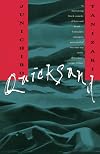
Aesthetically perverse in the way only the Japanese can be, this precision-tooled psychological thriller published in 1929 would have benefitted from more explicit lesbian sexual description, admittedly impossible at the time. The story really boils down to an attempt by a married couple and a hot beauty insinuating herself into their life to work out a polyamorous arrangement which they and Japanese society generally were far from conceptually ready for. The result instead was pretty grim.
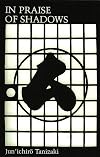
What an odd blend of poetic imagery and grumpy old-man syndrome. If you're inclined toward focusing on the beauty of old ways and old things then there's a lot to agree with here. Measured prose and evocative imagery paint the dark on light as is the author's theme, but it overlies a disdain for change. This disdain is a rot at the foundations of the premise.
Where the focus is on the sublime natural elements of rain or wood grain we charge along with nods, imagining ourselves in these show more peaceful moments and settings. That tranquility vanishes with comparison. Once modern life creeps its way into the work our tranquility vanishes, but not from the pen and western paper, but from the tonal change toward scorn.
And finally, this book is only about 50 pages, but it really manages to pack in a lot of racism and sexism in that space. Not much else to say there. It's a problem.
I kept finding myself saying, "Go back to musing on your special toilet, old man." show less
Where the focus is on the sublime natural elements of rain or wood grain we charge along with nods, imagining ourselves in these show more peaceful moments and settings. That tranquility vanishes with comparison. Once modern life creeps its way into the work our tranquility vanishes, but not from the pen and western paper, but from the tonal change toward scorn.
And finally, this book is only about 50 pages, but it really manages to pack in a lot of racism and sexism in that space. Not much else to say there. It's a problem.
I kept finding myself saying, "Go back to musing on your special toilet, old man." show less
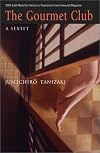
This collection of stories revisits many of Tanizaki’s usual subjects – various erotic obsessions, sadomasochistic relationships, the juxtaposition of the gross and the sublime. The stories all go by very fast – not only is there the question “Where is this going to go?” but one often finds oneself wondering “How far will he go?” The two longest stories, the title one and “Mr. Bluemound” pile up more and more details about their characters’ obsessions, with scenes that show more straddle the line between absurd and horrible. While “The Two Acolytes” is a departure from most of Tanizaki’s work – that one seems to reconcile the tension between the body and the spirit in a quiet way – the rest of the stories fit nicely together, starting with a story about children, moving through disillusioned men who need ever more extreme stimuli, and ending with an old married man who has memories and dreams that touch on earlier subjects, but everything is burned out now.
In “The Children”, the narrator befriends an aristocratic brother and sister and finds himself drawn into their sadomasochistic games. Even in this early story, there is a touch of the surreal and fanciful, which is seen throughout the entire collection.
The narrator of “The Secret” is an ennui-filled man who hopes that moving somewhere private and out of the way in the city will alleviate his dullness. He thinks up more fanciful ways to amuse himself, but his excursions while crossdressing lead to a new adventure altogether.
“The Two Acolytes” are boys who have been raised in a Buddhist monastery on an isolated mountain. They have never seen a woman before and both develop obsessions with the unknown but supposedly beautiful women, but they end up on two different paths.
“The Gourmet Club” is a group of rich, idle men who are obsessed with food and eating, but their overrefined palates have left them in continual pursuit of ever-different, ever-better tastes. One of the members stumbles onto a group of Chinese expats with a similar culinary obsession. He desperately wants to taste their food but ends up spying on the feast. He is inspired to make dining a total experience, often in grotesque ways. This one had a feverish narrative and lots of vivid, almost surreal descriptions of food. Good stuff.
“Mr. Bluemound” is probably the most extreme story in the collection. It starts out with a familiar premise – a well-known director plucked a young, beautiful girl out of obscurity, made her a star with his movies, and married her. This story often has somewhat controlling and objectifying overtones, but this is nothing compared to the superfan that the director meets. A stranger that he encounters is obsessed with his wife and describes his obsession with mounting creepy intensity. He keeps going on and on and ends with scenes that are somehow hilarious and horrifying at the same time.
In the final story, “Manganese Dioxide Dreams”, an older man and his family visit Tokyo and see movies, visit the theater and eat at restaurants. His thoughts wander to the erotic and violent, but there’s less obsession now, more cool analysis, and although he goes over all the food he’s eating, there are concerns about health - a sharp contrast to “The Gourmet Club”. show less
In “The Children”, the narrator befriends an aristocratic brother and sister and finds himself drawn into their sadomasochistic games. Even in this early story, there is a touch of the surreal and fanciful, which is seen throughout the entire collection.
The narrator of “The Secret” is an ennui-filled man who hopes that moving somewhere private and out of the way in the city will alleviate his dullness. He thinks up more fanciful ways to amuse himself, but his excursions while crossdressing lead to a new adventure altogether.
“The Two Acolytes” are boys who have been raised in a Buddhist monastery on an isolated mountain. They have never seen a woman before and both develop obsessions with the unknown but supposedly beautiful women, but they end up on two different paths.
“The Gourmet Club” is a group of rich, idle men who are obsessed with food and eating, but their overrefined palates have left them in continual pursuit of ever-different, ever-better tastes. One of the members stumbles onto a group of Chinese expats with a similar culinary obsession. He desperately wants to taste their food but ends up spying on the feast. He is inspired to make dining a total experience, often in grotesque ways. This one had a feverish narrative and lots of vivid, almost surreal descriptions of food. Good stuff.
“Mr. Bluemound” is probably the most extreme story in the collection. It starts out with a familiar premise – a well-known director plucked a young, beautiful girl out of obscurity, made her a star with his movies, and married her. This story often has somewhat controlling and objectifying overtones, but this is nothing compared to the superfan that the director meets. A stranger that he encounters is obsessed with his wife and describes his obsession with mounting creepy intensity. He keeps going on and on and ends with scenes that are somehow hilarious and horrifying at the same time.
In the final story, “Manganese Dioxide Dreams”, an older man and his family visit Tokyo and see movies, visit the theater and eat at restaurants. His thoughts wander to the erotic and violent, but there’s less obsession now, more cool analysis, and although he goes over all the food he’s eating, there are concerns about health - a sharp contrast to “The Gourmet Club”. show less
Lists
Cats in Fiction (1)
Shaking a Leg (1)
Awards


You May Also Like


Associated Authors
Statistics
- Works
- 198
- Also by
- 42
- Members
- 12,680
- Popularity
- #1,844
- Rating
- 3.9
- Reviews
- 287
- ISBNs
- 531
- Languages
- 26
- Favorited
- 64


