
Ogai Mori (1862–1922)
Author of The Wild Geese
About the Author
Image credit: Ougai Mori visits the atelier of Kozaburo Takeishi in Sugamo. Wikimedia Commons.
Works by Ogai Mori
Rakontoj de Oogai 4 copies
Nhan 2 copies
ヰタ・セクリアリス = ita・sekuriarisu 1 copy
The Abe Family 1 copy
The Boat on the River Takase 1 copy
Associated Works
Tagged
Common Knowledge
- Canonical name
- Mori, Ogai
- Legal name
- 森林太郎
- Other names
- 森鴎外
- Birthdate
- 1862-02-17
- Date of death
- 1922-07-08
- Gender
- male
- Education
- Japanese Government Medical School (MD, 1881)
- Occupations
- novelist
short story writer
historian
physician
translator
soldier - Organizations
- Imperial Japanese Army
- Cause of death
- renal failure
tuberculosis - Nationality
- Japan
- Birthplace
- Tsuwano, Japan
- Places of residence
- Leipzig, Germany
Dresden, Germany
Munich, Germany
Berlin, Germany - Place of death
- Tokyo, Japan
- Burial location
- Zenrin-ji Temple, Shimo-Renjyaku, Mitaka-city, Tokyo
Members
Reviews
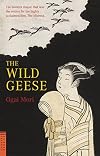
Such a simple story, of two ships passing in the night, the closeness of whose encounter only we can see with the help of our lighthouse narrator. That the events had to have happened the way they did, felt not contrived but perfectly natural. That both sides would romanticise each other so, added to melancholy of the missed opportunity whilst also portended what a catastrophe it would have been. I think this may have been the perfect short story.
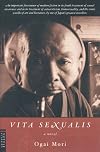
If anybody wants to file a class action suit against Ōgai Mori for false advertising, I'll gladly sign any document they put in front of me. "Vita Sexualis" has to be the least sexy account of a young man's journey to sexual maturity in existence. The introduction states that the author was writing against the current, so to speak: he wanted to write a novel about sex that would dispense with its more mechanical aspects and couple the theme of sexuality to a character's personal and show more spiritual nature.
On that score, I suppose that "Vita Sexualis" succeeds, but its main character, Kanei, still makes for an odd subject for an erotic novel of any sort. To put it bluntly: he's got a low sex drive and is much more interested in books than women. This isn't to say he's a prude, exactly, or a wet blanked like David Scherl of "Call It Sleep" or -- though it pains me to include him in this category -- Joyce's Stephen Dedalus. He's self-contained, studious, dutiful, and a bit of an introvert. "Vita Sexualis" doesn't contain any youthful sexual misadventures because it seems that the author doesn't really feel the need for them.
While Kanai is aware enough to recognize sexuality when he sees it, he remains largely innocent throughout much of the book. This works best in the book's first section, when our protagonist is a child: at this point, his confusion about matters sexual seems like a realistic depiction of childhood innocence when confronted with matters beyond its ken. As the book progressed, I rather wished that Kenai would get on with discovering his libido. He never quite does: the narrator, by his own admission, is not too interested in sex.
"Vita Sexualis" offers other pleasures, though. It provides interesting descriptions of nineteenth-century Japan and the ways that it dealt with the passing of the Samurai class and the arrival of Western and Chinese influence in Japanese society. Also of interest is the sometimes peculiar ways that sex was dealt with during this period: you hear about geishas, but also about the surreptitious sale of erotic drawings, marriage contracts, and seemingly normal businesses that doubled as brothels and operated using complex, esoteric secret codes. It's not titillating, but it's interesting. Readers seeking something to get them all het up should probably look elsewhere, though. show less
On that score, I suppose that "Vita Sexualis" succeeds, but its main character, Kanei, still makes for an odd subject for an erotic novel of any sort. To put it bluntly: he's got a low sex drive and is much more interested in books than women. This isn't to say he's a prude, exactly, or a wet blanked like David Scherl of "Call It Sleep" or -- though it pains me to include him in this category -- Joyce's Stephen Dedalus. He's self-contained, studious, dutiful, and a bit of an introvert. "Vita Sexualis" doesn't contain any youthful sexual misadventures because it seems that the author doesn't really feel the need for them.
While Kanai is aware enough to recognize sexuality when he sees it, he remains largely innocent throughout much of the book. This works best in the book's first section, when our protagonist is a child: at this point, his confusion about matters sexual seems like a realistic depiction of childhood innocence when confronted with matters beyond its ken. As the book progressed, I rather wished that Kenai would get on with discovering his libido. He never quite does: the narrator, by his own admission, is not too interested in sex.
"Vita Sexualis" offers other pleasures, though. It provides interesting descriptions of nineteenth-century Japan and the ways that it dealt with the passing of the Samurai class and the arrival of Western and Chinese influence in Japanese society. Also of interest is the sometimes peculiar ways that sex was dealt with during this period: you hear about geishas, but also about the surreptitious sale of erotic drawings, marriage contracts, and seemingly normal businesses that doubled as brothels and operated using complex, esoteric secret codes. It's not titillating, but it's interesting. Readers seeking something to get them all het up should probably look elsewhere, though. show less

A modern classic, written in 1913 (but set in the 1880s). Very Japanese in that the story is more in what is omitted than in what is told. Indeed, not much ever "happens,” although there is a clear narrative arc and a beginning and a middle. (An end, not so much.) The unnamed middle-aged narrator is reminiscing about a classmate’s “affair” with a local moneylender’s mistress. And precisely because such a bald statement omits so much, this is worth your time. It’s about the show more mistress, about the classmate, and Japan’s arrival on the world stage, and about nostalgia for a simpler time--among other things. show less

The events of my story took place some time ago—in 1880, the thirteenth year of the Meiji era, to be exact.
At the start of this short novel, the narrator described his friendship with a handsome student named Okada. Okada often walked the streets of Muenzaka in the evening and one time he happened upon a beautiful young woman living in a house in a silent neighborhood. Through his regular walks he had become acquainted with her, even if "the appearance of the house and the way the woman show more dressed strongly suggested that she was someone's mistress."
The Wild Goose, also known as The Wild Geese, by Mori Ōgai (1862-1922) was a dazzling and iconic Japanese novel about Otama, the woman who agreed to become the mistress of Suezō, a shrewd moneylender, and her acquaintance with Okada, the young student she fell in love with. Through gentle prose, Ōgai presented their interlinked stories while illuminating the attitudes and mores of late nineteenth century Japan, at the cusp of its transition to a modernist society.
It was a time when men of means like Suezō could hire go-betweens to negotiate and procure for them a mistress. The practice was then taboo and mistresses were then, as now, strongly discriminated against. Otama's previous marriage to a policeman turned out to be a sham, leaving her completely discouraged about her future prospects. Her plight was to be poor and her acquiescence to become a rich man's mistress was driven by her need to secure material comforts for herself and her old father.
Part of the charm of the story was the narrator's close observations of Otama, Suezō, and Okada's motives and actions. Like the character of Suezō, the man despised by society for his occupation as moneylender, the narrator had "keen powers of observation", in the way he delineated not only three strong characters but believable secondary characters as well. Suezō's suspicious wife Otsune and Otama's father had their own complexities.
Ōgai's marked evocation of a distinct place and culture and the marginal status of women at the time revealed a "not-quite" vanished age, in the sense that his characters' desires, despair, and anguish were just as transparent as the present. In addition, Ōgai's use of animal symbols (a pair of caged birds, a fierce snake, a flock of geese) and references to classical Chinese and Japanese literature had such cunning and grace that they didn't feel like literary devices at all but the very essence of the story, like fire to the brazier.
In her mortification there was very little hatred for the world or for people. If one were to ask exactly what in fact she resented, one would have to answer that it was her own fate. Through no fault of her own she was made to suffer persecution, and this was what she found so painful. When she was deceived and abandoned by the police officer, she had felt this mortification, and recently, when she realized that she must become a mistress, she experienced it again. Now she learned that she was not only a mistress but the mistress of a despised moneylender, and her despair, which had been ground smooth between the teeth of time and washed of its color in the waters of resignation, assumed once more in her heart its stark outline.
The unnamed narrator was a voice of kindness. His large sympathy for the fates of Otama and his friend Okada was unmistakable, relating their stories with penetrating understanding, even affecting a degree of respect and love for the two characters. He later revealed his storytelling method as a play on two perspectives: "Just as two images combine in a stereoscope to form a single picture, so the events I observed earlier and those that were described to me later have been fitted together to make this story of mine."
February marked the 150th year of Ōgai's birth. He was one of the exemplary prewar Japanese writers of national stature, and The Wild Goose (Gan), published serially in 1911-13, was his most esteemed work. Translator Burton Watson mentioned in his thorough introduction that the original title Gan could mean both the singular and plural words, hence the two distinct English titles. I have also read the earlier 1959 translation, The Wild Geese, by Kingo Ochiai and Sanford Goldstein. This full translation by Watson contains endorsements from Edwin McClellan and Edward Seidensticker, two powerhouse Japanese translators, so that should count for something. Indeed this version was quite beautiful. show less
At the start of this short novel, the narrator described his friendship with a handsome student named Okada. Okada often walked the streets of Muenzaka in the evening and one time he happened upon a beautiful young woman living in a house in a silent neighborhood. Through his regular walks he had become acquainted with her, even if "the appearance of the house and the way the woman show more dressed strongly suggested that she was someone's mistress."
The Wild Goose, also known as The Wild Geese, by Mori Ōgai (1862-1922) was a dazzling and iconic Japanese novel about Otama, the woman who agreed to become the mistress of Suezō, a shrewd moneylender, and her acquaintance with Okada, the young student she fell in love with. Through gentle prose, Ōgai presented their interlinked stories while illuminating the attitudes and mores of late nineteenth century Japan, at the cusp of its transition to a modernist society.
It was a time when men of means like Suezō could hire go-betweens to negotiate and procure for them a mistress. The practice was then taboo and mistresses were then, as now, strongly discriminated against. Otama's previous marriage to a policeman turned out to be a sham, leaving her completely discouraged about her future prospects. Her plight was to be poor and her acquiescence to become a rich man's mistress was driven by her need to secure material comforts for herself and her old father.
Part of the charm of the story was the narrator's close observations of Otama, Suezō, and Okada's motives and actions. Like the character of Suezō, the man despised by society for his occupation as moneylender, the narrator had "keen powers of observation", in the way he delineated not only three strong characters but believable secondary characters as well. Suezō's suspicious wife Otsune and Otama's father had their own complexities.
Ōgai's marked evocation of a distinct place and culture and the marginal status of women at the time revealed a "not-quite" vanished age, in the sense that his characters' desires, despair, and anguish were just as transparent as the present. In addition, Ōgai's use of animal symbols (a pair of caged birds, a fierce snake, a flock of geese) and references to classical Chinese and Japanese literature had such cunning and grace that they didn't feel like literary devices at all but the very essence of the story, like fire to the brazier.
In her mortification there was very little hatred for the world or for people. If one were to ask exactly what in fact she resented, one would have to answer that it was her own fate. Through no fault of her own she was made to suffer persecution, and this was what she found so painful. When she was deceived and abandoned by the police officer, she had felt this mortification, and recently, when she realized that she must become a mistress, she experienced it again. Now she learned that she was not only a mistress but the mistress of a despised moneylender, and her despair, which had been ground smooth between the teeth of time and washed of its color in the waters of resignation, assumed once more in her heart its stark outline.
The unnamed narrator was a voice of kindness. His large sympathy for the fates of Otama and his friend Okada was unmistakable, relating their stories with penetrating understanding, even affecting a degree of respect and love for the two characters. He later revealed his storytelling method as a play on two perspectives: "Just as two images combine in a stereoscope to form a single picture, so the events I observed earlier and those that were described to me later have been fitted together to make this story of mine."
February marked the 150th year of Ōgai's birth. He was one of the exemplary prewar Japanese writers of national stature, and The Wild Goose (Gan), published serially in 1911-13, was his most esteemed work. Translator Burton Watson mentioned in his thorough introduction that the original title Gan could mean both the singular and plural words, hence the two distinct English titles. I have also read the earlier 1959 translation, The Wild Geese, by Kingo Ochiai and Sanford Goldstein. This full translation by Watson contains endorsements from Edwin McClellan and Edward Seidensticker, two powerhouse Japanese translators, so that should count for something. Indeed this version was quite beautiful. show less
Lists
Awards

You May Also Like


Associated Authors
Statistics
- Works
- 43
- Also by
- 5
- Members
- 809
- Popularity
- #31,537
- Rating
- 3.8
- Reviews
- 15
- ISBNs
- 93
- Languages
- 15
- Favorited
- 6
