
Yasunari Kawabata (1899–1972)
Author of Snow Country
About the Author
Author Yasunari Kawabata was born in Osaka, Japan on June 14, 1899. He experienced numerous family deaths during his childhood including his parents, a sister, and his grandparents. He graduated from the Tokyo Imperial University in March 1924. He wrote both short stories including The Dancing Girl show more of Izu and novels including The Sound of the Mountains, Snow Country, Thousand Cranes, and The Old Capital. In 1959, he received the Goethe Medal in Frankfurt and in 1968 he won the Nobel Prize for Literature. He committed suicide on April 16, 1972. (Bowker Author Biography) show less
Works by Yasunari Kawabata
Sleeping Beauties 4 copies
Vechiul oraș imperial 3 copies
山の音 (角川文庫) 2 copies
山の音 2 copies
川端康成集 2 2 copies
川端康成名作集 2 copies
みづうみ 2 copies
花のワルツ 2 copies
虹いくたび 2 copies
女性開眼 2 copies
抒情歌・たまゆら 2 copies
La Danseuse d'Izu 2 copies
The Grasshopper and the Bell Cricket 2 copies
The Master of Funerals 2 copies
Sleeping Beauty ( Nobel laureate Yasunari Kawabata classics . new hardcover edition. Yu Hua portrait recommended )(Chinese Edition) (2014) 2 copies
Povestiri de ținut în palmă 2 copies
Mille gru, Koto, La casa delle belle addormentate, Uccelli ed altri animali, Il braccio, Il paese delle nevi (1993) 2 copies
Dos ensayos 1 copy
הנאהבים הצעירים 1 copy
Kanjó sóshoku (感情装飾) 1 copy
伊豆的舞女 1 copy
みづうみ 1 copy
眠れる美女 1 copy
නිදන සුන්දරියන්ගේ නිවහන 1 copy
雪国 (1950年) (新潮文庫) 1 copy
古都 1 copy
伊豆の踊り子 (文芸まんがシリーズ (27)) 1 copy
Nuvem de pássaros brancos 1 copy
感情?? 1 copy
野菊の墓 - Nogiku no Haka 1 copy
小説の研究 1 copy
Opere 1 copy
karlar ülkesi 1 copy
Chá e Amor 1 copy
Shui mei ren 睡美人 1 copy
舞姫 1 copy
女であること 1 copy
小説の研究Study of the novel (Kodansha academic library 168) (1977) ISBN: 4061581686 [Japanese Import] (1977) 1 copy
Mesec na vodi 1 copy
小説の研究 1 copy
古都 = koto 1 copy
محبون 1 copy
El Amor de la Montaña 1 copy
LA DANZARINA DE IZU 1 copy
Kioto / La danzarina de Izu 1 copy
Dientes de leon 1 copy
De dansers uit Izu 1 copy
Kalno aimana: romanas 1 copy
Tusen tranor roman 1 copy
De tusind traner 1 copy
නිදි කුමරියන්ගේ නිවහන 1 copy
Daun-daun Bambu 1 copy
La bailarina de Izú 1 copy
Prima neve sul Fuji 1 copy
La banda di Asakusa 1 copy
Kanyakamarute Prarthanakal 1 copy
UNA GRULLA EN LA TAZA DE TÉ 1 copy
Japan - Monumente grosser Kulturen — Foreword — 1 copy
Correspondencia 1935-1937 1 copy
Cerita Cerita Telapak Tangan 1 copy
川のある下町の話 (1958年) (新潮文庫) 1 copy
Nemureru bijō 1 copy
Shan zhi yin 1 copy
Daerah Salju 1 copy
Rumah Perawan 1 copy
Ibu Kota Lama 1 copy
Associated Works
The Art of the Tale: An International Anthology of Short Stories (1986) — Contributor — 381 copies, 3 reviews
Other Voices, Other Vistas: Short Stories from Africa, China, India, Japan, and Latin America (1992) — Contributor — 213 copies, 2 reviews
Three-Dimensional Reading: Stories of Time and Space in Japanese Modernist Fiction, 1911-1932 (2013) — Contributor — 11 copies
Meesters der vertelkunst : zevenendertig verhalen uit de moderne wereldliteratuur (1975) — Contributor — 2 copies
星の文学館 銀河も彗星も — Contributor — 1 copy
Tagged
Common Knowledge
- Canonical name
- Kawabata, Yasunari
- Legal name
- 川端 康成
- Other names
- Kawabata, Yasoenari
- Birthdate
- 1899-06-14
- Date of death
- 1972-04-16
- Gender
- male
- Education
- University of Tokyo (BA|Japanese Literature|1924)
- Occupations
- reporter
novelist
short story writer - Organizations
- Mainichi Shimbun
PEN - Awards and honors
- Japanese Order of Culture (1959)
Nobel Prize in Literature, 1968
Literaire Nomaprijs (1954)
American Academy of Arts and Letters, 1969 - Relationships
- Kobayashi, Hideo (friend)
Mishima, Yukio (friend) - Cause of death
- carbon monoxide poisoning
- Nationality
- Japan
- Birthplace
- Kita-ku, Osaka, Japan
- Places of residence
- Osaka, Japan
Tokyo, Japan
Kamakura, Japan - Place of death
- Kamakura, Kanagawa, Japan
- Burial location
- Kamakura Reien Cemetery, Jyunisho, Kamakura-city, Kanagawa, Japan
- Map Location
- Japan
Members
Discussions
Kawabata Yasunari: The Sound of the Mountain in Japanese Literature (March 2024)
Reviews
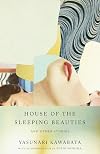
How easy is it to see this little book as the fruit of a perverted mind? Indeed, the title story apparently is nothing more than the disturbing story of an old man who frequents a brothel where he is allowed to sleep with numbed, naked girls, all virgins. He may touch them, but no more than that. Let's be honest, this does stimulate the imagination, however sickly you may find it. By the way, Kawabata does not shy away from moral ambiguity: he makes his protagonist, the old, almost impotent show more Eguchi, consciously think about the morbid character of his behaviour.
But I don't think that's the main thrust of this story. Kawabata has the old man accurately describe all his nighttime observations and sensations, the attractive forms of the girls, the light falling on their skin, the warmth or freshness of their bodies, the sounds and movements they make in their numb sleep, and so on. In Eguchi, moreover, this awakens numerous memories of childhood sweethearts, mistresses, own daughters, and that also sets in motion a train of musings about what has been, and what could have been, in order to - inevitably - end up at imminent death, his or the girl's (because will that ever wake up?). Apparently, there is still enough erotic power in the old man to fantasize about what he could do with the girls, and what the consequences of that could be. The old man's thoughts dart back and forth between instantaneous observations, memories, desires and possible actions and events, in short “an entire life” with all its ephemeral and opaque characteristics.
It seems to me that we should read this story primarily as an allegory, where the numbed girls are no more than instrumental metaphors for life itself, against which we snuggle ourselves, which we try to manipulate, with which we can reach ecstatic heights and miserable depths, which challenges us and at the same time remains inaccessible. I know, it's still perverse and disturbing how Kawabata has done here. But at the same time, this story is of an unparalleled depth and beauty. show less
But I don't think that's the main thrust of this story. Kawabata has the old man accurately describe all his nighttime observations and sensations, the attractive forms of the girls, the light falling on their skin, the warmth or freshness of their bodies, the sounds and movements they make in their numb sleep, and so on. In Eguchi, moreover, this awakens numerous memories of childhood sweethearts, mistresses, own daughters, and that also sets in motion a train of musings about what has been, and what could have been, in order to - inevitably - end up at imminent death, his or the girl's (because will that ever wake up?). Apparently, there is still enough erotic power in the old man to fantasize about what he could do with the girls, and what the consequences of that could be. The old man's thoughts dart back and forth between instantaneous observations, memories, desires and possible actions and events, in short “an entire life” with all its ephemeral and opaque characteristics.
It seems to me that we should read this story primarily as an allegory, where the numbed girls are no more than instrumental metaphors for life itself, against which we snuggle ourselves, which we try to manipulate, with which we can reach ecstatic heights and miserable depths, which challenges us and at the same time remains inaccessible. I know, it's still perverse and disturbing how Kawabata has done here. But at the same time, this story is of an unparalleled depth and beauty. show less

I didn't have this quote at first and then I stole it from the very next librarything review of this book, but what the hell, let it serve as epigraph: "In a gourd that had been handed down for three centuries, a flower that would fade in a morning."
It took me a bit to get into this one because I was expecting an origami story about a little girl with cancer (that's a different thousand cranes book), but I enjoyed it--a hard-edged little ditty that treats overwhelming emotions show more matter-of-factly, that contrasts the plain, unresponsive (yet so communicative) "eternal themselvesness" of the tea vessels (which also hold the spirit of Japan, of course) with the (I hate the term, I hate it, but here is the rare time that in its awfulness it is appropriate) 'hot mess" of being a living human. (Chikako, with her infinite self-control, her abiding cruelty, the wabi sabi mark on her breast, is clearly a tea vessel; conversely, Ms. Ota, who stains a vessel with her lips, and her daughter Fumiko, who destroys one, are akin to Diomedes defeating Ares at Troy--underdog emotion-bag humans so tempestuous they momentarily stun the gods. You can imagine it doesn't end well for them.) There is gender stuff going on that's very of its moment, the postwar loosening of Japanese patriarchy, but I don't think it's the core of the allegory here (Kawabata was a man's man and would not make gender the core of his allegory): we could easily have seen a similarly "modern" Kikuji at the dawn of the "modern" Meiji, the Edo, or back in the 12th century when all of a sudden the thing to do wasn't paint shodo anymore but hit the gym constantly and pose with your bushi sword and post it on Instagram. And eternal, too, is the fear as a parent that your child won't get a blank slate but will somehow pay for your selfishness. History as an eternal inner roiling, constrained to something resembling an aesthetically or narratively pleasing form by the perfection-for-all-time of the inhuman objects that anchor it. Japan in a chawan. show less
It took me a bit to get into this one because I was expecting an origami story about a little girl with cancer (that's a different thousand cranes book), but I enjoyed it--a hard-edged little ditty that treats overwhelming emotions show more matter-of-factly, that contrasts the plain, unresponsive (yet so communicative) "eternal themselvesness" of the tea vessels (which also hold the spirit of Japan, of course) with the (I hate the term, I hate it, but here is the rare time that in its awfulness it is appropriate) 'hot mess" of being a living human. (Chikako, with her infinite self-control, her abiding cruelty, the wabi sabi mark on her breast, is clearly a tea vessel; conversely, Ms. Ota, who stains a vessel with her lips, and her daughter Fumiko, who destroys one, are akin to Diomedes defeating Ares at Troy--underdog emotion-bag humans so tempestuous they momentarily stun the gods. You can imagine it doesn't end well for them.) There is gender stuff going on that's very of its moment, the postwar loosening of Japanese patriarchy, but I don't think it's the core of the allegory here (Kawabata was a man's man and would not make gender the core of his allegory): we could easily have seen a similarly "modern" Kikuji at the dawn of the "modern" Meiji, the Edo, or back in the 12th century when all of a sudden the thing to do wasn't paint shodo anymore but hit the gym constantly and pose with your bushi sword and post it on Instagram. And eternal, too, is the fear as a parent that your child won't get a blank slate but will somehow pay for your selfishness. History as an eternal inner roiling, constrained to something resembling an aesthetically or narratively pleasing form by the perfection-for-all-time of the inhuman objects that anchor it. Japan in a chawan. show less
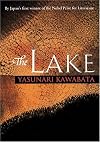
To the singing oars,
Jump the watery imp,
Moon-lit skies wake,
Tender palms aglow,
Lonely hearts to split,
Weeping willows below,
Cages with open doors,
Fireflies over the lake.
On a nearby tree, the screeching became louder with every passing minute. I knew it then, it was already past midnight. The bats were probably having a little party; for once their pairs of lustrous eyes were not being meticulously counted by a silly woman amid the flickering of the street light. I did not care about these show more nocturnal visitors; I was more fascinated with the valiant fireflies that nestled in monstrous human palms. The haiku of great poet Issa ran through my mind:-
Issa says:-
So quickly they join
the human goblins...
fireflies.
Tiny insects being chased by humongous strangers, trying to capture their splendor in a glass jar and as they glow in dark, gaze obsessively; till they glow no more. Behind the glass cage, as these fireflies flutter, radiating through their fears, smiles are painted as we take pleasure in their confined beauty. Is it then the beauty of our eyes that bestow upon the flies a claustrophobic existence, pleasing? What is it that drives human psyche to harbor a blinding compulsion of illicit beauty? Does a soul find an empty heart desirable? Do murderers find their hands beautiful? Does a sleeping man discover beauty in his nightmarish mind? Or, like Gimpei, is there a need to reveal ugliness of the body to rationalize the craving of a dream-like beauty?
“How many times in his youth had he told different lies because of his ugly feet?”....”Was the ugliness of a part of his body crying out, longing for beauty? Was it part of the divine plan that ugly feet chased beautiful women?..."
Gimpei likes to pursue strange, gorgeous ladies because similar to his athlete’s foot, the women keep coming in his path and never fade away. The surreal delicateness in a woman’s youth is ephemeral and Gimpei needs to embrace it by trailing his “angels” before he may misplace them forever. Gimpei followed the women to the theatre, the concert halls, in the school where he used to once teach, but with the exception of Hisako, he never stopped to talk to these strange pretty ladies as it would be the end of his hallucinatory paradise.
"One can’t stop and suddenly speak to a complete stranger, can one?......When it happens I could die of sadness. I feel somehow empty and drained...."
The glances of Gimpei’s memory are an ongoing charade of past and present; chronicling his lonesome and insufferable life. His stubbornness about not sharing secrets delineates the existential truth of secrets being the only personal and constant companion of a man in this transient world.
“Perfect awareness might exist in heaven or hell, but not in human world. If you have no secrets, it means that you don’t exist, that you are not living your life….. No human emotion can survive without them..."
See, this is why I love Kawabata, he speaks my genuine sentiments. Your secrets, your deepest scars belong only to you. You might lose an arm, you might lose loved ones, but you never lose your secrets. And when you become an open book, your life somehow amalgamates into someone else’s surreptitious world and you feel lost in their secrets, once again. Happiness sometimes perishes, but sorrows live on in the darkest corner of your heart.
Kawabata employs the ‘mono no aware’ concept, strongly. Similar to his [b:Beauty and Sadness|14029|Beauty and Sadness|Yasunari Kawabata|http://d202m5krfqbpi5.cloudfront.net/books/1327954071s/14029.jpg|1414440], he delineates the power of beauty that walks along the path of emptiness and lingering sadness.
The thought of her life savings being gone brought a momentary joy to Miyako; as if her life had avenged the ignominy of Arita’s hideous monetary compensation for Miyako’s lost youth, somehow restoring her dignity. The power of money came with the ugliness of being a mistress to an elderly man.
“The two hundred thousand yen was Miyako’s compensation for the loss of her youth-that brief flowering which she had wasted by giving her body to a half dead, gray haired old man.....When one loses the money one has saved, the very thought of saving is a bitter memory..."
By making a bizarre comparison of sucking his mistresses’ firm breasts to breast feeding in his mother’s warm arms, Arita found a respite for his nightmarish dreams. The loveliness of youthful breasts was marred by Arita’s despair of an unfulfilled motherly love.
“For only with a mother could the old man find peace of mind.”
The tranquility of a Turkish bath destroyed by Gimpei’s chaotic dreams, his arousing upheavals over his newly acquired obsession, the stillness of the lake disfigured by ghostly memories and his ever festering illusionary Athlete’s foot; made Gimpei fall even further in depths of self-loathing lies sinking in the “inky waves” of wretchedness.
“I want to follow them to the ends of the earth, but I can’t. The only way to chase a person that way is to kill him”.
Kawabata allows human emotions to escape the culpabilities through an abstract tunnel by entitling remorse to non-living objects. Hence, the reader can see Gimpei’s innate desire to pursue “angels” being weighed down by the guilt harboring in the inadequacies of his diseased feet. The frosty lake being the victim of Gimpei’s past and present regressions. The mono no aware concept reaches its climax with Gimpei questioning the compelling reality of one-sided love and Miyako experiencing a vague ecstasy when being followed by odd men. Here, we have a man who mixes the very purity of love with sinister passion and a woman who finds affection from her creepy followers; both these people sensing beauty from their repulsive occurrences.
Kawabata with precise erudition slips in the wabi-sabi theory of transience and imperfections.
“The world’s most beautiful is not always some towering green peak, but a vast, barren mound covered with volcanic ashes and rocks.”
To every beginning there is an unavoidable end. An attractive hand must accept the fate of someday being covered with nasty liver spots. To every thriving life there is death and to every beauty there is an awaiting decay. A clean existence is always muddled with clandestine stories. The beauty of prostitutes being robbed by the war, the infant for whom death would be a lucky escape, Gimpei’s women who would one day prefer being old rather than be stalked for their youth; Hisako momentary gifting Gimpei his first true happiness and the lake whose serene waters carry secrets of melancholic human corpses; are buried in the aesthetic core of impermanence.
Kawabata does not insist on liking Gimpei, Miyako, Arita,Hisako etc… ; he does not either seek sympathies for them . He yearns for the reader to perceive these actors for who they really are. Kawabata hopes that in order to avoid viewing flaws in the standing perfect picture, we stop squinting till our eyelids hurt. Even if the eyes are shut, the flaws still exists. The missed line, the shabby strokes, is what makes the painting comprehensible. Nothing last forever, nothing is faultless because perfection itself is a vibrant masquerade of imperfections. Let the night be dark without the radiance of fireflies, let the lake be silent even with floating scary images because some day the chase for a single firefly or the need for counting the eyes of screeching bats could be repulsive as a diseased foot. The advent of insanity.
“You fool! You fool!”
The ephemera of beauty and a prospect of leering blemish. show less
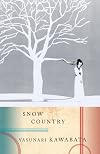
The simplicity and suggestiveness of Yasunari Kawabata’s writing is great at invoking landscapes, sights and sounds. The descriptions of nature are beautiful. You want to read slowly, being aware of every word. It’s almost hypnotizing.
The world of “Snow Country” is claustrophobic and heartbreaking, the relationships so fraught and unreal. There are moments of joy here and there, but they are just a contrast to the melancholy.
The beautiful writing is quite wasted on Shimamura, who is show more a misogynistic pretentious asshole. I did like how the author got into his head - it was very skillfully done. And then there is Komako, who has such talents and riches in her soul, and does not seem to be aware of it. The only reason why she is in love with Shimamura (or had convinced herself that she is, it’s not clear) seems to be that there is no one else.
Reading this book has been like reading a very long haiku. show less
The world of “Snow Country” is claustrophobic and heartbreaking, the relationships so fraught and unreal. There are moments of joy here and there, but they are just a contrast to the melancholy.
The beautiful writing is quite wasted on Shimamura, who is show more a misogynistic pretentious asshole. I did like how the author got into his head - it was very skillfully done. And then there is Komako, who has such talents and riches in her soul, and does not seem to be aware of it. The only reason why she is in love with Shimamura (or had convinced herself that she is, it’s not clear) seems to be that there is no one else.
Reading this book has been like reading a very long haiku. show less
Lists
Japanese Literature (11)
Hidden Classics (1)
100 knjiga (1)
Five star books (1)
Winter Books (1)
1930s (1)
Awards


You May Also Like


Associated Authors
Statistics
- Works
- 212
- Also by
- 26
- Members
- 16,153
- Popularity
- #1,405
- Rating
- 3.8
- Reviews
- 406
- ISBNs
- 609
- Languages
- 29
- Favorited
- 98

