
Natsume Sōseki (1867–1916)
Author of Kokoro
About the Author
Natsume Soseki's early education included the study of Chinese classics and architecture, but as an English literature major he found his life's work, as well as the friendship of haiku poet Masaoka Shiki, an important personal and literary influence. Soseki's prose, for example, is often show more interspersed with his own haiku. In 1900 the Japanese government sent Soseki, who was a professor of English literature, to London, but, poorly funded and isolated, he found his years abroad painful and began to exhibit neurotic behavior. On his return, he shocked society by giving up his teaching position at Tokyo University to write fiction for the Asahi newspaper, a profession associated with the world of "entertainers." Despite poor health in the last years of his life, Soseki continued to write an average of one novel a year. (Bowker Author Biography) show less
Image credit: Soseki Natsume
Series
Works by Natsume Sōseki
Κουσαμάκουρα 3 copies
Nỗi lòng 3 copies
吾輩は猫である(下) 3 copies
吾輩は猫である(上) 3 copies
Rediscovering Natsume Sōseki : with the first English translation of Travels in Manchuria and Korea (2000) 3 copies
Ten Nights of Dreams: Yume Juya 2 copies
大活字本シリーズ 夏目漱石② 草枕 (Japanese Edition) 2 copies
Être une hirondelle: Haikus 2 copies
Cea de-a treia noapte 2 copies
Küçük Bey 2 copies
Motanul are cuvantul 2 copies
Almohada de hierba 2 copies
CAU AM NGAY THO 1 copy
I Am A Cat (excerpt) 1 copy
Zbuciumul inimii 1 copy
SOCIAL SCIENCES 1 copy
Сансиро. Затем. Врата 1 copy
Μποτσάν ή Ο δασκαλάκος 1 copy
Ngày 210 1 copy
Tôi là con mèo 1 copy
Gối đầu lên cỏ 1 copy
Chouyaku Bocchan 1 copy
Cam Kapının Ardında 1 copy
On Gece Rüyası 1 copy
夢十夜 夏目漱石 1 copy
Rahasia Hati 1 copy
Từ Dạo Ấy 1 copy
少爺 1 copy
Cỏ Ven Đường 1 copy
Unhuman tour (Kusamakura) 1 copy
彼岸過迄 = higankamade 1 copy
Der Tor aus Tokio Roman 1 copy
坊っちゃん = Botchan 1 copy
Socrates In Love 1 copy
行人 = ikuto 1 copy
漫画 こころ 1 copy
こころ (まんがで読破 009) 1 copy
By Natsume Soseki The Three Cornered World (UNESCO Collection of Representative Works: Japanese) (3rd) (2011) 1 copy
Noticias de Londres 1 copy
UNË JAM NJË MAÇOK 1 copy
Manass 1 copy
My Individualism 1 copy
行人 (講談社文庫) 1 copy
Ani ḥatul אני חתול 1 copy
坊ちゃん(下)/ Bocchan(Ge) 1 copy
坊っちゃん(上)/Bocchan(Jou) 1 copy
On Gece Düşleri 1 copy
Sengkarut 1 copy
Pirinç Kuşu 1 copy
英文学形式論 (1976年) (漱石文学館 名著複刻) 1 copy
坊っちゃん 1 copy
それから 1 copy
現代日本の文学4 1 copy
草枕 (Chinese Edition) 1 copy
吾輩は猫である 上 1 copy
吾輩は猫である〈下〉 (岩波文庫) 1 copy
虞美人草 (1972年) (岩波文庫) 1 copy
道草 1 copy
吾輩は猫である 1 copy
Associated Works
The Sophisticated Cat: A Gathering of Stories, Poems, and Miscellaneous Writings About Cats (1992) — Contributor — 112 copies, 1 review
Great Short Stories: Russian, Japanese, American, Irish, French, English (2007) — Contributor — 36 copies
Three-Dimensional Reading: Stories of Time and Space in Japanese Modernist Fiction, 1911-1932 (2013) — Contributor — 11 copies
Takashi Saitō's I Can Read It In One Go! Selection of Masterpieces - Middle School (2006) — Contributor — 2 copies
Tagged
Common Knowledge
- Canonical name
- Natsume Sōseki
- Legal name
- 夏目金之助 (Natsume Kin'nosuke)
- Other names
- 夏目 漱石 (Natsume Sōseki)
Sōseki - Birthdate
- 1867-02-09
- Date of death
- 1916-12-09
- Gender
- male
- Education
- University of Tokyo (BA - English Literature)
University of Tsukuba (graduate studies)
University College London - Occupations
- novelist
teacher - Organizations
- Tokyo University
Asahi - Awards and honors
- Premi Llibreter (2008)
- Relationships
- 房之介, 夏目 (grandchild)
豊隆, 小宮 (disciple) - Nationality
- Japan
- Birthplace
- Babashita, Edo, Japan (present Kikui, Shinjuku)
- Places of residence
- Tokyo, Japan
London, Middlesex, England, UK - Place of death
- Tokyo, Japan
- Burial location
- Zoshigaya Reien Cemetery, Minami-Ikebukuro, Toshima-ku, Tokyo
- Associated Place (for map)
- Japan
Members
Discussions
Sanshirō by Natsume Sōseki in Author Theme Reads (March 2012)
Kokoro by Natsume Soseki in Author Theme Reads (February 2012)
Botchan by Natsume Soseki in Author Theme Reads (January 2012)
Reviews
I felt like reading Kokoro because the characters in The Great Passage talked about it. Yes, I will take book recommendations from fictional characters now, thank you very much ;)
The writing is like looking at the sea, seeing the waves come and go. The rhythm lulls you and you follow along, almost despite yourself. It feels both light and heavy, simple and very intricate.
This short novel has 110 chapters. The reader can take a breath in between, reading slower, reflecting, letting thoughts show more settle for a moment. I liked that.
There are three stories here:
📖 The unnamed young narrator who meets and comes to admire an older man he calls Sensei. “Admire” is the wrong word, though, it is more of an intellectual obsession born out of loneliness and an undefined youthful longing for “something else”. A very strange, yet compelling, friendship dance follows, with the narrator always wanting more, and with Sensei always drawing back.
“...whenever some unexpected terseness of his shook me, my impulse was to press forward with the friendship. It seemed to me that if I did so, my yearning for the possibilities of all he had to offer would someday be fulfilled.”
There are hints of tragedy and dark secrets in Sensei’s past, and his marriage is a melancholy thing. Sensei seems to fear the young man’s admiration.
“The memory of having sat at someone’s feet will later make you want to trample him underfoot. I am trying to fend off your admiration for me, you see, in order to avoid your future contempt.”
📖 The narrator coming to his parents’ home to be with his dying father. These are harrowing chapters. Young man’s time with Sensei has corrupted him somehow, I feel, made him less of who he should be. The decision he makes at the end of Part 2 is impulsive and rash. We never see its aftermath, making it all the more tragic.
📖 The third story is Sensei’s letter, his confession. The love story has a lovely beginning. “Whenever I saw her face, I felt that I myself had become beautiful.” I found the portrayal of romantic love in a misogynic society interesting. How does a clever, sensitive man reconcile romantic love with his contempt for women in general? (He tries. He doesn’t, not really.)
With the love triangle in place, the story turns ugly. It is about people unable to express their feelings and talk to each other about them. This evolves into an emotional impotence and an inability to act when you need to (it gets tedious for the reader, though).Words said and words unsaid destroy everyone involved.
“Words are not just vibrations in the air, they work more powerfully than that, on more powerful objects.”
Sensei does a vile, dishonourable thing. After that, his life is but an imitation of one.
It’s interesting how things authors don’t show you can still be powerful – we never see the young man’s reaction to the letter, but just thinking about it hits you hard.
I feel melancholy after finishing, but I liked the experience of reading this classic. show less
The writing is like looking at the sea, seeing the waves come and go. The rhythm lulls you and you follow along, almost despite yourself. It feels both light and heavy, simple and very intricate.
This short novel has 110 chapters. The reader can take a breath in between, reading slower, reflecting, letting thoughts show more settle for a moment. I liked that.
There are three stories here:
📖 The unnamed young narrator who meets and comes to admire an older man he calls Sensei. “Admire” is the wrong word, though, it is more of an intellectual obsession born out of loneliness and an undefined youthful longing for “something else”. A very strange, yet compelling, friendship dance follows, with the narrator always wanting more, and with Sensei always drawing back.
“...whenever some unexpected terseness of his shook me, my impulse was to press forward with the friendship. It seemed to me that if I did so, my yearning for the possibilities of all he had to offer would someday be fulfilled.”
There are hints of tragedy and dark secrets in Sensei’s past, and his marriage is a melancholy thing. Sensei seems to fear the young man’s admiration.
“The memory of having sat at someone’s feet will later make you want to trample him underfoot. I am trying to fend off your admiration for me, you see, in order to avoid your future contempt.”
📖 The narrator coming to his parents’ home to be with his dying father. These are harrowing chapters. Young man’s time with Sensei has corrupted him somehow, I feel, made him less of who he should be. The decision he makes at the end of Part 2 is impulsive and rash. We never see its aftermath, making it all the more tragic.
📖 The third story is Sensei’s letter, his confession. The love story has a lovely beginning. “Whenever I saw her face, I felt that I myself had become beautiful.” I found the portrayal of romantic love in a misogynic society interesting. How does a clever, sensitive man reconcile romantic love with his contempt for women in general? (He tries. He doesn’t, not really.)
With the love triangle in place, the story turns ugly. It is about people unable to express their feelings and talk to each other about them. This evolves into an emotional impotence and an inability to act when you need to (it gets tedious for the reader, though).Words said and words unsaid destroy everyone involved.
“Words are not just vibrations in the air, they work more powerfully than that, on more powerful objects.”
Sensei does a vile, dishonourable thing. After that, his life is but an imitation of one.
It’s interesting how things authors don’t show you can still be powerful – we never see the young man’s reaction to the letter, but just thinking about it hits you hard.
I feel melancholy after finishing, but I liked the experience of reading this classic. show less

I have a feeling that Kokoro is a book that will make more and more sense the more I know about modern Japanese culture. On one level it's a simple story about friendship and betrayal, but on another level it's a working-out of the cultural tensions set up in the minds of Japanese intellectuals who lived through the opening-up of Japan to western ideas during the Meiji period (Sōseki was born in the year of Meiji's accession to the imperial throne). The foreground story of Kokoro takes show more place in the months around the emperor's death, and its main character, Sensei (teacher), is an older man - a contemporary of the author - whose life has been messed up by his inability to resolve the existential conflict between the demands of the two threads of his upbringing, the requirement to subsume himself into the traditional, collective family values of middle-class Japanese society setting itself against the western need for intellectual self-determination. The narrator of the first part of the book is a man of a younger generation who gets into a similar ethical tangle, but with different dimensions and results.
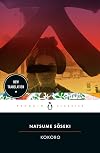
It's all very carefully, delicately built up, with a lot of everyday detail about the rapidly-changing face of Japan in the decades before 1914 used to reflect and explain the development of the conflicts the characters are dealing with. Very much a book about male friendships (what used to be called "homosocial" relationships in the good old days of literary theory), where the women rarely speak and don't have all that much to do apart from arranging flowers and cooking (is that why Penguin coincidentally put a brush-stroke across the woman's eyes in the cover design?). But that's an accusation that would be equally true of a lot of western novels of the same period.
Very interesting, and McKinnon's translation reads very naturally and transparently. show less
It's all very carefully, delicately built up, with a lot of everyday detail about the rapidly-changing face of Japan in the decades before 1914 used to reflect and explain the development of the conflicts the characters are dealing with. Very much a book about male friendships (what used to be called "homosocial" relationships in the good old days of literary theory), where the women rarely speak and don't have all that much to do apart from arranging flowers and cooking (is that why Penguin coincidentally put a brush-stroke across the woman's eyes in the cover design?). But that's an accusation that would be equally true of a lot of western novels of the same period.
Very interesting, and McKinnon's translation reads very naturally and transparently. show less
A tragedy that grips the reader right from the beginning, it’s somber elegiac mood slowly unwinds a story that leads inexorably to a conclusion that has been signposted nearly from the start. It is set in around Tokyo Japan at the start of the 20th century when Emperor Meiji (1868-1912) was leading a rapid drive to Westernise his semi-feudal country. The effects were keenly felt at the universities and students and teachers had to adapt quickly in rapidly changing times, some could not and show more Kokoro is the story of two individuals who were out of step with the modern world and found themselves cast adrift, in a world in-between the old and the new.
The story is told in the first person by a young student who is studying for his graduation at the University in Tokyo. He has few friends and does not want to return home to the country house for his holidays and goes on vacation to the coast. On a crowded beach he first spies Sensei a middle aged Japanese man in the company of a Westerner. The student is curious and engineers a chance meeting on the beach a few days later when Sensei is on his own. He finds someone who seems to be a kindred spirit in that he also has few friends and has an inner life that is rarely revealed, but who has a wisdom and conversation on issues that particularly appeals to the young student. He assiduously courts Sensei’s company and eventually gets invited to his home after the vacation where he meets Sensei’s wife. He becomes Sensei’s friend and soon discovers that he is his only friend and he gradually becomes aware of a tragic event in Sensei’s earlier life that has shaped his current situation and left him with a melancholia that prevents him from working and from participation in normal life. Sensei is enigmatic and like the student, the reader is almost afraid to find out his terrible secret:
Sensei “I do not have the right to expect anything from this world”
Sensei “there is guilt in loving” he insists more than once.
Sensei “it is not you in particular that I distrust, But the whole of humanity”
Sensei "You see, loneliness is the price we have to pay for being born in this modern age, so full of freedom, independence, and our own egotistical selves”
The student is called away from Tokyo to attend to his father who is slowly dying of a disease of the liver and he cannot get away to see Sensei. The students own problems take over his thoughts, but he is worried when a telegram arrives from Sensei followed shortly after by a long letter. Sensei has decided to unburden himself to his only friend and he starts by relating how his relations have cheated him out of his inheritance, but there is so much more and slowly the tragedy unfolds.
How can a sensitive, intelligent man like Sensei become so embittered and so isolated and the answer to this question goes to the core of the human condition; love, death, honour, friendship, family and betrayal are themes played out against the clash of the old country culture and modern city Westernisation. Above all this is a very human story of people unable to fit into a world in which the ground seems to be shifting away from under them and it is the old values which trap them, but which they cling to nevertheless.
Apart from an unforgettable story Soseki takes the reader into the milieu of pre first world war Japan. We glimpse a culture and a tradition that is told to us by an insider in such a way that we are soon immersed in it. Natsume Soseki has been labelled Japan’s first truly modern writer and this book published in 1914 is his masterpiece and enough to see him included in many lists of classic 20th century fiction, however don’t take the critics word for it, explore this mesmerising book yourself. From the first page to the last I was hooked and could not put it down. A five star read. show less
The story is told in the first person by a young student who is studying for his graduation at the University in Tokyo. He has few friends and does not want to return home to the country house for his holidays and goes on vacation to the coast. On a crowded beach he first spies Sensei a middle aged Japanese man in the company of a Westerner. The student is curious and engineers a chance meeting on the beach a few days later when Sensei is on his own. He finds someone who seems to be a kindred spirit in that he also has few friends and has an inner life that is rarely revealed, but who has a wisdom and conversation on issues that particularly appeals to the young student. He assiduously courts Sensei’s company and eventually gets invited to his home after the vacation where he meets Sensei’s wife. He becomes Sensei’s friend and soon discovers that he is his only friend and he gradually becomes aware of a tragic event in Sensei’s earlier life that has shaped his current situation and left him with a melancholia that prevents him from working and from participation in normal life. Sensei is enigmatic and like the student, the reader is almost afraid to find out his terrible secret:
Sensei “I do not have the right to expect anything from this world”
Sensei “there is guilt in loving” he insists more than once.
Sensei “it is not you in particular that I distrust, But the whole of humanity”
Sensei "You see, loneliness is the price we have to pay for being born in this modern age, so full of freedom, independence, and our own egotistical selves”
The student is called away from Tokyo to attend to his father who is slowly dying of a disease of the liver and he cannot get away to see Sensei. The students own problems take over his thoughts, but he is worried when a telegram arrives from Sensei followed shortly after by a long letter. Sensei has decided to unburden himself to his only friend and he starts by relating how his relations have cheated him out of his inheritance, but there is so much more and slowly the tragedy unfolds.
How can a sensitive, intelligent man like Sensei become so embittered and so isolated and the answer to this question goes to the core of the human condition; love, death, honour, friendship, family and betrayal are themes played out against the clash of the old country culture and modern city Westernisation. Above all this is a very human story of people unable to fit into a world in which the ground seems to be shifting away from under them and it is the old values which trap them, but which they cling to nevertheless.
Apart from an unforgettable story Soseki takes the reader into the milieu of pre first world war Japan. We glimpse a culture and a tradition that is told to us by an insider in such a way that we are soon immersed in it. Natsume Soseki has been labelled Japan’s first truly modern writer and this book published in 1914 is his masterpiece and enough to see him included in many lists of classic 20th century fiction, however don’t take the critics word for it, explore this mesmerising book yourself. From the first page to the last I was hooked and could not put it down. A five star read. show less

This gentle, atmospheric book is more about an existential feeling than it is about plot. It reminded me of Le Grand Meaulnes, and also the story The Judgment by Kafka. I’m going to go ahead and spoil such plot as there is. A university student makes friends with an older man his father’s age, whom he calls Sensei. Sensei is not very demonstrative and likes to keep his personal business to himself. I saw the character Sensei as a very realistic portrayal of a person who has been show more depressed for a long time, but the young man just sees Sensei as enigmatic and fascinating. It felt to me like the university student was practicing for being in love or making friends with his peers by trying to get close to Sensei, and also looking for a father figure because it turns out his own father is terminally ill. The young man goes home to be with his family. I thought the description of the father’s illness and the varied ways that everyone involved tried to avoid or deny what’s happening was incredibly realistic and timeless and this alone makes this book a masterpiece. However, during his father’s final hours, the young man receives a by-the-time-you-get-this-I-will-be-dead letter from Sensei. He rushes off the to the train station to go to Sensei. The rest of the book is Sensei’s long suicide letter, explaining what happened to him when he was young and why he’s going to end his life. So, when Sensei was a young man, he fell in love with the daughter of the family he was boarding with, but he was completely stalled and unable to declare his love. Then he asked his friend to live in the house too. This man falls in love with the same woman, although it takes Sensei a while to figure this out because no one ever has a straightforward conversation with anyone in this book. But the friend has deep spiritual/philosophical beliefs that involve asceticism and renouncing love, so he feels like a terrible hypocrite. Sensei basically tells his friend, “Yes, you are a terrible hypocrite,” and then immediately asks the young woman’s mother for her daughter’s hand. After the friend finds out, he stabs himself to death in the nighttime. Sensei feels responsible for his friend’s suicide and is wracked with guilt for decades, but he never explains anything to his wife because he doesn’t want to spoil her flowerlike purity. I don’t know if this was cultural, generational, the author’s own life view, or something else, but no one in this book has any get-up-and-go. It’s very hard for the characters to take any actions whatsoever and so they can never solve their problems; they just sink deeper into despond. The one thing they are able to do with great gusto and resolve is die by suicide. According to the introduction, the title of this book means “the heart of things.” I bought this book online, and it arrived with a yellow post-it note recommending further reading, which I found very touching. show less
Lists
Cats in Fiction (1)
03 (1)
Awards


You May Also Like


Associated Authors
Statistics
- Works
- 248
- Also by
- 13
- Members
- 11,620
- Popularity
- #2,024
- Rating
- 3.8
- Reviews
- 254
- ISBNs
- 660
- Languages
- 26
- Favorited
- 53
