
Jonathan Clements (1) (1971–)
Author of A Brief History of the Vikings: The Last Pagans or the First Modern Europeans?
For other authors named Jonathan Clements, see the disambiguation page.
About the Author
Jonathan Clements is the author of Modern China: All That Matters, The Armchair Traveller's History of Beijing, The Art of War: A New Translation, and biographies of Confucius, Khubilai Khan, Chairman Mao, Wellington Koo and the "pirate king" Koxinga. His books on Empress Wu and the First Emperor show more of China have both been translated into Chinese. For the National Geographic Channel, he has presented Shandong: Land of Confucius and several seasons of Route Awakening, a TV series on the historical underpinnings of Chinese culture. show less
Image credit: Jonathan Clements on right.
Works by Jonathan Clements
A Brief History of the Vikings: The Last Pagans or the First Modern Europeans? (2005) 499 copies, 7 reviews
The Anime Encyclopedia: A Guide to Japanese Animation Since 1917, Revised and Expanded Edition (2001) 261 copies, 4 reviews
A Brief History of Japan: Samurai, Shogun and Zen: The Extraordinary Story of the Land of the Rising Sun (2017) 161 copies, 3 reviews
Wu: The Chinese Empress Who Schemed, Seduced And Murdered Her Way To Become A Living God (2007) 78 copies, 2 reviews
A Brief History of China: Dynasty, Revolution and Transformation: From the Middle Kingdom to the People's Republic (2019) 57 copies
Japan at War in the Pacific: The Rise and Fall of the Japanese Empire in Asia: 1868-1945 (2022) 20 copies
A Brief History of the Martial Arts: East Asian Fighting Styles, from Kung Fu to Ninjutsu (Brief Histories) (2016) 17 copies, 1 review
28 June: Sarajevo 1914 - Versailles 1919: The War and Peace That Made the Modern World (2014) — Contributor — 16 copies
The Anime Encylcopedia 1 copy
Red Devils 1 copy
Manga Max 1 1 copy
Manga Max 9 1 copy
Associated Works
Tagged
Common Knowledge
- Legal name
- Clements, Jonathan Michael
- Birthdate
- 1971-07-09
- Gender
- male
- Education
- University of Stirling
University of Wales - Occupations
- author
scriptwriter - Nationality
- UK
- Birthplace
- Leigh on Sea, Essex, England, UK
- Associated Place (for map)
- England, UK
Members
Reviews

This is absolutely the book I wanted, but I can imagine how it might disappoint other readers who pick it up with false expectations. This is significant Japanese military history featuring samurai, with only a few details about how the samurai came to be and where their traditions originated sprinkled here and there. It is not the place to look if you want to know how their weapons and armour evolved, or learn about their fighting styles and the bushido code, etc. in any in-depth way show more (although it will help point you to those sources).
The various incidents and battles this work highlights are those central to Japanese history, including the Heiji Insurrection, the Genpei War, the Mongol invasions, the Korean invasions and Sekigahara. The historical record of earliest eras is shrouded in mythological retelling, making it interesting to observe in the early chapters which details have been preserved and which lost. The author shares multiple tellings where the records disagree, and challenges the traditional telling if it seems unlikely. He clearly loves his subject, and there are some fun asides and helpful observations along the way. This provides a solid framework in which I can find and fit all other reading on the topic, aided not a little by other works mentioned in the final chapter and appendix. show less
The various incidents and battles this work highlights are those central to Japanese history, including the Heiji Insurrection, the Genpei War, the Mongol invasions, the Korean invasions and Sekigahara. The historical record of earliest eras is shrouded in mythological retelling, making it interesting to observe in the early chapters which details have been preserved and which lost. The author shares multiple tellings where the records disagree, and challenges the traditional telling if it seems unlikely. He clearly loves his subject, and there are some fun asides and helpful observations along the way. This provides a solid framework in which I can find and fit all other reading on the topic, aided not a little by other works mentioned in the final chapter and appendix. show less
Wu: The Chinese Empress who schemed, seduced and murdered her way to become a living God by Jonathan Clements
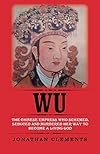
Much of what is recorded about Wu was either very praiseful, or hateful, and given that Wu lived over a thousand years ago, all these conflicting sources paint a confusing picture of this woman who was China's one and only female who ruled this patriarchal empire under her own power.
The author acknowledges the issue with these sources, and he discusses both favorable and unfavorable stories about her while he tries to find the truth in these varied records. So this biography may be more show more murky than books about more recent historical figures. Nonetheless, I learned a lot - not just about Wu, but the world and times she lived in.
Some of the anecdotes/stories were entertaining or depressing AF. In some, Wu sounds like a woman who was just trying to survive in a patriarchal world, others make her sound like a total bitch. I.e. her baby girl died and she exploited the situation - but did she kill the baby so she could exploit that, or was it just a tragic death that, once it happened, Wu decided to exploit it, since it'd already happened?
Overall, considering the time Wu lived in and why there are various records of her, I found this book to be an enjoyable read. It is also a relatively modest-sized read at just over 300 pages. Solid 4/5 stars. show less
The author acknowledges the issue with these sources, and he discusses both favorable and unfavorable stories about her while he tries to find the truth in these varied records. So this biography may be more show more murky than books about more recent historical figures. Nonetheless, I learned a lot - not just about Wu, but the world and times she lived in.
Some of the anecdotes/stories were entertaining or depressing AF. In some, Wu sounds like a woman who was just trying to survive in a patriarchal world, others make her sound like a total bitch. I.e. her baby girl died and she exploited the situation - but did she kill the baby so she could exploit that, or was it just a tragic death that, once it happened, Wu decided to exploit it, since it'd already happened?
Overall, considering the time Wu lived in and why there are various records of her, I found this book to be an enjoyable read. It is also a relatively modest-sized read at just over 300 pages. Solid 4/5 stars. show less
A Brief History of Japan: Samurai, Shogun and Zen: The Extraordinary Story of the Land of the Rising Sun by Jonathan Clements
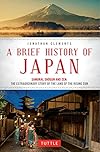
Six-word review: Japan sure has lots of history.
It seems to me that being Japanese must be complicated in a way that I can only dimly imagine.
Even though I never set out to study Japan, I find that my reading over the years has included a disproportionate number of Japan-related titles, from the novels of Haruki Murakami to Donald Richie's analyses of the films of Kurosawa, most of which I've seen; from Tanizaki's quiet meditation on shadows to a hefty tome on Japan's recovery from World War show more II; from Mr. Nakano's thrift shop to the imperial palace. I've given a thoughtful viewing to the films of Ozu and examined photos of samurai artifacts and traditional Japanese hairstyles. On a separate track, I've studied Zen Buddhism.
The more I read, the less I feel that I comprehend.
I thought that reading a broad-scoped history of Japan, packing fifteen or more centuries into a compact 300 pages, would give me a sense of context and place some events of lore and legend in relation to events of record. And perhaps it would have, if I had read it straight through and sustained the connections from one era to another. Unfortunately, this was the Kindle book I chose to read in waiting rooms and during down time on volunteer shifts, and so for me it was seven months from beginning to end.
I didn't manage to sustain much at all, apart from the experience of having it go on and on and on, which is pretty much what Japanese history has done. But I did gain a sense of vast complexity: of recorded deeds interwoven with myth, of tradition, of numerous strands of culture and ethnicity braided into one, of geographic smallness and military might, of privilege and poverty, humility and insuperable pride. Politics and poetry blend with cherished archetypes and deep symbolism; much is not as it seems. A reverence for delicate beauty abides with bloodthirsty ferocity. Zen and samurai, samurai and zen. I am only guessing. I know nothing.
Between the time before World War II and the emperor's surrender on August 15, 1945, the world changed.
If this book has not greatly enlarged my understanding, the book is not at fault. There is too much to know. I progress by mere inches. show less
It seems to me that being Japanese must be complicated in a way that I can only dimly imagine.
Even though I never set out to study Japan, I find that my reading over the years has included a disproportionate number of Japan-related titles, from the novels of Haruki Murakami to Donald Richie's analyses of the films of Kurosawa, most of which I've seen; from Tanizaki's quiet meditation on shadows to a hefty tome on Japan's recovery from World War show more II; from Mr. Nakano's thrift shop to the imperial palace. I've given a thoughtful viewing to the films of Ozu and examined photos of samurai artifacts and traditional Japanese hairstyles. On a separate track, I've studied Zen Buddhism.
The more I read, the less I feel that I comprehend.
I thought that reading a broad-scoped history of Japan, packing fifteen or more centuries into a compact 300 pages, would give me a sense of context and place some events of lore and legend in relation to events of record. And perhaps it would have, if I had read it straight through and sustained the connections from one era to another. Unfortunately, this was the Kindle book I chose to read in waiting rooms and during down time on volunteer shifts, and so for me it was seven months from beginning to end.
I didn't manage to sustain much at all, apart from the experience of having it go on and on and on, which is pretty much what Japanese history has done. But I did gain a sense of vast complexity: of recorded deeds interwoven with myth, of tradition, of numerous strands of culture and ethnicity braided into one, of geographic smallness and military might, of privilege and poverty, humility and insuperable pride. Politics and poetry blend with cherished archetypes and deep symbolism; much is not as it seems. A reverence for delicate beauty abides with bloodthirsty ferocity. Zen and samurai, samurai and zen. I am only guessing. I know nothing.
Between the time before World War II and the emperor's surrender on August 15, 1945, the world changed.
If this book has not greatly enlarged my understanding, the book is not at fault. There is too much to know. I progress by mere inches. show less
A Brief History of Japan: Samurai, Shogun and Zen: The Extraordinary Story of the Land of the Rising Sun by Jonathan Clements
22. A Brief History of Japan: Samurai, Shogun and Zen: The Extraordinary Story of the Land of the Rising Sun by Jonathan Clements
reader: Julian Elfer
OPD: 2017
format: 8:41 audible audiobook (304 pages in paperback)
acquired: audible loan listened: Apr 7-16
rating: 3½
genre/style: History theme: random audio
locations: Japan
about the author: A British author and scriptwriter, born in Leigh on Sea, Essex in 1971
Clements tells the reader up front that he really likes relaying quirky historical show more oddities, and the reader should take note. He's not an ideal fit for a brief history. Making history brief means making effective accurate clear summations of various things you want to cover. (This is actually very difficult.) The flip side is to remove the excess words, but still pile details on details in a compressed rapid form, uncooked, if you like. Clements trends a little too much to the latter form for my tastes, and it made listening challenging.
I really had trouble following the medieval and semi-feudal Japan because it's very complicated and I lost Clements's points in a confusion of names and factions and unfamiliar sounds. What I got was the power was always obscured, the Japanese emperor was traditionally a figurehead, often very young, and often the emperor would retire in an effort to establish real power, with mixed success. Shoguns were important, until they weren't. Samari had a long history of no practical military value because no one ever attacked Japan. It was largely unified enough and after the Mongol rulers of China failed in their rather poor marine invasion efforts, China never gave it another go. But I guess Japan was always ready.
I was entertained by getting a history of Edo/Tokyo, sushi, and kabuki theatre, and learning that the west and the US regret the constitutional disarming of Japan (although the constitution allows for finagling with "defense" forces). And I knew how fast Japan modernized, much faster than the other eastern countries (although China clearly tried). It took roughly 60 years from Japan's opening to its defeat of Russia. But I didn't realize how important the Korean War was to Japan's revitalization, funding the foundations of its post-war economic boom.
Anyway, while I hope there is a better brief history out there, I'm sure any readers will find something they like here.
2024
https://www.librarything.com/topic/358760#8515101 show less
reader: Julian Elfer
OPD: 2017
format: 8:41 audible audiobook (304 pages in paperback)
acquired: audible loan listened: Apr 7-16
rating: 3½
genre/style: History theme: random audio
locations: Japan
about the author: A British author and scriptwriter, born in Leigh on Sea, Essex in 1971
Clements tells the reader up front that he really likes relaying quirky historical show more oddities, and the reader should take note. He's not an ideal fit for a brief history. Making history brief means making effective accurate clear summations of various things you want to cover. (This is actually very difficult.) The flip side is to remove the excess words, but still pile details on details in a compressed rapid form, uncooked, if you like. Clements trends a little too much to the latter form for my tastes, and it made listening challenging.
I really had trouble following the medieval and semi-feudal Japan because it's very complicated and I lost Clements's points in a confusion of names and factions and unfamiliar sounds. What I got was the power was always obscured, the Japanese emperor was traditionally a figurehead, often very young, and often the emperor would retire in an effort to establish real power, with mixed success. Shoguns were important, until they weren't. Samari had a long history of no practical military value because no one ever attacked Japan. It was largely unified enough and after the Mongol rulers of China failed in their rather poor marine invasion efforts, China never gave it another go. But I guess Japan was always ready.
I was entertained by getting a history of Edo/Tokyo, sushi, and kabuki theatre, and learning that the west and the US regret the constitutional disarming of Japan (although the constitution allows for finagling with "defense" forces). And I knew how fast Japan modernized, much faster than the other eastern countries (although China clearly tried). It took roughly 60 years from Japan's opening to its defeat of Russia. But I didn't realize how important the Korean War was to Japan's revitalization, funding the foundations of its post-war economic boom.
Anyway, while I hope there is a better brief history out there, I'm sure any readers will find something they like here.
2024
https://www.librarything.com/topic/358760#8515101 show less
Lists
Awards

You May Also Like


Associated Authors
Statistics
- Works
- 65
- Also by
- 5
- Members
- 2,589
- Popularity
- #9,924
- Rating
- 3.6
- Reviews
- 44
- ISBNs
- 216
- Languages
- 14