
Natsuo Kirino
Author of Out
About the Author
Disambiguation Notice:
Natsuo Kirino is the pen-name of Mariko Hashioka. Kirino & Hashioka are surnames.
Image credit: Makoto Watanabe
Series
Works by Natsuo Kirino
OUT 2 copies
柔らかな頬 文庫版上下巻セット (文春文庫) 2 copies
残虐記 2 copies
柔らかな頬 2 copies
グロテスク 2 copies
顔に降りかかる雨 2 copies
ローズガーデン (講談社文庫) 1 copy
Real Word 1 copy
Næturvaktin 1 copy
Xấu 1 copy
Associated Works
Digital Geishas and Talking Frogs: The Best 21st Century Short Stories from Japan (2011) — Contributor — 21 copies
Kodansha's Fiction Sampler, Extraordinary Writers from Japan — Contributor — 1 copy
Tagged
Common Knowledge
- Canonical name
- Kirino, Natsuo
- Legal name
- Hashioka, Mariko
- Other names
- 桐野 夏生
Kirino Natsuo - Birthdate
- 1951-10-07
- Gender
- female
- Education
- Seikei University
- Occupations
- mystery writer
novelist - Awards and honors
- Edogawa Ranpo Award (Rain Falling on My Face, 1993)
Shibata Renzaburo Award (Zangyakuki, 2004)
Fujinkoron Literary Award (Tamamoe! 2005)
Naoki Prize (Soft Cheeks) - Agent
- Amanda Urban (ICM)
- Nationality
- Japan
- Birthplace
- Kanazawa, Ishikawa Prefecture, Japan
- Places of residence
- Kanazawa, Ishikawa Prefecture, Japan
Sendai, Japan
Sapporo, Japan
Tokyo, Japan - Map Location
- Japan
- Disambiguation notice
- Natsuo Kirino is the pen-name of Mariko Hashioka.
Kirino & Hashioka are surnames.
Members
Reviews
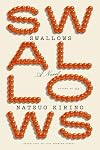
Riki was twenty-nine now. The upper limit for being an egg donor was thirty, so next year it would be "too late." It occurred to Riki that a woman lived her whole life with this feeling that she was always too late.
Riki is stuck in a cycle of working a succession of temporary jobs, none of which pay well, leaving her scrambling and exhausted from trying to get by. When a co-worker suggests that they donate their eggs, Riki is tempted. It's illegal in Japan, which means that the process would show more include a few weeks on vacation in another country. Eventually, Riki meets with the woman running the program, who convinces her that she could do much better as an egg donor and a surrogate, which would mean a significant amount of money and a year off, to have space to figure out what she wants to do with her life. She reluctantly agrees and meets the couple, Motoi, who was a successful professional ballet dancer and who wants to raise his own ballet prodigy, and his wife, Yuko, who was eager to get pregnant herself, but who grows increasingly ambivalent about doing the work of raising a child not connected to her. To round out this cast of characters, there's Ririko, Yuko's best friend, who is proudly asexual and makes her living painting erotic pictures. Ririko is against the surrogacy plan from the beginning, not because it is illegal, but because it seems inhumane to her to employ a woman solely for her reproductive organs.
Reading this novel felt like reading a book set in the 1980s, rather than just a few years ago, with rigid gender norms, marriage that serves to restrict the woman while leaving the man unencumbered, and with reproductive assistance mostly illegal. Then there's the astonishment that a person could simply not be interested in sex, and be an artist using erotic themes. Kirino is using her novel to look at the expectations levied on women in Japan, especially as it comes to reproduction and it's all fascinating stuff.
Kirino has written before about people living in precarious situations, and here she carefully notes what Riki can afford to eat, how her situation leaves her with no energy to plan for her future and how being a surrogate at first feels like a lifeline, and only later, when she has space to really, does she feel conflicted about her status. The married couple also feel the strain as their relationship splinters as Motoi becomes more controlling and Yuko worried that the marriage is dead, that she is expected to quit her job to raise his child and that they are taking advantage of a vulnerable person. The issues raised are complex and worth sorting through, even as other countries have much less restrictive policies. I will note that the ending was quite a shocker, leaving me eager for a sequel. show less
Riki is stuck in a cycle of working a succession of temporary jobs, none of which pay well, leaving her scrambling and exhausted from trying to get by. When a co-worker suggests that they donate their eggs, Riki is tempted. It's illegal in Japan, which means that the process would show more include a few weeks on vacation in another country. Eventually, Riki meets with the woman running the program, who convinces her that she could do much better as an egg donor and a surrogate, which would mean a significant amount of money and a year off, to have space to figure out what she wants to do with her life. She reluctantly agrees and meets the couple, Motoi, who was a successful professional ballet dancer and who wants to raise his own ballet prodigy, and his wife, Yuko, who was eager to get pregnant herself, but who grows increasingly ambivalent about doing the work of raising a child not connected to her. To round out this cast of characters, there's Ririko, Yuko's best friend, who is proudly asexual and makes her living painting erotic pictures. Ririko is against the surrogacy plan from the beginning, not because it is illegal, but because it seems inhumane to her to employ a woman solely for her reproductive organs.
Reading this novel felt like reading a book set in the 1980s, rather than just a few years ago, with rigid gender norms, marriage that serves to restrict the woman while leaving the man unencumbered, and with reproductive assistance mostly illegal. Then there's the astonishment that a person could simply not be interested in sex, and be an artist using erotic themes. Kirino is using her novel to look at the expectations levied on women in Japan, especially as it comes to reproduction and it's all fascinating stuff.
Kirino has written before about people living in precarious situations, and here she carefully notes what Riki can afford to eat, how her situation leaves her with no energy to plan for her future and how being a surrogate at first feels like a lifeline, and only later, when she has space to really, does she feel conflicted about her status. The married couple also feel the strain as their relationship splinters as Motoi becomes more controlling and Yuko worried that the marriage is dead, that she is expected to quit her job to raise his child and that they are taking advantage of a vulnerable person. The issues raised are complex and worth sorting through, even as other countries have much less restrictive policies. I will note that the ending was quite a shocker, leaving me eager for a sequel. show less
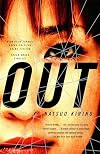
The first book by Natsuo Kirino was Grotesque, and that sentence can be read correctly with more than one meaning. However, I was sufficiently impressed by Kirino's writing that I wanted to try her more renowned book, Out. I'm glad I did.
It is clear that Kirino finds a lot to dislike about Japanese society - ubiquitous sexism, politeness-to-a-fault disingenuousness, frequently blatant hypocrisy, racism, and a pervasive drive to succeed. In Grotesque her observations are turned inwards, show more becoming unrelenting self-loathing. In Out they are manifested explicitly as a desire to destroy connections with the society.
The story involves four women who work part time night shift in a lunch-packing company. The story centers on Masako, a strong-willed, intelligent woman; her friends are Yoshie - a capable widow who cares for her daughter and mother-in-law - Kuniko - a young woman whose profligate spending has left her mired in unending debt - and Yayoi - a wife and mother whose husband is becoming abusive towards her.
Yayoi kills her husband one night and seeks help from Masako, and therein begins a sequence of events that drags the four women willingly towards disaster.
A writer with lesser skill would have taken on the sexist, racist, classist, elitist attitudes that seem to define Japanese society more directly - and to be sure, they are criticized by Kirino in direct passages; however, the perfection of her novel is that those aspects of Japanese society are integrated almost uncritically into the fabric of the story, becoming part of the background that drives the characters inexorably - and almost willfully - to their destruction.
The book is not as relentlessly depressing as Grotesque is, and is actually an excellent suspense story. Out works marvelously at several levels, the characters are fully developed, the narrative is clear, and the plot unfolds as it should - gradually, enticing the reader on. show less
It is clear that Kirino finds a lot to dislike about Japanese society - ubiquitous sexism, politeness-to-a-fault disingenuousness, frequently blatant hypocrisy, racism, and a pervasive drive to succeed. In Grotesque her observations are turned inwards, show more becoming unrelenting self-loathing. In Out they are manifested explicitly as a desire to destroy connections with the society.
The story involves four women who work part time night shift in a lunch-packing company. The story centers on Masako, a strong-willed, intelligent woman; her friends are Yoshie - a capable widow who cares for her daughter and mother-in-law - Kuniko - a young woman whose profligate spending has left her mired in unending debt - and Yayoi - a wife and mother whose husband is becoming abusive towards her.
Yayoi kills her husband one night and seeks help from Masako, and therein begins a sequence of events that drags the four women willingly towards disaster.
A writer with lesser skill would have taken on the sexist, racist, classist, elitist attitudes that seem to define Japanese society more directly - and to be sure, they are criticized by Kirino in direct passages; however, the perfection of her novel is that those aspects of Japanese society are integrated almost uncritically into the fabric of the story, becoming part of the background that drives the characters inexorably - and almost willfully - to their destruction.
The book is not as relentlessly depressing as Grotesque is, and is actually an excellent suspense story. Out works marvelously at several levels, the characters are fully developed, the narrative is clear, and the plot unfolds as it should - gradually, enticing the reader on. show less
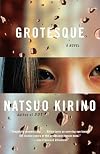
Grotesque is less a crime novel than an autopsy of hierarchy.
Like Out and Real World, Natsuo Kirino examines women navigating systems that were never designed for them. But here, the structure is colder, more fragmented, and more psychologically confrontational. Truth is unstable. Every narrator edits. Every account contradicts. By the end, justice feels irrelevant. What matters is who controls the story.
The novel begins with the murder of Yuriko, a woman whose extraordinary beauty defined show more her life from birth. Her sister—the unnamed narrator—assembles testimony, journals, and statements, supposedly to clarify what happened. Yet as the narrative unfolds, it becomes clear that clarification is not the goal. Control is.
Yuriko understands beauty as currency. She never romanticizes it; she trades on it. Kazue believes effort will overcome structural barriers, until she slowly begins to question that belief. Zhang reinvents himself through narrative inflation. The narrator, meanwhile, constructs superiority as insulation. Each character responds differently to the same male-defined hierarchy, but none escape it.
What makes Grotesque so unsettling is that awareness changes nothing. Yuriko knows her capital has a half-life. Kazue begins to suspect that hard work will not deliver dignity. The narrator recognizes systemic bias. Yet insight does not produce liberation. It produces bitterness, calculation, or resignation.
The ending is a deliberate shock. The narrator—who spent the entire novel dissecting and condemning the lives of her sister and Kazue—steps into the same world she judged. Her decision to become a sex worker does not read as empowerment or redemption. It reads as obsession completing its arc. The final question—whether her client might be Zhang—collapses the narrative into recursion. The system is not dismantled; it is reenacted.
Kirino refuses catharsis. There is no moral clarity, no triumphant exposure of truth. Instead, Grotesque suggests that hierarchy operates like weather: some people have insulation, some do not, and knowing the rules does not grant the power to change them.
Its ambition is immense, its structure intellectually rigorous, and its thematic coherence remarkable. The slight emotional distance is intentional—it mirrors the narrator’s coldness—but it prevents the novel from landing with the same visceral impact as Out.
Still, it is a mind-bending, deeply uncomfortable work. Not a story about solving a murder, but about how women are valued, ranked, and remembered—and what happens when those rankings are internalized so completely that even rebellion becomes repetition. show less
Like Out and Real World, Natsuo Kirino examines women navigating systems that were never designed for them. But here, the structure is colder, more fragmented, and more psychologically confrontational. Truth is unstable. Every narrator edits. Every account contradicts. By the end, justice feels irrelevant. What matters is who controls the story.
The novel begins with the murder of Yuriko, a woman whose extraordinary beauty defined show more her life from birth. Her sister—the unnamed narrator—assembles testimony, journals, and statements, supposedly to clarify what happened. Yet as the narrative unfolds, it becomes clear that clarification is not the goal. Control is.
Yuriko understands beauty as currency. She never romanticizes it; she trades on it. Kazue believes effort will overcome structural barriers, until she slowly begins to question that belief. Zhang reinvents himself through narrative inflation. The narrator, meanwhile, constructs superiority as insulation. Each character responds differently to the same male-defined hierarchy, but none escape it.
What makes Grotesque so unsettling is that awareness changes nothing. Yuriko knows her capital has a half-life. Kazue begins to suspect that hard work will not deliver dignity. The narrator recognizes systemic bias. Yet insight does not produce liberation. It produces bitterness, calculation, or resignation.
The ending is a deliberate shock. The narrator—who spent the entire novel dissecting and condemning the lives of her sister and Kazue—steps into the same world she judged. Her decision to become a sex worker does not read as empowerment or redemption. It reads as obsession completing its arc. The final question—whether her client might be Zhang—collapses the narrative into recursion. The system is not dismantled; it is reenacted.
Kirino refuses catharsis. There is no moral clarity, no triumphant exposure of truth. Instead, Grotesque suggests that hierarchy operates like weather: some people have insulation, some do not, and knowing the rules does not grant the power to change them.
Its ambition is immense, its structure intellectually rigorous, and its thematic coherence remarkable. The slight emotional distance is intentional—it mirrors the narrator’s coldness—but it prevents the novel from landing with the same visceral impact as Out.
Still, it is a mind-bending, deeply uncomfortable work. Not a story about solving a murder, but about how women are valued, ranked, and remembered—and what happens when those rankings are internalized so completely that even rebellion becomes repetition. show less
⭐️⭐️⭐️⭐️¼ (4.25)
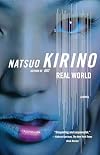
Real World is a trip. It looks like a crime novel, but it isn’t interested in police, justice, or tidy answers. Instead, Kirino hands the narration over to four teenage girls in suburban Tokyo and to Worm, the boy who has just murdered his mother.
What’s unsettling is not the murder itself but the reaction around it. No one seems shocked that Worm killed his mother. The horror lies in the indifference—the way family, friends, and neighbors treat it as if show more he had wrecked a car instead of taken a life. Violence is absorbed into social ritual, smoothed over with gift boxes and casual remarks.
Worm’s voice is the most accessible, which is disturbing in itself. He feels like a real teenager—blunt, impulsive, erratic, living half in fantasy. That makes him dangerous not because he’s in control, but because he isn’t. He’s volatile, unpredictable, and oddly familiar. The girls, by contrast, are stylized, often distant, almost like masks. We’re kept outside of them, just as they are half-removed from one another.
Each character’s “real world” is different:
Kirarin explodes into chaos
Worm survives in his fantasy bubble, almost tame compared to the girls.
Terauchi faces unbearable reality
Yuzan struggles with her sexuality but remains uninvolved
Toshiko, strangest of all, simply continues—sad, lonely, but already thinking of schools and exams.
The ending is devastating because it denies catharsis. There is no justice, no resolution, no clear moral line. Instead, the novel leaves fragments—each character carrying (or discarding) their version of reality.
Kirino flips expectations: the killer is the one we understand most; society is what feels alien. The effect is disturbing, distancing, unforgettable. show less
Real World is a trip. It looks like a crime novel, but it isn’t interested in police, justice, or tidy answers. Instead, Kirino hands the narration over to four teenage girls in suburban Tokyo and to Worm, the boy who has just murdered his mother.
What’s unsettling is not the murder itself but the reaction around it. No one seems shocked that Worm killed his mother. The horror lies in the indifference—the way family, friends, and neighbors treat it as if show more he had wrecked a car instead of taken a life. Violence is absorbed into social ritual, smoothed over with gift boxes and casual remarks.
Worm’s voice is the most accessible, which is disturbing in itself. He feels like a real teenager—blunt, impulsive, erratic, living half in fantasy. That makes him dangerous not because he’s in control, but because he isn’t. He’s volatile, unpredictable, and oddly familiar. The girls, by contrast, are stylized, often distant, almost like masks. We’re kept outside of them, just as they are half-removed from one another.
Each character’s “real world” is different:
Kirarin explodes into chaos
Worm survives in his fantasy bubble, almost tame compared to the girls.
Terauchi faces unbearable reality
Yuzan struggles with her sexuality but remains uninvolved
Toshiko, strangest of all, simply continues—sad, lonely, but already thinking of schools and exams.
The ending is devastating because it denies catharsis. There is no justice, no resolution, no clear moral line. Instead, the novel leaves fragments—each character carrying (or discarding) their version of reality.
Kirino flips expectations: the killer is the one we understand most; society is what feels alien. The effect is disturbing, distancing, unforgettable. show less
Lists
Asia (1)
Diverse Horror (1)
Awards


You May Also Like


Associated Authors
Statistics
- Works
- 49
- Also by
- 4
- Members
- 6,865
- Popularity
- #3,563
- Rating
- 3.7
- Reviews
- 250
- ISBNs
- 196
- Languages
- 22
- Favorited
- 40
