
Fuminori Nakamura
Author of The Thief
About the Author
Fuminori Nakamura was born in 1977 and graduated from Fukushima University in 2000. His first novel, A Gun, won the 2002 Shinch? Literary Prize for New Writers. His other books include Shade, which won the Noma Literary Prize in 2004, The Boy in the Earth, which won the 2005 Akutagawa Prize, The show more Thief, which won the 2010 Oe Prize, and Last Winter We Parted. (Bowker Author Biography) show less
Image credit: Author Fuminori Nakamura
Works by Fuminori Nakamura
去年の冬、きみと別れ 2 copies
遮光 (新潮文庫) 1 copy
Associated Works
スピン 第3号 — Contributor — 1 copy
Tagged
Common Knowledge
- Birthdate
- 1977
- Gender
- male
- Education
- Fukushima University (2000)
- Nationality
- Japan
- Associated Place (for map)
- Japan
Members
Reviews
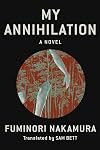
I read Nakamura's The Gun last year. In that novel, the premise was whether or not an object can somehow push a person into fulfilling the object's purpose. Obsession & a very distanced air were also omnipresent.
Similarly, My Annihilation also has a very clinical tone. Detached. This time, Nakamura is delving into what the "self" really is & how far the brain can be manipulated (hypnosis, brainwashing, electroshock, etc.) to change that. As you enter this dark (very dark) story, you are show more quickly upended, not even sure who is narrating. Nakamura continues to manipulate you, the reader, about what's really happening throughout, employing a nested story construction, an unreliable narrator, & horrifying events. I've seen mentions of the movie Memento in relation to this book & I think that's a fair comparison (even though I never figured out what the heck was going on in that movie back when it first ran).
The very bleak & upsetting events, the misogyny, & the violence will not appeal to some. Trigger warnings abound. But, if you can stomach it, it's a coolly-constructed novel with multiple, usually clever, unforeseen jolts & turns. I found it quite intriguing in spite of the horrors within. You will end with questioning everything you just read. My annihilation indeed. show less
Similarly, My Annihilation also has a very clinical tone. Detached. This time, Nakamura is delving into what the "self" really is & how far the brain can be manipulated (hypnosis, brainwashing, electroshock, etc.) to change that. As you enter this dark (very dark) story, you are show more quickly upended, not even sure who is narrating. Nakamura continues to manipulate you, the reader, about what's really happening throughout, employing a nested story construction, an unreliable narrator, & horrifying events. I've seen mentions of the movie Memento in relation to this book & I think that's a fair comparison (even though I never figured out what the heck was going on in that movie back when it first ran).
The very bleak & upsetting events, the misogyny, & the violence will not appeal to some. Trigger warnings abound. But, if you can stomach it, it's a coolly-constructed novel with multiple, usually clever, unforeseen jolts & turns. I found it quite intriguing in spite of the horrors within. You will end with questioning everything you just read. My annihilation indeed. show less
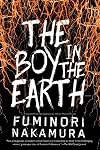
First posted at https://reallifereading.com/2017/05/29/asianlitbingo-the-boy-in-the-earth/
“All the books I have are depressing.”
“So why do you read them?”
“I don’t really know,” I said, laughing softly. “I feel like they save me. They get me thinking about things, even if it’s just that I’m not the only person who thinks it’s hard to get around in this world.”
A young man who works as a taxi driver keeps putting himself in danger.
Like throwing a cigarette butt at some show more drunk bikers.
“I did what I did on purpose – with clear intention. It was not unconscious, nor was it for no reason at all – I was completely cognizant and aware of my actions.”
Of course he gets badly beaten up – unconscious but he manages to wake and return home.
What is up with this guy? A guy who purposely stops his car in the middle of a crosswalk instead of avoiding another car trying to make a right turn against the light.
He lives with Sayuko. They used to work together, and now sleep together, and she’s pretty much the only person he talks to. She stays with him as she has no money and no place to live and it’s “as if she had resigned herself to sleeping with a guy if she were going to live with him”. She hates sex but does it anyway, and drinks a lot. Not the most ideal of people for him to live with but perhaps their bleak view of the world draws them together.
The taxi driver, who remains unnamed, recently got some news about his parents who had abandoned him some 20 years ago – that his mother died, but his father is still alive. And he cannot help but wonder what his life would have been like if his parents hadn’t abandoned him. Flashbacks to his sad abused childhood intersperse his everyday life.
A melancholic and violent tale about a very damaged man. It’s the kind of book that makes on shudder at the icy way this writer handles his characters. It’s a short read with rather sparse prose but Nakamura packs so much darkness into these 147 pages, I cannot help but marvel at his brilliance. show less
“All the books I have are depressing.”
“So why do you read them?”
“I don’t really know,” I said, laughing softly. “I feel like they save me. They get me thinking about things, even if it’s just that I’m not the only person who thinks it’s hard to get around in this world.”
A young man who works as a taxi driver keeps putting himself in danger.
Like throwing a cigarette butt at some show more drunk bikers.
“I did what I did on purpose – with clear intention. It was not unconscious, nor was it for no reason at all – I was completely cognizant and aware of my actions.”
Of course he gets badly beaten up – unconscious but he manages to wake and return home.
What is up with this guy? A guy who purposely stops his car in the middle of a crosswalk instead of avoiding another car trying to make a right turn against the light.
He lives with Sayuko. They used to work together, and now sleep together, and she’s pretty much the only person he talks to. She stays with him as she has no money and no place to live and it’s “as if she had resigned herself to sleeping with a guy if she were going to live with him”. She hates sex but does it anyway, and drinks a lot. Not the most ideal of people for him to live with but perhaps their bleak view of the world draws them together.
The taxi driver, who remains unnamed, recently got some news about his parents who had abandoned him some 20 years ago – that his mother died, but his father is still alive. And he cannot help but wonder what his life would have been like if his parents hadn’t abandoned him. Flashbacks to his sad abused childhood intersperse his everyday life.
A melancholic and violent tale about a very damaged man. It’s the kind of book that makes on shudder at the icy way this writer handles his characters. It’s a short read with rather sparse prose but Nakamura packs so much darkness into these 147 pages, I cannot help but marvel at his brilliance. show less
Creepy good
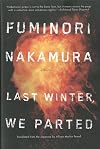
Last Winter We Parted by Fuminori Nakamura, translated by Allison Markin Powell (Soho, $25).
Fuminori Nakamura, the pseudonym used by a not-yet-40-year-old Japanese author, writes literary mystery-thrillers. His latest, Last Winter We Parted, is a not-so-guilty pleasure, carrying both the heft of good literary fiction and the page-riffling breathlessness of a dark crime thriller.
The narrator, a journalist, remains nameless (which seems to be well on its way to becoming a show more contemporary literary hallmark). He’s assigned to write an article about a Tokyo photographer on death row for the murders of two young models.
Much like the relationship between Hannibal Lector and Clarice Starling, the imprisoned killer demands personal revelations from the writer in order to give up his own secrets. But our narrator slips deeper into the story, tracking down others related to the killer, surrendering to suspicions about the existence of yet another journalist working on a story about the case, and generally losing trust in himself.
A fascinating and rich psychological novel, Last Winter We Parted also hits the mark as literature.
Reviewed on Lit/Rant: www.litrant.tumblr.com show less
Last Winter We Parted by Fuminori Nakamura, translated by Allison Markin Powell (Soho, $25).
Fuminori Nakamura, the pseudonym used by a not-yet-40-year-old Japanese author, writes literary mystery-thrillers. His latest, Last Winter We Parted, is a not-so-guilty pleasure, carrying both the heft of good literary fiction and the page-riffling breathlessness of a dark crime thriller.
The narrator, a journalist, remains nameless (which seems to be well on its way to becoming a show more contemporary literary hallmark). He’s assigned to write an article about a Tokyo photographer on death row for the murders of two young models.
Much like the relationship between Hannibal Lector and Clarice Starling, the imprisoned killer demands personal revelations from the writer in order to give up his own secrets. But our narrator slips deeper into the story, tracking down others related to the killer, surrendering to suspicions about the existence of yet another journalist working on a story about the case, and generally losing trust in himself.
A fascinating and rich psychological novel, Last Winter We Parted also hits the mark as literature.
Reviewed on Lit/Rant: www.litrant.tumblr.com show less
A dark and deeply disturbing novel, yet also strangely brilliant. Nakamura explores parts of the human condition that are often uncomfortable, yet here he does so with such style and precision that one cannot help but be drawn into the story.
Ah yes, the story. I'm still not 100% sure I know what the hell happened. It's that kind of book. Don't go for this if you want neat resolutions and a cozy mystery! This one will reward and challenge you, but if ever a book sets out it's own stall from show more the beginning then this is the one: 'Turn this page, and you may forfeit your entire life.'
A dark masterpiece. 5 stars. show less
Ah yes, the story. I'm still not 100% sure I know what the hell happened. It's that kind of book. Don't go for this if you want neat resolutions and a cozy mystery! This one will reward and challenge you, but if ever a book sets out it's own stall from show more the beginning then this is the one: 'Turn this page, and you may forfeit your entire life.'
A dark masterpiece. 5 stars. show less
Lists
Awards


You May Also Like


Associated Authors
Statistics
- Works
- 19
- Also by
- 1
- Members
- 1,683
- Popularity
- #15,271
- Rating
- 3.4
- Reviews
- 80
- ISBNs
- 114
- Languages
- 7
- Favorited
- 3
