
Shūichi Yoshida
Author of Villain
About the Author
Works by Shūichi Yoshida
Appartamento 401 2 copies
怒り(上) (中公文庫) 2 copies
国宝 (下) 花道篇 (朝日文庫) 1 copy
Associated Works
Tagged
Common Knowledge
- Canonical name
- Yoshida, Shūichi
- Legal name
- YOSHIDA, Shuichi
吉田 修一 - Birthdate
- 1968-09-14
- Gender
- male
- Education
- Hosei University
- Nationality
- Japan
- Places of residence
- Nagasaki, Japan
- Associated Place (for map)
- Nagasaki, Japan
Members
Reviews
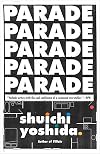
Parade is a seamy novel by a Japanese novelist. It does not fit nicely into the "crime novel" formula. Its characters do not care if you are staring at them in horror and fascination. Its plot is not concerned with your level of patience. Though it has a similar texture to Natsuo Kirino's gritty murder books, it is quieter, and couldn't have made less noise as it slid into English translation. Where are all the other translations of Yoshida? There is also a book called Villain. But Parade show more was my introduction to his work. Villain was a nice after dinner snack. It was damn good, but it did not keep me thinking about it for days afterward, as did this little gem.
I do not feel the need to analyze the character motivations, the atmosphere, the literary style or the intense disturbing quality of this book. (I do feel the need to reread it.) I would rather encourage you to discover it yourself. It is one of my favorite novels from Japan - and I've read a fair amount of them. But picking it apart would ruin the point. I didn't feel like examining Ryu Murakami's literary intentions when I read In the Miso Soup. I just wanted to witness a breathtaking cinematic gore-infused nightmare. This one beats Kirino hands down. It throws down the gauntlet when set beside bad-boy Ryu. But who ever talks about Shuichi Yoshida? The writing is not as polished as Ryu Murakami's but the atmospheric conditions of the novel are comparable. Yoshida has the casual, almost careless style of a crime writer, but somehow manages to wipe the floor with Seichō Matsumoto. If you liked Matsumoto's A Quiet Place, this will also tickle your fancy, but it'll be more of a deep-tissue massage, maybe blunt force trauma. Expect the unexpected in the third act. Try to be bored; I dare you. This is another Japanese writer writing whatever the hell he wants, and my eyes are begging for more.
The only other things of his in English I've found is obviously Villain and a beautiful short story in [b:The Book of Tokyo: A City in Short Fiction|18330268|The Book of Tokyo A City in Short Fiction|Michael Emmerich|https://i.gr-assets.com/images/S/compressed.photo.goodreads.com/books/1518858392l/18330268._SY75_.jpg|25874943] If you know of any other English stories in existence please let me know. I can tell Yoshida has what it takes to give Murakami a run for his money as my favorite novel-producing machine currently in Japan. I'm sorry, Keigo Higashino, but I'm just not that into you. Can we get some translations over here?
I admire when a writer deviates boldly. Subversion. Scare tactics. All the required ingredients of escapism are present here. Like Murakami's work, it is super easy to relate to these characters. They are young, of course, bored, dissatisfied, opinionated, ever so slightly witty, libidinous, angst-ridden - apply whatever adjective you will. In the end, there is plot, there is character development, but the intricacies congeal into an amorphous whole. I could live in this novel for a while. And I know I will revisit it. Slip into the shady, retro, bleak and quirky Tokyo Yoshida provides. Dark secrets abound in this singular work of subtle and not-so subtle inter-character relations. See if it haunts you like it does me. show less
I do not feel the need to analyze the character motivations, the atmosphere, the literary style or the intense disturbing quality of this book. (I do feel the need to reread it.) I would rather encourage you to discover it yourself. It is one of my favorite novels from Japan - and I've read a fair amount of them. But picking it apart would ruin the point. I didn't feel like examining Ryu Murakami's literary intentions when I read In the Miso Soup. I just wanted to witness a breathtaking cinematic gore-infused nightmare. This one beats Kirino hands down. It throws down the gauntlet when set beside bad-boy Ryu. But who ever talks about Shuichi Yoshida? The writing is not as polished as Ryu Murakami's but the atmospheric conditions of the novel are comparable. Yoshida has the casual, almost careless style of a crime writer, but somehow manages to wipe the floor with Seichō Matsumoto. If you liked Matsumoto's A Quiet Place, this will also tickle your fancy, but it'll be more of a deep-tissue massage, maybe blunt force trauma. Expect the unexpected in the third act. Try to be bored; I dare you. This is another Japanese writer writing whatever the hell he wants, and my eyes are begging for more.
The only other things of his in English I've found is obviously Villain and a beautiful short story in [b:The Book of Tokyo: A City in Short Fiction|18330268|The Book of Tokyo A City in Short Fiction|Michael Emmerich|https://i.gr-assets.com/images/S/compressed.photo.goodreads.com/books/1518858392l/18330268._SY75_.jpg|25874943] If you know of any other English stories in existence please let me know. I can tell Yoshida has what it takes to give Murakami a run for his money as my favorite novel-producing machine currently in Japan. I'm sorry, Keigo Higashino, but I'm just not that into you. Can we get some translations over here?
I admire when a writer deviates boldly. Subversion. Scare tactics. All the required ingredients of escapism are present here. Like Murakami's work, it is super easy to relate to these characters. They are young, of course, bored, dissatisfied, opinionated, ever so slightly witty, libidinous, angst-ridden - apply whatever adjective you will. In the end, there is plot, there is character development, but the intricacies congeal into an amorphous whole. I could live in this novel for a while. And I know I will revisit it. Slip into the shady, retro, bleak and quirky Tokyo Yoshida provides. Dark secrets abound in this singular work of subtle and not-so subtle inter-character relations. See if it haunts you like it does me. show less

This was a little depressing, but only because it was so well written. I felt a certain empathy for the central character and felt that Shūichi Yoshida made him a believable person. The book was an interesting exploration of alienation and the need to feel loved by someone, to feel that you belong. It wasn't just a clichéd tale of an introverted loner turning out to be a serial killer. It was more an exploration of how life events mould us and can take us to extremes. It did leave me show more feeling a little bummed out, though! show less
Shuichi Yoshida specialises in tales of isolation and lonliness, and Villain is another excellent piece of work, although not as complete in my view as Parade, his other work that has been translated into English.
Yoshino, an insurance saleswoman, has a late night date with the handsome college student Keigo; in the morning her body is found on the Mitsui Pass, an eerie place best avoided. And Keigo has disappeared
We soon learn that there were many sides to Yoshino; whilst her friends show more believe her to be dating Keigo, she was in fact having a range of assignations with men she met online. And some of them she had started asking for money.
One of these dates/ customers is Yuichi. A non communicative loner, obsessed with his car, Yuichi has had an unfortunate upbringing. Abandoned by his mother at an early age, he has been brought up by his grandparents in a small fishing village. He is emotionally stunted, desperate for love but with no sense of how to begin a relationship. He has previously been obsessed with the sex worker Miho, visiting her massage parlour everyday and cooking her lunch, before his intensity scared her off.
But then Yuichi encounters Mitsuyo online, another lonely young woman, with a boring job selling mens clothes. They agree to meet, and somewhat to Mitsuyo's surprise, rather than the drive to a romantic lighthouse that she was expecting, she finds herself in a love hotel with Yuichi within an hour of their first meeting. She finds herself responding to his emotional neediness and becoming obsessed with him in turn
As Keigo reappears on the scene and appears not to be the guilty party, police suspicion turns to Yuichi and he and Mitsuyo go on the run, firstly living in love hotels and then, as money gets tight and the net closes in, abandoning his car and huddling together in the abandoned lighthouse, happy, after a fashion. But it can't last and in a scene of remarkable intensity, Mitsuyo and Yuichi's relationship comes to a head as the police close in
During the course of the book we learn why Yoshino was at the Mitsue Pass, and who killed her, but not really why . In one of Shuichi's trademark morally ambiguous endings, a number of possibilities remain. But in many ways, the reason doesn't matter. What Shuichi succeeds brilliantly in doing is opening up a world of lonliness, quiet despair, inability to communicate and emotional immaturity. He seems to have a poor opinion of Japanese youth; none of his young characters, from the cruel, feckless Keigo to the naive Mitsuyo come out of this well compared to the older characters, such as Yoshino's grieving parents and Yuichi's brave, stoic grandparents. He seems to see a bleak future for these cold numb youth
An excellent book, but I as mentioned above, I do think Parade is better show less
Yoshino, an insurance saleswoman, has a late night date with the handsome college student Keigo; in the morning her body is found on the Mitsui Pass, an eerie place best avoided. And Keigo has disappeared
We soon learn that there were many sides to Yoshino; whilst her friends show more believe her to be dating Keigo, she was in fact having a range of assignations with men she met online. And some of them she had started asking for money.
One of these dates/ customers is Yuichi. A non communicative loner, obsessed with his car, Yuichi has had an unfortunate upbringing. Abandoned by his mother at an early age, he has been brought up by his grandparents in a small fishing village. He is emotionally stunted, desperate for love but with no sense of how to begin a relationship. He has previously been obsessed with the sex worker Miho, visiting her massage parlour everyday and cooking her lunch, before his intensity scared her off.
But then Yuichi encounters Mitsuyo online, another lonely young woman, with a boring job selling mens clothes. They agree to meet, and somewhat to Mitsuyo's surprise, rather than the drive to a romantic lighthouse that she was expecting, she finds herself in a love hotel with Yuichi within an hour of their first meeting. She finds herself responding to his emotional neediness and becoming obsessed with him in turn
As Keigo reappears on the scene and appears not to be the guilty party, police suspicion turns to Yuichi and he and Mitsuyo go on the run, firstly living in love hotels and then, as money gets tight and the net closes in, abandoning his car and huddling together in the abandoned lighthouse, happy, after a fashion. But it can't last and in a scene of remarkable intensity, Mitsuyo and Yuichi's relationship comes to a head as the police close in
During the course of the book we learn why Yoshino was at the Mitsue Pass, and who killed her, but not really why . In one of Shuichi's trademark morally ambiguous endings, a number of possibilities remain. But in many ways, the reason doesn't matter. What Shuichi succeeds brilliantly in doing is opening up a world of lonliness, quiet despair, inability to communicate and emotional immaturity. He seems to have a poor opinion of Japanese youth; none of his young characters, from the cruel, feckless Keigo to the naive Mitsuyo come out of this well compared to the older characters, such as Yoshino's grieving parents and Yuichi's brave, stoic grandparents. He seems to see a bleak future for these cold numb youth
An excellent book, but I as mentioned above, I do think Parade is better show less
Well this is quite excellent. Published in 2002 but only translated into English now, it is the most realistic depiction of twenty somethings and Japanese culture I have read for some time. Bored and listless, our protagonists don't rebel, don't attempt to "find themselves", don't attempt to take control of their lives. They simply passively exist and have no ambition or enthusiasms
2 Boys and 2 Girls share a flat. Disconnected from their families, and seemingly having few real friends they show more increasingly depend on each other without delving below the surface or forming real friendship bonds. As one says, "its like living in an Internet chat room".
Ryosuke, a shy college student spends his Sundays staring at the traffic below wondering why cars don't crash at the traffic lights. He somehow manages to start an affair with Kawako, the girlfriend of his college mentor, and pursues it listlessly whilst taking a part time job cooking in a Mexican restaurant. Koto, sits and waits for her actor boyfriend to call, which he occasionally does. She cleans the apartment and watches TV. Mirai parties constantly but joylessly, battles constant hangovers and watches rape scenes from films to calm herself. Naoki has the best job, with a film distributer, and is seemingly the most well adjusted even if constantly bugged by his ex girlfriend who feels more at home with him than her new, respectable, boyfriend. And in his own way, he does take action to break the listlessness
Suddenly Satoru arrives, younger than the rest, seemingly homeless and with a mysterious night job, he is either dragged home drunkenly by Mirai, or breaks in and makes himself at home. Either is possible - as Satoru admits, everything he says is made up. He despises his new flatmates, and sees through the fronts each put up but then finds himself irresistibly pulled to their artificial community, and
it is Satoru who is on hand to pull the household together and restore "normality" when a final crisis happens.
The ending is somewhat inevitable given the way the book is structured, but is no less surprising and morally ambiguous for that. I left the book wanting more and wondering how the last decade has treated the flatmates. I somehow feel Koto is still there, watching TV, waiting for the phone to ring show less
2 Boys and 2 Girls share a flat. Disconnected from their families, and seemingly having few real friends they show more increasingly depend on each other without delving below the surface or forming real friendship bonds. As one says, "its like living in an Internet chat room".
Ryosuke, a shy college student spends his Sundays staring at the traffic below wondering why cars don't crash at the traffic lights. He somehow manages to start an affair with Kawako, the girlfriend of his college mentor, and pursues it listlessly whilst taking a part time job cooking in a Mexican restaurant. Koto, sits and waits for her actor boyfriend to call, which he occasionally does. She cleans the apartment and watches TV. Mirai parties constantly but joylessly, battles constant hangovers and watches rape scenes from films to calm herself. Naoki has the best job, with a film distributer, and is seemingly the most well adjusted even if constantly bugged by his ex girlfriend who feels more at home with him than her new, respectable, boyfriend. And in his own way, he does take action to break the listlessness
Suddenly Satoru arrives, younger than the rest, seemingly homeless and with a mysterious night job, he is either dragged home drunkenly by Mirai, or breaks in and makes himself at home. Either is possible - as Satoru admits, everything he says is made up. He despises his new flatmates, and sees through the fronts each put up but then finds himself irresistibly pulled to their artificial community, and
it is Satoru who is on hand to pull the household together and restore "normality" when a final crisis happens.
The ending is somewhat inevitable given the way the book is structured, but is no less surprising and morally ambiguous for that. I left the book wanting more and wondering how the last decade has treated the flatmates. I somehow feel Koto is still there, watching TV, waiting for the phone to ring show less
Lists
Awards


You May Also Like


Associated Authors
Statistics
- Works
- 26
- Also by
- 1
- Members
- 587
- Popularity
- #42,722
- Rating
- 3.6
- Reviews
- 26
- ISBNs
- 47
- Languages
- 5