
Matsumoto Seichō (1909–1992)
Author of Tokyo Express
About the Author
The creator of the social detective story, Seicho is credited with reviving the mystery genre after World War II. He began writing in his middle age and has produced over 450 fiction and nonfiction works. (Bowker Author Biography)
Works by Matsumoto Seichō
水の炎 : 長編小説 3 copies
夜光の階段 3 copies
砂の器. 上巻 3 copies
危険な斜面 3 copies
聞かなかった場所 3 copies
砂の器. 下巻 3 copies
傑作短編集. 第5 (張込み) 3 copies
ベイルート情報 3 copies
西海道談綺〈3〉 (文春文庫) 3 copies
証明 2 copies
彩霧 2 copies
死の発送 2 copies
Nihon No Kuroi Kiri 2 copies
Kagerō Ezu 2 copies
時間の習俗 : 長編推理小説 2 copies
喪失の儀礼 2 copies
黒い画集 : 推理小説 2 copies
徳川家康 2 copies
浮遊昆虫 2 copies
紅刷り江戸噂 2 copies
黒い福音 2 copies
悪魔にもとめる女 2 copies
現代ミステリー短編集 (7) 殺意 2 copies
西海道談綺〈4〉 (文春文庫) 2 copies
Dの複合 : 長編推理小説 2 copies
西海道談綺〈2〉 (文春文庫) 2 copies
混声の森 2 copies
けものみち 2 copies
黒い画集 = kuroigashu 1 copy
けものみち 上 = Kemonomichi 1 1 copy
La chica del Kyushu 1 copy
死の枝 = shinoeda 1 copy
きものみち 下 = Kimonomichi 2 1 copy
Zeo no shóten (ゼロの焦点) 1 copy
点と線 1 copy
死の枝 (1967年) (新潮小説文庫) 1 copy
Me no kiryū 1 copy
火の路 下 (文春文庫 106-30) 1 copy
Journal local 1 copy
眩人 = Genjin = Blind person 1 copy
Kotei no kóbó (湖底の光芒) 1 copy
Warui yatsura 2 (わるいやつら 下) 1 copy
Warui yatsura 1 (わるいやつら 上) 1 copy
Ógai no hi (鴎外の婢) 1 copy
Me no kabe 1 copy
渦 (1979年) (新潮文庫) 1 copy
Tokyo esxpress 1 copy
徳川家康 (1964年) (角川文庫) 1 copy
松本清張全集〈3〉ゼロの焦点,Dの複合 (1971年) 1 copy
死の枝 1 copy
Associated Works
Ellery Queen's Japanese Mystery Stories: From Japan's Greatest Detective and Crime Writers (1978) — Contributor — 95 copies, 1 review
Tagged
Common Knowledge
- Canonical name
- Matsumoto Seichō
- Other names
- 松本 清張
Kiyoharu Matsumoto (birth) - Birthdate
- 1909-12-21
- Date of death
- 1992-08-04
- Gender
- male
- Education
- elementary school
- Occupations
- utility company worker
advertising layout designer
medical corpsman, Imperial Japanese Army
newspaperman
writer - Organizations
- Asahi Shimbun
Imperial Japanese Army - Awards and honors
- Akutagawa Prize (1952)
Mystery Writers of Japan Prize (1957)
Yoshikawa Eiji Prize for Literature (1967)
Kikuchi Kan Prize (1970)
Asahi Prize (1990) - Cause of death
- cancer
- Nationality
- Japan
- Birthplace
- Kokura, Fukuoka, Japan
- Places of residence
- Kyushu, Japan
Korea
Tokyo, Japan - Place of death
- Tokyo Women' Medical University Hospital, Tokyo, Japan
- Associated Place (for map)
- Japan
Members
Reviews

Every time I read one of Seicho Matsumoto's books, I get wistful because only four have been translated into English. It turns out that Matsumoto's writing style is something I totally adore. His books center on seemingly trivial details that make all the difference when it comes to solving the mysteries in his stories. The Voice is no exception, but instead of a novel, which is a collection of six short stories about six different attempts at the perfect crime.
As a general rule, I don't show more like short stories because they tend to be sad or leave me mostly unsatisfied. Of course, Matsumoto's stories are totally different. While each one doesn't follow the story to it's conclusion (you never read about the final arrest/etc), each one is immensely satisfying. I can't easy pick one I like best, though the title story, The Voice might be close, it strikes a nice balance of innocent victim, criminal and cops. But all of the stories are enjoyable to read.
The first four stories focus on the criminals themselves. I found myself sympathizing with them, until Matsumoto creatively reminded me that, in fact, they were criminals and then, when they finally get their due (and everyone does in these stories), it's exceptionally rewarding. The remaining two stories (which includes what I suppose could be my favorite, the title story) focuses on others, rather than the criminals. The first half of The Voice is about the victim, the second is about solving the murder. And the final story, The Woman Who Wrote Haiku, beings with acquaintances of the victim, though they don't know she's a victim until later.
Each one of Matsumoto's stories could be fleshed out into a full novel and I feel lucky that someone translated them. I have one English translation of Matsumoto's books left (Pro Bono) and I'm reluctant to read it, because that would mean there are none of his books left for me to read in English. Hopefully someone will translate some of his other writings, because he might end up being my favorite mystery author. He doesn't dwell on unnecessary descriptions and creates lively characters. And while these short stories weren't nearly as charming as his novels, I loved them all the same. show less
As a general rule, I don't show more like short stories because they tend to be sad or leave me mostly unsatisfied. Of course, Matsumoto's stories are totally different. While each one doesn't follow the story to it's conclusion (you never read about the final arrest/etc), each one is immensely satisfying. I can't easy pick one I like best, though the title story, The Voice might be close, it strikes a nice balance of innocent victim, criminal and cops. But all of the stories are enjoyable to read.
The first four stories focus on the criminals themselves. I found myself sympathizing with them, until Matsumoto creatively reminded me that, in fact, they were criminals and then, when they finally get their due (and everyone does in these stories), it's exceptionally rewarding. The remaining two stories (which includes what I suppose could be my favorite, the title story) focuses on others, rather than the criminals. The first half of The Voice is about the victim, the second is about solving the murder. And the final story, The Woman Who Wrote Haiku, beings with acquaintances of the victim, though they don't know she's a victim until later.
Each one of Matsumoto's stories could be fleshed out into a full novel and I feel lucky that someone translated them. I have one English translation of Matsumoto's books left (Pro Bono) and I'm reluctant to read it, because that would mean there are none of his books left for me to read in English. Hopefully someone will translate some of his other writings, because he might end up being my favorite mystery author. He doesn't dwell on unnecessary descriptions and creates lively characters. And while these short stories weren't nearly as charming as his novels, I loved them all the same. show less

Seichō Matsumoto's novella 'Suspicion' is based on a real case: in 1974, a mother and two children died after their car crashed off a dock. Her husband survived, but came under scrutiny after his claims that his wife was driving were found to be false, and details of several new insurance policies that he had taken out on the family were revealed. He was arrested after a live TV interview he gave regarding the murders.
In 'Suspicion' (published in Japanese in 1982) Matsumoto reverses the show more genders: the victim is Fukutaro Shirakawa, a wealthy man who falls in love with, and marries, Kumako Onizuka, a hostess with a murky past. The press immediately labels her a gold-digger, and tensions are whipped up by Moichi Akitani, a journalist who writes many stories about her, despite her protestations of innocence. You don't get to hear Onizuka's perspective at all: she is represented in the story by her lawyers, the older Masao Harayama, who is dying of a terminal disease, and the younger, rising star Okamura, who takes over from him. Instead, the story is narrated through meetings between the journalist who tried Onizuka in the court of public opinion, and the lawyers who are defending her before judges.
At the core of their conversations is how we can establish objective truths, if at all. As the lawyers slowly detangle the journalist's accusations, it becomes increasingly clear that all the circumstantial evidence isn't quite adding up. The journalist claims that Onizuka has mafia connections, and is afraid of revenge if she is acquitted - but re-reading his own reporting after talking to the lawyers, he himself is starting to question whether an acquittal might be the wrong result. The ending, when it comes, is a twist. This is a short, quick read, but Matsumoto does a fantastic job of creating atmosphere, tension, and plot in such a short space. I think this would really do well as a stage adaptation, given that it occurs chiefly through conversations between the lawyers and journalists. I'd watch that play. show less
In 'Suspicion' (published in Japanese in 1982) Matsumoto reverses the show more genders: the victim is Fukutaro Shirakawa, a wealthy man who falls in love with, and marries, Kumako Onizuka, a hostess with a murky past. The press immediately labels her a gold-digger, and tensions are whipped up by Moichi Akitani, a journalist who writes many stories about her, despite her protestations of innocence. You don't get to hear Onizuka's perspective at all: she is represented in the story by her lawyers, the older Masao Harayama, who is dying of a terminal disease, and the younger, rising star Okamura, who takes over from him. Instead, the story is narrated through meetings between the journalist who tried Onizuka in the court of public opinion, and the lawyers who are defending her before judges.
At the core of their conversations is how we can establish objective truths, if at all. As the lawyers slowly detangle the journalist's accusations, it becomes increasingly clear that all the circumstantial evidence isn't quite adding up. The journalist claims that Onizuka has mafia connections, and is afraid of revenge if she is acquitted - but re-reading his own reporting after talking to the lawyers, he himself is starting to question whether an acquittal might be the wrong result. The ending, when it comes, is a twist. This is a short, quick read, but Matsumoto does a fantastic job of creating atmosphere, tension, and plot in such a short space. I think this would really do well as a stage adaptation, given that it occurs chiefly through conversations between the lawyers and journalists. I'd watch that play. show less
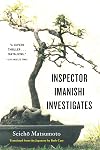
This is my idea of Japanese noir. Slow pace with lots of daily mundanities, lots of potential leads that don't pan out, lots of thinking and reading the newspapers or magazines. Time passes very suddenly in the space of a line. Sometimes the psychology of the crime can be very raw and extra messed up, but the dimly-lit homey public spaces (like Tanizaki's In Praise of Shadows) and countryside farmhouses (like in Old Enough!) ground me enough. I can read a few more books of Imanishi just show more reading magazines for clues and travelling on trains to explore wild leads. show less
Inspector Imanishi Investigates: From the bestselling author of Tokyo Express (Penguin Modern Classics) by Seichō Matsumoto
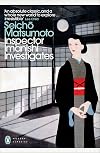
A wonderful book, exquisitley translated. The year is 1960 and we are in both Tokyo and small town Japan. The war is over, but memories linger. Japan is improving economically but we are yet to see the transformations of the 1970s and 1980s. New cultural ideas are starting to replace old certainties
And into this steps Inspector Imanishi. Careful, methodical, good at his job, polite and keenly aware of his status, he is in many ways an ideal policeman - for that place and time. It is worth show more noting that in the 1960s and still today, the vast majority of criminal cases in Japan are solved via confession. Imanishi expects to get to the bottom of his case through identifying the right suspec
But to start with, he can't even identify the body. A man has been beaten beyond recognition and left underneath a train. He is not local - noone is missing. No one knows anything about him, other than that he was drinking in a bar with a younger man. All Imanishi has to go on his a scrap of overheard conversation; the name Kamada and a distinctive regional accent
From these fragments Imanishi has to build a case; and his methodical yet meandering progress, is contrasted with the modern, incomprehensible culture of the new generation Nouveau Group, and the old conservative culture of rural and regional Japan. Class and status mean everything. Women are treated with casual disrespect and have little agency; some appalling things happen to female characters in this novel, to noone's great surprise. All in all, it perfectly captures a moment in time.
Highly recommended. Minus half a star because I am not sure I quite believe in the murder method, ingenious as it is. show less
And into this steps Inspector Imanishi. Careful, methodical, good at his job, polite and keenly aware of his status, he is in many ways an ideal policeman - for that place and time. It is worth show more noting that in the 1960s and still today, the vast majority of criminal cases in Japan are solved via confession. Imanishi expects to get to the bottom of his case through identifying the right suspec
But to start with, he can't even identify the body. A man has been beaten beyond recognition and left underneath a train. He is not local - noone is missing. No one knows anything about him, other than that he was drinking in a bar with a younger man. All Imanishi has to go on his a scrap of overheard conversation; the name Kamada and a distinctive regional accent
From these fragments Imanishi has to build a case; and his methodical yet meandering progress, is contrasted with the modern, incomprehensible culture of the new generation Nouveau Group, and the old conservative culture of rural and regional Japan. Class and status mean everything. Women are treated with casual disrespect and have little agency; some appalling things happen to female characters in this novel, to noone's great surprise. All in all, it perfectly captures a moment in time.
Highly recommended. Minus half a star because I am not sure I quite believe in the murder method, ingenious as it is. show less
Lists
Awards


You May Also Like


Associated Authors
Statistics
- Works
- 163
- Also by
- 5
- Members
- 2,607
- Popularity
- #9,853
- Rating
- 3.7
- Reviews
- 80
- ISBNs
- 186
- Languages
- 11
- Favorited
- 5