
Janwillem van de Wetering (1931–2008)
Author of Outsider in Amsterdam
About the Author
Janwillem Van de Wetering was born in Rotterdam, Netherlands on February 12, 1931. He traveled extensively, both geographically and philosophically, his adventures ranging from being a motorcycle gang member to a Buddhist, a real estate salesman in Australia to an exporter in Holland. He was a show more police officer in Amsterdam from 1966 to 1975 and his crime novels featuring detectives Grijpstra and De Gier were based on his experiences. He also wrote a trilogy based on the time he spent at a Japanese Zen Buddhist monastery and wrote children's books about a porcupine named Hugh Pine. In 1984, he received the French Grand Prix de Littérature Policière. He died on July 4, 2008 at the age of 77. (Bowker Author Biography) show less
Disambiguation Notice:
(dut) Jan van de Wetering is not the same as Janwillem van de Wetering
Jan van de Wetering is not the same as Janwillem van de Wetering
Series
Works by Janwillem van de Wetering
Distant danger: The 1988 Mystery Writers of America anthology (1988) — Editor & Contributor — 31 copies
Brief uit het dodenrijk 4 copies
Waar zijn we aan begonnen ? een psychologisch overzicht van levenslopelijke struikelblokken (1985) 2 copies
Der blonde Affe 1 copy
De kleine uil acht manieren om ergens te komen zoals Boeddha dat 2500 jaar geleden aanraadde (1982) 1 copy
Riquet Pique 1 copy
De zesde deur — Author — 1 copy
Misdaadverhalen 1 copy
Brief uit het dodenrijk 1 copy
Een ongenode gast 1 copy
Katten och andra berättelser 1 copy
Associated Works
Judge Dee at Work: Eight Chinese Detective Stories (1967) — Introduction, some editions — 503 copies, 7 reviews
Murder on the Menu: Cordon Bleu Stories of Crime and Mystery, Volume 1 (1984) — Contributor — 213 copies, 2 reviews
These United States: Original Essays by Leading American Writers on Their State within the Union by John Leonard (1995) — Contributor — 102 copies, 1 review
City Sleuths and Tough Guys: Crime Stories from Poe to the Present (1989) — Contributor — 32 copies, 1 review
Maigret and the Spinster, Death of a Hawker, The Doomsday Carrier (1978) — Contributor — 5 copies, 1 review
Kat in beeld — Introduction, some editions — 3 copies
Tagged
Common Knowledge
- Canonical name
- Wetering, Janwillem van de
- Legal name
- Wetering, Janwillem Lincoln van de
- Other names
- Wetering, Janwillem Van de
- Birthdate
- 1931-02-12
- Date of death
- 2008-07-04
- Gender
- male
- Occupations
- detective novelist
- Nationality
- Netherlands
- Birthplace
- Rotterdam, Netherlands
- Places of residence
- Surry, Maine, USA
Cape Town, South Africa
London, England, UK
Kyoto, Japan
Columbia
Peru (show all 8)
Brisbane, Queensland, Australia
Amsterdam, Netherlands - Place of death
- Blue Hill, Maine, USA
- Disambiguation notice
- Jan van de Wetering is not the same as Janwillem van de Wetering
Members
Reviews

Het lijk in de Haarlemmer Houttuinen is the first of the Grijpstra and de Gier novels. A man's body is found hanging in the headquarters of an Eastern religious sect in a rambling old house in the centre of Amsterdam. It looks like suicide, but of course when something in a crime story looks like suicide it probably isn't...
The mystery isn't all that sophisticated, but the real interest of this book is in the detail of everyday police work and the interplay of personalities between the show more policemen and the suspects (one of whom turns out to be a former colonial police officer). I really enjoyed the way that the investigation keeps being held up by random small incidents that the police have to deal with - a drunk collapsing in the street, a minor car accident, an escaped prisoner they spot in a restaurant, a street fight, etc. - and by an amazing coincidence, not one of these incidents has any bearing on the case they are investigating. A trick I've never seen in a crime story before!
It's all very Dutch - improbable quantities of coffee, jenever and cigars are consumed during the investigation - and very 1970s - on the rare occasions the detectives are allowed to use a car it's a VW Beetle, and if they don't happen to be in a car they have to use public telephones to summon assistance. Which is another van de Wetering oddity, by the way: they always do summon assistance. They don't seem to realise that the first rule of fictional policing is always to go into dangerous situations without backup.
If you like novels about pets, you'll be pleased to know that de Gier's cat, Oliver, has an excessively large part in the story, and in a small gesture to the conventions of the genre, one of the policemen is allowed to go to bed with one of the witnesses, but that apart, this struck me as a charmingly off-beat example of the police procedural. To be added to my long list... show less
The mystery isn't all that sophisticated, but the real interest of this book is in the detail of everyday police work and the interplay of personalities between the show more policemen and the suspects (one of whom turns out to be a former colonial police officer). I really enjoyed the way that the investigation keeps being held up by random small incidents that the police have to deal with - a drunk collapsing in the street, a minor car accident, an escaped prisoner they spot in a restaurant, a street fight, etc. - and by an amazing coincidence, not one of these incidents has any bearing on the case they are investigating. A trick I've never seen in a crime story before!
It's all very Dutch - improbable quantities of coffee, jenever and cigars are consumed during the investigation - and very 1970s - on the rare occasions the detectives are allowed to use a car it's a VW Beetle, and if they don't happen to be in a car they have to use public telephones to summon assistance. Which is another van de Wetering oddity, by the way: they always do summon assistance. They don't seem to realise that the first rule of fictional policing is always to go into dangerous situations without backup.
If you like novels about pets, you'll be pleased to know that de Gier's cat, Oliver, has an excessively large part in the story, and in a small gesture to the conventions of the genre, one of the policemen is allowed to go to bed with one of the witnesses, but that apart, this struck me as a charmingly off-beat example of the police procedural. To be added to my long list... show less
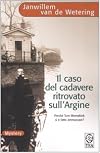
Il libro è godibilissimo, ben scritto, i personaggi balzano fuori dalla pagina coi loro tic e le loro idiosincrasie, i buoni hanno un giusto sottofondo meschino che li rende umani, e i cattivi hanno molto fascino.
Amsterdam perde molto del suo mito di città cosmopolita in cui tutto è permesso, in compenso diventa un luogo che si ha voglia di visitare per, chissà mai, andarci a vivere, sperando di incontrare da qualche parte qualcuno dei personaggi.
Se vuoi conoscere i dettagli più show more reconditi che formano il carattere di una città, devi leggere i suoi scrittori noir, questo è vero per la Milano di Colaprico ed è vero per l'Amsterdam di Van de Wetering. show less
Amsterdam perde molto del suo mito di città cosmopolita in cui tutto è permesso, in compenso diventa un luogo che si ha voglia di visitare per, chissà mai, andarci a vivere, sperando di incontrare da qualche parte qualcuno dei personaggi.
Se vuoi conoscere i dettagli più show more reconditi che formano il carattere di una città, devi leggere i suoi scrittori noir, questo è vero per la Milano di Colaprico ed è vero per l'Amsterdam di Van de Wetering. show less

The Rattle-Rat is one of a series of Dutch police procedurals taking place in the early 1980s. In this installment, the detectives have to find the murderer of a corpse found in a burning dory floating in the Amsterdam harbor. The victim came from Friesland, on the northern edge of the Netherlands, and so there most of the action takes place.
The mystery plays second fiddle to the interactions between the detectives, to jokes about Friesland and to showing how the changing roles of women show more affect everyone. There's a lot of odd comedy, which I couldn't tell if it was Dutch humor or simply the author's own, but I found it very funny with a weird combination of sarcasm and charm. The title of the novel comes from the rat they are asked to petsit in exchange for using the house of a Friesian police officer on holiday. The rat, Eddy, rattles rather than squeaks and his behavior, as well as the reactions of people to him, made him a suitable choice for the title.
The changing role of women in the Netherlands is a major theme in this novel. For the most part, van de Wetering handles the subject with agility and humor although, to modern ears, a few of his jokes misfire badly. He almost, but not quite, manages to make the female characters as fully real as the male detectives. Here, the lead detective, the commissaris, speaks on the phone to his assistant:
"Have Grijpstra called. He should phone me." The commissaris waited. The phone was quiet. "Dear?"
"Sir?"
"Is that understood?"
"You didn't finish your request."
"My request is quite finished."
"No," the soft female voice said. "You never said 'please,' so I'm still waiting, as is customary these modern days."
"What are you?" the commissaris asked. "A communist? A feminist? I gave you an order. I don't have to say 'please.'"
"I'm not your slave."
"Please," the commissaris said, "dear."
"Thank you," the secretary said. "I won't insist that you call me 'miss.'"
"Is that so?" the commissaris asked. "The new rule allows for exceptions?"
"I think you're a dear, too," the soft voice said. The telephone clicked.
The commissaris watered his begonias, while reflecting. They were right, he thought in between his reflections. They were abused, yelled at, repressed, underpaid, and over-worked. It had to come to an end, but why today?
The appeal of this book lays in the characters that van de Wetering has created. I'll be looking for other titles in the series. show less
The mystery plays second fiddle to the interactions between the detectives, to jokes about Friesland and to showing how the changing roles of women show more affect everyone. There's a lot of odd comedy, which I couldn't tell if it was Dutch humor or simply the author's own, but I found it very funny with a weird combination of sarcasm and charm. The title of the novel comes from the rat they are asked to petsit in exchange for using the house of a Friesian police officer on holiday. The rat, Eddy, rattles rather than squeaks and his behavior, as well as the reactions of people to him, made him a suitable choice for the title.
The changing role of women in the Netherlands is a major theme in this novel. For the most part, van de Wetering handles the subject with agility and humor although, to modern ears, a few of his jokes misfire badly. He almost, but not quite, manages to make the female characters as fully real as the male detectives. Here, the lead detective, the commissaris, speaks on the phone to his assistant:
"Have Grijpstra called. He should phone me." The commissaris waited. The phone was quiet. "Dear?"
"Sir?"
"Is that understood?"
"You didn't finish your request."
"My request is quite finished."
"No," the soft female voice said. "You never said 'please,' so I'm still waiting, as is customary these modern days."
"What are you?" the commissaris asked. "A communist? A feminist? I gave you an order. I don't have to say 'please.'"
"I'm not your slave."
"Please," the commissaris said, "dear."
"Thank you," the secretary said. "I won't insist that you call me 'miss.'"
"Is that so?" the commissaris asked. "The new rule allows for exceptions?"
"I think you're a dear, too," the soft voice said. The telephone clicked.
The commissaris watered his begonias, while reflecting. They were right, he thought in between his reflections. They were abused, yelled at, repressed, underpaid, and over-worked. It had to come to an end, but why today?
The appeal of this book lays in the characters that van de Wetering has created. I'll be looking for other titles in the series. show less

Third in the Grijpstra & De Gier series, another very entertaining police story. Our heroes stumble upon a corpse in a dodgy neighbourhood of Amsterdam North where the locals believe that good fences make good neighbours — which is fortunate, since one of their neighbours (who sounds suspiciously like a self-portrait of the author as villain) is a supremely talented fence. As usual, the story maunders along for a while in a cloud of music, metaphysics and local colour, and we get a show more slightly tongue-in-cheek bit of excitement at the end, when the Amsterdammers have to call in the assistance of the local police in Middelburg (who haven't written out a summons since before the war...) for a nighttime raid to arrest an armed suspect. show less
Lists
Global Mysteries (1)
Translingualism (1)
Awards


You May Also Like


Associated Authors
Statistics
- Works
- 94
- Also by
- 25
- Members
- 6,398
- Popularity
- #3,849
- Rating
- 3.7
- Reviews
- 145
- ISBNs
- 448
- Languages
- 16
- Favorited
- 19
