
Nicolas Freeling (1927–2003)
Author of Love in Amsterdam
About the Author
Novelist Nicolas Freeling was born in London on March 3, 1927. After serving in the military and working as a cook, he began his first novel, Love in Amsterdam, while in prision for theft. He is best know for his Piet Van der Valk dective stories which inspired two television series. He also show more created the Henri Castang series and wrote numerous individual novels. He received the Edgar Allan Poe Award from the Mystery Writers of America for The King of the Rainy Country. He also won the Gold Dagger from the British Crime Writers Association and France's Grand Prix de Roman Policier. He died on July 20, 2003 at the age of 76. (Bowker Author Biography) show less
Image credit: http://www.fantasticfiction.co.uk/f/nicolas-freeling/
Series
Works by Nicolas Freeling
The Nicolas Freeling Omnibus: Because of the Cats, Gun Before Butter, Double-Barrel (1983) 10 copies
Alibi voor een paratrooper 1 copy
fHeren van de nacht 1 copy
Associated Works
Van Der Valk, Series 1-5 [1972-1992] — Creator — 7 copies
Time-Life Book Digest: Masquerade | Sand Castles | His Little Women | What Lisa Knew (1990) — Author — 2 copies
Tagged
Common Knowledge
- Other names
- Davidson, Nicolas (birth name)
- Birthdate
- 1927-03-03
- Date of death
- 2003-07-20
- Gender
- male
- Education
- University of Dublin
- Occupations
- chef
novelist
crime writer - Organizations
- Royal Air Force
- Awards and honors
- CWA Gold Dagger (runner up 1963)
Grand Prix de Littérature Policière
Edgar Award (1967) - Short biography
- Nicolas Freeling dropped out of university and wanted to become a writer. He traveled around France and Britain, working in restaurants, and discovered he had a talent for cooking. In 1959, while working as a chef in Amsterdam, a brief stint in prison for theft led Freeling to start writing a detective story that became his first Inspector Van der Valk novel, published in 1962. After killing Van der Valk off in 1972, he launched the Castang series about a provincial French detective inspector. He also wrote stand-alone novels and other books. Over the years, Freeling won the three most prestigious awards for crime writing, the Grand Prix de Roman Policier, the Edgar Allan Poe Award and the British Crime Writers' Golden Dagger, but many consider his novels to be mainstream literature.
- Cause of death
- cancer
- Nationality
- UK
- Birthplace
- London, Middlesex, England, UK
- Places of residence
- London, Middlesex, England, UK
Strasbourg, Bas-Rhin, Grand-Est, France
Amsterdam, Netherlands
Grandfontaine, Vosges, France
Schirmeck, Alsace, France - Place of death
- Mutzig, Bas-Rhine, France
- Map Location
- England, UK
Members
Reviews

A man is found stabbed to death in a house in Amsterdam. A white Mercedes is parked awkwardly on the curb, and there is no sign of how the murderer got away. Police Inspector Pieter Van der Valk is sure that there’s something up with this case that goes beyond the easy story of “oh, this person must have been a criminal”. He’s determined to find out what happened. Meanwhile, he keeps crossing paths with Lucienne, the fiercely independent daughter of a famous conductor, in the most show more unusual of circumstances.
I quite liked this story. Van der Valk is grumpy and opinionated in a way I find amusing; he has little patience for officialdom, even as he represents officialdom in the form of the police. He is interested in justice in a way that goes beyond mere arresting and sentencing. He chastises himself for getting too absorbed in a case with so little payoff, but at the same time is compelled to continue. I liked that he is happily married (and laughed because his wife’s name is Arlette; I have an Arlette in my family). The story had a kind of Maigret feel to me, although Van der Valk is lower in rank than Maigret. This is even mentioned in the book, that Van der Valk’s boss is at Maigret level. I don’t know whether that means Maigret actually exists in the Van der Valk universe… hope so!
As for its setting, the atmosphere, pacing, and use of language really brought the Netherlands, Germany, and France to life, or at least enough for this North American. Actual residents of the above-mentioned countries may have a different experience.
It’s a shame that Freeling’s books don’t seem to be readily available; hopefully with the new Van der Valk series on PBS Masterpiece in summer 2020, they’ll get reprinted. I’d read more. show less
I quite liked this story. Van der Valk is grumpy and opinionated in a way I find amusing; he has little patience for officialdom, even as he represents officialdom in the form of the police. He is interested in justice in a way that goes beyond mere arresting and sentencing. He chastises himself for getting too absorbed in a case with so little payoff, but at the same time is compelled to continue. I liked that he is happily married (and laughed because his wife’s name is Arlette; I have an Arlette in my family). The story had a kind of Maigret feel to me, although Van der Valk is lower in rank than Maigret. This is even mentioned in the book, that Van der Valk’s boss is at Maigret level. I don’t know whether that means Maigret actually exists in the Van der Valk universe… hope so!
As for its setting, the atmosphere, pacing, and use of language really brought the Netherlands, Germany, and France to life, or at least enough for this North American. Actual residents of the above-mentioned countries may have a different experience.
It’s a shame that Freeling’s books don’t seem to be readily available; hopefully with the new Van der Valk series on PBS Masterpiece in summer 2020, they’ll get reprinted. I’d read more. show less

This is the eighth of the van der Valk novels. It's the late 1960s, and a housewife has been gunned down in her provincial Dutch apartment in what looks oddly like a military-style assassination. The trail seems to lead to her past as a nurse in Vietnam at the time of Dien Bien Phu, and van der Valk finds himself trying to pick his way through the French military bureaucracy without stepping on too many toes made sensitive by the political fallout from that disaster and more recently from show more Algeria. As you would expect there is a lot of food-talk, some gentle mocking of French peculiarities as seen by a Dutch (i.e. British) outsider, a stack of opera references, and quite a lot of self-deprecating jokes about the conventions of spy fiction.
Fun to spot some of the very 60s things going on — Dutch people coming home for lunch and eating a cooked meal in the middle of the day; everyone smoking; van der Valk buying himself a Playboy to read at the airport; water-filled sofas made of transparent plastic; telephones disguised as ornaments. What a long time ago it all was! show less
Fun to spot some of the very 60s things going on — Dutch people coming home for lunch and eating a cooked meal in the middle of the day; everyone smoking; van der Valk buying himself a Playboy to read at the airport; water-filled sofas made of transparent plastic; telephones disguised as ornaments. What a long time ago it all was! show less
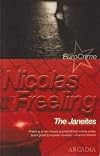
Nicolas Freeling's novel The Janeites was definitely not what I had expected from the title. It's written at the highest level of oblique "you-know-what-I'm-saying" tough-guy style, and takes much for granted for the American reader -- which can be very confusing. And the style seems quite jarring with the characters' interest in the works of Jane Austen, which (by the way) don't make their entrance until about half-way through the book. It's mostly a story of two intertwined romantic show more triangles involving a Parisienne aristocrat, a police bodyguard, a couple of high-ranking politicians, a mysterious good-time girl, and a Jesuit cancer researcher. In this cynical tale, power politics invades every aspect of life and death. The language and the plot both demonstrate that things are seldom what they seem. Jane Austen's works appear to serve as the corrective to -- or the distraction from -- the serious illness, amorality, and violence of the modern world. show less

It is remarkable how much passion Freeling injects into his characters, making it very easy for the reader to slip in to their skins. As with many of his books, there is a considerable degree of morality in the theme, but morality in an unconventional way, right through to the ending, which (as noted on the jacket blurb) the choice is the reader’s. The diamond of the title is a symbol of the moral paradoxes which confront the main characters, while at the same time driving the plot on by show more its physical existence. Its value is beyond price, yet it is also worthless from the market perspective because its value cannot be realized. Even so, the desire for possession of it changes lives, and causes deaths. show less
Lists
Edgar Award (1)
Global Mysteries (1)
Awards


You May Also Like


Associated Authors
Statistics
- Works
- 47
- Also by
- 9
- Members
- 3,157
- Popularity
- #8,093
- Rating
- 3.7
- Reviews
- 48
- ISBNs
- 392
- Languages
- 8
- Favorited
- 1
