"The House of Twenty Thousand Books" is many things: a look at early 20th century publishing; an exploration of the joys of book collecting, especially rare and antique works; a loving but clear-eyed personal memoir of Abramsky's grandparents; and an elegy to the intellectual salon they hosted in their home in north London for more than 40 years. The Abramskys drew a constant crowd that included great writers, historians, and thinkers who hotly debated the most pressing issues of their time. The author shows how the idealistic Communism of the Abramskys, their friends and colleagues during the 1930s and 1940s gave way to terrible disillusionment in the 1950s and eventual re-direction for many. I found it to be an engrossing story of one family and their milieu during an uncertain but exciting period of history.
A heart-wrenching, unforgettable story of suffering, compassion, and a fight for survival set in both the 21st and 14th centuries. Though the book's genre is science fiction, it's really about the human condition and what people are capable of under extreme circumstances. Highly recommended, though be aware that some the descriptions of the Black Death are gruesome.
Instead of "Casual Vacancy," this novel could have been called "Casual Unkindness" or even "Casual Cruelty." It portrays the ease with which many people take out their own unhappiness on each other every day. J.K. Rowling, with her gift for bringing even minor characters to life, also gives them chances to act differently, to choose the path to being a better person -- but as in real life, most of them don't. With evocative language and dialogue and striking turns of phrase, the author pulls you into the interior lives of the characters and their families. I couldn't stop thinking about them when the book was closed. As a long-time Harry Potter fan, I really enjoyed this complete change of tone and direction from Ms. Rowling.

The Lady of the Rivers is the best written, though the most fanciful, of the Cousins' War series. The character of Jacquetta of Bedford, so often obscured by history, is made memorable here. Her personal life was really quite romantic, and highly unusual for a woman of her time. Though the author embellishes Jacquetta's story with legends of mystical river deities and stories about witchcraft, it's still a fairly accurate portrayal of this fascinating person and her family. Jacquetta usually is portrayed as an old crone at the time her daughter Elizabeth meets King Edward, but this novel helps you understand that she was only in her late 40s -- still a relatively young and active woman.
An excellent non-traditional biography filled with fascinating background detail and context to Jane Austen's life and work. It was thrilling to learn so much in this one book that was new to me about Austen and her extended circle. This is a real a tribute to Paula Byrne, as I've been a member of the Jane Austen Society of North America for years, read several previous biographies as well as the six novels (repeatedly), and attended Austen conferences. But now I'm seeing Austen's work in a new light thanks to Paula Byrne's creative approach. Highly recommended to all, whether you've read Jane Austen before or not.

Fay Weldon's writing is always intelligent, witty and funny, and this novel has very good moments. But I agree with the previous reviewers who said that it's a minor work. I'd rather re-read one of Weldon's classic books, such as "Down Among the Women," than the planned sequels to this one.
Nicolas Freeling's novel The Janeites was definitely not what I had expected from the title. It's written at the highest level of oblique "you-know-what-I'm-saying" tough-guy style, and takes much for granted for the American reader -- which can be very confusing. And the style seems quite jarring with the characters' interest in the works of Jane Austen, which (by the way) don't make their entrance until about half-way through the book. It's mostly a story of two intertwined romantic triangles involving a Parisienne aristocrat, a police bodyguard, a couple of high-ranking politicians, a mysterious good-time girl, and a Jesuit cancer researcher. In this cynical tale, power politics invades every aspect of life and death. The language and the plot both demonstrate that things are seldom what they seem. Jane Austen's works appear to serve as the corrective to -- or the distraction from -- the serious illness, amorality, and violence of the modern world.
This novel stands out among the several dozen books on 15th-century English history that I've read. Firstly because it's written from the point of view of the tragic Anne Neville, of whom we know little except that she was used as a pawn by the men in her life and then -- to add insult to injury -- misrepresented by Shakespeare in his play Richard III. I also recommend this book because it really helps the reader appreciate that the Wars of the Roses, although a dynastic struggle between two rival branches of the Plantagenet family, also became a fight to the death among the members of the House of York. Philippa Gregory describes with deep emotional power how this "Cousins' War" brings about the deaths of all the people Anne loved. We see how the Yorkist rebellion against the legal king, though grounded in a rightful claim, moves its participants inexorably down a shameful and murderous path. And we understand that none of these individuals remained wholly innocent.
Ruth Rendell can instill a feeling of dread onto every page better than anyone (with the possible exception of the late Patricia Highsmith). Her characters often are not what they initially seem, and their full intentions unfold slowly, extending the reader's anxiety as the story progresses. The St. Zita Society is a black comedy as well as a suspense thriller, and there are many darkly funny lines and situations. In addition, Ms. Rendell has created another enjoyable layer of meaning to the story by focusing on the upstairs/downstairs class system that continues to operate in English society.
I'm so glad to have discovered Iris Owens. She was a tremendously funny and witty writer and I laughed aloud from page 1 of "After Claude"! But unfortunately, the last quarter of the book was disappointing, not up to the quality of the earlier section. I agree with the previous reviewers who said the book should have ended with the breakup with Claude and that If it had, I would have rated it with more stars.

Garden of Beasts is very apt as a title for this book about a city being roamed at will by various types of human beasts. Once a hunting ground for the aristocracy, the Tiergarten (literally, "animal garden') at the heart of Berlin has become one of the most popular pleasure parks in the city. But In 1933, when U.S. Ambassador William E. Dodd and his family arrive, acts of horrific violence are taking place in broad daylight against American citizens as well as German Jews and anyone even suspected of opposition to Hitler's new regime. Although this is work of nonfiction, Larson writes as vividly as a novelist and brings the period and the major characters to life with a wealth of detail about their actions and thoughts gleaned from his extraordinary research among published and unpublished documents. Ambassador Dodd and some of his more observant colleagues recognize from these beastly actions, and the regime's barely concealed re-arming efforts, that Hitler will stop at nothing to obtain absolute power. They try to warn U.S. and world leaders that Germany soon will be in a position to threaten the entire world. Meanwhile, Dodd's pleasure-seeking daughter Martha plays counterpoint by her involvement in a whirl of parties and affairs with Berlin's elite, including both the head of the Gestapo and a Soviet agent -- until she, too, grows disillusioned. Though the reader knows what the outcome will be, the book builds up the suspense to a series of terrifying events. Anyone show more interested in a good historical thriller and in learning more about the origins of World War II will find this book fascinating. show less

This biography cannot be surpassed, even by more recent scholarship or interpretations of the life and times of Eleanor of Aquitaine. Amy Ruth Kelly's vivid language and masterful style conjure up the 12th century so convincingly that you will never forget it.
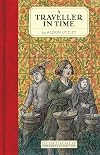
Never think of this as just a children's book! Alison Uttley paints a hauntingly beautiful portrait of rural England in two centuries that will captivate any adult. Her descriptive passages of the people and the landscape will stay with you forever. Although the plot is certainly enjoyable, and you can learn more about a controversial episode in history, it's the author's mastery of dialogue, character, and place that make this book so successful to me.
Like many previous reviewers here, I'm full of admiration for Kate Atkinson's writing style and the ingenious way she lays out and then weaves together many various plot threads. And I was also stumped at the end by the (as I first thought) unresolved mystery: who is Courtney? No spoilers here! I just read the entire novel a second time, and this time around the clues jumped out at me and I was satisfied.
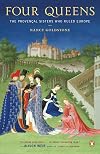
I've been fascinated for years by mentions in other works of the four beautiful and influential Provençal sisters of the Middle Ages, so I welcomed this book. It's the very best kind of history -- a first rate piece of scholarship written in a lively and entertaining style. Ms. Goldstone expertly weaves togther the lives of the sisters and their families with the events and culture of the period. I wish there had been more detail about the daily lives of the individual sisters, but perhaps there just wasn't enough source material for that; plus the author had the bigger picture of 13th century power politics in mind. I don't think she quite makes the case that these sisters actually "ruled" Europe. It appears rather that they had varying degrees of autonomy and influence (although a couple of them actually did save the day for their hapless husbands!)

I like reading about the Hundred Years’ War, and so picked this up recently in a used book store. My copy is subtitled, “a literary biography,” and it's written in an old-fashioned, fanciful style that I enjoyed. However, I became skeptical about the accuracy of it after I found factual errors that the author and publisher should have noticed (even in those pre-Internet days). So although I can’t recommend this book as history, I think fans of the 15th century would find it contributes to your overall understanding of the geopolitical situation of England/France/Burgundy and the roles of Charles, Duke of Orléans and Joan of Arc – consider it historical fiction.
I enjoyed all the stories in this collection, but "A Warm Welcome" was absolutely outstanding! Told with a keenly observant eye and a gift for dialogue, it's funny, poignant, and unforgettable.
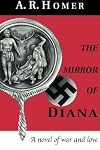
Having visited beautiful Nemi, Italy, a few years ago, I was initially thrilled to discover this novel set in the village. Nemi is located on the edge of an extinct volcanic crater in the Alban hills, about 15 miles southeast of Rome. Lake Nemi (Lago di Nemi), at the bottom of the crater, is called the “Mirror of Diana” because there was a temple to the goddess here in ancient times and the woods were considered sacred to her. The lake is also famous because the emperor Caligula (d. 41 AD) kept two very large ships here -- one a temple of Diana, the other a floating pleasure palace. These were raised in the 1930s, and a museum was built to house them. The lingering mystery over the destruction of the ships as the German army was retreating from Nemi in 1944, and a love affair between the fictional museum curator’s daughter and a German officer, are the focal points of this novel.
But unfortunately, I was very disappointed. This novel is a workmanlike effort but nothing more. It’s populated with stock characters whose actions are predictable, and who lack the inner lives needed to make the reader care much about them. Nor does the book bring either the time period or the place fully alive in the way that first-class historical fiction can do. I was really looking forward to learning more about Nemi and the Roman ships – but this book fails to deliver more than a few small scraps of information.
The positive blurbs given to this book appear to be based more on show more wishful thinking than actual merit. Italian officials who praised it, for example, are probably just gratified to have attention drawn to the town and the nonprofit association set up for the reconstruction of one of the ships. show less
But unfortunately, I was very disappointed. This novel is a workmanlike effort but nothing more. It’s populated with stock characters whose actions are predictable, and who lack the inner lives needed to make the reader care much about them. Nor does the book bring either the time period or the place fully alive in the way that first-class historical fiction can do. I was really looking forward to learning more about Nemi and the Roman ships – but this book fails to deliver more than a few small scraps of information.
The positive blurbs given to this book appear to be based more on show more wishful thinking than actual merit. Italian officials who praised it, for example, are probably just gratified to have attention drawn to the town and the nonprofit association set up for the reconstruction of one of the ships. show less
This book was an absolute joy to read! The narrative is lively, the author asks and answers provocative questions about the lives of women in 16th century Italy, and she provides the right amount of cultural, political, and historical context to help you understand Isabella de Medici's life beyond just the known biographical facts. Unlike the previous reviewer, I enjoyed every word of it even though I was aware of the sad outcome. The only quibble I have with the author is that she confusingly Italianized the names of individuals best known to history by English speakers by other names (i.e., Don Giovanni for Don John of Austria; Christina di Lorena for Christine of Lorraine). Highly recommended.
A beautifully written and evocative biography that positions Nureyev within his family and cultural contexts. The author really knows her subject and it shows on every page. This book would please both balletomanes and those new to the world of dance.
What an extraordinary work of journalism and history! I have the highest admiration for this author. This book is compulsary reading for anyone with a serious interest in World War II. I've been reading books about the war and espionage for 40 years and this book provided new information and fresh insights .

A tragic and compelling historical novel that you won't forget. See also the recent nonfiction account of Semmelweis's life, "The Doctors' Plague: Germs, Childbed Fever, and the Strange Story of Ignác Semmelweis" by Sherwin B. Nuland.
I agree with gooutsideandplay -- the book was enjoyable but could have been so much better if the author had provided more period detail.
The Stupids Step Out is not just for kids! It's one of the funniest and most memorable books I've ever encountered -- I laughed so hard I was gasping. The Stupids are complete dolts who do everything imaginable the wrong way, but as they're also totally clueless (although their dog Kitty is wise to them) and good-natured, they all go to bed happy. The illustrations are adorable and really make the humor work. Don't miss it.
Just Enough Liebling left me yearning for more! Abbott Joseph Liebling was an immensely engaging and skillful writer-journalist (and droll character) whose work is truly unparalleled. This volume provides just a sampling of his writing -- on subjects ranging from dining in Paris to World War II to boxing -- most of which were originally published in The New Yorker. Only wish I could give it 6 stars!

A superb, masterful re-creation of the time and place. I read this book as a teenager and it made a deep impression on me. M.M. Kaye loved India and was steeped in its history and customs -- she was descended from a long line of British officers. A book to treasure!
Blood Red Roses: The Archaeology of a Mass Grave from the Battle of Towton, AD 1461 by Veronica Fiorato
As a fan of historical fiction about the Wars of the Roses, I was fascinated by this true account of the discovery of a mass grave from the Battle of Towton in North Yorkshire, said to be the bloodiest battle every fought on English soil. The gravesite was uncovered by chance in 1996, touching off a major research project on the causes of death of the soldiers, their health status in life, battlefield conditions and landscape, weaponry, fighting techniques, and more. The book is a collection of essays by the experts in the various fields. Highly recommended!

This is one of the liveliest and wittiest biographies ever written. How could anyone resist such an evocative opening line, "After the death of the great King, beautiful Versailles, fatal for France, lay empty seven years while fresh air blew through its golden rooms, blowing away the sorcery and bigotry which hung about the walls like a miasma, blowing away the old century and blowing in the new."