
Hugo Claus (1929–2008)
Author of The Sorrow of Belgium
About the Author
Author and artist Hugo Claus was born in Bruges, Belgium in 1929. While in Paris, in his early twenties, he explored surrealism, existentialism, and modernism as a member of the Cobra group of experimentalist artists. Later in Rome he concerned himself with filmmaking and actually produced a film show more called Friday for which he wrote the script himself. He can be regarded as the primary developer of a technique which has become known as intertextuality. Its application in The Sign of the Hamster led to accusations of plagiarism, an accusation which many critics rejected because of the recognizability of the references which vary from the classics to the Middle Ages and his own time. He gained recognition as painter, poet, playwright, filmmaker, and writer of classical, psychological, modernist, and experimentalist novels. His best known work is The Sorrow of Belgium. The book consists of two parts, the first strongly autobiographic, situated in a Roman Catholic boarding school in Belgium, from which Louis, the protagonist, is expelled. The second part describes the experiences of a large number of people, including Louis's mother and father, during and shortly after World War II. He was charged with blasphemy for the play Masscheroen because of his irreverent representation of the Holy Trinity on the stage. This charge and the possibility of plagiarism identify Claus as a controversial writer. He died by euthanasia in Antwerp, Belgium on March 19, 2008. (Bowker Author Biography) show less
Disambiguation Notice:
aka Dorothea van Male, Jan Hyoens, and Thea Streiner
(dut) aka Dorothea van Male, Anatole Ghekiere, Jan Hyoens, and Thea Streiner
Series
Works by Hugo Claus
Flagrant 15 copies
De legende en de heldhaftige, vrolijke en roemrijke avonturen van Uilenspiegel en van Lamme Goedzak in Vlaanderen en elders toneelspel in twee delen (1965) 13 copies, 1 review
Laat nooit deze brief aan iemand lezen de briefwisseling tussen Hugo Claus en Simon Vinkenoog 1951-1956 (2008) 12 copies
Masscheroen 10 copies
De vijanden cinéroman 9 copies
De avonturen van Belgman 8 copies
Paal en Perk gedichten 6 copies
De Spaanse hoer 6 copies
Getekend 5 copies
Het mes 5 copies
Louis Paul Boon 5 copies
Het teken van de ram 5 copies
Tancredo infrasonic 4 copies
Claustrum 222 knittelverzen 4 copies
Een bruid in de morgen ; Suiker 3 copies
Eros 3 copies
Randstad 11-12 3 copies
Stemmen van schrijvers. 2: Hans Andreus, Remco Campert, Hugo Claus, Jan G. Elburg, Jan Hanlo, Gerrit Kouwenaar, Lucebert — Author — 3 copies
De dief van liefde 3 copies
Randstad 9 — Editor — 3 copies
Een hooglied 3 copies
De geruchten ; Onvoltooid verleden 2 copies
Voor Corneille 2 copies
Wrraaak ! 2 copies
De blijde en onvoorziene week 2 copies
Zoek de zeven 2 copies
Taptoe dicht 2 copies
Perte Totale 2 copies
Wees gegroet 2 copies
Hugo Claus leest 2 copies
Ach, Clemens 2 copies
Randstad 1 — Editor — 2 copies
Een weerzinwekkend bezoek 2 copies
Randstad 13 — Editor — 2 copies
Randstad 7 — Editor — 2 copies
Randstad 5 — Editor — 2 copies
De vluchtende Atalanta 2 copies
Een beeld in Gent 2 copies
De geboorte 2 copies
Muziek: dauw op een galg 2 copies
Van de koude grond 1 copy
Rubens 1 copy
De Avonturen van Belgman 1 copy
Voor Pierre 1 copy
Waarover spreken 1 copy
Imitaties 1 copy
Gedichten 1948 - 1963 1 copy
El gatpenat 1 copy
Karel Appel Painter 1 copy
Eerbetoon aan Hugo Claus 1 copy
Het graf van Pernath 1 copy
Jan de Lichte 1 copy
Vendredi, jour de liberté 1 copy
Randstad 1 copy
Pierre Alechinsky & Karel Appel, Encres a deux pinceaux et leurs poemes par Hugo Claus (1978) 1 copy
Et voilà, le travail 1 copy
Dr. Faustus 1 copy
Gedichte aus belgien und den Niederlanden — Contributor — 1 copy
Dimensie 1 copy
Et voilà, le travail ! 1 copy
Het verschijnsel 1 copy
Aan Van Ostaijen 1 copy
Ludduvuddu 1 copy
Voor de reiziger 1 copy
Apollinaire revisited 1 copy
Belladona 1 copy
We moeten bij Streuvels zijn 1 copy
Van de zinnen en de vruchten 1 copy
Hladni ljubavnik 1 copy
Familie 1 copy
De man van het toeval 1 copy
Randstad 2 1 copy
Georg Büchner 1 copy
Zonder vorm van proces 1 copy
Randstad 10 1 copy
Een schilder: Roger Raveel 1 copy
Bonjour Monsieur de Lussanet 1 copy
Anatomie in Zeven Lessen 1 copy
Venus Vulgaris 1 copy
Gedichten 2 1 copy
Claus Hugo 1 copy
Antiphon 1 copy
Vrijdag 1 copy
Dynamo 1 copy
Fuga 1 copy
Evergreens 1 copy
Voor Roger Raveel 1 copy
Ο πειρασμός 1 copy
Première 1 copy
Warm en Koud 1 copy
De Verlossing - scenario 1 copy
Macbeth 1 copy
Impromptu 1 copy
Bijster 1 copy
April in Paris, 1951 1 copy
Jessica! een toneelstuk 1 copy
Asperges 1 copy
Aan de gecensureerden 1 copy
Een overtreding 1 copy
Motet 1 copy
Emblemata 1 copy
Echolalia 1 copy
Voor Thomas 1 copy
Teirlinck Adamisch 1 copy
Een vrouw 1 copy
Winteravond 1 copy
Cobra revisited 1 copy
Associated Works
De Nederlandse poëzie van de negentiende en twintigste eeuw in duizend en enige gedichten (1979) — Contributor, some editions — 208 copies, 1 review
De Nederlandse en Vlaamse literatuur vanaf 1880 in 250 verhalen (2005) — Contributor — 79 copies, 2 reviews
De Nederlandse en Vlaamse literatuur vanaf 1880 in 60 lange verhalen (2006) — Contributor — 43 copies, 2 reviews
The Dedalus Book of Flemish Fantasy (Dedalus European Literary Fantasy Antholgies) (2011) — Contributor — 27 copies
Büch's boeket. 3: Boudewijn Büch koos verhalen van auteurs bij De Bezige Bij — Contributor — 11 copies
Nederland leest : de mooiste korte verhalen - Utrecht leest (2015) — Contributor — 8 copies, 1 review
Nederland leest : de mooiste korte verhalen - Noord-Holland leest (2015) — Contributor — 7 copies, 1 review
Transit : Oostenrijkse lyriek van de twintigste eeuw = Österreichische Lyrik des zwanzigsten Jahrhunderts. I: 1988 (1989) — Translator — 3 copies
Roger Raveel 70 — Contributor — 2 copies
Drie essays over experimentele poëzie van Bertus Aafjes, — Author, some editions — 1 copy
Tagged
Common Knowledge
- Canonical name
- Claus, Hugo
- Legal name
- Claus, Hugo Maurice Julien
- Other names
- Ghekiere, Anatole
Van Male, Dorothea
Couperus, Conny - Birthdate
- 1929-04-05
- Date of death
- 2008-03-19
- Gender
- male
- Occupations
- film director
painter
author
playwright
novelist
poet - Organizations
- CoBrA Group
- Awards and honors
- Aristeion Prize (1998)
Libris Prize 91997)
VSB Poetry Prize (1994)
Prijs voor Meesterschap (1994)
Prijs der Nederlandse Letteren (1986)
Herman Gorterprize (1986) (show all 14)
Cestoda-prize (1985)
Constantijn Huygensprijs (1979)
Edmond Hustinxprize (1967)
Henriëtte Roland Holst-prize (1965)
August Beernaertprize (1964)
Arkprijs van het Vrije Woord (1952)
Leo J. Krynprijs (1950)
International Nonino Prize (2000) - Short biography
- 1929 Hugo Claus wordt op 5 april geboren in Brugge. Hij is de eerste zoon van drukker Jozef Claus en Germaine Vanderlinden. In 1930 al moet de kleine Hugo op kostschool. Vanaf 1931 woont het gezin Claus in Kortrijk. 1944 Claus volgt tijdens de oorlog Grieks-Latijnse op het Atheneum van Kortrijk. Verschillende leraars zijn er radicale flaminganten. Claus scoort goed voor Nederlands, minder voor wiskunde en goed gedrag. Hij wordt lid van de NSJV, de Nationaal-Socialistische Jeugd Vlaanderen. Dan stopt de oorlog. Na de oorlog wordt de drukkerij van het gezin vernield door het verzet. Jozef Claus wordt gevangen genomen en gaat tot 1946 achter de tralies. 1947 Jozef drukt Hugo's eerste dichtbundel Kleine reeks. Hugo Claus vlucht naar Frankrijk en verdient er geld met seizoensarbeid en zwarte suikerhandel. Daarna trekt hij naar Parijs, waar hij de experimentelen leert kennen. Een jaar later schrijft hij zijn eerste roman, 'De eendenjach't. Nog een jaar later ontmoet Hugo Claus de beeldschone redersdochter Elly Overzier, op een poëzieavond in Oostende, waar hij sinds 1948 woonde. Elly wordt zijn eerste echtgenote in 1955. 1949 Het eerste nummer van het legendarische literaire tijdschrift Tijd en Mens verschijnt. Claus is één een van de redacteurs. 1950 wint hij met 'De eendenjacht', herdoopt tot 'De Metsiers', zijn eerste prijs. Een lauwe Elsschot zit in de jury. Claus raakt dat jaar helemaal betrokken bij de internationale Cobra-kunstbeweging en verblijft de volgende jaren vaak in Parijs. Claus schrijft een credo voor zijn leven en zijn werk: 'Ik verkies, dat de eeuwig-menselijke thema's en dito-woorden een deukje krijgen.' Er volgen meer prijzen en af en toe een relletje. Hij wordt onder meer beticht van plagiaat, insubordinatie en infaam geldgewin. 1955 Claus en Elly hebben drie jaar doorgebracht in Italië maar keren terug en gaan na drie jaar Italië in Gent wonen. 'De Oostakkerse gedichten' verschijnt, 'verweg het beste dat ik ooit schreef', en het toneelstuk 'Een bruid in de morgen'. De volgende jaren wordt Claus ook als toneelauteur annex filmscenarist heel actief. En succesvol, niet in het minst in Nederland. 1963 Elly en Hugo krijgen een zoon. Ze noemen hem Thomas. 1965 Kwaad omdat hij geen directeur mag worden van het NTG, verbiedt Claus om zijn stukken nog langer in Gent op te voeren. Claus was zelf net van Gent naar Nukerke verhuisd. Zijn roman De verwondering uit 1962 blijft prijzen winnen. 1967 Claus heeft al veel filmscenario's geschreven, voor onder andere Fons Rademakers. Nu debuteert hij zelf als regisseur, met De vijanden. 1968 Het revolutiejaar is ook het jaar waarin Claus tijdens een Cubareis zijn bewondering uitdrukt voor het 'tropisch communisme' en door een rechtbank wordt veroordeeld voor zedenschennis. Hij heeft in Masscheroen drie naakte mannen het toneel opgestuurd. Een jaar later wordt zijn gevangenisstraf omgezet tot een voorwaardelijk straf en een geldboete. 1970 Hugo Claus woont vanaf nu in Amsterdam. Hij heeft een relatie met de zeven jaar jongere Kitty Courbois. Later schrijft Claus over hun dolle tijd de wrange roman 'Het jaar van de kreeft'. Maar niet alles loopt slecht. Een jaar later krijgt Claus zijn derde Staatsprijs. Hij overtreft zijn vorige liefde in 1973, wanneer hij met de 24 jaar jongere Sylvia Kristel een relatie begint, met haar in de filmwereld verzeilt en in Parijs gaat wonen, met haar zijn zoon Arthur maakt en nog later met haar twee jaar een bouwfirma heeft, de NV Groep Kristel. 1977 Claus woont weer in Gent. Zijn broer Guido bezit daar inmiddels de nachtclub Hotsy Totsy. 1979 Claus wordt vijftig, krijgt zijn vierde Staatsprijs en een tentoonstelling. 1983 Op de laatste dag van het vorige jaar had Hugo Claus zijn uitgever het manuscript van een nieuw boek overhandigd. Het verdriet van België wordt dat jaar de eerste megaseller van de Vlaamse letteren. Het levert Claus roem, geld en weer een nieuwe Staatsprijs op, in 1984. 1989 Het Nederlandse Boekenweekgeschenk van zijn hand, De zwaardvis, wordt meteen gedrukt op 500.000 exemplaren. 1991 Claus wordt dezer jaren langs alle kanten gefêteerd en gehuldigd, maar er is ook slecht nieuws. Zijn broer Guido sterft. Een jaar later krijgt Hugo Claus prostaatkanker. Twee jaar later vindt hij zijn tweede echtgenote. Hugo Claus trouwt met Veerle de Wit. Hij woont dan al enkele jaren afwisselend in Antwerpen en Frankrijk. 1996 Het jaar van 'De geruchten', zijn laatste grote roman. Twee jaar later krijgt hij er de Europese Aristeion Literatuurprijs voor, en schrijft hij er met Onvoltooid verleden een vervolg op. Nog eens twee jaar later, Claus wordt dan zeventig, volgt zijn zevende staatsprijs, deze keer voor zijn hele loopbaan. In de jaren daarna volgen nog een paar grote prijzen. Zelf publiceert Claus nog erg weinig. 2006 Dokters constateren officieel Alzheimer. Op 19 maart 2008 vraagt Claus zelf om euthanasie.
- Cause of death
- euthanasia
- Nationality
- Belgium
- Birthplace
- Bruges, Belgium
- Places of residence
- Flanders, Belgium
Paris, Île-de-France, France
Italy - Place of death
- Antwerp, Belgium
- Burial location
- cremated
- Map Location
- Belgium
- Disambiguation notice
- aka Dorothea van Male, Jan Hyoens, and Thea Streiner
Members
Discussions
Group Read, July 2023: The Sorrow of Belgium in 1001 Books to read before you die (August 2023)
Hugo Claus in Dutch writing in English - An appreciation (August 2012)
Reviews
De zwaardvis : een uitgave van de Stichting Collectieve Propaganda van het Nederlandse Boek ter gelegenheid van de Boekenweek 1989 by Hugo Claus

A summer afternoon in a Flemish village turns out a lot less idyllic than it looks, with all kinds of sexual and religious tensions floating around. The involvement of a police inspector makes it clear that something has gone badly wrong, but we are left until the last page to find out precisely who has been murdered.
Hugo Claus uses the 1989 Boekenweek novella to perform another hit and run attack on the Flemish middle classes: no-one comes out of this one well, with the partial exception show more of the murderer, for whom Claus seems to have at least a little sympathy. show less
Hugo Claus uses the 1989 Boekenweek novella to perform another hit and run attack on the Flemish middle classes: no-one comes out of this one well, with the partial exception show more of the murderer, for whom Claus seems to have at least a little sympathy. show less

Het verdriet van België is Claus's great, sprawling, historical, autobiographical, satirical, send-up of what his neighbours and relatives did in the Second World War. It's a divisive book - as you would expect when it paints a largely one-sided picture of a country where it's rare for political questions to have as few as five or six sides - but it seems to have established itself as the definitive novel about Belgium during the occupation.
The title makes you expect a lamentation of the show more hardships and abuses the Belgian people were subjected to at the hands of the Germans. The opening chapters, where the 10-year-old narrator, Louis, is at a convent boarding school in the spring and summer of 1939, keep up this anticipation of gloom to come, but it soon turns out to be fraudulent in several ways.
For one thing, the Germans only appear in very minor offstage roles: the actual horrors (and there are plenty of these, don't worry) are all perpetrated by Belgians who have been drawn into collaboration with the Nazis either by personal greed and ambition or by distorted ideals of Flemish nationalism that make them see the Nazis as their natural allies against the hated French. Plus a fair bit of damage "accidentally" done to Belgium by the countries that are fighting to liberate it.
For another thing, the amoral viewpoint character Louis and the narrator, who increasingly identifies with him as the book goes on, clearly take a great, Rabelaisian pleasure in watching the theatre of moral deformation and physical destruction that is growing up around them as people get the chance to do something about the petty jealousies and envies they have been harbouring for decades. There's no shortage of corruption based on church, family and party connections; denunciations, slander, incest, murder, and simple theft.
Although Claus frequently makes fun of the Flemish nationalists' tendency to relate everything to their nation's glory days five or six centuries ago, there is a lot in this book that reminds you of one of those very busy early renaissance Flemish paintings. It is a very messy sort of book, with dozens of storylines appearing and disappearing at will, more characters than your average Dickens novel, and a narrative that has a disconcerting habit of hopping about between realistic and dream sequences without warning. The language takes some getting used to, as well, as it's relentlessly Flemish (if you're used to standard Dutch, then the experience is a bit like reading a novel that's written in Scots when you're used to standard English - you can make most of it out, but it takes a moment or two, and sometimes you have to go back a bit and read it aloud...). Claus is clearly determined not to "clean up" the way his characters talk any more than he would clean up their politics or their morals, and he wants to emphasise that all his characters have their roots in the Flemish mud. And it's very egotistical - the book stops abruptly, directly Louis achieves literary glory for the first time, without any consideration for fates of the the dozens of characters whose plots have not been resolved yet. All over Flanders, wives are still missing husbands, prisoners are still awaiting verdicts, lovers ununited, children unborn, dinners half-cooked, diseases uncured, and we'll never know how they came out.
I found that this was a book that I only really started to enjoy about 3/4 of the way through, when the penny dropped that the humour was not just incidental, it is the real point of the book. Claus seems to be arguing that most people - at least in Flanders - are not involved in great struggles of good and evil, but are trying to find a way to reconcile their material self-interest with their desire to look good in the eyes of their neighbours. From time to time the compromises they reach have truly great or truly horrifying effects, and perhaps the only way we can come to terms with the horrible banality of this is to find a way to laugh about it. show less
The title makes you expect a lamentation of the show more hardships and abuses the Belgian people were subjected to at the hands of the Germans. The opening chapters, where the 10-year-old narrator, Louis, is at a convent boarding school in the spring and summer of 1939, keep up this anticipation of gloom to come, but it soon turns out to be fraudulent in several ways.
For one thing, the Germans only appear in very minor offstage roles: the actual horrors (and there are plenty of these, don't worry) are all perpetrated by Belgians who have been drawn into collaboration with the Nazis either by personal greed and ambition or by distorted ideals of Flemish nationalism that make them see the Nazis as their natural allies against the hated French. Plus a fair bit of damage "accidentally" done to Belgium by the countries that are fighting to liberate it.
For another thing, the amoral viewpoint character Louis and the narrator, who increasingly identifies with him as the book goes on, clearly take a great, Rabelaisian pleasure in watching the theatre of moral deformation and physical destruction that is growing up around them as people get the chance to do something about the petty jealousies and envies they have been harbouring for decades. There's no shortage of corruption based on church, family and party connections; denunciations, slander, incest, murder, and simple theft.
Although Claus frequently makes fun of the Flemish nationalists' tendency to relate everything to their nation's glory days five or six centuries ago, there is a lot in this book that reminds you of one of those very busy early renaissance Flemish paintings. It is a very messy sort of book, with dozens of storylines appearing and disappearing at will, more characters than your average Dickens novel, and a narrative that has a disconcerting habit of hopping about between realistic and dream sequences without warning. The language takes some getting used to, as well, as it's relentlessly Flemish (if you're used to standard Dutch, then the experience is a bit like reading a novel that's written in Scots when you're used to standard English - you can make most of it out, but it takes a moment or two, and sometimes you have to go back a bit and read it aloud...). Claus is clearly determined not to "clean up" the way his characters talk any more than he would clean up their politics or their morals, and he wants to emphasise that all his characters have their roots in the Flemish mud. And it's very egotistical - the book stops abruptly, directly Louis achieves literary glory for the first time, without any consideration for fates of the the dozens of characters whose plots have not been resolved yet. All over Flanders, wives are still missing husbands, prisoners are still awaiting verdicts, lovers ununited, children unborn, dinners half-cooked, diseases uncured, and we'll never know how they came out.
I found that this was a book that I only really started to enjoy about 3/4 of the way through, when the penny dropped that the humour was not just incidental, it is the real point of the book. Claus seems to be arguing that most people - at least in Flanders - are not involved in great struggles of good and evil, but are trying to find a way to reconcile their material self-interest with their desire to look good in the eyes of their neighbours. From time to time the compromises they reach have truly great or truly horrifying effects, and perhaps the only way we can come to terms with the horrible banality of this is to find a way to laugh about it. show less

First novel of the Belgian giant that I manage to finish (though admittedly I did not try as often as with Reve, the primus inter pares of Dutch literati). And I think it is wonderful, typical, iconic, a Flemish Romeo and Juliet, with all the beauty, coziness, vicious foulness and duplicity of Belgium as a nation thrown in. If this is the essence of the Claus’ style - a modern day parable that provides you with the DNA of a nation – then Claus is a giant.
Reading some reviews I now show more understand that this was the last novel written by Claus and that it was exceptional in the sense of applying a fast moving style, presenting many different POVs (Claus’ other novels apply the usual terse style that is used by many Dutch literati of his generation, making for tough reading and slow unfolding of the story).
The Romeo of the story is Rene Catrijsse, a recently returned deserter of a colonial war in Belgian Congo in the mid-1960s. This Rene has quite a reputation in the village (a typical Belgian village in West Flanders) as a hoodlum, irresponsible thief and playboy. His meek, soft hearted brother, and timid parents running a local bottlestore, do initially not know how to respond to his sudden re-appearance. Neither does Rene feel the urge to explain anything, being traumatized by his experiences in the Congo. This sets the scene for rumours. Rumours whispered in the local pubs, night clubs and homes (including the rectory). When next several people die suddenly of some mysterious illness that manifests itself in body parts turning blue and victims dying a slow and agonizing death, subdued voices add fuel to the rumours. Rene has been seen at night with a mysterious character in a car in the woods. Nosy investigators disappear (after being killed by Rene and his mate, their bodies dumped elsewhere). Rene’s mom is suspected to cover up for her son’s deeds and her past as nazi collaborator re-merges in village talks. Someone paints swastikas on their bottlestore front, people shy away from buying beverages from the family. Rene’s mom visits his real dad (a high-end Belgian collaborator, who impregnated her when working as a nurse in a labour camp in Germany) and requests protection of her son from high-up. The girlfriend of Rene’s brother visits Rene and spends some days frolicking with him in a sea-side hotel. In the end Rene has to disappear. He is called in to meet his captain (de kap), informed of the final judgement and killed. The diamonds left in his possession are sent to his mom and Julia, his brother’s girlfriend. Slowly normalcy returns to the village.
So what’s the DNA of Belgium? Catholic collaboration and suppression of whatever vices; nazi collaboration and State capture; Illegal diamond trading networks operating under the wings of post-colonial wars; illicit parentage and long lasting family secrets. But equally important: a culture of gossips, surprising sources of personal support and understanding (the scene where Rene’s brother loses his mind in the bar), high-flying love affairs and warm patronage networks. show less
Reading some reviews I now show more understand that this was the last novel written by Claus and that it was exceptional in the sense of applying a fast moving style, presenting many different POVs (Claus’ other novels apply the usual terse style that is used by many Dutch literati of his generation, making for tough reading and slow unfolding of the story).
The Romeo of the story is Rene Catrijsse, a recently returned deserter of a colonial war in Belgian Congo in the mid-1960s. This Rene has quite a reputation in the village (a typical Belgian village in West Flanders) as a hoodlum, irresponsible thief and playboy. His meek, soft hearted brother, and timid parents running a local bottlestore, do initially not know how to respond to his sudden re-appearance. Neither does Rene feel the urge to explain anything, being traumatized by his experiences in the Congo. This sets the scene for rumours. Rumours whispered in the local pubs, night clubs and homes (including the rectory). When next several people die suddenly of some mysterious illness that manifests itself in body parts turning blue and victims dying a slow and agonizing death, subdued voices add fuel to the rumours. Rene has been seen at night with a mysterious character in a car in the woods. Nosy investigators disappear (after being killed by Rene and his mate, their bodies dumped elsewhere). Rene’s mom is suspected to cover up for her son’s deeds and her past as nazi collaborator re-merges in village talks. Someone paints swastikas on their bottlestore front, people shy away from buying beverages from the family. Rene’s mom visits his real dad (a high-end Belgian collaborator, who impregnated her when working as a nurse in a labour camp in Germany) and requests protection of her son from high-up. The girlfriend of Rene’s brother visits Rene and spends some days frolicking with him in a sea-side hotel. In the end Rene has to disappear. He is called in to meet his captain (de kap), informed of the final judgement and killed. The diamonds left in his possession are sent to his mom and Julia, his brother’s girlfriend. Slowly normalcy returns to the village.
So what’s the DNA of Belgium? Catholic collaboration and suppression of whatever vices; nazi collaboration and State capture; Illegal diamond trading networks operating under the wings of post-colonial wars; illicit parentage and long lasting family secrets. But equally important: a culture of gossips, surprising sources of personal support and understanding (the scene where Rene’s brother loses his mind in the bar), high-flying love affairs and warm patronage networks. show less
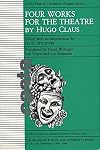
Four plays that address some heavy themes: prostitution, incest and infidelity, with Claus overturning expectations by ascribing Christ-like qualities to those normally treated as outcasts by society. I think it works best in The Hair of the Dog where the journey of Mira, a prostitute, is analogous with the journey to Calvary and the dialogue whether due to the translation or the author's intention is like a more surreal Harold Pinter. Friday is a little more unruly as a play and the show more Christian elements seem more tacked on. I lost some interest even as it was coming to a climax but it may benefit from a second reading. The Temptation is satisfying as a largely interior monologue of an aged blind nun as she is about to be beatified. The stream of consciousness narration is compelling. These plays, written in the early eighties apart from Friday (1969) still challenge our sympathies and beliefs today. show less
Lists
Ulenspiegel (1)
My TBR (1)
Awards


You May Also Like


Associated Authors
Statistics
- Works
- 309
- Also by
- 34
- Members
- 6,222
- Popularity
- #3,938
- Rating
- 4.0
- Reviews
- 72
- ISBNs
- 359
- Languages
- 19
- Favorited
- 15