
Jan Wolkers (1925–2007)
Author of Turkish Delight
About the Author
Jan Wolkers could serve as the prototype of the group of post--World War II writers who give the impression of having seized the crushing of Nazi power as an opportunity to attempt to cast off the yoke of oppression in all forms and formats. Their protest took the form of rebellion against any form show more of authority that seemed to restrict their freedom and individuality. In effect they, and more particularly Wolkers, demonstrated against authority in the home (often represented by a supposedly dominant father figure); against the political system (as, for instance, represented by American capitalism and international military involvement); against God and church office-bearers; and finally, against society and social norms in general as these found expression in current views on proper language, morals, and manners. We thus find that Wolkers's main characters challenge all forms of established, prewar concepts as embodied in selected characters, frequently holding them up for ridicule and caricature. By way of contrast, the author portrays a series of persons who appear to be the victims of the corrupt views of modern society, usually social outcasts such as the immortal Uncle Louis in Serpentina's Petticoat (1961) with which Wolkers made his debut and simultaneously established his name. Animals, which almost by definition are also considered innocent, sometimes serve as victims of man's desire for power as well, as in Wolkers's famous Back to Oegstgeest (1965). A unique form of expression of resentment is Wolkers's use of cruelty, as though the writer wishes to vent his anger on anything he can lay his hands on. It is important to note, in this connection, that the negative qualities mentioned above---such as anger, resentment, ridicule, and cruelty---do, in fact, together form the very thin and sometimes transparent shell covering Wolkers's sensitive and vulnerable nature and his religious pursuit of fairness, justice, love, and beauty. In literally demonstrating these commendable qualities, Wolkers is a worthy representative of his generation. (Bowker Author Biography) show less
Image credit: Uitgeverij De Bezige Bij
Works by Jan Wolkers
Het afschuwelijkste uit Jan Wolkers 8 copies
Zwarte advent 7 copies
Dagboek Texel 1979-191 1 copy
Unora le plac roșcatele 1 copy
Dagboek 1 copy
Dd̲skallefjr̃ilen Box 2 1 copy
Jan Wolkers leest 1 copy
Mars Zwart & Titan Wit 1 copy
De wet op het kleinbedrijf 1 copy
Foto 1 copy
Associated Works
De Nederlandse en Vlaamse literatuur vanaf 1880 in 250 verhalen (2005) — Contributor — 79 copies, 2 reviews
The Dedalus Book of Dutch Fantasy (European Literary Fantasy Anthologies) (1990) — Contributor — 50 copies
De Nederlandse en Vlaamse literatuur vanaf 1880 in 60 lange verhalen (2006) — Contributor — 43 copies, 2 reviews
'Als u begrijpt wat ik bedoel' : de taal van Marten Toonder : met Bommellexicon (1995) — Contributor — 8 copies
Meesters der vertelkunst : zevenendertig verhalen uit de moderne wereldliteratuur (1975) — Contributor — 2 copies
Tagged
Common Knowledge
- Canonical name
- Wolkers, Jan
- Legal name
- Wolkers, Jan Hendrik
- Birthdate
- 1925-10-26
- Date of death
- 2007-10-19
- Gender
- male
- Occupations
- author
sculptor
painter - Awards and honors
- Busken Huetprijs (1991)
- Relationships
- Blom, Onno (biograaf)
Wolkers, Tom (zoon)
Wolkers, Bob (zoon) - Cause of death
- old age
liver cirrhosis
erysipelas - Nationality
- Netherlands
- Birthplace
- Oegstgeest, Netherlands
- Places of residence
- Texel, Netherlands
Amsterdam, Netherlands - Place of death
- Westermient, Netherlands
- Map Location
- Netherlands
Members
Reviews

Each year, since 2006, a book is selected and freely distributed through public libraries as a "national reading experience". In 2019, this book consisted of a selection of the writings of Jan Wolkers. It consists of a number of letters, pieces of prose and a full version of Groeten van Rottumerplaat. The work of
Wolkers is preceded by two introductions, a general introduction by Ronald Giphart and a more specific introduction to the work by the Wolkers biographer Onno Blom. There are a few show more small contributions by other writers.
The general introduction by Giphart is peculiar in the sense that he suggests these fragments were chosen to fit the overall theme of sustainability. This is really stretching the point, because none of Wolkers's writings are about sustainability of conservation. Giphart also calls Wolkers one of the best Dutch writers about nature and natural history, and this is obviously not true. Why else would the editors have so much difficulty to put together such a thin volume of just over a hundred pages?
It is true that Wolkers has a eye for the natural environment, and includes some detail about plants and animals that other writers might miss, but Wolkers is no great naturalist. Then, too, Wolkers studied biology or intended to study Biology as a young man, and in his final years, after having retired from writing he lived close to nature, painting and drawing and contributing small publications about his garden and his cats, but to suggest that he is one of the greatest writers about nature is really far-fetched. show less
Wolkers is preceded by two introductions, a general introduction by Ronald Giphart and a more specific introduction to the work by the Wolkers biographer Onno Blom. There are a few show more small contributions by other writers.
The general introduction by Giphart is peculiar in the sense that he suggests these fragments were chosen to fit the overall theme of sustainability. This is really stretching the point, because none of Wolkers's writings are about sustainability of conservation. Giphart also calls Wolkers one of the best Dutch writers about nature and natural history, and this is obviously not true. Why else would the editors have so much difficulty to put together such a thin volume of just over a hundred pages?
It is true that Wolkers has a eye for the natural environment, and includes some detail about plants and animals that other writers might miss, but Wolkers is no great naturalist. Then, too, Wolkers studied biology or intended to study Biology as a young man, and in his final years, after having retired from writing he lived close to nature, painting and drawing and contributing small publications about his garden and his cats, but to suggest that he is one of the greatest writers about nature is really far-fetched. show less
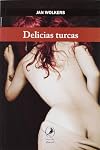
Olga es burguesa, pelirroja y sensual hasta quitar el aliento. Él es un artista sin un centavo, rudo, práctico. Todo comienza con un choque automovilístico provocado por un doloroso cierre de bragueta, que desemboca en un matrimonio arrollador, desaforado, que desafía los prejuicios de la educación de Olga y se convierte en un paraíso terrenal en el que la locura es el destino final. Escrita a fines de los sesenta, Delicias turcas cuenta la historia de un amorío sorprendente, show more tempestuoso, sensual, escandalosamente explícito, una pasión de esas que sólo la muerte puede destruir. Pero también es una cruda y satírica mirada sobre el conflicto entre la potencia represora de la sociedad burguesa y los arrolladores embates de la revolución sexual. Delicias turcas ha sido traducida a más de diez idiomas y llevada a la pantalla grande por Paul Verhoeven en 1972. show less

De perzik van onsterfelijkheid is a novel that I would consider typically Dutch and typical for Jan Wolkers. It is typical for Dutch literature in the sense that it is extremely banal, with a lot of base humor. It is typical for Wolkers, particularly for his middle period through the focus on dirt, shit, slime or other filth, in this case dog shit.
Otherwise, the novel is a pleasant, and fluent read, with detail for environment and location. Like many modern novels, it is based of a very thin show more story, or hardly any.
I have also wondered whether the structure, the tendency of being preoccupied with certain motives and the relative absence of a story line has anything to do with the way Wolkers wrote his books. According to the diaries, he would work very methodically. Every morning he would write just one page. And that's the way it feels, as if each page is a new beginning. But this interpretation may be deceptive because the diaries do not mention revision or other editorial work. show less
Otherwise, the novel is a pleasant, and fluent read, with detail for environment and location. Like many modern novels, it is based of a very thin show more story, or hardly any.
I have also wondered whether the structure, the tendency of being preoccupied with certain motives and the relative absence of a story line has anything to do with the way Wolkers wrote his books. According to the diaries, he would work very methodically. Every morning he would write just one page. And that's the way it feels, as if each page is a new beginning. But this interpretation may be deceptive because the diaries do not mention revision or other editorial work. show less

This was Wolkers's last work of prose fiction, a novella written as the gift-book for the Dutch book promotion week (Boekenweek) in 2005. It's a curious mixture of bird-spotting, hardcore porn, and organised crime, set among the sand-dunes of the Dutch island of Texel where Wolkers lived for many years. There are some bits of quite inspired writing in the sex-scenes, but they seem to be written with a firm conviction that it's still 1970 and women's liberation is all about the right to take show more your clothes off on the beach. The crime story is clumsily cobbled together, apparently as an afterthought when the author realised that the love-story couldn't be made to fill enough pages - he has the narrator describe the key scene no fewer than five times, in slightly different situations. Perhaps it would have been kinder to leave Wolkers to enjoy his retirement in peace. show less
Lists
Awards


You May Also Like


Associated Authors
Statistics
- Works
- 102
- Also by
- 13
- Members
- 4,294
- Popularity
- #5,846
- Rating
- 3.3
- Reviews
- 77
- ISBNs
- 222
- Languages
- 9
- Favorited
- 9