
Hella S. Haasse (1918–2011)
Author of In a Dark Wood Wandering
About the Author
Hella Haasse was born in Batavia, the capital of what was then Dutch East India, now independent Indonesia. It is thus understandable why her first novel, Oeroeg (1948), describes the relationship between a Dutch and an Indonesian youth. As the two young men grow up, they gradually become conscious show more of their ethnic and cultural differences and, in spite of their efforts, nature appears to have destined them to become estranged from each other. Haasse's greatest impact on the Dutch literary scene occurred when her historical novel Het woud der verwachting (In a Dark Wood Wandering) (1948) was published. It was translated into English in 1989. This novel became a classic in its own time. In it the author describes the ever-increasing loneliness of the fifteenth-century Romantic poet--prince Charles d'Orleans, pretender to the crown of France, who wrote most of his poems in British and French prisons. In addition to giving a moving report of the life of a person destined to end his life in utter isolation, Hella Haasse succeeds in presenting her main character in a way which allows the reader to identify with him. Charles's life is interwoven with the lives of all the other people he meets. Haasse's talent for description and narration and her skill with flashbacks allow her to manage the novel's many characters, constructing a microcosm in which each reader feels "at home' and meets people with whom he or she can identify. (Bowker Author Biography) show less
Works by Hella S. Haasse
A Stranger in the Hague: The Letters of Queen Sophie of the Netherlands to Lady Malet, 1842-1877 (1984) — Editor — 23 copies
Een kom water, een test vuur 15 copies
Het woud der verwachting II 2 copies
Twee verhalen 2 copies
Persoonsbewijs 2 copies
Sleuteloog 1 copy
In gesprek met... — Contributor — 1 copy
Oeroeg & Transit 1 copy
De échte kerstman 1 copy
Anneau de la clé(L') 1 copy
Dat weet ik zelf niet 1 copy
Veelzijdig 1 copy
De lage landen en het platte vlak : kanttekeningen bij een gemeenschappelijke litteratuur (1986) 1 copy
Een kruik uit Arelate 1 copy
Stroomversnelling 1 copy
Het woud der verwachting I 1 copy
Je leest het zó : een boekje propvol proza en poëzie, gelardeerd met puzzels en citaten, geïllustreerd met prenten en cartoons — Editor — 1 copy
Balladen en legenden 1 copy
Het student 1 copy
Associated Works
De Nederlandse en Vlaamse literatuur vanaf 1880 in 250 verhalen (2005) — Contributor — 79 copies, 2 reviews
De Nederlandse en Vlaamse literatuur vanaf 1880 in 60 lange verhalen (2006) — Contributor — 43 copies, 2 reviews
Goed geboekt : een verzameling van schetsen, korte verhalen en tekeningen (1954) — Contributor — 43 copies
Proeve van vaderland : een verslag — Introduction — 8 copies
Mijn boek van vroeger en van nu : zeven auteurs vertellen over de rol die het boek in hun leven speelde — Contributor — 5 copies
Liefde en bedrog zeven hartstochtelijke verhalen — Contributor — 4 copies
BZZLLETIN nr. 71: Maarten 't Hart — Contributor — 4 copies
De psychoanalyse in de geschiedschrijving. Je kunt Clio niet op de divan leggen — Contributor — 3 copies
Multatuli — Contributor — 3 copies
Tagged
Common Knowledge
- Canonical name
- Haase, Hella S.
- Legal name
- Lelyveld-Haasse, Hélène Serafia van
- Other names
- Sevensterre, C.J. van der
- Birthdate
- 1918-02-02
- Date of death
- 2011-09-29
- Gender
- female
- Education
- Gymnasium, Batavia, Java, Dutch East Indies
University of Amsterdam (Scandinavian language- en literature - broken)
Theatreschool, The Netherlands - Occupations
- novelist
poet
playwright
autobiographer - Awards and honors
- P.C. Hooft-prijs (1983)
Officier dans l'Ordre de la Légion d'Honneur (2000)
Constantijn Huygensprijs (1981)
Prijs der Nederlandse Letteren (2004)
Diplôme de médaille Argent (1984) - Agent
- Marianne Fritsch (Liepman Agency)
- Relationships
- Eemlandt, W.H. van (father)
- Short biography
- Hélène Serafia "Hella" Haasse was born in Indonesia, the daughter of a government administrator and a pianist. In 1938, she enrolled in the University of Amsterdam to study Scandinavian language and literature. In 1940, she took the entrance exam at the Theatre School in Amsterdam, from which she graduated in 1943. The following year, she married Jan van Lelyveld. Her first book of poetry, Water, was published in 1945. She wrote 20 novels, a collection of short stories, five autobiographical works and several collections of essays, as well as numerous plays and song lyrics. She won her numerous awards, including the Prijs de Nederlandse Letteren in 2004 for her entire body of work.
- Nationality
- Netherlands
- Birthplace
- Batavia, Java, Dutch East Indies
- Places of residence
- Batavia, Java, Dutch East Indies (birth)
Saint-Witz, France
Amsterdam, Netherlands - Place of death
- Amsterdam, Netherlands
- Burial location
- cremated
Members
Reviews
A novel without a hero.
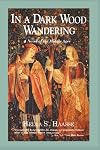
Reading this book reminded me of a visit to Musée de Cluny in Paris, and seeing “The Lady and the Unicorn” tapestries, and getting lost in the magic of their colours and details. Isn’t the title, “In a Dark Wood Wandering”, glorious?
We follow the life of Charles d’Orléans (1394-1465), from his birth in the prologue, to his death in the last chapter. Haasse’s choice of a protagonist is a curious one – he was part of the royal family, nephew to the mad show more king Charles VI… yet throughout his life, he remained a passive observer of events, a pawn who spent 25 years in captivity in England. He is not a person destined for “greatness”, he is happy when he can lose himself in books and write poetry. ”For poetry contests are the order of the day in the castle of Blois; they are, it is said with amusement, the Duke’s only weakness.”
This made me think about courage. Courage can take many different forms. One of them is quietly persevering during dark times (civil wars, Hundred Year’s War between France and England…), just trying to live with dignity. This novel was published in 1949, so the choice of a protagonist is probably not a curious, but a natural one.
”Doesn’t it seem to you that we have, all of us – the King and I and our good friends – wandered off into the forest of the night, filled with wolves and sly foxes? […] We are lost in the Forest of Long Awaiting, a wilderness without prospect.”
The historical background is fascinating. I loved how this book connected with my other historical reads – "The Last Duel: A True Story of Crime, Scandal, and Trial by Combat in Medieval France", Dunnett’s House of Niccoló books, "The Life and Death of King Richard III" by Anthony Cheetham. I like having yet another piece of the puzzle of 15th century Europe. It’s a funny thing: if you had asked me a couple of months ago what Joan of Arc might mean to the characters of House of Niccoló, I would have said “oh, ancient history”. Then the dates of the events in this book were right in front of me, and I said “oh, my”. *The sound of puzzle pieces clicking firmly into place.*
I think the author’s style might be off-putting to some readers. There are historical exposés that feel dry and are more like non-fiction than a novel. Yet the writing is vivid and precise. The book comes alive in dialogue and interactions between the characters. These things made me sink deeper and deeper into my “medieval tapestries”. Also, the style shifts from concise to poetic when we come to Charles d’Orleans’ POV. It’s really nice!
”It was not so much looking at what could be seen through the windows that he loved, it was rather the standing still, the waiting, which enthralled him – that curious feeling that at any moment a miracle would happen.”
”…sound of the music, clear as raindrops, cool and shimmering like the green river, filled with fragrance and the color of unknown things.”
”He was continually overcome with amazement that a world filled with adventure and beauty could rise from behind the black letters; that within a single page, a life could unfold, that death and heroism could be enclosed in a few strokes on the paper.”
There was a lot of Charles d’Orleans’ poetry in the book. (in the original lovely French, with translation into English). I really appreciated it, and thought I could see the man behind the rhyming lines. And isn’t what reading historical fiction is all about, seeing real people behind the pages of chronicles? show less
Reading this book reminded me of a visit to Musée de Cluny in Paris, and seeing “The Lady and the Unicorn” tapestries, and getting lost in the magic of their colours and details. Isn’t the title, “In a Dark Wood Wandering”, glorious?
We follow the life of Charles d’Orléans (1394-1465), from his birth in the prologue, to his death in the last chapter. Haasse’s choice of a protagonist is a curious one – he was part of the royal family, nephew to the mad show more king Charles VI… yet throughout his life, he remained a passive observer of events, a pawn who spent 25 years in captivity in England. He is not a person destined for “greatness”, he is happy when he can lose himself in books and write poetry. ”For poetry contests are the order of the day in the castle of Blois; they are, it is said with amusement, the Duke’s only weakness.”
This made me think about courage. Courage can take many different forms. One of them is quietly persevering during dark times (civil wars, Hundred Year’s War between France and England…), just trying to live with dignity. This novel was published in 1949, so the choice of a protagonist is probably not a curious, but a natural one.
”Doesn’t it seem to you that we have, all of us – the King and I and our good friends – wandered off into the forest of the night, filled with wolves and sly foxes? […] We are lost in the Forest of Long Awaiting, a wilderness without prospect.”
The historical background is fascinating. I loved how this book connected with my other historical reads – "The Last Duel: A True Story of Crime, Scandal, and Trial by Combat in Medieval France", Dunnett’s House of Niccoló books, "The Life and Death of King Richard III" by Anthony Cheetham. I like having yet another piece of the puzzle of 15th century Europe. It’s a funny thing: if you had asked me a couple of months ago what Joan of Arc might mean to the characters of House of Niccoló, I would have said “oh, ancient history”. Then the dates of the events in this book were right in front of me, and I said “oh, my”. *The sound of puzzle pieces clicking firmly into place.*
I think the author’s style might be off-putting to some readers. There are historical exposés that feel dry and are more like non-fiction than a novel. Yet the writing is vivid and precise. The book comes alive in dialogue and interactions between the characters. These things made me sink deeper and deeper into my “medieval tapestries”. Also, the style shifts from concise to poetic when we come to Charles d’Orleans’ POV. It’s really nice!
”It was not so much looking at what could be seen through the windows that he loved, it was rather the standing still, the waiting, which enthralled him – that curious feeling that at any moment a miracle would happen.”
”…sound of the music, clear as raindrops, cool and shimmering like the green river, filled with fragrance and the color of unknown things.”
”He was continually overcome with amazement that a world filled with adventure and beauty could rise from behind the black letters; that within a single page, a life could unfold, that death and heroism could be enclosed in a few strokes on the paper.”
There was a lot of Charles d’Orleans’ poetry in the book. (in the original lovely French, with translation into English). I really appreciated it, and thought I could see the man behind the rhyming lines. And isn’t what reading historical fiction is all about, seeing real people behind the pages of chronicles? show less

The cover art of this one immediately made me think of Sandrine Bonnaire in Agnes Varda's 1985 film Sans toit ni loi (Vagabond), and indeed there seem to be a lot of parallels between these two snapshots from the lives of teenage girls estranged from society and living rough. But maybe only at an obvious, superficial level: Varda starts with a defined ending and works backwards, whilst Haasse takes care to fill in a past for her character Xenia ("Iks"), but to leave the future undefined. show more
Xenia has returned to Amsterdam, homeless and penniless, after a year or so of travelling around Europe doing odd jobs where she can. She wants to resume contact with the two friends she left behind after their grand project to travel the world was broken off in acrimony, but Daan seems to have turned into a broken and uncommunicative junkie, whilst Alma has disappeared — apparently into sex-work. Whilst she attempts to pick up the pieces, she finds temporary shelter with an elderly philosopher who has withdrawn from the world in disgust after his experiences in Paris in 1968. And, inevitably, they use the opportunity to share their experiences of the many things that are wrong with the (modern) world.
Haasse has written a lot of short fiction in her time, and clearly knows how to handle the form: this somehow feels like a much more substantial book than it actually is, as though there were hundreds of extra pages that had been written and then deleted because they weren't really necessary. Very impressive, and moving. show less
Xenia has returned to Amsterdam, homeless and penniless, after a year or so of travelling around Europe doing odd jobs where she can. She wants to resume contact with the two friends she left behind after their grand project to travel the world was broken off in acrimony, but Daan seems to have turned into a broken and uncommunicative junkie, whilst Alma has disappeared — apparently into sex-work. Whilst she attempts to pick up the pieces, she finds temporary shelter with an elderly philosopher who has withdrawn from the world in disgust after his experiences in Paris in 1968. And, inevitably, they use the opportunity to share their experiences of the many things that are wrong with the (modern) world.
Haasse has written a lot of short fiction in her time, and clearly knows how to handle the form: this somehow feels like a much more substantial book than it actually is, as though there were hundreds of extra pages that had been written and then deleted because they weren't really necessary. Very impressive, and moving. show less

Six characters — American, Dutch, German and Greek — are brought together by a variety of circumstances in a small Cretan mountain village in the summer of 1954, with the German occupation and the Civil War still fresh in everyone's memories. Haasse passes the point-of-view from one character to the next in a sort of relay-race pattern, with overlaps in which we are made to see how little one person knows of what's going on in another's life.
For each character, Haasse prompts us to show more think about what the transition from childhood into independent adult life really means, and how it doesn't always coincide with cultural norms or biological development. She asks how that goes together with the religious/cultural idea of "initiation" — is there a necessary modern counterpart to the mysteries of Eleusis? Probably not, it seems: the one character who explicitly thinks of himself as an initiate is the German deserter Helmuth, whose featureless working-class life was given meaning by entry into the rites of Nazism, but who has been driven out of his mind by exposure to the realities that the Nazi ideology unleashed.
As ever, Haasse doesn't give the reader an easy ride, but it's an interesting trip all the same, with a lot of incidental detail of 1950s Greece along the way, and some sharp social observation. show less
For each character, Haasse prompts us to show more think about what the transition from childhood into independent adult life really means, and how it doesn't always coincide with cultural norms or biological development. She asks how that goes together with the religious/cultural idea of "initiation" — is there a necessary modern counterpart to the mysteries of Eleusis? Probably not, it seems: the one character who explicitly thinks of himself as an initiate is the German deserter Helmuth, whose featureless working-class life was given meaning by entry into the rites of Nazism, but who has been driven out of his mind by exposure to the realities that the Nazi ideology unleashed.
As ever, Haasse doesn't give the reader an easy ride, but it's an interesting trip all the same, with a lot of incidental detail of 1950s Greece along the way, and some sharp social observation. show less

The Blue House, a massive 1920s villa, has been empty since the widowed Mrs Lunius took her daughters back to Argentina shortly before the war. Now, some fifty years later, Felicia and Nina are back to spend a last summer in the house where they grew up before it is sold off to make way for retirement apartments. Their reappearance stirs up a lot of interest in the village, where a few people can still remember them. (The place sounds suspiciously like Aerdenhout, where Haasse's Dutch show more relatives lived before the war, but she has prudently mixed up the geography a bit to discourage us from treating the book as a roman à clef.) And, despite their reluctance to get too involved with the place, the presence of the sisters does become a trigger for an unforeseen tragedy. Or at least a mystery...
This seems to be a book about conformity and rebellion and the way they work themselves out in women's lives. The narrative voice alternates between a conventional omniscient narrator with privileged access to the thoughts of the four women at the centre of the story and a "we" narrator, a kind of Greek chorus, representing the collective, disapproving view of the village gossip-machine. And the four women are sorted carefully as well: Felicia and Nora have lived safe, conformist lives, taking careful control of how they are perceived in the world and waiting for the big moment when they can do the thing they really wanted to (although they may well have missed it already...); Nina and Wanda are rebels, constantly running against the walls and hurting themselves. Nina has done some good in the world despite all the obstacles - she has been a dancer and political activist in Argentina - but the author has condemned poor Wanda to a life of chasing illusions.
A very densely-written, short novel in which every fleeting reference and transitory image turns out to have been working hard for its living, and probably a book you can go back to many times to find different threads of meaning in it. And a rather bleak view of life.
(But also fun in a totally anachronistic way: it's hard to stop yourself thinking that a book which starts out with a dull, respectable Dutchman marrying a glamorous and unreliable Argentinian must have some kind of buried satirical message, even if it was written a couple of decades before the Dutch radio first broke out into orgies of bandoneon music...) show less
This seems to be a book about conformity and rebellion and the way they work themselves out in women's lives. The narrative voice alternates between a conventional omniscient narrator with privileged access to the thoughts of the four women at the centre of the story and a "we" narrator, a kind of Greek chorus, representing the collective, disapproving view of the village gossip-machine. And the four women are sorted carefully as well: Felicia and Nora have lived safe, conformist lives, taking careful control of how they are perceived in the world and waiting for the big moment when they can do the thing they really wanted to (although they may well have missed it already...); Nina and Wanda are rebels, constantly running against the walls and hurting themselves. Nina has done some good in the world despite all the obstacles - she has been a dancer and political activist in Argentina - but the author has condemned poor Wanda to a life of chasing illusions.
A very densely-written, short novel in which every fleeting reference and transitory image turns out to have been working hard for its living, and probably a book you can go back to many times to find different threads of meaning in it. And a rather bleak view of life.
(But also fun in a totally anachronistic way: it's hard to stop yourself thinking that a book which starts out with a dull, respectable Dutchman marrying a glamorous and unreliable Argentinian must have some kind of buried satirical message, even if it was written a couple of decades before the Dutch radio first broke out into orgies of bandoneon music...) show less
Lists
Awards


You May Also Like


Associated Authors
Statistics
- Works
- 92
- Also by
- 19
- Members
- 6,343
- Popularity
- #3,876
- Rating
- 3.6
- Reviews
- 165
- ISBNs
- 404
- Languages
- 13
- Favorited
- 21


