
Marga Minco (1920–2023)
Author of Bitter Herbs: A Little Chronicle
About the Author
Works by Marga Minco
Terugkeer 7 copies
In het voorbijgaan 4 copies
Door het land 3 copies
De tweede deur — Author — 2 copies
Je mag van geluk spreken 2 copies
Maart 1 copy
Floroskoop - Maart 1 copy
De verhalen 1 copy
Verzameld werk 1 copy
Fluitend in de file 1 copy
December blues 1 copy
Associated Works
De Nederlandse en Vlaamse literatuur vanaf 1880 in 250 verhalen (2005) — Contributor — 79 copies, 2 reviews
Büch's boeket. 1: Boudewijn Büch koos verhalen van auteurs bij Uitgeverij Bert Bakker — Contributor — 13 copies
Breekbare dagen 4 en 5 mei door de jaren heen — Contributor — 5 copies
5 van Cees Buddingh' en anderen — Contributor — 3 copies
Tagged
Common Knowledge
- Legal name
- Menco, Sara
- Other names
- Faes, Marga
Hoorn, Marga van
Hus
Rebel, J.
Wit, Marga de - Birthdate
- 1920-03-31
- Date of death
- 2023-07-10
- Gender
- female
- Education
- Middelbare Nutsschool voor Meisjes
- Occupations
- journalist
novelist
drawing teacher
Holocaust survivor
short story writer - Awards and honors
- Annie Romeinprijs (1999)
Constantijn Huygensprijs (2005) - Relationships
- Voeten, Bert (husband)
- Short biography
- Marga Minco, née Sara Minco, was born to a Jewish family in Ginneken, The Netherlands. Her parents were Grietje (van Hoorn) and Salomon Minco, a salesman. She had a sister, Bettie, and a brother, David. The family moved to Breda in about 1925. Ms. Minco began writing as a child, and following her graduation from high school, got a job as an apprentice reporter for the Bredasche Courant, where she covered local news and wrote theater and film reviews. After Nazi Germany invaded Holland in World War II in May 1940, Ms. Minco was fired from her job and her family was forced into a Jewish ghetto in Amsterdam. Her parents and both siblings were rounded up and deported by the Nazis. Ms. Minco escaped and went into hiding with her boyfriend Bert Voeten, a poet and translator, and assumed the alias Marga. After the liberation of The Netherlands, Ms. Minco learned that she was the only surviving member of her extended family except for an uncle. Ms. Minco and Voeten married in August 1945 and had two daughters. In 1957, she made her literary debut with a short novel in diary form that remains her best-known work, Het bittere kruid (Bitter Herbs). She took Marga Minco as her pen name. Bitter Herbs was one of the first books about the war and the Holocaust published in The Netherlands, and became a bestseller that has never gone out of print. Besides novels, Ms. Minco also wrote numerous short stories that appeared in Dutch periodicals and were later published in collections such as De andere kant (The Other Side, 1959), Het adres en andere verhalen (The Address and Other Stories, 1976), and Achter de muur (Behind the Wall, 2010). Although she wrote about many other subjects, at times with absurdist and humorous elements, Ms. Minco always returned to her experiences during WWII and the post-war period. She received many awards for individual works, as well as the 1999 Annie Romein Prize, the 2005 Constantijn Huygens Prize, and the 2018 P.C. Hooft Prize, her country's most prestigious literary award, for her entire oeuvre.
- Nationality
- Netherlands
- Birthplace
- Ginniken, Netherlands
- Places of residence
- Ginniken, Netherlands
Breda, Netherlands
Amersfoort, Netherlands
Amsterdam, Netherlands
Utrecht, Netherlands - Place of death
- Amsterdam, Noord-Holland, Nederland
- Map Location
- Netherlands
Members
Reviews
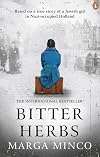
Marga Minco was a young adult when the Nazis invaded the Netherlands and she would lose her entire family in the ensuing Holocaust. She wrote pieces of this novel as short stories about her experiences, and in 1957 she put the stories in chronological order and published them as a novel. The book became very popular and acclaimed and was required reading in many schools in the Netherlands. In the novel she is roughly six years younger than she was in real life, but the incidents are based on show more her life.
Although told in a spare style without excess emotion, I found Bitter Herbs quite touching. The story of her and her brother going to various stores looking for good camping cups to take with them will remain with me. show less
Although told in a spare style without excess emotion, I found Bitter Herbs quite touching. The story of her and her brother going to various stores looking for good camping cups to take with them will remain with me. show less

With her 1986 Boekenweek novella, Marga Minco revisited the autobiographical territory of her best-known book, Bitter herbs. Art student Stella manages to escape over the rooftops when her Jewish parents and their friends are rounded up by the Nazis in Amsterdam, and she is helped by a succession of more or less altruistic ordinary Dutch people to stay undercover until the Liberation. After the war she is reluctant to look up the people who helped to save her life — so many of them ended show more up in concentration camps themselves — but she remains curious about one person she never knew, a woman of her own age who died young and whose identity papers Stella was able to use.
Forty years on, Minco wants to remind us of the realities of surviving undercover, and dispel some of the romantic fictions about brave resistance workers and happy endings. At least some of the brave resistance workers thought that the young women they rescued owed them a practical demonstration of gratitude, and ”happy endings” for the few like Minco who managed to stay safe were modulated by an awful lot of survivor’s guilt for the friends and family who weren’t so lucky and for the helpers who sacrificed themselves. show less
Forty years on, Minco wants to remind us of the realities of surviving undercover, and dispel some of the romantic fictions about brave resistance workers and happy endings. At least some of the brave resistance workers thought that the young women they rescued owed them a practical demonstration of gratitude, and ”happy endings” for the few like Minco who managed to stay safe were modulated by an awful lot of survivor’s guilt for the friends and family who weren’t so lucky and for the helpers who sacrificed themselves. show less

This very sober and pared-down novella tells the story of a young Jewish girl's experiences during the German occupation of the Netherlands, in the simplest possible language and with the least possible explicit emotional input. It's the kind of book that has all its narrative power in the things it doesn't tell us, but which we know are there just under the surface. By not sharing anything about the narrator's fears and griefs, it takes us into them much more strongly than it would if show more everything had been spelled out.
The story is a lightly fictionalised version of Minco's own experiences — all her family were murdered in the Holocaust, but she was able to escape arrest by a stroke of luck and remained in hiding until the end of the war. She sharpens the focus a bit by making her narrator seem rather younger and more naive than she actually was herself (in reality she was already working as a journalist in May 1940). But it would be unfair to suggest that she was trying to ride in the slipstream of Anne Frank (although her publishers certainly were): this is a very different kind of book, clearly a highly sophisticated piece of literature with a strong message about the gulf that opened up under the ordinary, provincial life the Minco family and their neighbours were living, convinced that "it can't happen here," when it did. show less
The story is a lightly fictionalised version of Minco's own experiences — all her family were murdered in the Holocaust, but she was able to escape arrest by a stroke of luck and remained in hiding until the end of the war. She sharpens the focus a bit by making her narrator seem rather younger and more naive than she actually was herself (in reality she was already working as a journalist in May 1940). But it would be unfair to suggest that she was trying to ride in the slipstream of Anne Frank (although her publishers certainly were): this is a very different kind of book, clearly a highly sophisticated piece of literature with a strong message about the gulf that opened up under the ordinary, provincial life the Minco family and their neighbours were living, convinced that "it can't happen here," when it did. show less
Another heart-breaking fictionalized book based on one of the millions of true stories about evil stealing innocence and love. And destroying millions of families.
Seems it took the Jews in the Netherlands awhile before they could believe what was happening. Minco's family like many other Jewish families would not believe that Jews were being rounded out and sent to concentration camps, and killed. Despite not being allowed to work, earn money, associate with non-Jews, her father remained show more optimistic and calm.
Hard to wrap my head around the routine anti-semitic bullying and physical attacks by non-Jewish classmates against friends and neighbors they had grown up with. Or how a non-Jewish neighbor visited Minco's home and helped herself to small belongings because Minco's family 'would not be needing them anymore'. Just like that.
Minco writes in a quiet, calm voice that speaks of the horror loudly. show less
Seems it took the Jews in the Netherlands awhile before they could believe what was happening. Minco's family like many other Jewish families would not believe that Jews were being rounded out and sent to concentration camps, and killed. Despite not being allowed to work, earn money, associate with non-Jews, her father remained show more optimistic and calm.
Hard to wrap my head around the routine anti-semitic bullying and physical attacks by non-Jewish classmates against friends and neighbors they had grown up with. Or how a non-Jewish neighbor visited Minco's home and helped herself to small belongings because Minco's family 'would not be needing them anymore'. Just like that.
Minco writes in a quiet, calm voice that speaks of the horror loudly. show less
Lists
Awards


You May Also Like


Associated Authors
Statistics
- Works
- 40
- Also by
- 10
- Members
- 1,328
- Popularity
- #19,368
- Rating
- 3.3
- Reviews
- 30
- ISBNs
- 97
- Languages
- 9
- Favorited
- 1
