
Harry Mulisch (1927–2010)
Author of The Discovery of Heaven
About the Author
Mulisch's name will go down in history as the writer par excellence of modern myths, and possibly not only in Dutch literary history. Every one of his great novels such as Het Stenen Bruidsbed (The Stone Bridal Bed) (1959), Hoogste Tijd (High Time) (1985), and De Aanslag (The Assault) (1982) is show more technically based on, or evokes reminiscences of, existing classical myths; at the same time, each work is thematically related to the author's own time and experiences, usually World War II. Every one of the more important characters, excluding the main characters who normally serve as narrators or reporters, is an embodiment or personification of an archetype. In The Assault the various characters not only play completely different roles in the killing of a German officer by members of the Dutch Resistance movement, but they also represent distinct types. The action is also much more than an incident. The protagonist, Anton Steenwijk, spends a lifetime trying to solve the puzzle consisting of the various causes and effects relative to the fatal act. He does this not as a detective but as a normal, thinking human being who is interested in knowing where he came from and where he is headed. The puzzle that presents itself to him is as complex, yet as logical, as the waves created by a passing ship, reverberating indefinitely, even when the ship has disappeared from sight. Mulisch is, with Wolkers, Hermans, and Vestdijk, one of the most talented novelists of his generation, but he may be expected to outlive all three others because of the classical nature of his work, classical here meaning "of primary significance for all people of all times." (Bowker Author Biography) Harry Mulisch is the author of such internationally bestselling novels as "The Assault", which was made into the film that won the 1987 Oscar for Best Foreign Film, & "The Discovery of Heaven". He has also published short stories, essays, poetry, plays, & philosophical works. He lives in Amsterdam. (Bowker Author Biography) show less
Image credit: Photo © ÖNB/Wien
Series
Works by Harry Mulisch
Criminal Case 40/61, The Trial Of Adolf Eichmann: An Eyewitness Account (1962) 198 copies, 5 reviews
Harry Mulisch 11 copies
De romans 10 copies
De vogels : drie balladen 8 copies
Tegenlicht 4 copies
Randstad 9 — Editor — 3 copies
Randstad 11-12 — Editor — 3 copies
Harry Mulisch Leest 3 copies
De ontdekking van de hemel II 3 copies
Randstad 1 — Editor — 2 copies
Randstad 7 — Editor — 2 copies
Randstad 6 — Editor — 2 copies
Randstad 13 — Editor — 2 copies
Randstad 4 — Editor — 2 copies
Randstad 8 — Editor — 2 copies
Randstad 5 — Editor — 2 copies
'We praten polemisch' : Harry Mulisch vijfentwintig jaar Gids-redacteur — Contributor — 2 copies
Geen combinatie 2 2 copies
In gesprek met Harry Mulisch 2 copies
In gesprek met... — Contributor — 1 copy
De ontdekking van de hemel I 1 copy
Randstad 10 — Editor — 1 copy
Verzamelde verhalen 1 copy
Cadeautje! 1 copy
Symmetrie en andere verhalen 1 copy
Associated Works
De Nederlandse poëzie van de negentiende en twintigste eeuw in duizend en enige gedichten (1979) — Contributor, some editions — 209 copies, 1 review
De Nederlandse en Vlaamse literatuur vanaf 1880 in 250 verhalen (2005) — Contributor — 79 copies, 2 reviews
The Dedalus Book of Dutch Fantasy (European Literary Fantasy Anthologies) (1990) — Contributor — 50 copies
De Nederlandse en Vlaamse literatuur vanaf 1880 in 60 lange verhalen (2006) — Contributor — 43 copies, 2 reviews
Büch's boeket. 3: Boudewijn Büch koos verhalen van auteurs bij De Bezige Bij — Contributor — 11 copies
Breekbare dagen 4 en 5 mei door de jaren heen — Contributor — 5 copies
Smutny kos : opowieści niesamowite i osobliwe z prozy niderlandzkiej (1983) — Contributor — 3 copies
Tagged
Common Knowledge
- Canonical name
- Mulisch, Harry
- Legal name
- Mulisch, Harry Kurt Victor
- Other names
- Мулиш, Харри
Fjodor Klondyke - Birthdate
- 1927-07-29
- Date of death
- 2010-10-30
- Gender
- male
- Education
- Eerste Christelijk Lyceum, Haarlem (1940-1944)
- Occupations
- novelist
short story writer
dramatist
essayist
poet
memoirist - Awards and honors
- Prijs der Nederlandse Letteren (1995)
Commandeur in de Orde van de Nederlandse Leeuw (1997)
Bundesverdienstkreuz (2002)
Man Booker International Prize Finalist (2007) - Short biography
- Harry Mulisch was born in the town of Haarlem, the Netherlands. His father Karl Mulisch was an Austrian immigrant who had served as an officer in World War I, and his mother Alice Schwarz was herself the daughter of Austrian Jews. By the time Germany invaded and occupied the Netherlands in 1940, his parents were divorced. His father worked at Lippmann-Rosenthal & Company, a repository for looted Jewish assets, where he made connections that helped save Harry and his mother from deportation and death. After the war, his father was imprisoned for three years as a German collaborator and his mother moved to the USA. Mulisch attended the Christelijk Lyceum, which he had to leave in 1944. His original career ambition was to be a scientist. In 1947, he published his first story in a weekly newspaper and five years later, published his first novel, Archibald Strohalm. He went on to produce more novels, plays, collections of essays, short stories, opera libretti, poetry, and memoirs, and covered the Eichmann trial for Dutch newspapers in 1962. He won the leading Dutch literary awards and become the country’s most admired living author. In 1971, he married Sjoerdje Woudenberg, an artist, with whom he had two daughters; in 1989, he began living with Kitty Saal, with whom he had a third child. His 1982 novel De Aanslag (The Assault) was a bestseller that was translated into 32 languages, and made into a successful Dutch film, winning the Academy Award in 1987 for Best Foreign Film. It became a standard text in Dutch schools.
- Cause of death
- old age
- Nationality
- Netherlands
- Birthplace
- Haarlem, Netherlands
- Place of death
- Amsterdam, Netherlands
- Burial location
- Begraafplaats Zorgvlied, Amsterdam, Netherlands
- Map Location
- Netherlands
Members
Reviews
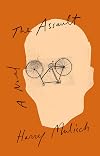
In the last cold, hungry months of World War II, a Nazi collaborator in Haarlem is assassinated as he rides along a quiet street at night on his bicycle. In retaliation, the Nazis murder a group of hostages and burn down the home of an innocent family. Twelve-year-old Anton is spared, but is so traumatized that he represses his emotions and memories of the night and of his family. Four times over the next 36 years, Anton is confronted with people from his past, and slowly the bigger picture show more of what happened that night becomes clear.
This is a brilliant book that covers so much ground in only 185 pages. Childhood trauma plays out in so many ways. For Anton, his lack of control at that pivotal moment develops into a life of passivity. He drifts along until he bumps into someone from his past who jostles his memories and causes a flareup of emotion. This tension between action and inaction also plays out on a larger scale with collaborators, resistance fighters, and bystanders; those who engage with politics and those who abstain; surgeons who cut and anesthesiologists who numb the pain. It's a book about history and a country struggling with how to treat collaborators and resistance fighters years and decades after the war's end. But it's also about one incident and how interconnected all the players are in that single night's drama. And it asks some big questions about innocence and guilt, justice, and whether acts done with the foreknowledge of fallout carry responsibility for the unintended damage. Engrossing and thought-provoking, it's a book that can be considered from many different angles, all of them multifaceted. show less
This is a brilliant book that covers so much ground in only 185 pages. Childhood trauma plays out in so many ways. For Anton, his lack of control at that pivotal moment develops into a life of passivity. He drifts along until he bumps into someone from his past who jostles his memories and causes a flareup of emotion. This tension between action and inaction also plays out on a larger scale with collaborators, resistance fighters, and bystanders; those who engage with politics and those who abstain; surgeons who cut and anesthesiologists who numb the pain. It's a book about history and a country struggling with how to treat collaborators and resistance fighters years and decades after the war's end. But it's also about one incident and how interconnected all the players are in that single night's drama. And it asks some big questions about innocence and guilt, justice, and whether acts done with the foreknowledge of fallout carry responsibility for the unintended damage. Engrossing and thought-provoking, it's a book that can be considered from many different angles, all of them multifaceted. show less

I will quote for you the blurb:
“It is the winter of 1945, the last dark days of the war in occupied Holland. A Nazi collaborator, infamous for his cruelty, is assassinated as he rides home on his bicycle. The Germans retaliate by slaughtering an innocent family: only the youngest son, twelve-year-old Anton Steenwijk, survives.
The Assault traces the complex repercussions of this nightmarish event on Anton's life. Determined to forget, he opts for a carefully normal existence—a prudent show more marriage, a successful career, and colorless passivity. But the past keeps breaking through, in relentless memories and in chance encounters with the other actors in the drama, until Anton finally learns what really happened that night in 1945, and why.”
Once again, this novel's magic lies in the author's handling of the narrator. Published in 1985, I have no idea why we didn't read this after reading all those heavy holocaust novels, perhaps because in this novel, there is no easy discussion in the classrooms. But because of the large room of thought this novel creates, I feel it is all the more important.
When I say The Assault is though-provoking, I am freely invoking that cliché. Perhaps you know how deeply personal The Assault was for me as it dealt with things that German children must cope with on their own, guilt, the past, ignorance, excuses, avoidance, et cetera. I'd never inspected my coping methods as acutely as when confronted in spectacular luminosity the way in which Anton avoids the past his entire life. But like the Greeks, he is always facing it.
The Assault reminded me of Kazuo Ishiguro's Remains of the Day its quiet narrator who reflects on events typical of the second world war, but there the similarities end. Had this been eligible, The Assault would have won the Booker prize, but what are awards anyway? Where Remains had been affable in it's avoidance, there is no pretension about what Mulisch and Anton conspire to do. Anton refuses to remember, forced down 'memory-lane' while it is his subconscious that lures him into not turning away the unwanted guest, yearning to be fulfilled.
A reader might be tempted to pity Anton from the blurb, as one freely did after reading Remains, but pity or hate the butler, Mulisch does not bring us through these moments, titled 'episodes', to make us feel sorry. Mulisch, in actuality, feels sorry for us, the readers. But he does not pose questions of morality to us with apology. These are things we all must face in our lives, unless we are like that aloof butler traveling the countryside.
This novel isn't cynical, nor is it hopeful in the way The Minotaur Takes a Cigarette Break by Steven Sherril is. The heart races as the events in Anton's life come to a head, but we do not pity him, not because he is unsympathetic and 'merely' the child of fate, but because Mulisch has written a concise novel that does not have room for misplaced tears. We mourn the lost child, the one whom Anton has forgotten, who died along with the rest of his family. Perhaps because Anton has been indifferent for so long, that when he finally concludes this history and looks to other memories, we only feel immense satisfaction.
I am letting myself imagine, now that the book is shut, that Anton has begun to come to his own conclusions about the many questions that Harry Mulisch poses, as I must now attempt to do. But further, that Anton changes his life, going home and finally climbs up into the cockpit, and finally opens up to the person that he once was.
While I will not answer any of the questions posed within, dealing with our history, the morality of causalities, the innocence of the guilty, I am curious about your own thoughts. The tome is not very long, and it is a fabulous piece of literature, important for many reasons, and I encourage you to read it, if not immediately buy it. Once you have, come back and let me know your thoughts. I gladly welcome discussion in the comments.
185pp. Random House. 1985. show less
“It is the winter of 1945, the last dark days of the war in occupied Holland. A Nazi collaborator, infamous for his cruelty, is assassinated as he rides home on his bicycle. The Germans retaliate by slaughtering an innocent family: only the youngest son, twelve-year-old Anton Steenwijk, survives.
The Assault traces the complex repercussions of this nightmarish event on Anton's life. Determined to forget, he opts for a carefully normal existence—a prudent show more marriage, a successful career, and colorless passivity. But the past keeps breaking through, in relentless memories and in chance encounters with the other actors in the drama, until Anton finally learns what really happened that night in 1945, and why.”
Once again, this novel's magic lies in the author's handling of the narrator. Published in 1985, I have no idea why we didn't read this after reading all those heavy holocaust novels, perhaps because in this novel, there is no easy discussion in the classrooms. But because of the large room of thought this novel creates, I feel it is all the more important.
When I say The Assault is though-provoking, I am freely invoking that cliché. Perhaps you know how deeply personal The Assault was for me as it dealt with things that German children must cope with on their own, guilt, the past, ignorance, excuses, avoidance, et cetera. I'd never inspected my coping methods as acutely as when confronted in spectacular luminosity the way in which Anton avoids the past his entire life. But like the Greeks, he is always facing it.
The Assault reminded me of Kazuo Ishiguro's Remains of the Day its quiet narrator who reflects on events typical of the second world war, but there the similarities end. Had this been eligible, The Assault would have won the Booker prize, but what are awards anyway? Where Remains had been affable in it's avoidance, there is no pretension about what Mulisch and Anton conspire to do. Anton refuses to remember, forced down 'memory-lane' while it is his subconscious that lures him into not turning away the unwanted guest, yearning to be fulfilled.
A reader might be tempted to pity Anton from the blurb, as one freely did after reading Remains, but pity or hate the butler, Mulisch does not bring us through these moments, titled 'episodes', to make us feel sorry. Mulisch, in actuality, feels sorry for us, the readers. But he does not pose questions of morality to us with apology. These are things we all must face in our lives, unless we are like that aloof butler traveling the countryside.
This novel isn't cynical, nor is it hopeful in the way The Minotaur Takes a Cigarette Break by Steven Sherril is. The heart races as the events in Anton's life come to a head, but we do not pity him, not because he is unsympathetic and 'merely' the child of fate, but because Mulisch has written a concise novel that does not have room for misplaced tears. We mourn the lost child, the one whom Anton has forgotten, who died along with the rest of his family. Perhaps because Anton has been indifferent for so long, that when he finally concludes this history and looks to other memories, we only feel immense satisfaction.
I am letting myself imagine, now that the book is shut, that Anton has begun to come to his own conclusions about the many questions that Harry Mulisch poses, as I must now attempt to do. But further, that Anton changes his life, going home and finally climbs up into the cockpit, and finally opens up to the person that he once was.
While I will not answer any of the questions posed within, dealing with our history, the morality of causalities, the innocence of the guilty, I am curious about your own thoughts. The tome is not very long, and it is a fabulous piece of literature, important for many reasons, and I encourage you to read it, if not immediately buy it. Once you have, come back and let me know your thoughts. I gladly welcome discussion in the comments.
185pp. Random House. 1985. show less

There's a scene towards the end of this book where the narrator, exhausted from nervous strain and a long drive, briefly falls unconscious at a café table. When she comes round, the friend who was sitting with her tells her that he saw her suddenly lean forward and fold up "like a ventriloquist's doll".
An image Mulisch chose carefully, of course, because the one fact we never manage to shake out of our minds whilst reading this very intimate first-person story of a tragic love-affair show more between two women is that it's actually being told by one of the biggest alpha-males of seventies Dutch literature, in a quite extraordinarily bare-faced bit of ventriloquism. To his credit, he doesn't quite turn it into porn (the only explicit sex described in the book is, bizarrely enough, between two men on a theatre stage), but we do get all the other clichés of male-gaze fantasy. Both women are scared stiff of their mothers; the relationship is incomplete by definition, without a man and without children; it can only end unhappily; there can only be a dramatic resolution by bringing a man into the story.
Mulisch is a competent and entertaining story-teller, and he manages to muddy the waters enough by clever image-play and high-cultural references that we almost believe that there's something serious going here. Perhaps not surprising to know that it was one of his most popular books, made into a reasonably high-profile film in 1979. But fifty years on the world has changed: it's hard now to see it as anything more than a rather pointless confidence trick. show less
An image Mulisch chose carefully, of course, because the one fact we never manage to shake out of our minds whilst reading this very intimate first-person story of a tragic love-affair show more between two women is that it's actually being told by one of the biggest alpha-males of seventies Dutch literature, in a quite extraordinarily bare-faced bit of ventriloquism. To his credit, he doesn't quite turn it into porn (the only explicit sex described in the book is, bizarrely enough, between two men on a theatre stage), but we do get all the other clichés of male-gaze fantasy. Both women are scared stiff of their mothers; the relationship is incomplete by definition, without a man and without children; it can only end unhappily; there can only be a dramatic resolution by bringing a man into the story.
Mulisch is a competent and entertaining story-teller, and he manages to muddy the waters enough by clever image-play and high-cultural references that we almost believe that there's something serious going here. Perhaps not surprising to know that it was one of his most popular books, made into a reasonably high-profile film in 1979. But fifty years on the world has changed: it's hard now to see it as anything more than a rather pointless confidence trick. show less

The background of Mulisch's Boekenweek novella draws on a real Dutch cause célèbre from 1987: An actor faked neo-fascist death threats against himself and others and staged a "kidnapping attempt" to draw publicity to his campaign against a Dutch production of Fassbinder's controversial play Der Müll, die Stadt und der Tod (which was widely considered to be antisemitic). Mulisch uses a fictionalised version of these events to explore the complex links between actions and our perceived, show more stated and (possibly unknowable) real motives for them. Especially in the world of theatre, where everyone is pretending to be something other than they are.
Act One of this reads almost like an entry in a competition to create a Harry Mulisch parody: the main female character is centre-stage throughout, but as a dead body at her own funeral. Her husband is giving the funeral oration, but it seems to be much more about him than her. After the intermission, we're back with a reset stage and there's an ingenious reversal of roles - perhaps not quite as original and audacious as Mulisch claims in his afterword, but still quite a good trick if you can get away with it.
The correction of Mulisch's androcentric view of the universe may be purely nominal, but it's sad to realise that what hasn't lost its relevance in this book is what it has to say to us about the threat to our liberal society from extreme views, and the danger we face if we allow ourselves to forget what actually happened under the Nazis. show less
Act One of this reads almost like an entry in a competition to create a Harry Mulisch parody: the main female character is centre-stage throughout, but as a dead body at her own funeral. Her husband is giving the funeral oration, but it seems to be much more about him than her. After the intermission, we're back with a reset stage and there's an ingenious reversal of roles - perhaps not quite as original and audacious as Mulisch claims in his afterword, but still quite a good trick if you can get away with it.
The correction of Mulisch's androcentric view of the universe may be purely nominal, but it's sad to realise that what hasn't lost its relevance in this book is what it has to say to us about the threat to our liberal society from extreme views, and the danger we face if we allow ourselves to forget what actually happened under the Nazis. show less
Lists
Awards


You May Also Like


Associated Authors
Statistics
- Works
- 124
- Also by
- 17
- Members
- 11,826
- Popularity
- #1,986
- Rating
- 3.7
- Reviews
- 184
- ISBNs
- 394
- Languages
- 25
- Favorited
- 50

