

Connie Palmen
Author of The Friendship
About the Author
Image credit: Edwin de Graaf
Works by Connie Palmen
Helemaal Huf 5 copies
Home 2 copies
De psychiater gevolgd door dezelfde tekst in 't Bergs, het Limburgse dialect van St.-Odiliënberg (2011) 2 copies
Jij bent de absolute harmonie : laudatie bij de tachtigste verjaardag van Harry Mulisch (2014) 2 copies
Lola 1 copy
Helemaal Huf 1 copy
Connie Palmen: die Gesetze 1 copy
Todo es posible 1999 1 copy
I. M. Ischa Meijer 1 copy
Associated Works
De Nederlandse en Vlaamse literatuur vanaf 1880 in 250 verhalen (2005) — Contributor — 79 copies, 2 reviews
Tagged
Common Knowledge
- Canonical name
- Palmen, Connie
- Legal name
- Palmen, Aldegonda Petronella Huberta Maria
- Birthdate
- 1955-11-25
- Gender
- female
- Awards and honors
- Gouden Ezelsoor (1992)
AKO Literatuurprijs (1995)
Trouw Publieksprijs (1996)
Libris Literatuur Prijs (2016)
Inktaap (2017) - Relationships
- Meijer, Ischa (partner)
Mierlo, Hans van (partner) - Nationality
- Netherlands
- Birthplace
- Sint Odiliënberg, Netherlands
- Places of residence
- Sint Odiliënberg, Netherlands
Amsterdam, Netherlands - Map Location
- Netherlands
- Associated Place (for map)
- Netherlands
Members
Discussions
Group Read, September 2017: The Laws in 1001 Books to read before you die (October 2017)
Reviews
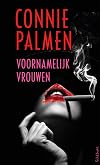
Haar hele lezende leven al is Connie Palmen gebiologeerd door vrouwelijk kunstenaarschap. In Voornamelijk vrouwen beschrijft ze hen: vrouwen als Marilyn Monroe, Marguerite Duras, Patricia Highsmith en Jane Bowles, die ieder op hun eigen wijze de grenzen van de heersende moraal en hun sekse overschreden. Sylvia Plath, die zich bezoedeld voelde omdat ze te veel onechtheid in haar leven had toegelaten. Vivian Gornick, die met Connie Palmen, haar lezer, onbewust deed wat ze met haar moeder deed: show more treiteren en provoceren. Olivia Laing, die zich al non-binair voelde voordat ze dat woord kende. Joan Didion, die in haar essays, klaagzangen zonder klacht, beschreef hoe het is om Joan Didion te zijn. Vooruit, één man, Philip Roth, al is het maar omdat je als vrouw altijd weer moet uitleggen waarom je van die wraakzuchtige, overspelige schrijver houdt. En Connie Palmen zelf, die op haar vijftiende voor het eerst de popsong ‘Lola’ hoorde, die een opmaat bleek voor een ‘mixed up, muddled up, shook up world’, waarin geologische en biologische afbakeningen niet langer bindend of noodlottig zijn. Voornamelijk vrouwen is Connie Palmens schitterende literaire lofzang op vrouwelijke scheppende kracht en autonomie. En het is vooral een verkenning van haar eigen schrijverschap, waarin ze al haar literaire thema’s laat terugkomen. Bron: uitgeverij Prometheus show less
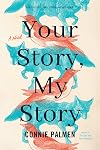
An imaginative work based on documentary evidence from, and about, Ted Hughes and Sylvia Plath, written from Hughes’ POV. Usually referring to Sylvia as ‘bride’ cleverly brings attention to both the relationship and the controversy after her death as to which surname to use. Portrayal of Hughes is neither as sinner or saint, but aims to show both as deeply flawed, real people, who ultimately brought out the worst in each other. The book reminds us that most biographies, to various show more extents, reduce people to “hackneyed” archetypes. Hughes can be seen as both a besotted lover and a 1950s self-absorbed misogynist, a man who wanted to play the hero (“It was up to me to raise her from that death.”) without understanding the role; Plath as caught in that cruelest of nets, the almost healed.
Palmen does an excellent job of showing how Hughes has been perceived without critique or admission. Many thoughts attributed to Hughes could apply equally to either of them: “ of a poet who has stood eye-to-eye with everything he has been forced to conceal.” Each had abandonment issues (Hughes’ brother, Plath’s father), a need for external validation, and a love/hate relationship with themselves.
The reader is left feeling saddened for both and complicit in the aftermath. Real lives do not have a narrative arc, only individual scenes; in this case, a Bergmanesque scenes from a marriage. show less
Palmen does an excellent job of showing how Hughes has been perceived without critique or admission. Many thoughts attributed to Hughes could apply equally to either of them: “ of a poet who has stood eye-to-eye with everything he has been forced to conceal.” Each had abandonment issues (Hughes’ brother, Plath’s father), a need for external validation, and a love/hate relationship with themselves.
The reader is left feeling saddened for both and complicit in the aftermath. Real lives do not have a narrative arc, only individual scenes; in this case, a Bergmanesque scenes from a marriage. show less

This is the story of the young literature graduate Max, taken on by the distinguished novelist Lotte Inden as confidential secretary and carer when she is diagnosed with a progressive muscle disease. Max works on cataloguing and collating the vast assembly of marginalia and sticky notes she's been creating in her library throughout her writing career, which is to form the basis of her planned final novel, The inheritance. Meanwhile she's busy with a novel called Geheel de Uwe (quite show more coincidentally, the title of Palmen's next book). And the two of them have long philosophical discussions about the nature of originality, literary narcissism (something Palmen is often accused of), and similar topics, many of which Max then re-discusses with his elective aunt Margarethe, a psychotherapist. And of course Max falls hopelessly in love with the curmudgeonly old novelist as her life is taken over by the illness.
An intelligent, articulate little book, but one that left me quite unsatisfied. I didn't feel at the end of the book that I'd really learnt anything about the characters, or literature, or human nature. It felt as though Palmen just got to the end of the allotted 96 pages and stopped, irrespective of whether she'd said everything she wanted to or not. show less
An intelligent, articulate little book, but one that left me quite unsatisfied. I didn't feel at the end of the book that I'd really learnt anything about the characters, or literature, or human nature. It felt as though Palmen just got to the end of the allotted 96 pages and stopped, irrespective of whether she'd said everything she wanted to or not. show less

Ik vergelijk dit boek met Tonio (veel indringender), met De Vriendschap, met I.M. Het is een typisch Connie Palmenboek, invoelbaar, heftig, veel grote gevoelens. En ook de vraag: mag dit wel, wat doet ze anderen aan met zo'n boek? Dat is wel bij meer literatuur de vraag, Knausgard bijv. Waarom ze dit heeft geschreven? Bij A.F.Th. Begreep ik de noodzaak beter. Hoe dan ook: heel treurig, zo'n litanie en al die andere mensen die in dat jaar ook doodgaan.
Lists
Awards


You May Also Like


Associated Authors
Statistics
- Works
- 34
- Also by
- 4
- Members
- 3,296
- Popularity
- #7,762
- Rating
- 3.7
- Reviews
- 58
- ISBNs
- 120
- Languages
- 10
- Favorited
- 13
