
Louis Couperus (1863–1923)
Author of Eline Vere
About the Author
Series
Works by Louis Couperus
Als ik, bij voorbeeld, de geest van mijn moeder op den rand van mijn bed zag zitten : okkulte knipsels uit Couperus (1974) — Author — 90 copies, 2 reviews
Als ik, bij voorbeeld, de geest van mijn moeder op den rand van mijn bed zag zitten occulte teksten (1986) — Author — 21 copies, 1 review
Verzamelde werken. X: De komedianten ; De verliefde ezel ; Het zwevende schaakbord ; De ode 14 copies
Verzamelde werken. VIII: Herakles ; Verhalen en dagboekbladen ; Uit blanke steden onder blauwe lucht 12 copies
Verzamelde werken. IV: De stille kracht ; Babel ; Novellen ; De zonen der zon ; Jahve ; Dionysos 12 copies
Verzamelde werken. II: Noodlot ; Extase ; Majesteit ; Wereldvrede ; Hoge troeven ; Reis-impressies 12 copies
Verzamelde werken. XI: Xerxes ; Iskander 12 copies
Verzamelde werken. XII: Verhalen 11 copies
The Books of Small Souls, Vol 3 and Vol 4: The Twilight of the Souls and Dr. Adriaan (1991) 11 copies
Verzamelde werken 10 copies
Fantasia 7 copies
De onbekende Couperus : vergeten, weinig gepubliceerde en bekende verhalen, gedichten, brieven en fragmenten bijeengebra (1973) 6 copies
Herinneringen 3 copies
Der dingen ziel 3 copies
Gedachten van Louis Couperus 3 copies
Il Mago 3 copies
Nachtelijke gedaanten : fantastische literatuur uit Nederland van Louis Couperus, Ferdinand Bordewijk, Jan de Hartog ... [et al.] (1977) 2 copies
In Nice en Dresden 2 copies
Omnibus 2 copies
Schimmen van glans 2 copies
De oude trofime 2 copies
Japanse legenden : voor het onderwijs gekozen en van opdrachten voorzien door Marc Galle (1976) 2 copies
Babel en Psyche 1 copy
Verzameld Werk V 1 copy
De binocle 1 copy
Werk van Louis Couperus — Author — 1 copy
The Twilight of the Souls 1 copy
Nyderlandų novelės 1 copy
Dr Adriaan (Perfect Library) 1 copy
Verjaardagalbum 1 copy
Babel by Louis Couperus 1 copy
Proza : tweede bundel 1 copy
Jan en Florence 1 copy
De Haagse romans 1 copy
Met Louis Couperus op tournee: Voordrachten uit eigen werk 1915-1923 in recensies, brieven en andere documenten (1998) 1 copy
Romantisch avontuur 1 copy
Wreede portretten 1 copy
Het afscheid 1 copy
Louis Couperus 1 copy
Bulkboek speciaal 1 copy
Proza. Derde bundel 1 copy
De betooveraar 1 copy
Majesteit deel II 1 copy
Majesteit deel I 1 copy
Couperus in De Steeg 1 copy
Het boek van adel 1 copy
Van vagebonden en schelmen 1 copy
Associated Works
De Nederlandse poëzie van de negentiende en twintigste eeuw in duizend en enige gedichten (1979) — Contributor, some editions — 209 copies, 1 review
De Nederlandse en Vlaamse literatuur vanaf 1880 in 250 verhalen (2005) — Contributor — 79 copies, 2 reviews
The Dedalus Book of Dutch Fantasy (European Literary Fantasy Anthologies) (1990) — Contributor — 50 copies
De Nederlandse en Vlaamse literatuur vanaf 1880 in 60 lange verhalen (2006) — Contributor — 43 copies, 2 reviews
Zit stil en reis verhalen en gedichten uit het eerste kwart van de 20ste eeuw (1974) — Contributor — 20 copies
Oogst Der Tijden. keur uit de werken van schrijvers en dichters aller volken en eeuwen (1940) — Contributor — 12 copies
Smutny kos : opowieści niesamowite i osobliwe z prozy niderlandzkiej (1983) — Contributor — 3 copies
* De Provence Lege Artis: Verhalen uit het land van Van Gogh — Contributor — 1 copy
Waarde van Oss. Een onbekende brief van Louis Couperus — Author, some editions — 1 copy
Tagged
Common Knowledge
- Canonical name
- Couperus, Louis
- Legal name
- Couperus, Louis Marie Anne
- Birthdate
- 1863-06-10
- Date of death
- 1923-07-16
- Gender
- male
- Education
- Willem III Gymnasium, Batavia, Dutch East Indies
Hogere Burgerschool - Occupations
- novelist
poet - Relationships
- Baud, Elisabeth (spouse)
- Short biography
- http://www.dbnl.org/auteurs/auteur.ph...
- Cause of death
- typhoid
- Nationality
- Netherlands
- Birthplace
- The Hague, Netherlands
- Places of residence
- The Hague, Netherlands
Batavia, Dutch East Indies
De Steeg, The Netherlands
Venice, Veneto, Italy
Florence, Tuscany, Italy
Nice, France - Place of death
- De Steeg, Netherlands
- Burial location
- Oud Eik en Duinen, The Hague, Netherlands
- Associated Place (for map)
- Netherlands
Members
Reviews
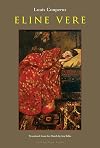
A Dutch 19th century psychological character study of a woman and the society she tries to fit in to? Yes, please! I was so happy to discover this Dutch classic through the 1001 books to read before you die group. It fit right in with some of my favorites: [Anna Karenina], [Madame Bovary], [Middlemarch], and [Age of Innocence].
This book is the story of Eline Vere, a well-to-do but mentally unstable young woman living in The Hague. Her manic-depressive tendencies make her various show more relationships volatile and unfulfilling. Eline and her relationships with her sister, brother-in-law, and various love interests are central to the over-arching flow of the book, but there are plenty of other characters to follow as well.
I loved this book and definitely recommend it to others who love this time period of writing. I think it is "under-known" in English. In fact, the only print copy of it I could find easily in English translation is an Archipelago publication from 2013. It was my first Archipelago book and, as a side note, I love the book quality - very nice cover, binding, paper, etc. show less
This book is the story of Eline Vere, a well-to-do but mentally unstable young woman living in The Hague. Her manic-depressive tendencies make her various show more relationships volatile and unfulfilling. Eline and her relationships with her sister, brother-in-law, and various love interests are central to the over-arching flow of the book, but there are plenty of other characters to follow as well.
I loved this book and definitely recommend it to others who love this time period of writing. I think it is "under-known" in English. In fact, the only print copy of it I could find easily in English translation is an Archipelago publication from 2013. It was my first Archipelago book and, as a side note, I love the book quality - very nice cover, binding, paper, etc. show less
The Book of the Small Souls (quartet comprising: Small Souls, Later life, Twilight of the Souls, Dr Adriaan.) by Louis Couperus

Couperus takes you under the skin of a family of Hague socialites whose lives in many respects are quite insular. They are not concerned with what is going on in the world, they are only concerned with themselves. In effect, very little happens in, what in the 1930s US translation into English amounts to approximately 1,600 pages. Nothing happens, and yet everything happens. On the whole quietly, and generally in ill weather, this group of people sit, visit, think of themselves and their show more relations and the occasional breath of air – an outsider, a friend. What you receive for your efforts of concentration, and on some levels trance reading is whole personalities growing, shifting, evolving, or doing none of the aforementioned.
At the heart of these lives is the life of the outsider, and the story begins with the return of a daughter, Constance, who has been shunned by her family for leaving her husband for another man, who she subsequently marries. When 20 years later she approaches her mother to ascertain if she would be welcomed were she to return to the Hague, her mother encourages her to return and primes her other family to welcome her, which they do in varying degree and with varying honesty.
Over the four novels that make up this quartet, and approximately another 15 or so years of time, Constance glides ultimately into the centre of the family which has transformed into another entity by the end of the tale. What you see in many respects is that everyone is an outsider. Each personality may at some time be a part of a greater whole, but each also acts and perceives itself outside the circle. Separate, separated, unconnected to those with whom it has been or shared ‘inside’ or inclusive rights. Who belongs, or perceives themselves to belong or to be outside shifts and tilts constantly, reshaping and reforming the whole that is left behind and the satellites that float around it. It is a movement if not quite a dance (for a dance infers generally a formal pattern), a progression if not necessarily a journey. A passage between places and back. Sometimes crossing or re-crossing previous touchstones, at other times avoiding by default or intent where they have wandered before.
All the while Couperus (via his translator) is quietly listening and recording. Like a scribe at the door with his ear to the keyhole. His prose are rarely fireworks, but they do crescendo periodically when he is describing weather for literal or metaphorical intent. He is a writer of weather, human and natural. show less
At the heart of these lives is the life of the outsider, and the story begins with the return of a daughter, Constance, who has been shunned by her family for leaving her husband for another man, who she subsequently marries. When 20 years later she approaches her mother to ascertain if she would be welcomed were she to return to the Hague, her mother encourages her to return and primes her other family to welcome her, which they do in varying degree and with varying honesty.
Over the four novels that make up this quartet, and approximately another 15 or so years of time, Constance glides ultimately into the centre of the family which has transformed into another entity by the end of the tale. What you see in many respects is that everyone is an outsider. Each personality may at some time be a part of a greater whole, but each also acts and perceives itself outside the circle. Separate, separated, unconnected to those with whom it has been or shared ‘inside’ or inclusive rights. Who belongs, or perceives themselves to belong or to be outside shifts and tilts constantly, reshaping and reforming the whole that is left behind and the satellites that float around it. It is a movement if not quite a dance (for a dance infers generally a formal pattern), a progression if not necessarily a journey. A passage between places and back. Sometimes crossing or re-crossing previous touchstones, at other times avoiding by default or intent where they have wandered before.
All the while Couperus (via his translator) is quietly listening and recording. Like a scribe at the door with his ear to the keyhole. His prose are rarely fireworks, but they do crescendo periodically when he is describing weather for literal or metaphorical intent. He is a writer of weather, human and natural. show less
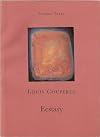
Though Louis Couperus is not a name that turns up frequently on summer reading lists or undergraduate syllabi, it is, I am given to understand, one that is still well-known in Holland. In his time, at the turn of the last century, his name was infamous among his staid, well-mannered countrymen. His writing tended to avoid the common place, the enshrined prejudices, which Remy de Gourmont accurately defined as the prevailing morality of one's times. His name was associated with Oscar Wilde's show more and the vice du jour - and nothing much, in the end, is known of his private life.
To have fallen from the grace of notoriety (originality?) is, in a way, a good thing: many of his books were translated into English and are available, reasonably priced. Also, the Pushkin Press has reprinted several of his novellas in attractive, yet budget-minded, paperback format.
Briefly, Ecstasy is the story of a young widow and mother of two young children, born of the industrious and unfailingly discreet middle class who is drawn out of her solitude by the jaundiced aura of Taco Quaerts, a strange, independent bachelor about whom little is known, but much conjectured.
Introduced in society, she despises him at first, but gradually (not gradually enough, to my taste) she falls madly in love with him. The thing may follow one of two paths as there is, apparently, no moderate option: savage earthly consummation or taper-and-myrrh-scented adoration. I'll leave it at that and say it is for the prose - lush and luminous- which reaches to trace a state both voluptuous and ascetic, that I offer this recommendation.
The translator, Alexander Teixeira de Mattos, kept company with Max Beerbohm, William Rothenstein, Richard Le Gallienne and other English and continental writers and artists of the 1890s. show less
To have fallen from the grace of notoriety (originality?) is, in a way, a good thing: many of his books were translated into English and are available, reasonably priced. Also, the Pushkin Press has reprinted several of his novellas in attractive, yet budget-minded, paperback format.
Briefly, Ecstasy is the story of a young widow and mother of two young children, born of the industrious and unfailingly discreet middle class who is drawn out of her solitude by the jaundiced aura of Taco Quaerts, a strange, independent bachelor about whom little is known, but much conjectured.
Introduced in society, she despises him at first, but gradually (not gradually enough, to my taste) she falls madly in love with him. The thing may follow one of two paths as there is, apparently, no moderate option: savage earthly consummation or taper-and-myrrh-scented adoration. I'll leave it at that and say it is for the prose - lush and luminous- which reaches to trace a state both voluptuous and ascetic, that I offer this recommendation.
The translator, Alexander Teixeira de Mattos, kept company with Max Beerbohm, William Rothenstein, Richard Le Gallienne and other English and continental writers and artists of the 1890s. show less
Couperus is an important Dutch author, and this book is a Dutch classic. It features a large Dutch family with elders who had previously lived in the Dutch East Indies. The matriarch, Grandmama, is 97, and is visited daily by a friend from her time in the East Indies, Takma, who is also in his 90’s. Together, they harbor a deep, dark, and violent secret from their time in the Indies 60 years previously.
As the book opens, Takma’s granddaughter Ellie has just agreed to marry Lot, son of show more Grandmama’s youngest daughter Ottilie, who is on her third marriage, an unhappy one to a man named Steyn. Grandmama’s family is large, and there are close to a dozen other main characters in her children and their spouses (the aunts and uncles), and all the children of the aunts and uncles.
Grandmama and Takma have lived with their secret (“the Thing”) all these years, believing that no one else knows. Over the course of the book, we come to know that this belief is mistaken. Other people know, and as events transpire, more and more people learn the secret. By the end of the book, just about everyone knows, although just about everyone thinks no one else knows.
Couperus cleverly plays with constantly shifting points of view, which he does quite successfully. I enjoyed this book, although I found the writing a bit overwrought at times. Recommended.
3 1/2 stars show less
As the book opens, Takma’s granddaughter Ellie has just agreed to marry Lot, son of show more Grandmama’s youngest daughter Ottilie, who is on her third marriage, an unhappy one to a man named Steyn. Grandmama’s family is large, and there are close to a dozen other main characters in her children and their spouses (the aunts and uncles), and all the children of the aunts and uncles.
Grandmama and Takma have lived with their secret (“the Thing”) all these years, believing that no one else knows. Over the course of the book, we come to know that this belief is mistaken. Other people know, and as events transpire, more and more people learn the secret. By the end of the book, just about everyone knows, although just about everyone thinks no one else knows.
Couperus cleverly plays with constantly shifting points of view, which he does quite successfully. I enjoyed this book, although I found the writing a bit overwrought at times. Recommended.
3 1/2 stars show less
Lists
Awards


You May Also Like


Associated Authors
Statistics
- Works
- 182
- Also by
- 21
- Members
- 5,029
- Popularity
- #4,973
- Rating
- 3.6
- Reviews
- 99
- ISBNs
- 456
- Languages
- 14
- Favorited
- 20
