
Qiu Xiaolong
Author of Death of a Red Heroine
About the Author
Qiu Xiaolong teaches Chinese Literature at Washington University.
Image credit: Louisa Lim
Series
Works by Qiu Xiaolong
Treasury of Chinese Love Poems: In Chinese and English (Hippocrene Treasury of Love) (2003) 18 copies
Amour, meurtre et pandémie 4 copies
The Inspector Chen Collection 1-3: Death of a Red Heroine, A Loyal Character Dancer, When Red is Black (2015) 3 copies, 1 review
L'insaisissable Monsieur X 2 copies
2005 1 copy
Visto per Shangai 1 copy
Amour, meurtre et pandémie 1 copy
Il dossier di Wuhan 1 copy
2004 1 copy
Associated Works
Tagged
Common Knowledge
- Canonical name
- Qiu Xiaolong
- Legal name
- 裘小龙
- Other names
- 裘小龙
- Birthdate
- 1953
- Gender
- male
- Education
- Washington University (PhD - Comparative Literature)
- Occupations
- novelist
poet
translator
literary critic - Awards and honors
- Edgar Award nomination (best first novel)
- Short biography
- Qiu Xiaolong was born in Shanghai. The Cultural Revolution began in his last year of elementary school, and out of school, out of work, he studied English by himself in a local park. In 1977, he began his studies at East China Normal University in Shanghai, and then the Chinese Academy of Social Science in Beijing. In 1988, he came to Washington University in St. Louis as a Ford Foundation fellow to do a project on Eliot, but after the Tiananmen tragedy of 1989, he decided to stay on. He lives there still with his wife and daughter.
- Nationality
- China
- Birthplace
- Shanghai, China
- Places of residence
- Shanghai, China
St. Louis, Missouri, USA - Associated Place (for map)
- China
Members
Reviews
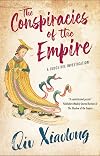
Rating: 4* of five
The Publisher Says: The legendary Judge Dee Renjie returns, in this lyrical combination of mystery, history and ancient Chinese politics from the author of the renowned Inspector Chen mysteries
In Tang dynasty China, Empress Wu—seductive, ambitious and vindictive—rules with an iron fist. Her premier minister, Judge Dee Renjie, is honored to be trusted by her. But when she orders him to carry out an urgent investigation into the disappearance of disgraced poet Luo show more Binwang, he can't see why the matter is of such vital importance.
Luo Binwang joined a doomed uprising against Her Majesty, and vanished after the final, bloody battle. Is he missing—or dead? Either way, now that the rebellion has been mercilessly quashed, what harm could a poor, elderly poet do?
Traveling out of the great capital of Chang'an, accompanied by his loyal manservant Yang, Judge Dee launches a painstaking investigation, in the hopes of achieving what the empress' secret police could not. But the journey is marred by ill omens, and with death and disaster following his every step, Judge Dee soon begins to wonder if the empress trusts him as much as he thought . . .
This powerful mystery, set in ancient China, will appeal to fans of Robert Van Gulik's novels featuring the semi-fictional historical character Judge Dee, and includes an appendix of poems from some of China's finest Tang dynasty poets, newly translated by the author, who is an award-wining poet and critic in his own right.
I RECEIVED A DRC FROM THE PUBLISHER VIA EDELWEISS+. THANK YOU.
My Review: I ate up the van Gulik series in the 1970s. I have never been so ready to get into a new take on the character from classic mystery days...Robert van Gulik started publishing his take on the Chinese character in fiction in 1951...as in this instance. I was not disappointed. Author Qiu's Inspector Chen mysteries have entertained me for twenty-five years now, so I knew I was in for a good reading experience. I liked his choice to set the story in the more appropriate seventh-century Tang dynasty, unlike van Gulik's more Western-reader friendly sixteenth-century Ming setting that we're all more familiar with.
I think my feelings about poetry are well known to most who read my reviews (I'm agin it) and here I am pushing a story centered around a poet, written by a poet and scholar, at you. I reserve the right to be inconsistent. Judge Dee, to give him the Western-accepted name, is an old man who should not be traveling over rough roads and sleeping wherever he finds himself to re-investigate a death the secret police have thoroughly raked over for plots and treason...Poet Luo died rebelling against Empress Wu. The Empress wants him to do it so off the Judge goes. You don't say "no, I'm too old and ill to do that" to someone who has ordered the horrific deaths she has lest you be next.
It's now I must tell you that this is not as much a mystery as an historical fiction literary novel with a puzzle of sorts to push its plot down the action hill. It's super vibes heavy, with an appalling tyrant creating a paranoid culture of personality, an atmosphere of unrest and resistance, and an old man who thinks he's probably going to die doing this job for the tyrant he privately disrespects. (Spoiler alert: he doesn't.)
I did object to the poetry that clogged the story's channels adding nothing but dragging like heavy, caked on clay to my readerly need for action. I was ready not to be whirled into motion like a 1950s 87th Precinct procedural, but wow is there a lot of verse. There's also some excellent food description, and good ol' Yang's as dolefully fun as ever in any version of the Dee stories.
As Author Qiu makes clear in the historical notes of the Afterword, Di Goong An is an amalgam of real crime-solver and the platonic ideal of one. Think Eliot Ness in The Untouchables. I enjoyed the history lesson and the assurance we were reading real events from this period's annals.
Not for the plot-driven reader, but catnip for the vibes-led lover of atmosphere. show less
The Publisher Says: The legendary Judge Dee Renjie returns, in this lyrical combination of mystery, history and ancient Chinese politics from the author of the renowned Inspector Chen mysteries
In Tang dynasty China, Empress Wu—seductive, ambitious and vindictive—rules with an iron fist. Her premier minister, Judge Dee Renjie, is honored to be trusted by her. But when she orders him to carry out an urgent investigation into the disappearance of disgraced poet Luo show more Binwang, he can't see why the matter is of such vital importance.
Luo Binwang joined a doomed uprising against Her Majesty, and vanished after the final, bloody battle. Is he missing—or dead? Either way, now that the rebellion has been mercilessly quashed, what harm could a poor, elderly poet do?
Traveling out of the great capital of Chang'an, accompanied by his loyal manservant Yang, Judge Dee launches a painstaking investigation, in the hopes of achieving what the empress' secret police could not. But the journey is marred by ill omens, and with death and disaster following his every step, Judge Dee soon begins to wonder if the empress trusts him as much as he thought . . .
This powerful mystery, set in ancient China, will appeal to fans of Robert Van Gulik's novels featuring the semi-fictional historical character Judge Dee, and includes an appendix of poems from some of China's finest Tang dynasty poets, newly translated by the author, who is an award-wining poet and critic in his own right.
I RECEIVED A DRC FROM THE PUBLISHER VIA EDELWEISS+. THANK YOU.
My Review: I ate up the van Gulik series in the 1970s. I have never been so ready to get into a new take on the character from classic mystery days...Robert van Gulik started publishing his take on the Chinese character in fiction in 1951...as in this instance. I was not disappointed. Author Qiu's Inspector Chen mysteries have entertained me for twenty-five years now, so I knew I was in for a good reading experience. I liked his choice to set the story in the more appropriate seventh-century Tang dynasty, unlike van Gulik's more Western-reader friendly sixteenth-century Ming setting that we're all more familiar with.
I think my feelings about poetry are well known to most who read my reviews (I'm agin it) and here I am pushing a story centered around a poet, written by a poet and scholar, at you. I reserve the right to be inconsistent. Judge Dee, to give him the Western-accepted name, is an old man who should not be traveling over rough roads and sleeping wherever he finds himself to re-investigate a death the secret police have thoroughly raked over for plots and treason...Poet Luo died rebelling against Empress Wu. The Empress wants him to do it so off the Judge goes. You don't say "no, I'm too old and ill to do that" to someone who has ordered the horrific deaths she has lest you be next.
It's now I must tell you that this is not as much a mystery as an historical fiction literary novel with a puzzle of sorts to push its plot down the action hill. It's super vibes heavy, with an appalling tyrant creating a paranoid culture of personality, an atmosphere of unrest and resistance, and an old man who thinks he's probably going to die doing this job for the tyrant he privately disrespects. (Spoiler alert: he doesn't.)
I did object to the poetry that clogged the story's channels adding nothing but dragging like heavy, caked on clay to my readerly need for action. I was ready not to be whirled into motion like a 1950s 87th Precinct procedural, but wow is there a lot of verse. There's also some excellent food description, and good ol' Yang's as dolefully fun as ever in any version of the Dee stories.
As Author Qiu makes clear in the historical notes of the Afterword, Di Goong An is an amalgam of real crime-solver and the platonic ideal of one. Think Eliot Ness in The Untouchables. I enjoyed the history lesson and the assurance we were reading real events from this period's annals.
Not for the plot-driven reader, but catnip for the vibes-led lover of atmosphere. show less
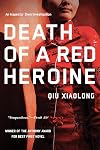
Death of a Red Heroine is serviceable as a police procedural and brilliant as a look a people’s lives during a period of enormous social upheaval. The main character, Chief Inspector Chen Cao, is head of the special case squad in the Homicide Division of the Shanghai Police Bureau in 1990. When the book opens, Chairman Mao has been dead for more than a decade, only a few years have passed since China’s new leader Deng Xiaoping proclaimed “to get rich is glorious,” and the 1989 show more massacre in Tiananmen Square is still painfully fresh.
Chen must investigate the murder of a young woman named Guan Hongying who was a “model worker,” a selfless citizen dedicated only to embodying the ideals of the Communist Party. As the investigation progresses, it becomes clear that Guan was leading a double life – model worker by day and transgressive mistress to a vicious and dangerous married man by night.
The strength of the novel lies not in uncovering the identity of the murderer (which is clear from early in the story), but in the fascinating portrait of China during the time it was beginning to open to the rest of the world, and was on the road to becoming a global super power. Chen and his generation are disillusioned by the corruption of the Communist regime, the horrors of the Cultural Revolution, and the repression of the Tiananmen incident, but uneasy about the rapid and massive economic and social changes that make their daily lives like a trip through Alice’s Looking Glass.
Death of a Red Heroine is filled with intriguing details, how you shop for dinner both at the state-run market (where prices are fixed to make delicacies available for everyone -- but you can't actually find those delicacies for sale), and the newly legitimized free market (where everything you can imagine is on the shelves, if you have the money buy it.) Men and women can dance together in public for the first time in decades. “Ordinary” people can get tickets to movies that only Party Members are supposed to see. The idea that the law applies equally to all people is gaining ground, but the State still has enormous power over what career you can follow and who you can and can’t marry.
Those who enjoy mysteries will find things to like in Death of a Red Heroine, but most of all I recommend this book to anyone who is interested in the country that the US owes $850 billion (yes, billion with a “b”) and what is was like for the people of China to shift from an inflexible Communist system to the economically bounteous--but still repressive--system of today. show less
Chen must investigate the murder of a young woman named Guan Hongying who was a “model worker,” a selfless citizen dedicated only to embodying the ideals of the Communist Party. As the investigation progresses, it becomes clear that Guan was leading a double life – model worker by day and transgressive mistress to a vicious and dangerous married man by night.
The strength of the novel lies not in uncovering the identity of the murderer (which is clear from early in the story), but in the fascinating portrait of China during the time it was beginning to open to the rest of the world, and was on the road to becoming a global super power. Chen and his generation are disillusioned by the corruption of the Communist regime, the horrors of the Cultural Revolution, and the repression of the Tiananmen incident, but uneasy about the rapid and massive economic and social changes that make their daily lives like a trip through Alice’s Looking Glass.
Death of a Red Heroine is filled with intriguing details, how you shop for dinner both at the state-run market (where prices are fixed to make delicacies available for everyone -- but you can't actually find those delicacies for sale), and the newly legitimized free market (where everything you can imagine is on the shelves, if you have the money buy it.) Men and women can dance together in public for the first time in decades. “Ordinary” people can get tickets to movies that only Party Members are supposed to see. The idea that the law applies equally to all people is gaining ground, but the State still has enormous power over what career you can follow and who you can and can’t marry.
Those who enjoy mysteries will find things to like in Death of a Red Heroine, but most of all I recommend this book to anyone who is interested in the country that the US owes $850 billion (yes, billion with a “b”) and what is was like for the people of China to shift from an inflexible Communist system to the economically bounteous--but still repressive--system of today. show less

This is the first book in a long time that's drawn me immediately into a mystery series and every way, where I've enjoyed nearly every moment and had a hard time putting the book down. Xiaolong's balance of atmosphere, character, and plotting was masterful, and I can't wait to read the next book in the series. I will say that there were moments where the quoting was a bit on the heavy side (and this, coming from a reader who loves poetry), but on the whole, it didn't at all interfere with show more how much I enjoyed the book since the quotes were generally only snippets of two or three lines. And, for this being the author's first novel, I really can't complain.
All told, there's no question that I'll be reading the next book in the series sooner than later. Whether looked at as a mystery or simply as a good read, there's a lot to love here, and I'd absolutely recommend it. show less
All told, there's no question that I'll be reading the next book in the series sooner than later. Whether looked at as a mystery or simply as a good read, there's a lot to love here, and I'd absolutely recommend it. show less
The idea of reading a mystery novel over 400 pages long is not inherently appealing. I find that mysteries are usually brain candy -- the best for me reveal something about the local ecology or politics (hence I really like the "Florida weird" mystery writers -- Carl Hiassen, Randy Wayne White, Tim Dorsey). When I travel to a new destination, it's fun to pick up the local mystery writer to catch a flavor of the place.
Now and then, a long mystery, like Eliot Patterson's Skull Mantra about show more contemporary Tibet, has drawn me into the cultural milieu and society -- eclipsing the murder that is being investigated.
Death of a Red Heroine is such a novel. While the discovery of a female corpse in a remote canal in Shanghai is the catalyst for the tale, the book is much more a portrait of life in China in the early 1990s, shortly after Tianamen. The murdered woman was a "national role-model worker," and hence the investigation takes on political overtones, especially when it is discovered she has ties to a prominent HCC -- High Cadre Child -- a photographer whose father was one of the founders of the Chinese Republic.
Chief Detective Chen, head of Special Investigations, is in charge of the case. A poet, scholar of classical and contemporary literature, and a foodie connoisseur, he is an engaging protagonist.
But the aspect of the novel that I found most interesting was the incredibly detailed life of ordinary people crowded into the booming metropolis of Shanghai. Aspects of life, like local voluntary "spy patrols" that I found quite chilling, are regarded as ordinary and actually, beneficial, to the maintenance of social order.
The mystery unfolds in a believable and interesting fashion, but it is the cultural portrait of this book that I found really intriguing. show less
Now and then, a long mystery, like Eliot Patterson's Skull Mantra about show more contemporary Tibet, has drawn me into the cultural milieu and society -- eclipsing the murder that is being investigated.
Death of a Red Heroine is such a novel. While the discovery of a female corpse in a remote canal in Shanghai is the catalyst for the tale, the book is much more a portrait of life in China in the early 1990s, shortly after Tianamen. The murdered woman was a "national role-model worker," and hence the investigation takes on political overtones, especially when it is discovered she has ties to a prominent HCC -- High Cadre Child -- a photographer whose father was one of the founders of the Chinese Republic.
Chief Detective Chen, head of Special Investigations, is in charge of the case. A poet, scholar of classical and contemporary literature, and a foodie connoisseur, he is an engaging protagonist.
But the aspect of the novel that I found most interesting was the incredibly detailed life of ordinary people crowded into the booming metropolis of Shanghai. Aspects of life, like local voluntary "spy patrols" that I found quite chilling, are regarded as ordinary and actually, beneficial, to the maintenance of social order.
The mystery unfolds in a believable and interesting fashion, but it is the cultural portrait of this book that I found really intriguing. show less
Lists
Awards


You May Also Like


Associated Authors
Statistics
- Works
- 43
- Also by
- 1
- Members
- 5,383
- Popularity
- #4,627
- Rating
- 3.6
- Reviews
- 235
- ISBNs
- 301
- Languages
- 12
- Favorited
- 6