

Colin Cotterill
Author of The Coroner's Lunch
About the Author
Colin Cotterill is an author and cartoonist. He was born in London in 1952, and trained as a Physical Education teacher, before setting off on a world tour that hasn't ended yet. Along the way, he has held various teaching positions in Israel, Australia, the U. S., Japan, and Southeast Asia. He show more would eventually become involved in child protection, and it was his work with trafficked children that motivated him to write his first novel, The Night Bastard. The reaction was so positive that he decided to take time off and write full-time. Two of his subsequent novels are child-protection based: Evil in the Land Without, and Pool and its role in Asian Communism. Cotterill may be best known as the author of the Dr. Siri Paiboun series, set in the People's Democratic Republic of Laos. Titles in the series include: Six and a Half Deadly Sins, the Woman Who Wouldn't Die, Love Songs from a Shallow Grave, The Merry Misogynist, Thirty-Three Teeth and The Coroner's Lunch. He also pens the Jim Jurree series, set in southern Thailand. Titles in this series include: The Axe Factor, Grandad, There's a Head on the Beach and Killed at the Whim of a Hat. (Bowker Author Biography) show less
Image credit: Roy Hamric
Series
Works by Colin Cotterill
Associated Works
The Usual Santas: A Collection of Soho Crime Christmas Capers (2017) — Contributor — 159 copies, 10 reviews
Tagged
Common Knowledge
- Other names
- Cotterill, Col
- Birthdate
- 1952-10-02
- Gender
- male
- Occupations
- physical education instructor
teacher (primary school)
crime writer
cartoonist - Organizations
- ECPAT
- Nationality
- UK
Australia - Birthplace
- Wimbledon, Surrey, England, UK
- Places of residence
- London, England, UK
Israel
Australia
Cape Cod, Massachusetts, USA
Japan
Chiang Mai, Thailand (show all 7)
Laos - Associated Place (for map)
- England, UK
Members
Reviews
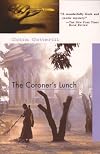
Now here I was, ladies and gents, just snuggling down with a perfect cosy mystery, The Coroner's Lunch, and thinking there would be a few twists and turns, a little mayhem, and voila -- comfort delivered. But before I reached page 10, I was laughing out loud in sheer delicious enjoyment, and I knew that although I had come to the right place for a cosy feeling, I was going to get far more than I bargained for. In a good way.
Dr. Siri Paiboun is a brilliant anti-revolutionary show more revolutionary-cum-coroner who learned his physician's trade in Paris and his autopsy skills from a DIY textbook. (Having been given no other option in communist Laos, Dr. Siri is not without innate resourcefulness.) He is a dreamer, both literally and figuratively: he dreams of peace and equanimity as he struggles within the corruption rampant in his country; at night, he is visited by the spirits of the dead who help him solve mysteries, and re-balance his life.
He is sweet and sentimental -- if slightly misanthropic. (Yes, the contradictions do not escape me.) He is irreverent and a-social, and yet kind, funny, and warm. He sounds like a real human being, hmm?? Go figure! In this context, there is special enjoyment of all the characters: there is actual character growth and development, so often ignored in cosy mysteries where all the characters remain flat, stagnant. Each of Cotteril's recurring characters is endowed with spirit, humour and development.
As I relished Dr. Siri's witticisms and his cynical bent, (he being one of the founding fathers of cynicism, apparently) I wondered out loud ... Dr. Siri, where have you been all my life?
What a delightful read! I'm looking forward to the rest of the series. show less
Dr. Siri Paiboun is a brilliant anti-revolutionary show more revolutionary-cum-coroner who learned his physician's trade in Paris and his autopsy skills from a DIY textbook. (Having been given no other option in communist Laos, Dr. Siri is not without innate resourcefulness.) He is a dreamer, both literally and figuratively: he dreams of peace and equanimity as he struggles within the corruption rampant in his country; at night, he is visited by the spirits of the dead who help him solve mysteries, and re-balance his life.
He is sweet and sentimental -- if slightly misanthropic. (Yes, the contradictions do not escape me.) He is irreverent and a-social, and yet kind, funny, and warm. He sounds like a real human being, hmm?? Go figure! In this context, there is special enjoyment of all the characters: there is actual character growth and development, so often ignored in cosy mysteries where all the characters remain flat, stagnant. Each of Cotteril's recurring characters is endowed with spirit, humour and development.
As I relished Dr. Siri's witticisms and his cynical bent, (he being one of the founding fathers of cynicism, apparently) I wondered out loud ... Dr. Siri, where have you been all my life?
What a delightful read! I'm looking forward to the rest of the series. show less
"What torture is this? Leave me alone."
"I will not. You deliberately missed the community painting of the youth center last month. I'm certainly not going to let you miss out on the chance to dig the overflow canal."
"Community service in the city of Vientiane wasn't a punishment; it was a reward for being a good citizen. It was the authorities' gift to the people. They didn't want a single man, woman or child to miss out on the heart-swelling pride that comes from resurfacing a road or show more dredging a stream. The government knew the people would gladly give up their only day off for such a treat."
The Coroner's Lunch by Colin Cotterill is a mystery set in Laos during the 1970s, featuring reluctant coroner Dr. Siri. Once a successful physician, his outspokenness caused his new assignment, despite his support for the victorious Communist Party. At 72 years old, he's in no mood to rein in his strong views. As he tells the inexperienced young man installed as the judge in charge of him, "I'm twenty-two years beyond the national life expectancy. I've exceeded. I'm on overtime. In my natural life, I've already experienced any form of punishment you could come up with. Basically there's nothing you can do to me to fill me with even a smidgen of dread."
This creates a potent mix. In a system dependent on subservience and scarce on resources, he has allies and an ability to find what he needs. When a high-up military man's wife apparently is killed by his mistress who then commits suicide, Dr. Siri sees signs that all is not as it appears. As he probes with the assistance of a chemistry professor who has testing materials he needs, he learns that there's far more at stake than anyone realized. He is unusual for other reasons: he is visited by spirits of the dead, and in the eyes of the indigenous Hmong he may be an ancient shaman, more than a thousand years old. While this may sound somewhat over the top, the author makes it fit in smoothly, so that it only adds to the intrigue. Is it real or not?
Another appeal of this book is his team and his allies, including his ambitious young assistant Dtui, who likes to read her illicit Thai fan magazines when not busy, and Mr. Greung, afflicted with mild Downs Syndrome, but also possessing a formidable memory. There is a lot of good dry humor in the book, e.g. when an explosion intended to kill Dr. Siri leaves behind remnants of his illegal transistor radio that allows him to hear Thai broadcasts, Siri comments, "The bastards must have thrown it in with the mortar shells." The deadpan response: "That is what we suspected."
This book is an enjoyable read for any number of reasons - armchair travel to a part of the world I knew little about, an inside view of a Communist life, appealing characters, an interesting mystery, a thought-provoking central character, and a gestalt well beyond standard mystery fare. Kudos to Mark for recommending this. I look forward to reading more of the adventures of Dr. Siri and his team. show less
"I will not. You deliberately missed the community painting of the youth center last month. I'm certainly not going to let you miss out on the chance to dig the overflow canal."
"Community service in the city of Vientiane wasn't a punishment; it was a reward for being a good citizen. It was the authorities' gift to the people. They didn't want a single man, woman or child to miss out on the heart-swelling pride that comes from resurfacing a road or show more dredging a stream. The government knew the people would gladly give up their only day off for such a treat."
The Coroner's Lunch by Colin Cotterill is a mystery set in Laos during the 1970s, featuring reluctant coroner Dr. Siri. Once a successful physician, his outspokenness caused his new assignment, despite his support for the victorious Communist Party. At 72 years old, he's in no mood to rein in his strong views. As he tells the inexperienced young man installed as the judge in charge of him, "I'm twenty-two years beyond the national life expectancy. I've exceeded. I'm on overtime. In my natural life, I've already experienced any form of punishment you could come up with. Basically there's nothing you can do to me to fill me with even a smidgen of dread."
This creates a potent mix. In a system dependent on subservience and scarce on resources, he has allies and an ability to find what he needs. When a high-up military man's wife apparently is killed by his mistress who then commits suicide, Dr. Siri sees signs that all is not as it appears. As he probes with the assistance of a chemistry professor who has testing materials he needs, he learns that there's far more at stake than anyone realized. He is unusual for other reasons: he is visited by spirits of the dead, and in the eyes of the indigenous Hmong he may be an ancient shaman, more than a thousand years old. While this may sound somewhat over the top, the author makes it fit in smoothly, so that it only adds to the intrigue. Is it real or not?
Another appeal of this book is his team and his allies, including his ambitious young assistant Dtui, who likes to read her illicit Thai fan magazines when not busy, and Mr. Greung, afflicted with mild Downs Syndrome, but also possessing a formidable memory. There is a lot of good dry humor in the book, e.g. when an explosion intended to kill Dr. Siri leaves behind remnants of his illegal transistor radio that allows him to hear Thai broadcasts, Siri comments, "The bastards must have thrown it in with the mortar shells." The deadpan response: "That is what we suspected."
This book is an enjoyable read for any number of reasons - armchair travel to a part of the world I knew little about, an inside view of a Communist life, appealing characters, an interesting mystery, a thought-provoking central character, and a gestalt well beyond standard mystery fare. Kudos to Mark for recommending this. I look forward to reading more of the adventures of Dr. Siri and his team. show less
Rating: 3.75* of five
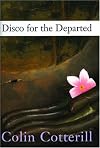
The Publisher Says: Dr. Siri Paiboun, reluctant national coroner of the People’s Democratic Republic of Laos, is summoned to a remote location in the mountains of Huaphan Province, where for years the leaders of the current government had hidden out in caves, waiting to assume power. Now, as a major celebration of the new regime is scheduled to take place, an arm is found protruding from the concrete walk that had been laid from the President’s former cave hideout to show more his new house beneath the cliffs. Dr. Siri is ordered to supervise the disinterment of the body attached to the arm, identify the corpse and discover how he died.
The autopsy provides some surprises but it is his gift as a shaman that enables the seventy-two-year old doctor to discover why the victim was buried alive and, eventually, the identity of his killer.
My Review: Comrade Doctor Siri, the only coroner in the newly “liberated” Communist regime of Laos, returns to the northeastern jungle caves where he and his Pathet Lao insurgent comrades once fought the Royalists and the Americans for control of Laos. His purpose: Find out, in the ten days before a celebratory concert takes place there, whose body has been discovered in the newly laid cement walkway leading to the president's former hideout. Formidable Nurse Dtui in tow, Dr. Siri uncovers a series of awful, painful truths about families, friends, and the departed but not gone spirits of those who (willingly or not) gave their lives for the cause of communism.
Along the way, Dr. Siri encounters an old Cuban friend from insurgency days, a host of disco-dancing spirits, a Lao cadre with the personality of a rock and the temerity to file a request for permission to woo before approaching Dtui to ask for her hand in marriage, becomes the living host of a different, dead Cuban, and unknowingly loses his eidetically gifted, Down's syndrome afflicted morgue assistant Mr. Geung, who contracts dengue fever (often fatal) in an epic walk across most of Laos to get back from his politically motivated exile from Vientiane's—indeed Laos's—only morgue at the hands of insufferable idiot politico Judge Haeng.
When triumphant Siri and Dtui host an official delegation from Vietnam, their delightful antics offer an ending to this entry in the long-running series that should, if you're at all a fan of the comedy of cosmic justice, have you chortling with appreciative schadenfreude for hours.
In any series, there comes a point when things either get stale or take some sort of turn that's got long-range implications and bends the course of future events. The latter point has been reached in this series, here in the third book, and there are some characters not present who would ordinarily be on-scene. Comrade Inspector Phosy is completely absent; Comrade Minister Civilai is only a token presence; but they will be back. Won't they? I haven't read the next book yet, so I can't be sure, but they should...and Dtui, bless her cotton socks, not only gets a marriage proposal (rejected) but other life-changing news (good) that will make the rest of the series look a little different.
Series mysteries appeal to me for these reasons, these ongoing characters having ongoing lives that change the way things transpire in the books. I am, I suppose, the soap-opera-watching sort of personality. I like getting to know the characters in my entertainments over time, and watching them develop as logically as fictional characters can. Which is often a great deal more logically than corporeal characters can, or at least do, develop. And of course there is the orderliness of bad people being punished for doing bad things aspect of mysteries that's very appealing. It happens so seldom in life.
Cotterill's Laos has the virtue of being completely unfamiliar to me, and therefore adding a (possibly spurious) sense of learning something about an alien life-way. I found the expanded knowledge of Laotian communitarian culture very interesting in this book. The moments that Mr. Geung, walking across most of his country, spends in the care of his countrymen are charming to me, revealing a place and a time that valued humanness and kindness over and above any -ism or credo. Cotterill is at pains to point out that the cities might already be changing, but the populace still valued and followed the ancient principles of hospitality and generosity to others.
A deeply involving series, an interesting entry in it, and a story that both wraps itself up sensibly and satisfyingly as well as sets up the changes and events of the next entry...what more can a mystery addict ask for?
This work is licensed under a Creative Commons Attribution-NonCommercial-ShareAlike 3.0 Unported License. show less
The Publisher Says: Dr. Siri Paiboun, reluctant national coroner of the People’s Democratic Republic of Laos, is summoned to a remote location in the mountains of Huaphan Province, where for years the leaders of the current government had hidden out in caves, waiting to assume power. Now, as a major celebration of the new regime is scheduled to take place, an arm is found protruding from the concrete walk that had been laid from the President’s former cave hideout to show more his new house beneath the cliffs. Dr. Siri is ordered to supervise the disinterment of the body attached to the arm, identify the corpse and discover how he died.
The autopsy provides some surprises but it is his gift as a shaman that enables the seventy-two-year old doctor to discover why the victim was buried alive and, eventually, the identity of his killer.
My Review: Comrade Doctor Siri, the only coroner in the newly “liberated” Communist regime of Laos, returns to the northeastern jungle caves where he and his Pathet Lao insurgent comrades once fought the Royalists and the Americans for control of Laos. His purpose: Find out, in the ten days before a celebratory concert takes place there, whose body has been discovered in the newly laid cement walkway leading to the president's former hideout. Formidable Nurse Dtui in tow, Dr. Siri uncovers a series of awful, painful truths about families, friends, and the departed but not gone spirits of those who (willingly or not) gave their lives for the cause of communism.
Along the way, Dr. Siri encounters an old Cuban friend from insurgency days, a host of disco-dancing spirits, a Lao cadre with the personality of a rock and the temerity to file a request for permission to woo before approaching Dtui to ask for her hand in marriage, becomes the living host of a different, dead Cuban, and unknowingly loses his eidetically gifted, Down's syndrome afflicted morgue assistant Mr. Geung, who contracts dengue fever (often fatal) in an epic walk across most of Laos to get back from his politically motivated exile from Vientiane's—indeed Laos's—only morgue at the hands of insufferable idiot politico Judge Haeng.
When triumphant Siri and Dtui host an official delegation from Vietnam, their delightful antics offer an ending to this entry in the long-running series that should, if you're at all a fan of the comedy of cosmic justice, have you chortling with appreciative schadenfreude for hours.
In any series, there comes a point when things either get stale or take some sort of turn that's got long-range implications and bends the course of future events. The latter point has been reached in this series, here in the third book, and there are some characters not present who would ordinarily be on-scene. Comrade Inspector Phosy is completely absent; Comrade Minister Civilai is only a token presence; but they will be back. Won't they? I haven't read the next book yet, so I can't be sure, but they should...and Dtui, bless her cotton socks, not only gets a marriage proposal (rejected) but other life-changing news (good) that will make the rest of the series look a little different.
Series mysteries appeal to me for these reasons, these ongoing characters having ongoing lives that change the way things transpire in the books. I am, I suppose, the soap-opera-watching sort of personality. I like getting to know the characters in my entertainments over time, and watching them develop as logically as fictional characters can. Which is often a great deal more logically than corporeal characters can, or at least do, develop. And of course there is the orderliness of bad people being punished for doing bad things aspect of mysteries that's very appealing. It happens so seldom in life.
Cotterill's Laos has the virtue of being completely unfamiliar to me, and therefore adding a (possibly spurious) sense of learning something about an alien life-way. I found the expanded knowledge of Laotian communitarian culture very interesting in this book. The moments that Mr. Geung, walking across most of his country, spends in the care of his countrymen are charming to me, revealing a place and a time that valued humanness and kindness over and above any -ism or credo. Cotterill is at pains to point out that the cities might already be changing, but the populace still valued and followed the ancient principles of hospitality and generosity to others.
A deeply involving series, an interesting entry in it, and a story that both wraps itself up sensibly and satisfyingly as well as sets up the changes and events of the next entry...what more can a mystery addict ask for?
This work is licensed under a Creative Commons Attribution-NonCommercial-ShareAlike 3.0 Unported License. show less
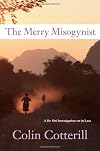
The sixth installment in a mystery series about a 73 year-old Laotian national coroner, Dr. Siri. A corpse of a young village woman ends up in his morgue, and he and his team take a personal interest in the case. Meanwhile, the Ministry of Housing is investigating the number and nature of illegal residents in Siri's government-supplied housing. As he ruminates with a friend, they realize they having seen Crazy Rajid skinny-dipping in some time, and decide to search for the village madman.
Let show more me be forthright. I am flat-out turned off by the serial killer perspective, virtually guaranteed to dislike any book that includes it as a secondary narrative. For the most part, I manage to avoid it, but every so often, a mystery novelist is tempted to dip their toes into a new narrative, and I get blindsided. When I read the synopsis for The Merry Misogynist, I was tempted to skip it entirely, except Cotterill has been building on Dr. Siri's emotional and social circle from book to book, and I didn't want to miss significant life events.
Why? Too often, it's a crutch towards creating tension and plot movement, a manner of building a sense of impending disaster when the main narrative can't sustain the mystery or sense of danger. Even more often, the killer viewpoint becomes a window into a show of torture porn. Don't need it. Don't want to dwell on it. Lastly, in this particular case, it is a poor narrative choice with the previous series tone, a fact that Dr. Siri and his comrades point out as they discover the killer has multiple victims.
One of the clever hooks of the Dr. Siri series is his connection to the spirits of his homeland, who often show themselves to him in an effort to incite him towards action or vengeance. In this book, the spirits were barely present, appearing only harbingers of doom rather than agents of the dead. Then there was a giant deux ex machina to solve Siri's (political) humorous housing problem, and did I mention how much I hate the serial killer viewpoint? The combination of women-hating/stalking combined with humorous, 'let's make-buffoons-of politicians' are an inharmonious mix.
But you know what I hate worse than a homicidal viewpoint? Making the serial killer a gender-bender with a domineering mother. Seriously. Seriously. I can't get over how genderist that is. Just when I think Cotterill has managed to defy convention with his elderly Laotian, socialist protagonist, he pulls out an antique, moth-eaten trope of sexuality that was dated in Victorian times. I'm not pretending any great knowledge of Laotian culture, but I will put forth that third-gender identity is relatively common in the non-Euro-Western world. Thailand in particular has a third-gender tradition, (http://en.wikipedia.org/wiki/Third_gender#Thailand) and Cotterill was seemly open to the concept with one of the earlier characters in the series. So why dust off this unenlightened trope in a series built on defying convention? Don't know. Not sure I care. But I enjoy a good conspiracy, so maybe we can just blame it on the publishing house or something and hope the old Cotterill comes back with the next book.
That said, there were moments of Siri witticisms that worked exceptionally well. Cotterill's flare for the slightly deconstructed idiom remains. This time, much of the humor is in dialogue or absurd situations with Siri's house guests while he stays at Madame Daeng's.
"'Perhaps you'd like an orange cordial to help you cool down, uncle," sad lady of the night Gongjai.
'I don't want to be cool,' Siri replied. 'I want my head as hot as I can make it so you understand I'm not just speaking for my own benefit.'
'So you don't want a drink?' Gongjai tried again.
'I didn't say that. I just don't want you thinking it's going to make me any calmer.'"
There's an insightful moment when Siri muses on his years in the jungle and the endangered species he's eaten: In those days a man didn't give a hoot about the survival of an avian family lineage. It was them or us... he believed that if God made you colorful, overweight, and delicious and didn't give you any survival skills, you deserved to get eaten." Classic Cotterill--one of those humorous asides that is also so insightful into what the reality of subsistence living is.
I enjoyed Siri's and Daeng's intimate version of 'rock-paper-scissors'--elephant-mouse-ant. "The elephant crushed the mouse, the mouse squashed the ant, and the ant crawled up the elephant's trunk and paralyzed his brain."
Overall, enough flavors of the earlier books remained to hope that Cotterill regains his footing in the next. show less
Let show more me be forthright. I am flat-out turned off by the serial killer perspective, virtually guaranteed to dislike any book that includes it as a secondary narrative. For the most part, I manage to avoid it, but every so often, a mystery novelist is tempted to dip their toes into a new narrative, and I get blindsided. When I read the synopsis for The Merry Misogynist, I was tempted to skip it entirely, except Cotterill has been building on Dr. Siri's emotional and social circle from book to book, and I didn't want to miss significant life events.
Why? Too often, it's a crutch towards creating tension and plot movement, a manner of building a sense of impending disaster when the main narrative can't sustain the mystery or sense of danger. Even more often, the killer viewpoint becomes a window into a show of torture porn. Don't need it. Don't want to dwell on it. Lastly, in this particular case, it is a poor narrative choice with the previous series tone, a fact that Dr. Siri and his comrades point out as they discover the killer has multiple victims.
One of the clever hooks of the Dr. Siri series is his connection to the spirits of his homeland, who often show themselves to him in an effort to incite him towards action or vengeance. In this book, the spirits were barely present, appearing only harbingers of doom rather than agents of the dead. Then there was a giant deux ex machina to solve Siri's (political) humorous housing problem, and did I mention how much I hate the serial killer viewpoint? The combination of women-hating/stalking combined with humorous, 'let's make-buffoons-of politicians' are an inharmonious mix.
But you know what I hate worse than a homicidal viewpoint? Making the serial killer a gender-bender with a domineering mother. Seriously. Seriously. I can't get over how genderist that is. Just when I think Cotterill has managed to defy convention with his elderly Laotian, socialist protagonist, he pulls out an antique, moth-eaten trope of sexuality that was dated in Victorian times. I'm not pretending any great knowledge of Laotian culture, but I will put forth that third-gender identity is relatively common in the non-Euro-Western world. Thailand in particular has a third-gender tradition, (http://en.wikipedia.org/wiki/Third_gender#Thailand) and Cotterill was seemly open to the concept with one of the earlier characters in the series. So why dust off this unenlightened trope in a series built on defying convention? Don't know. Not sure I care. But I enjoy a good conspiracy, so maybe we can just blame it on the publishing house or something and hope the old Cotterill comes back with the next book.
That said, there were moments of Siri witticisms that worked exceptionally well. Cotterill's flare for the slightly deconstructed idiom remains. This time, much of the humor is in dialogue or absurd situations with Siri's house guests while he stays at Madame Daeng's.
"'Perhaps you'd like an orange cordial to help you cool down, uncle," sad lady of the night Gongjai.
'I don't want to be cool,' Siri replied. 'I want my head as hot as I can make it so you understand I'm not just speaking for my own benefit.'
'So you don't want a drink?' Gongjai tried again.
'I didn't say that. I just don't want you thinking it's going to make me any calmer.'"
There's an insightful moment when Siri muses on his years in the jungle and the endangered species he's eaten: In those days a man didn't give a hoot about the survival of an avian family lineage. It was them or us... he believed that if God made you colorful, overweight, and delicious and didn't give you any survival skills, you deserved to get eaten." Classic Cotterill--one of those humorous asides that is also so insightful into what the reality of subsistence living is.
I enjoyed Siri's and Daeng's intimate version of 'rock-paper-scissors'--elephant-mouse-ant. "The elephant crushed the mouse, the mouse squashed the ant, and the ant crawled up the elephant's trunk and paralyzed his brain."
Overall, enough flavors of the earlier books remained to hope that Cotterill regains his footing in the next. show less
Lists
20230107 (1)
New Mysteries! (1)
Tagged Doctors (1)
Murder Mysteries (1)
Next in Series (1)
1970s Narratives (1)
Asia (1)
Awards


You May Also Like


Associated Authors
Statistics
- Works
- 54
- Also by
- 5
- Members
- 8,117
- Popularity
- #2,980
- Rating
- 3.8
- Reviews
- 579
- ISBNs
- 385
- Languages
- 8
- Favorited
- 33

