
Eliot Pattison
Author of The Skull Mantra
About the Author
Image credit: Jerry Bauer
Series
Works by Eliot Pattison
Tage des Todes 1 copy
Tagged
Common Knowledge
- Legal name
- Pattison, Joseph Eliot
- Birthdate
- 1951
- Gender
- male
- Occupations
- lawyer
- Agent
- Natasha Kern
- Short biography
- Eliot Pattison has been described as a "writer of faraway mysteries," a label which is particularly apt for someone whose travel and interests span such a broad spectrum. After reaching a million miles of global trekking, visiting every continent but Antarctica, Pattison stopped logging his miles and set his compass for the unknown. Today he avoids well-trodden paths whenever possible, in favor of wilderness, lesser known historical venues, and encounters with indigenous peoples. An international lawyer by training, early in his career Pattison began writing on legal and business topics, producing several books and dozens of articles published on three continents. In the late 1990's he decided to combine his deep concerns for the people of Tibet with his interest in venturing into fiction by writing The Skull Mantra. Winning the Edgar Award for Best First Mystery--and listed as a finalist for best novel for the year in Dublin's prestigious IMPAC awards.
- Nationality
- USA
- Places of residence
- Pennsylvania, USA
Boston, Massachusetts, USA
Washington, D.C., USA - Associated Place (for map)
- USA
Members
Reviews
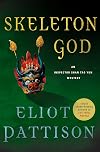
'In Tibet souls were tried, and souls were tormented, but always souls endured.'
Having not read any of Inspector Shan Tao Yun's exploits before I found myself fascinated with the hints about his past and fall from grace. There is much for me to catchup on, yet the lack of background did not detract from my understanding of trouble in Shan's past and how that placed him in the now.
Here he is a constable in an isolated Tibetan town of Yangkar in Lhadrung County. Shan is confronted with two show more bodies found in an ancient Tibetan tomb on the Plain of Ghosts.
The story stretches from the ancient past, to the not so ancient past to the now. The People’s Liberation Army and the Hammer of Freedom Brigade's actions in this area have had long tentacles, and those tentacles still have a stranglehold on the area.
That story is set against the background of the army's roundup of 'feral' (undocumented) Tibetans, the destruction and seizure of Buddhist temples and their goods, the separation of families and their 'reeducation', and the demon ghosts and gods roaming the area.
The exploration by Shan of ancient Tibetan artifacts, and his fascination with the Tibetan way of life, the gods, the scared places are all included in this fascinating murder mystery set in an equally as fascinating part of the world. The history of Tibet and the results for that country by China's invasion in the 1950's is brought into sharp focus.
A NetGalley ARC show less
Having not read any of Inspector Shan Tao Yun's exploits before I found myself fascinated with the hints about his past and fall from grace. There is much for me to catchup on, yet the lack of background did not detract from my understanding of trouble in Shan's past and how that placed him in the now.
Here he is a constable in an isolated Tibetan town of Yangkar in Lhadrung County. Shan is confronted with two show more bodies found in an ancient Tibetan tomb on the Plain of Ghosts.
The story stretches from the ancient past, to the not so ancient past to the now. The People’s Liberation Army and the Hammer of Freedom Brigade's actions in this area have had long tentacles, and those tentacles still have a stranglehold on the area.
That story is set against the background of the army's roundup of 'feral' (undocumented) Tibetans, the destruction and seizure of Buddhist temples and their goods, the separation of families and their 'reeducation', and the demon ghosts and gods roaming the area.
The exploration by Shan of ancient Tibetan artifacts, and his fascination with the Tibetan way of life, the gods, the scared places are all included in this fascinating murder mystery set in an equally as fascinating part of the world. The history of Tibet and the results for that country by China's invasion in the 1950's is brought into sharp focus.
A NetGalley ARC show less
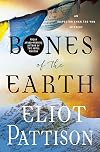
Collusion and corruption!
How can I not give this final installment in the Detective Shan series five stars? I clung to every word Eliot put down, listened to every prayer uttered by the tibetans throughout these captivating pages, and was amazed by the depth of Eliot's understanding of the plight of Tibet in the face of Chinese occupation.
Shan Tao Yun is front and center with Colonel Tan, governor of Lhadrung County, as they uncover corruption, murder and foul doings, all in the name of show more Beijing and the Motherland.
The plight of the Tibetans is underscored even as Shan uncovers a massive, fraudulent plot surrounding the building of a dam smack in the center of a Tibetan holy place, known locally as Valley of the Gods, Holy Home, and Gekho’s Roost.
When an American archeology student is killed by a mining explosion / accident when investigating a cave holding an ancient shrine, the intrigue ratchets up, especially as Tibetans she was associated with come to inexplicably die.
The Tibetan gods are angry and the Chinese confused, which leads to more brutality and retaliation.
Astrologers, sorcerers and scientists all have their part to play, along with the Chinese party faithful.
The action moves swiftly and I was as glued to that as I was to the expose of traditional tibetan life before and after Mao's rule.
The cruelty and injustice of the Chinese overlords is evident in the gulags and simple everyday life. Communism has exchanged one set of warlords for another centralized from Beijing.
For Shan the simple life of a village contained, just became even more complicated, and that's a huge understatement.
A page turner combining historical fiction with mystery and intrigue!
Fascinating in all sorts of ways and highly addictive.
An elegant read!
A St Martin's Press ARC via NetGalley show less
How can I not give this final installment in the Detective Shan series five stars? I clung to every word Eliot put down, listened to every prayer uttered by the tibetans throughout these captivating pages, and was amazed by the depth of Eliot's understanding of the plight of Tibet in the face of Chinese occupation.
Shan Tao Yun is front and center with Colonel Tan, governor of Lhadrung County, as they uncover corruption, murder and foul doings, all in the name of show more Beijing and the Motherland.
The plight of the Tibetans is underscored even as Shan uncovers a massive, fraudulent plot surrounding the building of a dam smack in the center of a Tibetan holy place, known locally as Valley of the Gods, Holy Home, and Gekho’s Roost.
When an American archeology student is killed by a mining explosion / accident when investigating a cave holding an ancient shrine, the intrigue ratchets up, especially as Tibetans she was associated with come to inexplicably die.
The Tibetan gods are angry and the Chinese confused, which leads to more brutality and retaliation.
Astrologers, sorcerers and scientists all have their part to play, along with the Chinese party faithful.
The action moves swiftly and I was as glued to that as I was to the expose of traditional tibetan life before and after Mao's rule.
The cruelty and injustice of the Chinese overlords is evident in the gulags and simple everyday life. Communism has exchanged one set of warlords for another centralized from Beijing.
For Shan the simple life of a village contained, just became even more complicated, and that's a huge understatement.
A page turner combining historical fiction with mystery and intrigue!
Fascinating in all sorts of ways and highly addictive.
An elegant read!
A St Martin's Press ARC via NetGalley show less
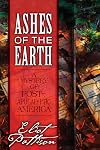
I read this because I liked The Skull Mantra, and the similarities are striking. The main character is fascinating, as is the setting, esp. if you're a sucker for post-apocalyptic scenarios. The suspense is great, but I found the plot to be perhaps too convoluted -- which I think was also a weakness of Skull Mantra. On the other hand, I am not a great lover of mysteries, but still enjoyed the book a great deal, based on the strength of the characterizations and setting.
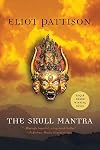
I slid into this book effortlessly and was spellbound throughout. This book is as much about the land and the people of Tibet as it is a skillfully plotted and gracefully written mystery. In the depths of a desert summer, Pattison had me shivering with cold in a prison camp high in the Himalayas. I suffered with the prisoners, and I watched, amazed, as Shan Tao Yun deftly wove his way through a labyrinth of Tibetan customs and the cruel and callous bureaucracy of the Chinese. I am always show more somewhat impressed and aghast at the subtleties involved in such a completely different mindset. Shan always seemed to know when to push an advantage and when to retreat; how to look for the open window when a door is slammed shut in his face. You would think that such a man, unjustly accused and doing whatever he can to survive in hellish conditions, would become bitter and hard. Shan has not. Living as he has with the priests and other Tibetan prisoners, he seems to have absorbed their quiet calm and infinite kindness. When you combine this behavior with his sharp policeman's mind, you create an incredibly powerful and memorable character.
As I was learning about Chinese prison conditions and the contempt and cruelty the Chinese have shown the Tibetan people over the years, I was also falling in love with the landscape. How could I not with passages such as this:
" The seeds of the night sky grew in Tibet. There the stars were the thickest, the dark blackest, the heavens closest. People looked up and cried without knowing why. Prisoners sometimes stole from their huts... to lie on the ground silently watching the heavens. The year before... an old priest had been found in such a position one morning, frozen, his dead eyes fixed on the sky. He had written two words in the snow at his side. Catch me."
As is so often the case when reading a book that deals with a mindset so entirely alien to mine, I didn't even try to deduce what had happened or who had killed the American. I was pulled along in the strong current of Eliot Pattison's lyrical narrative, hoping that it would never end. This is one of the best books I've read this year, and I look forward to continuing the series.
Catch me. show less
As I was learning about Chinese prison conditions and the contempt and cruelty the Chinese have shown the Tibetan people over the years, I was also falling in love with the landscape. How could I not with passages such as this:
" The seeds of the night sky grew in Tibet. There the stars were the thickest, the dark blackest, the heavens closest. People looked up and cried without knowing why. Prisoners sometimes stole from their huts... to lie on the ground silently watching the heavens. The year before... an old priest had been found in such a position one morning, frozen, his dead eyes fixed on the sky. He had written two words in the snow at his side. Catch me."
As is so often the case when reading a book that deals with a mindset so entirely alien to mine, I didn't even try to deduce what had happened or who had killed the American. I was pulled along in the strong current of Eliot Pattison's lyrical narrative, hoping that it would never end. This is one of the best books I've read this year, and I look forward to continuing the series.
Catch me. show less
Lists
Awards


You May Also Like


Associated Authors
Statistics
- Works
- 23
- Members
- 3,486
- Popularity
- #7,297
- Rating
- 3.9
- Reviews
- 107
- ISBNs
- 175
- Languages
- 9
- Favorited
- 10