
Robert Bausch (1945–2018)
Author of Far as the Eye Can See: A Novel
About the Author
Robert Charles Bausch was born at Fort Benning, Georgia on April 18, 1945. In 1965, he and his twin brother enlisted in the Air Force and served together for four years, teaching survival tactics. He received a bachelor's degree in 1974, a master's degree in English in 1975, and a master of fine show more arts in creative writing in 2001 from George Mason University. He taught at a private school before becoming an instructor at Northern Virginia Community College in 1975. He received a statewide award in 2013 as one of Virginia's leading college professors. His first novel, On the Way Home, was published in 1982. His other novels included A Hole in the Earth, The Gypsy Man, Out of Season, Far as the Eye Can See, The Legend of Jesse Smoke, and In the Fall They Come Back. His novel Almighty Me was adapted into the movie Bruce Almighty. In 2009, he received the John Dos Passos Prize for Literature from Longwood University for his body of work. He died from multiple myeloma October 9, 2018 at the age of 73. (Bowker Author Biography) show less
Disambiguation Notice:
Robert Bausch has a twin brother, Richard Bausch, who is also an author.
Works by Robert Bausch
Associated Works
Tagged
Common Knowledge
- Birthdate
- 1945-04-18
- Date of death
- 2018-10-09
- Gender
- male
- Education
- George Mason University (BA, MA & MFA)
- Occupations
- professor (English)
- Organizations
- Northern Virginia Community College
- Awards and honors
- Hillsdale Award for Fiction (2005)
John Dos Passos Prize (2009) - Relationships
- Bausch, Richard (brother)
- Nationality
- USA
- Birthplace
- Fort Benning, Georgia, USA
- Places of residence
- Stafford, Virginia, USA
- Place of death
- Fredericksburg, Virginia, USA
- Disambiguation notice
- Robert Bausch has a twin brother, Richard Bausch, who is also an author.
- Associated Place (for map)
- Virginia, USA
Members
Reviews
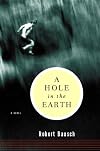
If you are anything like me you won't be able to decide whether you love or hate or just feel sorry for Henry Porter. On the surface he is a selfish, superficial s.o.b. who never knows the right thing to say or do. He doesn't know how to greet Nicole, his only child he hasn't seen in six years. He has a strained relationship with his girlfriend and doesn't know how to respond when she tells him she is pregnant with his child. He comes across as shallow and callous. Case in point: "I show more calculated that if she really wanted to get my understanding, she would ask for it" he says (p 32). But, having said all that, it's his very attitude that makes him human. We all have our moments of being selfish, superficial, shallow, awkward, cold and callous. Henry Porter is real and you can't help but identify with him, even if it is just a little. As Henry's life becomes more complicated (Nicole gets in trouble with a boy and Elizabeth breaks up with him) Henry starts to find his way through his inability to respond to tragedy. It's a good thing because things go from bad to the very worst and Henry must change in order to survive. show less
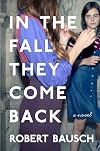
This book is not something I would generally choose to read. I lean much more toward sci-fi/fantasy stories. However, I am very glad I did choose to enter the contest and that I won this book because it was....amazing. None of the main characters were completely likable but I fell in love with them anyway. I wanted to slap some of them but I still found myself worrying about what was going to happen to them next. That takes a very talented writer. To make you care and worry about characters show more that you're not always sure you even like. The pace was slow(ish) but the book still drew me in and kept me so involved that I didn't notice the passage of time. This is a book about relationships, and about choices, and about human mistakes and humanity in general. But it's also just a book about some very messed up individuals that you find yourself wishing you could save. Definitely recommended. show less
Ben Jameson decides to take an English teaching position after finishing his undergraduate but before embarking on graduate school, or possibly law school. He’s never taught young people before, and there is every reason to think that he might not be especially good at it. Only the flexibility afforded a private school and the recent loss of its English teacher could make plausible his hiring. But, despite some early ups and downs, it begins to look like a smart move. Good for Ben, good show more for his students, and good for the school.
That it doesn’t necessarily end up there is, after all, what makes this an interesting read. Also a bit unsettling. Ben is both strangely naive and unappreciative of the consequences of his own actions or those of others. Indeed you might begin to suspect that something very curious might happen. Or that everything you are reading might turn out to be double-edged. That it doesn’t and isn’t is somewhat of a disappointment. Not that what we have here is weak at all. It’s just that it might have been so much more.
The writing, at least in the first half, might have you thinking along the lines of Nabokov. But mostly that is because the character of Ben is so peculiar. Alas his peculiarity is never mined for anything profound. And so we get the ins and outs of two years of teaching by an inexperienced but fitfully enthusiastic amateur who inappropriately meddles in the personal lives of his students, though sometimes with fortuitous effect. Maybe that’s enough. show less
That it doesn’t necessarily end up there is, after all, what makes this an interesting read. Also a bit unsettling. Ben is both strangely naive and unappreciative of the consequences of his own actions or those of others. Indeed you might begin to suspect that something very curious might happen. Or that everything you are reading might turn out to be double-edged. That it doesn’t and isn’t is somewhat of a disappointment. Not that what we have here is weak at all. It’s just that it might have been so much more.
The writing, at least in the first half, might have you thinking along the lines of Nabokov. But mostly that is because the character of Ben is so peculiar. Alas his peculiarity is never mined for anything profound. And so we get the ins and outs of two years of teaching by an inexperienced but fitfully enthusiastic amateur who inappropriately meddles in the personal lives of his students, though sometimes with fortuitous effect. Maybe that’s enough. show less
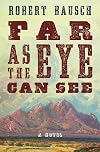
A simple, meandering novel which takes you on one mans journey through western America in the 1870's. There isn't much plot to speak of and the story gets dry and slow at times but I also can't imagine cutting anything because it all serves the purpose of connecting the reader to Bobby Hale. I thought Bobby to be a somewhat lacklustre character until the last 100 or so pages when I realised how truly invested I was in his story. I wanted him to survive, to get a happy ending with Ink and show more Little Fox. And while I'm not fond of first person narration I thoroughly enjoyed its use here. Bobby isn't a hero or a villain and his inner thoughts as he tried to rationalise what he has done and seen was truly heartbreaking.
I imagine a better understanding of this period in American history could have helped paint a picture of what Hale was living through but all I had was Bausch's words. Ultimately, all I knew is what Bobby knew and that's that life for him and others like him was bleak, violent, corrupting, and quick. Seeing everything through his eyes meant the reader only saw snapshots of history with no bigger picture. This is brought home in the last paragraph when (**spoilers**) Bobby, in 1876, talks of going to Nez Perce and hopefully getting a happy life with Ink and Little Fox. As it turns out (learnt through the authors note and some googling) war hits the Nez Perce in 1877. I wonder if perhaps Bausch finished the novel this way in hope of writing a follow up or if he wanted to add one last moment of tension to clued in readers. show less
I imagine a better understanding of this period in American history could have helped paint a picture of what Hale was living through but all I had was Bausch's words. Ultimately, all I knew is what Bobby knew and that's that life for him and others like him was bleak, violent, corrupting, and quick. Seeing everything through his eyes meant the reader only saw snapshots of history with no bigger picture. This is brought home in the last paragraph when (**spoilers**) Bobby, in 1876, talks of going to Nez Perce and hopefully getting a happy life with Ink and Little Fox. As it turns out (learnt through the authors note and some googling) war hits the Nez Perce in 1877. I wonder if perhaps Bausch finished the novel this way in hope of writing a follow up or if he wanted to add one last moment of tension to clued in readers. show less
Awards

You May Also Like


Associated Authors
Statistics
- Works
- 10
- Also by
- 2
- Members
- 338
- Popularity
- #70,453
- Rating
- 3.8
- Reviews
- 13
- ISBNs
- 33
- Languages
- 2
- Favorited
- 2
