
James Dickey (1923–1997)
Author of Deliverance
About the Author
James Lafayette Dickey, an American poet and novelist, was born in Atlanta, Georgia, in 1923. He is perhaps best known for Deliverance, his novel about four suburban men struggling to survive a canoe trip gone awry, which was made into a popular movie of the same title, starring Burt Reynolds. show more Dickey also published several volumes of poetry that are marked by his portrayal of a world in conflict. His collected poems (1942-1992) were published under the title The Whole Motion in 1992. After serving as a pilot during World War II, Dickey earned bachelor's and master's degrees from Vanderbilt University. He taught at several universities and worked as poetry consultant to the Library of Congress from 1966 to 1968. He died in 1996. (Bowker Author Biography) show less
Image credit: Photo by Christopher Dickey
Works by James Dickey
The owl king 2 copies
Dove porta il fiume 1 copy
Dickey James 1 copy
Strength of Fields 1 copy
Exchanges 1 copy
The Weather of the Valley, Reflections on the Soul and Its Making (an address by James Dickey) 1 copy
How to enjoy poetry 1 copy
Two poems of the air 1 copy
Into the Stone & Other Poems 1 copy
Associated Works
The Call of the Wild, White Fang, and Other Stories (1903) — Introduction, some editions — 988 copies, 8 reviews
World Poetry: An Anthology of Verse from Antiquity to Our Time (1998) — Contributor — 499 copies, 2 reviews
The Red Badge of Courage And Four Stories (Signet Classic) (1997) — Introduction, some editions — 324 copies, 2 reviews
Selected Poems of Edwin Arlington Robinson (1966) — Introduction, some editions — 204 copies, 2 reviews
An American Album: One Hundred and Fifty Years of Harper's Magazine (2000) — Contributor — 145 copies, 1 review
The Norton Anthology of American Literature, Volume 2: 1865 to Present (1979) — Contributor, some editions — 136 copies
A Controversy of Poets: An Anthology of Contemporary American Poetry, (1965) — Contributor — 83 copies
Wild: Stories of Survival from the World's Most Dangerous Places (Adrenaline) (1999) — Contributor — 65 copies, 1 review
Where is Vietnam? American poets respond; an anthology of contemporary poems (1967) — Contributor, some editions — 35 copies
Selected Poems of Edwin Arlington Robinson (1966) — Introduction, some editions — 28 copies, 1 review
Possibilities of Poetry: An Anthology of American Contemporaries (1970) — Contributor — 17 copies, 1 review
South: Modern Southern Literature in Its Cultural Setting (1974) — Contributor, some editions — 11 copies
Poetry Magazine Vol. 86 No. 3, June 1955 — Contributor — 2 copies
New World Writing 21 — Contributor — 1 copy
Tagged
Common Knowledge
- Legal name
- Dickey, James Lafayette
- Birthdate
- 1923-02-02
- Date of death
- 1997-01-19
- Gender
- male
- Education
- Clemson College (now University ∙ 1942)
Vanderbilt University (BA|English|1949)
Vanderbilt University (MA|English|1950) - Occupations
- poet
novelist
literary critic
essayist
professor
fighter pilot (show all 9)
advertising copywriter
children's book author
night-fighter radar observer - Organizations
- Fellowship of Southern Writers (charter member)
American Academy of Arts and Sciences
American Academy of Arts and Letters
National Advisory Council on the Arts
National Institute of Arts and Letters
South Carolina Academy of Authors (show all 11)
Writer's Guild of America
Phi Beta Kappa
University of South Carolina (professor ∙ poet-in-residence)
United States Army Air Forces (fighter pilot ∙ WWII)
United States Air Force (Korean War) - Awards and honors
- Poet Laureate Consultant in Poetry to the Library of Congress (1966-1968)
American Academy of Arts and Letters Academy Award ( [1966])
Air Medal
Five Bronze Stars
Sewanee Review poetry fellowship (1954-55)
Vachel Lindsay Prize (1959) (show all 14)
Levinson Prize (1982)
Guggenheim fellowship (1961-62)
National Institute of Arts and Letters grant (1966)
New York Quarterly Poetry Day Award (1977)
Order of the Palmetto, South Carolina (1983)
Order of the South
Harriet Monroe Prize (1996)
Georgia Writers Hall of Fame - Relationships
- Dickey, Christopher (son)
Dickey, Bronwen (daughter)
Price, Reynolds (friend)
Davidson, Donald (teacher)
Lytle, Andrew (teacher) - Cause of death
- alcoholism
jaundice
pulmonary fibrosis - Nationality
- USA
- Birthplace
- Buckhead, Georgia, USA
- Places of residence
- Buckhead, Georgia, USA
New York, New York, USA
Houston, Texas, USA
Columbia, South Carolina, USA
Pawleys Island, South Carolina, USA - Place of death
- Columbia, South Carolina, USA
- Burial location
- All Saints Waccamaw Cemetery, Pawleys Island, South Carolina, USA
- Associated Place (for map)
- South Carolina, USA
Members
Reviews
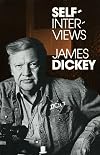
I picked up this book while perusing the stacks at the University of Virginia bookstore when I was a student back in 1986. I was acquainted with Dickey's work from my 1st year American Lit course, but his writing didn't do much for me. But, still, I was interested in poets and what made them tick, their writing process, etc., so I read a couple of pages of this book and immediately bought it, went home and devoured it. I've since read parts of it many times, and always find something deeper show more to ponder. I also found more appreciation for Dickey's brand of poetry. This little book has everything for anyone who is interested in writing, or any other art.
"...in our technology-dominated world the value of literature is getting harder and harder to maintain, but it must be maintained if we're going to have any humanity left at all." p.51
This was written over 50 years ago. Look at where technology is today. Holy smokes! Fortunately, we haven't done too bad holding on to the arts. It's a battle. Keep fighting. show less
"...in our technology-dominated world the value of literature is getting harder and harder to maintain, but it must be maintained if we're going to have any humanity left at all." p.51
This was written over 50 years ago. Look at where technology is today. Holy smokes! Fortunately, we haven't done too bad holding on to the arts. It's a battle. Keep fighting. show less
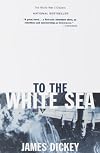
This is our American Robinson Crusoe, a successor to Walden, Moby-Dick, and "Big Two-Hearted River," and a novel with the most original voice since True Grit. Every page has at least one satisfying or arresting turn-of-phrase. It’s thrilling, disturbing, provoking, beautiful, suspenseful—everything a novel should be. I can’t do it justice, nor can I remember a time in recent memory when I was so awestruck by a novelist's performance. This one will stay with me for a long time.
Imagine, if you can, you're an American air force tail-gunner flying over enemy territory, Japan during WWII. Your plane is hit, on fire, and spirals toward the earth. All your crew-mates are dead. If not for the parachute you religiously taped to the bulkhead, you'd soon be a goner, too. Instead, you make it safely back to earth, where men belong anyway. What would you do now?
James Dickey gives us an account of one possibility through one of his strangest, and best creations, Muldrow, a man show more raised in the Alaskan wilderness of the 1920s and 30s, and appropriately named after an Alaskan glacier.
Early on in his predicament of being totally on his own in the land of the enemy, Muldrow makes his plan to head North. If he can make it to the White sea, to the beloved snow and ice of his childhood, he knows he can survive and feel the comfort and freedom of home again.
The story of his trek is one of dreams, camouflage, and savagery. For some, this tale may become a bit too gruesome to take. There were scenes I wouldn't want to revisit. But, if you have the stomach for it, Dickey's prose is as razor sharp as the bread knife Muldrow carries.
"'It's a bread knife,' I told him. 'The only difference is that I brought the point on down and fine. The edge is good, too. Kitchen steel is good steel. As good as you can get.'
'Look,' I said, bending the knife almost double. The light from the roof bulb curved, wires and all, into the light of the blade. 'That means it won't break off. It's not like one of these stiff issue blades, like a bayonet or a commando knife, that ain't got any give to it. This one will bend, it'll go around.'
'Go around what?'
'Go around anything, say, like a rib. It'll go around and come back. It'll straighten out on the other side and keep on going.'"
This passage leaves a little to the imagination, but the description of its actual use is not for the faint of heart. Ghastly is the word I'd use.
If you're a fan of [b:Deliverance|592657|Deliverance|James Dickey|https://i.gr-assets.com/images/S/compressed.photo.goodreads.com/books/1624579180l/592657._SY75_.jpg|1257919], you'll probably get along fine with this book, though it is not nearly as tight and well written.
Dickey repeats himself often, and becomes long-winded, particularly when Mulder describes animals, birds, and landscapes. About three-quarters into the book, he says,
"I was discouraged, I don't mind telling you. If the other island (his destination) didn't show pretty soon, I would be too weak and played out to get to it."
That's the way I felt about half-way through. Come on, James, get me there already, I'm dragging here.
Dickey revisits themes he explored so beautifully in his poetry, especially the connection between men and animals, and the relationship of hunter and prey.
I go back to my question, "What would you do in this situation?"
I have ideas about what I MIGHT do, but I tend to believe there's no way for any of us to know unless we were there. I'm fairly certain though, that we'd all surprise ourselves of what we may have to become in order to survive. show less
James Dickey gives us an account of one possibility through one of his strangest, and best creations, Muldrow, a man show more raised in the Alaskan wilderness of the 1920s and 30s, and appropriately named after an Alaskan glacier.
Early on in his predicament of being totally on his own in the land of the enemy, Muldrow makes his plan to head North. If he can make it to the White sea, to the beloved snow and ice of his childhood, he knows he can survive and feel the comfort and freedom of home again.
The story of his trek is one of dreams, camouflage, and savagery. For some, this tale may become a bit too gruesome to take. There were scenes I wouldn't want to revisit. But, if you have the stomach for it, Dickey's prose is as razor sharp as the bread knife Muldrow carries.
"'It's a bread knife,' I told him. 'The only difference is that I brought the point on down and fine. The edge is good, too. Kitchen steel is good steel. As good as you can get.'
'Look,' I said, bending the knife almost double. The light from the roof bulb curved, wires and all, into the light of the blade. 'That means it won't break off. It's not like one of these stiff issue blades, like a bayonet or a commando knife, that ain't got any give to it. This one will bend, it'll go around.'
'Go around what?'
'Go around anything, say, like a rib. It'll go around and come back. It'll straighten out on the other side and keep on going.'"
This passage leaves a little to the imagination, but the description of its actual use is not for the faint of heart. Ghastly is the word I'd use.
If you're a fan of [b:Deliverance|592657|Deliverance|James Dickey|https://i.gr-assets.com/images/S/compressed.photo.goodreads.com/books/1624579180l/592657._SY75_.jpg|1257919], you'll probably get along fine with this book, though it is not nearly as tight and well written.
Dickey repeats himself often, and becomes long-winded, particularly when Mulder describes animals, birds, and landscapes. About three-quarters into the book, he says,
"I was discouraged, I don't mind telling you. If the other island (his destination) didn't show pretty soon, I would be too weak and played out to get to it."
That's the way I felt about half-way through. Come on, James, get me there already, I'm dragging here.
Dickey revisits themes he explored so beautifully in his poetry, especially the connection between men and animals, and the relationship of hunter and prey.
I go back to my question, "What would you do in this situation?"
I have ideas about what I MIGHT do, but I tend to believe there's no way for any of us to know unless we were there. I'm fairly certain though, that we'd all surprise ourselves of what we may have to become in order to survive. show less

In which four suburban professionals with sagging machismo turn to a wilderness experience to restore their connection to the countryside and the authenticity of its residents. It strikes me as unfortunate that this book is best-known for the movie made from it, and, for that matter, that the movie is best-known for an unlikely hit song. As for the book, it is a full-tilt page-turner, one of the best you'll read, with a certain space left for rumination on the human condition, particularly show more its male portion. show less
Lists
Favourite Books (1)
Fiction For Men (1)
Five star books (1)
crime / thriller (1)
Southern Fiction (1)
Movies/Shows (1)
Awards


You May Also Like


Associated Authors
Statistics
- Works
- 69
- Also by
- 40
- Members
- 4,832
- Popularity
- #5,196
- Rating
- 3.9
- Reviews
- 85
- ISBNs
- 174
- Languages
- 10
- Favorited
- 14

