

Frederick Busch (1941–2005)
Author of The Night Inspector
About the Author
Frederick Bush's most recent novel is The Night Inspector, a finalist for the National Book Critics Circle Award. He is Fairchild Professor of Literature at Colgate University. (Publisher Provided) Frederick Busch was born on August 1, 1941 in Brooklyn, New York. Busch graduated from Muhlenberg show more College and earned a master's degree from Columbia. He was professor emeritus of literature at Colgate University in Hamilton, New York from 1966 to 2003. He won numerous awards, including the American Academy of Arts and Letters Fiction Award in 1986, the PEN/Malamud Award in 1991, 1999 National Book Critics Circle Award Nomination for "The Night Inspector", and 2000 PEN/Faulkner Award for Fiction finalist, for "The Night Inspector". His works include "A Memory of War", "North: A Novel", and "Rescue Missions". He passed away on February 23, 2006 in New York City. (Bowker Author Biography) show less
Image credit: Eye on Books
Works by Frederick Busch
Noční inspektor 1 copy
Associated Works
A Christmas Carol and Other Christmas Stories (1984) — Introduction, some editions — 792 copies, 11 reviews
Published and Perished: Memoria, Eulogies, and Remembrances of American Writers (2002) — Contributor — 41 copies, 1 review
Tin House 17 (Fall 2003): Give — Contributor — 8 copies
Tagged
Common Knowledge
- Birthdate
- 1941-08-01
- Date of death
- 2005-02-25
- Gender
- male
- Education
- Muhlenberg College
Columbia University - Occupations
- professor (English ∙ Colgate University)
writer - Awards and honors
- PEN/Malamud Award (1991)
American Academy of Arts and Letters Academy Award (Literature ∙ 1986)
Guggenheim Fellowship (1981) - Relationships
- Busch, Benjamin (son)
- Nationality
- USA
- Birthplace
- Brooklyn, New York, USA
- Places of residence
- Hamilton, New York, USA
- Place of death
- Manhattan, New York, USA
- Associated Place (for map)
- New York, USA
Members
Reviews
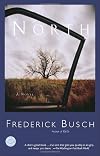
NORTH is a modern tragedy. Anyone who reads it would not question this statement. But the real tragedy here is how few people have read this book, how few people knew the magic of Fred Busch's fiction. Author of more than two dozen books, Busch was often referred to as a "writer's writer," which is a kind way of saying a guy who never had a bestseller. But he should have, and NORTH, along with its excellent prequel, GIRLS, should have topped the lists. Yes, the tragic hero of GIRLS, the show more long-suffering one-time cop, sometime rent-a-cop, returns in NORTH. There are no giants and no beanstalks in these two Busch books, but Jack is back. And so (briefly) is "the dog," his faithful companion from GIRLS. I find it odd that a writer like Busch, who so obviously loved dogs, created a hero (anti-hero?) who had a dog with no name. I always wonder what the significance of this was. As was the case in GIRLS, Jack is again trying to "rescue" someone. And once again, so very sadly, he fails. But he does so in the most human way. For Jack is a kind of Everyman in his trying to make things better. He supposedly doesn't have the words for the tragedies that have befallen him - in his marriage and in his friendships and work. But NORTH (and GIRLS) are perhaps the most eloquent novels of sorrow, loss and near-redemption that I have ever read. Many times, hearing Jack's inner monologue in my own mind as I read, I was nearly reduced to tears. There are a couple of reasons for this. The first, of course, is Busch's consumate skill in the creation of this guy; you'll never find a more human, sympathetic character in modern fiction. The other reason I was so saddened was the knowledge that Fred Busch is no longer with us. He died in February 2006. There will be no more stories of Jack. There will be no more beautiful Busch books to look forward to. Too sad. If I had to compare Jack to other modern "investigators," the Matt Scudder character of author Lawrence Block comes to mind. Those books were a guilty pleasure for me for a few years back in the 90s. But Jack is special in his suffering, in his fortitude, in keeping his dark secrets. There is violence and cruelty here, there is love and longing, there is even torrid and brutal sex, but most of all there is Jack himself, a character to be remembered for a long long time. The ending of NORTH left an opening for another book, a sequel, but no dice. En route to Maine and a new life, Jack will remain forever on that road. I will miss him, and I will miss the art of Fred Busch even more. show less

I first read GIRLS (1997) more than twenty years ago when I was only just discovering the fiction of Frederick Busch. It's perhaps his best known book of the thirty that he wrote in a career that spanned nearly forty years. Busch was never afraid to plumb the darkest side of a man's most secret thoughts and nature, and he went deep in this one, about a fourteen year-old girl gone missing in a bleak upstate New York winter, and a campus cop, identified only as Jack, who is enlisted as an show more unwilling investigator. Jack is also the narrator here, and his own story unfolds in stages. A veteran of Vietnam where he was an MP, while he didn't see combat, he bears his own psychic scars from that time, and now his marriage is on shaky ground following the recent death of an infant daughter, an event neither he nor his wife, Fanny, can talk about. Grief and denial figure prominently throughout this tragic tale, but so too do infidelity and betrayal. Jack's affair with Rosalie Piri, a professor who is described as tiny and girlish, takes on disturbing nuances as he also tries to solve the disappearance of the teenager, the daughter of a minister. College life in the 90s is painfully accurate in its portrayal, as Jack targets a drug dealer, rescues a girl attempting suicide after an affair with her professor, and coordinates with a student committee to prevent rape.
And yet, despite all the dark threads mentioned here, I often found myself chuckling or even guffawing at small things slipped into Jack's stream of consciousness narration, sometimes subtle irony, and sometimes just flat out funny. Weaving dark and light together this way? Not easy. But Busch is a master at this kind of unexpected comic relief, as well as making you squirm at the nastier stuff or scaring the hell out of you.
I had read GIRLS before, but could not remember "whodunit," and Busch kept me guessing to the very end. This is simply one helluva good read, and if you've never read any Fred Busch, this book would be a good place to begin. My very highest recommendation.
- Tim Bazzett, author of the memoir, BOOKLOVER show less
And yet, despite all the dark threads mentioned here, I often found myself chuckling or even guffawing at small things slipped into Jack's stream of consciousness narration, sometimes subtle irony, and sometimes just flat out funny. Weaving dark and light together this way? Not easy. But Busch is a master at this kind of unexpected comic relief, as well as making you squirm at the nastier stuff or scaring the hell out of you.
I had read GIRLS before, but could not remember "whodunit," and Busch kept me guessing to the very end. This is simply one helluva good read, and if you've never read any Fred Busch, this book would be a good place to begin. My very highest recommendation.
- Tim Bazzett, author of the memoir, BOOKLOVER show less

William Bartholomew was a soldier in the Civil War until he was shot in the face. Now a few years past the end of the war, Billy is living in New York, wearing a mask to cover his ruined face and making a dubious living trading on futures and stocks. He meets a man who intrigues him, a failed writer working the night shift as a customs inspector and they become friends. His other friends include a Black prostitute whom he loves, a Chinese woman who makes her money taking in washing, and a show more man who served with him in the Union Army. When his lover asks him to help her in a daring plan to rescue children from the South, Billy gathers his friends and a few others and comes up with a plan.
This is mostly a story of what daily life was like in post-Civil War New York, from the relative comforts and financial insecurity of a family clinging to the middle class to those scraping by with nothing at all in shocking circumstances. Frederick Busch tells a nineteenth century tale, seen through modern eyes but told in the voice of the nineteenth century. It's a difficult juggling act, but Busch manages to make it work. Here's a novel that reads like it could have been written 150 years ago, but which sees women, immigrants, the formerly enslaved and those making their livings as they can as full human beings and which looks unflinchingly at how they are preyed upon by the wealthy and white dominant class. But this isn't a lecture, but an action-packed and heart-breaking story of an morally-complex man making his way in the world and how his past, both his childhood and his experiences in the war, inform his present. show less
This is mostly a story of what daily life was like in post-Civil War New York, from the relative comforts and financial insecurity of a family clinging to the middle class to those scraping by with nothing at all in shocking circumstances. Frederick Busch tells a nineteenth century tale, seen through modern eyes but told in the voice of the nineteenth century. It's a difficult juggling act, but Busch manages to make it work. Here's a novel that reads like it could have been written 150 years ago, but which sees women, immigrants, the formerly enslaved and those making their livings as they can as full human beings and which looks unflinchingly at how they are preyed upon by the wealthy and white dominant class. But this isn't a lecture, but an action-packed and heart-breaking story of an morally-complex man making his way in the world and how his past, both his childhood and his experiences in the war, inform his present. show less
I picked up Frederick Busch's book hoping for a reasonably well done crime novel and got so much more than that. It was wonderfully written; Busch has the astonishing knack of making his words both eloquent and spare. His characters became people I knew, complex and interesting and the setting, a private university in upstate New York during a harsh winter, was so clearly drawn as to make me pull on gloves. Busch writes a little like Castle Freeman, Jr., which suits perfectly the setting of show more the book, but also with an understated descriptiveness that reminded me a little of Hemingway.
And, for all that, this is an unpretentious book about how a girl gone missing from a small farming community impacts the life of a man with the sorrow of his own daughter's death. Jack works as a university security guard, protecting the pampered children of well-to-do families as they do their best to misbehave. His wife and he are not doing so well; although they both wish their relationship was better, improving it seems to be impossible. Jack isn't a talkative man and his closest relationship is with his dog. When an acquaintance asks him to look into the girl's disappearance, he is reluctant to get involved. The state police know what they are doing and his investigating days never amounted to more than getting drunk servicemen to admit to their acts of violence. He slowly becomes obsessed with the missing girl, as she becomes mixed in his mind with his own daughter.
As much a psychological study of people handling more than they're equipped for, the plot nonetheless is well put together, creating a book that is both an entertainment and worth thinking about afterward. show less
And, for all that, this is an unpretentious book about how a girl gone missing from a small farming community impacts the life of a man with the sorrow of his own daughter's death. Jack works as a university security guard, protecting the pampered children of well-to-do families as they do their best to misbehave. His wife and he are not doing so well; although they both wish their relationship was better, improving it seems to be impossible. Jack isn't a talkative man and his closest relationship is with his dog. When an acquaintance asks him to look into the girl's disappearance, he is reluctant to get involved. The state police know what they are doing and his investigating days never amounted to more than getting drunk servicemen to admit to their acts of violence. He slowly becomes obsessed with the missing girl, as she becomes mixed in his mind with his own daughter.
As much a psychological study of people handling more than they're equipped for, the plot nonetheless is well put together, creating a book that is both an entertainment and worth thinking about afterward. show less
Lists
Awards


You May Also Like


Associated Authors
Statistics
- Works
- 31
- Also by
- 16
- Members
- 2,100
- Popularity
- #12,256
- Rating
- 3.9
- Reviews
- 58
- ISBNs
- 92
- Languages
- 5
- Favorited
- 5