
Alice Notley (1945–2025)
Author of The Descent of Alette
About the Author
Works by Alice Notley
Grave of Light: New and Selected Poems, 1970–2005 (Wesleyan Poetry Series) (2006) 87 copies, 1 review
165 Meeting House Lane 2 copies
A Diamond Necklace 2 copies
City Of 2 copies
Tell me again 2 copies
Secret I D 2 copies
Notley, Alice Archive 1 copy
By Alice Notley - Grave of Light: New and Selected Poems, 1970-2005 (Wesleyan Poetr (2006-10-03) [Hardcover] (2006) 1 copy
Parts of a Wedding 1 copy
Another Part of Now 1 copy
Scarlet No. 1, Sept. 1990 1 copy
Scarlet No. 4, Spring, 1991 1 copy
Twenty-Four Sonnets 1 copy
Scarlet, No. 5 1 copy
Incidentals in the Day World 1 copy
Scarlet No. 2, Fall 1990 1 copy
Associated Works
The Serpent and the Fire: Poetries of the Americas from Origins to Present (2024) — Contributor — 16 copies
Saturday morning, vol. II, no. 1 & 2, New york City issue — Contributor — 3 copies
Personal Injury Magazine, no. 4 — Contributor — 1 copy
Dark Ages Clasp the Daisy Root #2 — Contributor — 1 copy
Talisman: A Journal of Contemporary Poetry and Poetics, Number 1, The Alice Notley Issue — Contributor — 1 copy
HOW(ever), Vol. V, No. 4, October 1989 — Contributor — 1 copy
Tagged
Common Knowledge
- Canonical name
- Notley, Alice
- Birthdate
- 1945-11-08
- Date of death
- 2025-05-19
- Gender
- female
- Education
- Barnard College
University of Iowa - Occupations
- poet
- Awards and honors
- Shelley Memorial Award (2000/2001)
American Academy of Arts and Letters Academy Award (Literature, 2001) - Relationships
- Berrigan, Ted (husband)
- Nationality
- USA
- Birthplace
- Bisbee, Arizona, USA
- Places of residence
- Bisbee, Arizona, USA
Needles, California, USA - Place of death
- Paris, France
- Associated Place (for map)
- USA
Members
Reviews
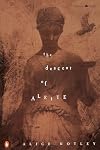
The book is divided into four books, each of which describe narratively a stage of a journey. In the first book we join our narrator in the subway/underworld, reminiscent of Dante's purgatory or that episode of Dr. Who where everyone is trapped in a tunnel driving around eternally. I absolutely loved the first book - the mythopoetic language, the eerie, atmospheric terror of it, the obviously signified Tyrant (representing war, logic, masculinity, & capitalism, a sort of Orwellian figure of show more oppression). Like Odysseus in the underworld there are many voices, at first all longing to ascend. There are many small tragedies, but they are dulled beneath the weight of the larger communal tragedy of being trapped by a system that repeats its oppression.
"..." "There are animals" "in the subway" "But they"
"are mute & sad" ...
(4)
The struggle to escape, to ascend to the naturally-lit world above consumes some, who are forced to sell everything, not just the things of value, to the Tyrant to escape. "he wants your things," "your small things," (5) Even then, no one is permitted to leave. Gradually it becomes clear that the very idea of ascension toward the light is false:
"..." "That's when I knew,' she said," "light
meant lie" "That's when I knew that" "the light" "was a lie,"
"& that" "I would never" "seek light" "I will never" "seek light,'"
(22)
This was the part of the work that I was most engaged with - the surreal horror of the subway world, the details of individual people, a glowing woman and her baby, a subway car full of animals in suits, a subway car of disappearing walls and floor that becomes its own skeleton, a subway car of silent sleepers, each one surprising and astonishingly described. Here is where the effect of the broken, breathy lines really suits the world it's building, where the strangeness of the rhythms serves the content.
[read the whole review: http://wp.me/pKVSf-fp] show less
"..." "There are animals" "in the subway" "But they"
"are mute & sad" ...
(4)
The struggle to escape, to ascend to the naturally-lit world above consumes some, who are forced to sell everything, not just the things of value, to the Tyrant to escape. "he wants your things," "your small things," (5) Even then, no one is permitted to leave. Gradually it becomes clear that the very idea of ascension toward the light is false:
"..." "That's when I knew,' she said," "light
meant lie" "That's when I knew that" "the light" "was a lie,"
"& that" "I would never" "seek light" "I will never" "seek light,'"
(22)
This was the part of the work that I was most engaged with - the surreal horror of the subway world, the details of individual people, a glowing woman and her baby, a subway car full of animals in suits, a subway car of disappearing walls and floor that becomes its own skeleton, a subway car of silent sleepers, each one surprising and astonishingly described. Here is where the effect of the broken, breathy lines really suits the world it's building, where the strangeness of the rhythms serves the content.
[read the whole review: http://wp.me/pKVSf-fp] show less
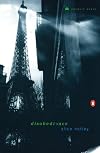
Written over the period July 1995 through August 1996, Notley's long poem (very long poem in that the book is 284 pages)is a combination dream journal, commentary on current events (Parisian particularly), memoir, anti-patriarchal manifesto (especially poetry world patriarchy)and metaphysical journey (quest by the self for the self of the self). The quest by/for/of the self takes the Soul (not a theological soul but all that one can't place one's hands on) down into the caves of imagination show more in the company of the Will whose names are many (Harwood, Hardwood, Robert Mitch-ham, Dante Hardone, Hardmitch, Basehart, Hardtimes, Hardwill, Hardlife, etc.)I read Disobedience as one long poem, even though the book is divided into sections which are themselves comprised of poems with titles (very long titles for the most part). While reading, I skipped over the titles, which my reading brain failed to acknowledge. On the other hand, Notley's use of a truncated line to separate "stanzas" is a formal element that did make me pay attention, as it often signals a shift from dream to saga to news clip, etc. Notley writes in the first person: elsewhere she has said, "I’m disappointed that some contemporary women poets might want to give up “voice,” as if that were possible or good. Voicelessness wouldn’t make a point that anyone outside a coterie would get; veiling the speaker hedges issues and responsibility for what’s said and what’s lived, individually and communally." Bearing that in mind, Notley's "I" is a dialogic, unshirking, multiple-persona force. Disobedience is a book that is radically unhospitable ("I've taken some/ care that this poem not be a nice place." 279) yet not without humor ("Should the soul eat quite so many/ chocolates, oh why not?" 278). I find particularly salutary her, so-to-speak, spiritual/ religious stance: "I don't propose an equalitarian lovingkindness or compassion./ I propose, for women, always an instinctive wariness./I propose, further, meditation in separate closets, without/ instructions. That's/ the whole religion. It never has to be proposed again/ in order to exist. It has no organization and no beliefs." Yes. show less
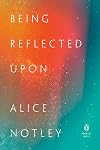
Famed poet, Alice Notley, pens a memoir in verse; primarily reflecting on the last two decades of her life. Being Reflected Upon is a memoir, in the vaguest sense of the definition - but being as it's written by a poet, it works quite well. Notley reflects upon her breast cancer diagnosis, years spent living in Paris, reminisces of her youth and much more. It's not at all linear and told in a stream of conscious way - but for poetry it works. Narrated by the poet herself, this poetry effuses show more authenticity and introspection. Fans of Alice Notley's work will love this, those unfamiliar with her work may be inspired to read her earlier collections. Heartfelt and affecting, Notley's poetry leaps from the page and straight into the imagination. show less
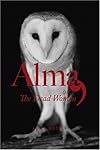
This book is many things simultaneously: a collection of experimental poems utilizing different female personae; a cry of abject despair regarding US foreign policy; a set of incantations, curses, and other witchery; a call for the creation of a new species, defecting from the old. The fact that none of these things are particularly popular make it all the more impressive that this book ever made it to press. Enjoyable in small doses, sobering at its full length (at 344 pages it dwarfs most show more other volumes of contemporary poetry on my shelf). show less
Lists
Awards


You May Also Like


Associated Authors
Statistics
- Works
- 56
- Also by
- 17
- Members
- 1,002
- Popularity
- #25,740
- Rating
- 3.9
- Reviews
- 10
- ISBNs
- 51
- Favorited
- 3