
Eli Horowitz
Author of The Future Dictionary of America
About the Author
Disambiguation Notice:
Gus Twintig is the main (fictional) character of "The Clock Without a Face", not the author. The authors are Scott Teplin, Mac Barnett, and Eli Horowitz
Image credit: Eli Horowitz. Photo by John Zipperer.
Works by Eli Horowitz
The Lost Coast: Chapter Six 2 copies
The Lost Coast: Chapter Four 2 copies
The Lost Coast: Chapter Five 2 copies
Associated Works
Noisy Outlaws, Unfriendly Blobs, and Some Other Things . . .: That Aren't as Scary, Maybe, Depending on How You Feel Abo (2005) — Editor — 693 copies, 13 reviews
Tagged
Common Knowledge
- Canonical name
- Horowitz, Eli
- Other names
- Twintig, Gus (fictional)
- Gender
- male
- Disambiguation notice
- Gus Twintig is the main (fictional) character of "The Clock Without a Face", not the author. The authors are Scott Teplin, Mac Barnett, and Eli Horowitz
Members
Reviews

A science fiction novel presented as an oral history, beginning in the present and covering the next 30 years. Children are being born who are healthy and alert, but have no capacity for expressive or receptive language. Through short entries from numerous characters, many of whom reappear frequently over the years, we see how society responds to these silent children. The book is divided into six parts that correspond to social shifts in public interactions with the silent people.
I like show more books that are written in the "oral history" format, but keeping track of the repeat characters was a bit of a problem. Each entry was headed with a name, date and location, but the individual voices weren't always distinct. I had to keep checking the table of contents to see whether certain characters had appeared earlier in the book, and try to recall their backgrounds. This probably would have been easier in a physical book than in the ebook version that I was reading. I found that it lagged a bit in the middle, as different people told similar stories, but it picked back up again later.
There is an almost apocalyptic tone to the book. Although it takes place in the near future, the American cities and landscapes seem bleak and regressive. Many of the narrators are not particularly likeable, and even the most sympathetic ones have some pretty major flaws. There are lots of good intentions with unforeseen consequences, as well as prejudice, opportunism, and obsession. Fortunately, the bleakness is leavened by moments of love, hope, and kindness.
As someone with a lifelong interest in disability issues, and some professional experience with augmentative communication systems, I found that the book raised some important questions about the nature of language and communication, human rights, autonomy and self-determination, special education and medical ethics. Lots of questions, but no easy answers.
This will be a memorable reading experience for me. An interesting and unusual concept, fairly well executed. There were a few suspension of disbelief issues, but also very much that was entirely plausible. The book explored themes that are important to me, and helped to give form to some of my thoughts. So despite a few complaints, it worked very well for me on a personal level. show less
I like show more books that are written in the "oral history" format, but keeping track of the repeat characters was a bit of a problem. Each entry was headed with a name, date and location, but the individual voices weren't always distinct. I had to keep checking the table of contents to see whether certain characters had appeared earlier in the book, and try to recall their backgrounds. This probably would have been easier in a physical book than in the ebook version that I was reading. I found that it lagged a bit in the middle, as different people told similar stories, but it picked back up again later.
There is an almost apocalyptic tone to the book. Although it takes place in the near future, the American cities and landscapes seem bleak and regressive. Many of the narrators are not particularly likeable, and even the most sympathetic ones have some pretty major flaws. There are lots of good intentions with unforeseen consequences, as well as prejudice, opportunism, and obsession. Fortunately, the bleakness is leavened by moments of love, hope, and kindness.
As someone with a lifelong interest in disability issues, and some professional experience with augmentative communication systems, I found that the book raised some important questions about the nature of language and communication, human rights, autonomy and self-determination, special education and medical ethics. Lots of questions, but no easy answers.
This will be a memorable reading experience for me. An interesting and unusual concept, fairly well executed. There were a few suspension of disbelief issues, but also very much that was entirely plausible. The book explored themes that are important to me, and helped to give form to some of my thoughts. So despite a few complaints, it worked very well for me on a personal level. show less
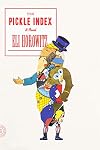
A first time for me reading author Eli Horowitz, I was quite taken by his trim little satire, the intriguingly titled The Pickle Index.
It's a scathing look at the control exerted over citizens by a nanny state, but also a tale of ordinary people with oddball skills who just want to live their lives creating something big. In this case, the something big is a circus. A somewhat derelict and not quite successful circus, but, and here lies the poignancy, their own effort at life.
A mixed bag of show more characters and a very strange old dog led by one Zloty Kornblatt, clown, make up the circus. An unctuous reporter named Hank Hamper represents the state through his byline in the newspaper: The Srutinizer. Pretty soon it becomes obvious that this Hank actually has a crush on the supreme leader of the state, an enigmatic presence known only as Madame J. Hilariously, the Madame has a "Javanese cobalt octopus" named Simeon as a pet. (I couldn't help being reminded of a certain South Indian leader whose followers practiced the same rank sycophancy. She didn't have any interesting pets, though.)
Full review here: http://devikamenon.blogspot.com/2016/06/readings-pickle-index.html show less
It's a scathing look at the control exerted over citizens by a nanny state, but also a tale of ordinary people with oddball skills who just want to live their lives creating something big. In this case, the something big is a circus. A somewhat derelict and not quite successful circus, but, and here lies the poignancy, their own effort at life.
A mixed bag of show more characters and a very strange old dog led by one Zloty Kornblatt, clown, make up the circus. An unctuous reporter named Hank Hamper represents the state through his byline in the newspaper: The Srutinizer. Pretty soon it becomes obvious that this Hank actually has a crush on the supreme leader of the state, an enigmatic presence known only as Madame J. Hilariously, the Madame has a "Javanese cobalt octopus" named Simeon as a pet. (I couldn't help being reminded of a certain South Indian leader whose followers practiced the same rank sycophancy. She didn't have any interesting pets, though.)
Full review here: http://devikamenon.blogspot.com/2016/06/readings-pickle-index.html show less
It makes sense to compare this book to [b:World War Z: An Oral History of the Zombie War|8908|World War Z An Oral History of the Zombie War|Max Brooks|https://d.gr-assets.com/books/1386328204s/8908.jpg|817]; they are similar, in that they both use testimonials to slowly paint a picture of an event.
I just loved the concept of The Silent History - all of a sudden children are being born without the ability to comprehend or create speech. I do love a good psychological sci-fi that posits a show more situation and then just goes with it. It was fascinating how different characters interpreted being Silent in such different ways (as a disease or disability, as just a new variation, as a message, as a return to "real humanity", etc.).
The Silent community has many strong parallels with the Deaf community, especially when it comes to the fight between seeing it as a disorder and trying to fix it with medical technology, and not seeing it as a personal problem but as one with a society that tries to "fix" everyone to make us all the same instead of changing the environment around us to allow everyone to participate equally. It was interesting to read about the range of parental reactions to having Silent children, where some would immediately embrace it and attempt to learn the "face talking" language that Silents use with each other, some would hold hope that their child would be able to learn language someday and would spend all their money and time on speech therapy, some would encourage their children to make other Silent friends while others would prevent their children from seeing any other Silents, some immediately jumped on a new medical "cure" while others were horrified that they should be expected to change their children at all...etc.
I didn't love all the characters, but I didn't really hate any of them either. I liked seeing the same event from different perspectives, it helped to empathize with each person. Everyone is trying to deal with this sudden and confusing situation as best they can, and we all have different coping mechanisms.
So, I really liked this book. And it's cool that it's an app too, but I don't think I really missed out on anything by not owning any apple products. If you want, you can just read a chapter a day and you'll have the same experience, pretty much. show less
I just loved the concept of The Silent History - all of a sudden children are being born without the ability to comprehend or create speech. I do love a good psychological sci-fi that posits a show more situation and then just goes with it. It was fascinating how different characters interpreted being Silent in such different ways (as a disease or disability, as just a new variation, as a message, as a return to "real humanity", etc.).
The Silent community has many strong parallels with the Deaf community, especially when it comes to the fight between seeing it as a disorder and trying to fix it with medical technology, and not seeing it as a personal problem but as one with a society that tries to "fix" everyone to make us all the same instead of changing the environment around us to allow everyone to participate equally. It was interesting to read about the range of parental reactions to having Silent children, where some would immediately embrace it and attempt to learn the "face talking" language that Silents use with each other, some would hold hope that their child would be able to learn language someday and would spend all their money and time on speech therapy, some would encourage their children to make other Silent friends while others would prevent their children from seeing any other Silents, some immediately jumped on a new medical "cure" while others were horrified that they should be expected to change their children at all...etc.
I didn't love all the characters, but I didn't really hate any of them either. I liked seeing the same event from different perspectives, it helped to empathize with each person. Everyone is trying to deal with this sudden and confusing situation as best they can, and we all have different coping mechanisms.
So, I really liked this book. And it's cool that it's an app too, but I don't think I really missed out on anything by not owning any apple products. If you want, you can just read a chapter a day and you'll have the same experience, pretty much. show less
In the not too distant future a number of children are born without the ability to speak, or it seems to even process language. As it becomes more widespread, parents, doctors and researchers study the phenomena without any luck in finding the cause or the cure. It is only when the children are discovered to communicate with each other through minute facial movements that it seems there is some hope for the future.
The story is told through many points of view. Some are fleeting voices; show more others are used consistently through the story. There is the father who spends every hour of the day working towards being able to communicate with his daughter; the teacher working in a special school for the “Silents” who cares too much for her charges; the New Ager who believes the children are the purest form of life; and the politician who at first, altruistically sets up a commune, and later selfishly allows it to fail.
When these Silent children begin to grow up, becoming teenagers and then young adults, public opinion begins to change. They are seen less as children who need help and funding and Government attention and more as social outcasts and a drain on their communities and society in general.
As a treatise on discrimination and prejudice, “The Silent History” is a success, showing how public opinion can be swayed through all kinds of communication. As a book of fiction it is also a success, with a plot that is extensive and captivating, characters that surprise and shock, and writing that compels you to just keep on reading. show less
The story is told through many points of view. Some are fleeting voices; show more others are used consistently through the story. There is the father who spends every hour of the day working towards being able to communicate with his daughter; the teacher working in a special school for the “Silents” who cares too much for her charges; the New Ager who believes the children are the purest form of life; and the politician who at first, altruistically sets up a commune, and later selfishly allows it to fail.
When these Silent children begin to grow up, becoming teenagers and then young adults, public opinion begins to change. They are seen less as children who need help and funding and Government attention and more as social outcasts and a drain on their communities and society in general.
As a treatise on discrimination and prejudice, “The Silent History” is a success, showing how public opinion can be swayed through all kinds of communication. As a book of fiction it is also a success, with a plot that is extensive and captivating, characters that surprise and shock, and writing that compels you to just keep on reading. show less
Lists
Awards


You May Also Like


Associated Authors
Statistics
- Works
- 16
- Also by
- 4
- Members
- 1,530
- Popularity
- #16,819
- Rating
- 3.6
- Reviews
- 39
- ISBNs
- 29
- Languages
- 2