
John Hodgman
Author of The Areas of My Expertise
About the Author
Image credit: John Hodgman at BookExpo at the Javits Center in New York City, May 2019. By Rhododendrites - Own work, CC BY-SA 4.0, https://commons.wikimedia.org/w/index.php?curid=79387555
Series
Works by John Hodgman
Associated Works
Created in Darkness by Troubled Americans: The Best of McSweeney's Humor Category (2004) — Contributor — 889 copies, 16 reviews
You Can't Touch My Hair and Other Things I Still Have to Explain (2016) — Narrator, some editions — 822 copies, 37 reviews
How to Sharpen Pencils: A Practical and Theoretical Treatise on the Artisanal Craft of Pencil Sharpening for Writers, Artists, Contractors, Flange Turners, Anglesmiths, and Civil… (2012) — Foreword — 223 copies, 8 reviews
Tagged
Common Knowledge
- Legal name
- Hodgman, John Kellogg
- Other names
- The Deranged Millionaire
- Birthdate
- 1971-06-03
- Gender
- male
- Education
- Brookline High School, Brookline, MA
Yale College (BA|1994) - Occupations
- literary agent
actor
humorist - Organizations
- Comedy Central
- Agent
- Kassie Evashevski
- Nationality
- USA
- Birthplace
- Brookline, Massachusetts, USA
- Places of residence
- Brooklyn, New York, USA
- Map Location
- Massachusetts, USA
Members
Reviews
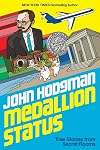
I have never been so glad to have read a book mostly intended to be funny that I didn’t find funny at all. Let me explain.
I have read two John Hodgman books. The first one, The Areas of My Expertise, I read in hardcopy (because that was back when I still read books in hardcopy), mostly in doctors’ waiting rooms (because I was spending a lot of time in those at that point in my life). And my reaction was mostly: I can see he’s doing a thing, but I have a very limited appetite for this show more thing and wish he would stop now. And also: Oh my god, can he please stop trying SO VERY HARD to be clever? But I could also see that he had the potential to be a lot more interesting to me in the future, so I put him in my mental Try Again in a Decade file, and then — did not do that. It took more like a decade and a half. Still. I did get back to him eventually.
And he is definitely a noticeably better writer now. I could see that he’d settled perfectly into his narrative voice, into his subject matter, into his structure. But I still wasn’t laughing. I wasn’t even amused. And then, in a twist I did not see coming, he told me why. He talked about acting in a TV show, and how the director kept telling him to be smaller, more natural, not punch the jokes so hard, and I realized that’s what he does. That’s who he is. He comes in with his ukulele and weird moustache and honking clown nose (probably not) and basically screams I AM BEING FUNNY. HI. THIS IS THE FUNNY PART. He can’t not. And I am pretty limited in the kinds of humor that appeal to me, and mostly they are smaller. More natural. Not punched at all.
(An example of this: he retells Gaiman’s imposter syndrome story in this book, which is fine, because Gaiman himself has told it one million times. But Gaiman, when he tells it, stops at the actual key line. Hodgman was physically unable NOT to go on for half a page of point belaboring with many exclamation points, to help us get the joke. And for me, that made it not a joke anymore. It was just a man yelling at me.)
But. Hodgman is not only being funny in this book. He also talks about the death of his cat, about the pain and misery of the election of Donald Trump, and the even greater pain and misery of watching his children live through that election. And when he talks about those things, when he’s not trying to be funny, he’s suddenly genuine and warm and compelling. It’s amazing. And those essays, even though they were on topics I would honestly rather never read about again — those essays I loved.
So reading this book was remarkably rewarding for me. I learned something about myself! I read some really good essays! I understood a minor mystery that had been plaguing me for 15 years! I got a lot from this. I just didn’t get what I hoped to get. (A laugh.) show less
I have read two John Hodgman books. The first one, The Areas of My Expertise, I read in hardcopy (because that was back when I still read books in hardcopy), mostly in doctors’ waiting rooms (because I was spending a lot of time in those at that point in my life). And my reaction was mostly: I can see he’s doing a thing, but I have a very limited appetite for this show more thing and wish he would stop now. And also: Oh my god, can he please stop trying SO VERY HARD to be clever? But I could also see that he had the potential to be a lot more interesting to me in the future, so I put him in my mental Try Again in a Decade file, and then — did not do that. It took more like a decade and a half. Still. I did get back to him eventually.
And he is definitely a noticeably better writer now. I could see that he’d settled perfectly into his narrative voice, into his subject matter, into his structure. But I still wasn’t laughing. I wasn’t even amused. And then, in a twist I did not see coming, he told me why. He talked about acting in a TV show, and how the director kept telling him to be smaller, more natural, not punch the jokes so hard, and I realized that’s what he does. That’s who he is. He comes in with his ukulele and weird moustache and honking clown nose (probably not) and basically screams I AM BEING FUNNY. HI. THIS IS THE FUNNY PART. He can’t not. And I am pretty limited in the kinds of humor that appeal to me, and mostly they are smaller. More natural. Not punched at all.
(An example of this: he retells Gaiman’s imposter syndrome story in this book, which is fine, because Gaiman himself has told it one million times. But Gaiman, when he tells it, stops at the actual key line. Hodgman was physically unable NOT to go on for half a page of point belaboring with many exclamation points, to help us get the joke. And for me, that made it not a joke anymore. It was just a man yelling at me.)
But. Hodgman is not only being funny in this book. He also talks about the death of his cat, about the pain and misery of the election of Donald Trump, and the even greater pain and misery of watching his children live through that election. And when he talks about those things, when he’s not trying to be funny, he’s suddenly genuine and warm and compelling. It’s amazing. And those essays, even though they were on topics I would honestly rather never read about again — those essays I loved.
So reading this book was remarkably rewarding for me. I learned something about myself! I read some really good essays! I understood a minor mystery that had been plaguing me for 15 years! I got a lot from this. I just didn’t get what I hoped to get. (A laugh.) show less

It's a rare event that I'm moved to laughter, tears and introspection all from a single page. This happened repeatedly throughout John Hodgman's Vacationland. At the outset I had few expectations from the book's title and what little I had read about it online, but I certainly wasn't expecting anything this profound and personal.
As the subtitle suggests, these are true stories of everyday, mundane happenings which Hodgman relates in ways that are anything but mundane. Part of the reason I show more took to Vacationland so easily, I suspect, is because I'm similar in age to the author and our personal coming-of-age histories share many similar cultural beat points.
The stories skip around Hodgman's young adult and adult life, with a common theme of trying to integrate oneself in whatever part of life one lands in. Like a long-term vacationer, where the persistent initial feeling is "I am an outsider here but if I stick around long enough, this place might feel like home."
Just try it. Flip to the first page and go. I think you'll be delighted by the result. show less
As the subtitle suggests, these are true stories of everyday, mundane happenings which Hodgman relates in ways that are anything but mundane. Part of the reason I show more took to Vacationland so easily, I suspect, is because I'm similar in age to the author and our personal coming-of-age histories share many similar cultural beat points.
The stories skip around Hodgman's young adult and adult life, with a common theme of trying to integrate oneself in whatever part of life one lands in. Like a long-term vacationer, where the persistent initial feeling is "I am an outsider here but if I stick around long enough, this place might feel like home."
Just try it. Flip to the first page and go. I think you'll be delighted by the result. show less
The Areas of My Expertise: A Compendium of Complete World Knowledge Compiled with Instructive Annotation and Arranged in Useful Order by Myself by John Hodgman
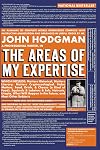
Hodgman's sense of humour is about as dry as the centre of the Atacama Desert—and, I would imagine, one of the few to give rise to a list of 700 pseudonyms employed by hobos. (who, as we all know, long waged a war against the USA)—which means this book gels nicely with what I tend to find funny. Most of The Areas of My Expertise is brief and episodic, which I think makes it more a book to dip into rather than read straight through; there are parts of it which are more amusing than show more others. It's only towards the end of it, as Hodgman allows himself to engage in something closer to a narrative, that the humour goes beyond the simply wry to the truly sharp—I'd love to see what he could do if he gave himself the scope of a novel(la). show less

I adored every word of the first volume in John Hodgman's Compendium of Complete World Knowledge, The Areas of My Expertise. The second volume, More Information Than You Require, was also very good, but fell a bit flat in comparison — though by all means still a thoroughly enjoyable book. This third and finally volume, appropriately titled That Is All, follows the same pattern. While it is very funny and engaging and fun to read, it didn't quite reach the same level that the first book show more did.
Some of the things that made More a bit less than I liked were a focus more on humorous essays and anecdotes, and less of the quirky fake trivia format of the prior book. That Is All remedies this problem by having a much better balance of content, but by now, I suppose it must simply be losing its novelty for me. I confess that I mostly skimmed the listing of the names of 700 Elder Gods, where I had closely read each of the 700 Hobos (and the additional 700 Hobos from the paperback edition) and then the 700 Mole-men. While I find the idea of the list of 700 names amusing and had previously found myself admiring Hodgman's ability to maintain variety in them, even with 2100 listed, I just couldn't find it in me to do it once again. I think it might also have to do with not really finding much appeal in the Elder Gods theme this time around.
The Elder Gods do play a large part in That Is All, which purports to be the last and final book of all knowledge before Ragnarok. The marginal feature "This Day in History" from More returns as "This Day in the End Times" and details events of the final year before Ragnarok itself occurs on 21 December 2012, and the contents of the main part of the book include tips on how to survive the Blood Wave and the best things to invest in for future currency.
But the End Times aren't the only focus of the book: since this is a complete compendium of world knowledge, Hodgman finally discusses sports (and not just hermit crab racing, the sport of the asthmatic man) and different types of wine. He also provides instructions for becoming a deranged millionaire and the benefits thereof, plus some final secrets and answers to pressing questions.
The deranged millionaire character is the driving narrator of the book, while in More, he was a minor television personality, and in Areas of My Expertise, he was a former literary agent. As with the previous books, the narrator's character (who is John Hodgman and yet is also a creation of his) influences and informs the content. In the case of That Is All, it means many digressions and tangents of an absurd nature. The deranged millionaire and the knowledge of the coming Ragnarok also gives many sections a frantic feel, with many uses of emphatic caps lock.
One of my favorite parts of the book is also a favorite from the second book, too — the contiguous page numbering and references with the previous volumes. This choice really drives home the idea that these books are all part of one unit, and I like the interconnectedness. In fact, this meta-awareness of the series as a series goes so far to explicitly state that you need to have the paperback editions on hand for some of the reference notes, because of the change in page numbering or edits in the text. I love the subtle pressure to acquire the paperback editions if you haven't already done so. In fact, this third book references the previous two far more heavily than the second did the first, which is very satisfying to me, and provides new reasons to read them, and new ways to look at them.
I happen to be a fan of Hodgman's writing, so I did very much enjoy That Is All, but the frantic nature of some of the early sections and the weird deranged and confused nature of some of the latter ones (all part of the meta-story, I should point out) made it a bit difficult for me to read. There's also the way that when you have such a perfect-for-me book as Areas of My Expertise, anything else would pale in comparison. It is definitely a great end to the series, and well worth any fan's time, but it shouldn't be read at all if you've not already read and enjoyed the previous two books, due to the heavy use of references, and the fact that it's more of the same. show less
Some of the things that made More a bit less than I liked were a focus more on humorous essays and anecdotes, and less of the quirky fake trivia format of the prior book. That Is All remedies this problem by having a much better balance of content, but by now, I suppose it must simply be losing its novelty for me. I confess that I mostly skimmed the listing of the names of 700 Elder Gods, where I had closely read each of the 700 Hobos (and the additional 700 Hobos from the paperback edition) and then the 700 Mole-men. While I find the idea of the list of 700 names amusing and had previously found myself admiring Hodgman's ability to maintain variety in them, even with 2100 listed, I just couldn't find it in me to do it once again. I think it might also have to do with not really finding much appeal in the Elder Gods theme this time around.
The Elder Gods do play a large part in That Is All, which purports to be the last and final book of all knowledge before Ragnarok. The marginal feature "This Day in History" from More returns as "This Day in the End Times" and details events of the final year before Ragnarok itself occurs on 21 December 2012, and the contents of the main part of the book include tips on how to survive the Blood Wave and the best things to invest in for future currency.
But the End Times aren't the only focus of the book: since this is a complete compendium of world knowledge, Hodgman finally discusses sports (and not just hermit crab racing, the sport of the asthmatic man) and different types of wine. He also provides instructions for becoming a deranged millionaire and the benefits thereof, plus some final secrets and answers to pressing questions.
The deranged millionaire character is the driving narrator of the book, while in More, he was a minor television personality, and in Areas of My Expertise, he was a former literary agent. As with the previous books, the narrator's character (who is John Hodgman and yet is also a creation of his) influences and informs the content. In the case of That Is All, it means many digressions and tangents of an absurd nature. The deranged millionaire and the knowledge of the coming Ragnarok also gives many sections a frantic feel, with many uses of emphatic caps lock.
One of my favorite parts of the book is also a favorite from the second book, too — the contiguous page numbering and references with the previous volumes. This choice really drives home the idea that these books are all part of one unit, and I like the interconnectedness. In fact, this meta-awareness of the series as a series goes so far to explicitly state that you need to have the paperback editions on hand for some of the reference notes, because of the change in page numbering or edits in the text. I love the subtle pressure to acquire the paperback editions if you haven't already done so. In fact, this third book references the previous two far more heavily than the second did the first, which is very satisfying to me, and provides new reasons to read them, and new ways to look at them.
I happen to be a fan of Hodgman's writing, so I did very much enjoy That Is All, but the frantic nature of some of the early sections and the weird deranged and confused nature of some of the latter ones (all part of the meta-story, I should point out) made it a bit difficult for me to read. There's also the way that when you have such a perfect-for-me book as Areas of My Expertise, anything else would pale in comparison. It is definitely a great end to the series, and well worth any fan's time, but it shouldn't be read at all if you've not already read and enjoyed the previous two books, due to the heavy use of references, and the fact that it's more of the same. show less
Lists
Awards


You May Also Like


Associated Authors
Statistics
- Works
- 11
- Also by
- 19
- Members
- 5,111
- Popularity
- #4,892
- Rating
- 4.3
- Reviews
- 147
- ISBNs
- 36
- Favorited
- 17


