
David Rees (6) (1972–)
Author of Get Your War On
For other authors named David Rees, see the disambiguation page.
Works by David Rees
Associated Works
A Fictional History of the United States with Huge Chunks Missing (2006) — Contributor — 77 copies, 2 reviews
Tagged
Common Knowledge
- Birthdate
- 1972
- Gender
- male
- Birthplace
- Chapel Hill, North Carolina, USA
- Associated Place (for map)
- North Carolina, USA
Members
Reviews
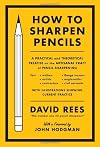
How to Sharpen Pencils: A Practical & Theoretical Treatise on the Artisanal Craft of Pencil Sharpening for Writers, Artists, Contractors, Flange Turners, Anglesmiths, & Civil Servants by David Rees
From David Rees:
If this book serves any purpose, let it be as the definitive counter-argument to my teacher’s conspiracy theories {that my constantly going to the pencil sharpener was an attention-getting tactic}: Mr. Stewart, it was always about the pencil point.
I was thrilled a couple years ago when New Yorker shopping maven Patricia Marx took readers on a back-to-school spree for supplies, and have enjoyed using Mirado Black Warrior pencils ever since.
So I was thrilled again to learn of show more this book by Rees, an artisan dubbed “the number one #2 pencil sharpener.” I wasn’t sure if it was satire or serious, so I borrowed a copy from the library just to see, and before I knew it I’d read it through. It’s serious! -- somewhat -- he even operates a pencil-sharpening business, and he treats the subject with the precision of an engineer (cubed) and with humor, including footnotes that rival Mary Roach.
Rees begins with the anatomy of a pencil, including problem pencil points and how different points are suited to different jobs (see photos on my reading thread). He follows with physical warm-up exercises, then to the how-to of sharpening. His methods include pocketknife; single- and multiple-blade pocket sharpeners; and single- and double-burr crank sharpeners; and his accessories include an apron; tweezer; sandpaper and emery boards; protective tubes and pencil-point caps; baggies (to return the shavings to the customer); and bandages. The chapter on mechanical pencils is short (fulltext: “Mechanical pencils are bullshit.”) and the one on electric sharpeners is long (including how to identify which houses have them, how to gain access, and how to destroy them using safety goggles and a mallet).
I'm neutral about the chapter on sharpening pencils with your mind, skipped most of the chapter on celebrity-impersonator sharpening, and found many of the b/w photos too dark with too little contrast to see well. I wanted more about the (inside) engineering of burr pencil sharpeners (how they actually work) though overall was impressed that I came away knowing about both burr- and razor-sharpeners. And came away very entertained. show less
If this book serves any purpose, let it be as the definitive counter-argument to my teacher’s conspiracy theories {that my constantly going to the pencil sharpener was an attention-getting tactic}: Mr. Stewart, it was always about the pencil point.
I was thrilled a couple years ago when New Yorker shopping maven Patricia Marx took readers on a back-to-school spree for supplies, and have enjoyed using Mirado Black Warrior pencils ever since.
So I was thrilled again to learn of show more this book by Rees, an artisan dubbed “the number one #2 pencil sharpener.” I wasn’t sure if it was satire or serious, so I borrowed a copy from the library just to see, and before I knew it I’d read it through. It’s serious! -- somewhat -- he even operates a pencil-sharpening business, and he treats the subject with the precision of an engineer (cubed) and with humor, including footnotes that rival Mary Roach.
Rees begins with the anatomy of a pencil, including problem pencil points and how different points are suited to different jobs (see photos on my reading thread). He follows with physical warm-up exercises, then to the how-to of sharpening. His methods include pocketknife; single- and multiple-blade pocket sharpeners; and single- and double-burr crank sharpeners; and his accessories include an apron; tweezer; sandpaper and emery boards; protective tubes and pencil-point caps; baggies (to return the shavings to the customer); and bandages. The chapter on mechanical pencils is short (fulltext: “Mechanical pencils are bullshit.”) and the one on electric sharpeners is long (including how to identify which houses have them, how to gain access, and how to destroy them using safety goggles and a mallet).
I'm neutral about the chapter on sharpening pencils with your mind, skipped most of the chapter on celebrity-impersonator sharpening, and found many of the b/w photos too dark with too little contrast to see well. I wanted more about the (inside) engineering of burr pencil sharpeners (how they actually work) though overall was impressed that I came away knowing about both burr- and razor-sharpeners. And came away very entertained. show less
How to Sharpen Pencils: A Practical & Theoretical Treatise on the Artisanal Craft of Pencil Sharpening for Writers, Artists, Contractors, Flange Turners, Anglesmiths, & Civil Servants by David Rees
This is a completely pointless and very stupid book. I loved it.
I was worried that this was just a funny idea for a book. With an artful photo shoot, a well-designed cover, and enough padding and celebrity endorsements, I thought, you could make a book out of this, but it might not be worth reading.
The line that convinced me otherwise was in a rundown of the equipment required for sharpening pencils, when he says, "It's not hard to come by a good pair of tweezers; I use the ones my wife left show more behind when she moved out".
The weird emotional truths revealed in these asides colour everything else in the book; it's less about how to sharpen pencils and more about the type of man who sharpens pencils as a calling. show less
I was worried that this was just a funny idea for a book. With an artful photo shoot, a well-designed cover, and enough padding and celebrity endorsements, I thought, you could make a book out of this, but it might not be worth reading.
The line that convinced me otherwise was in a rundown of the equipment required for sharpening pencils, when he says, "It's not hard to come by a good pair of tweezers; I use the ones my wife left show more behind when she moved out".
The weird emotional truths revealed in these asides colour everything else in the book; it's less about how to sharpen pencils and more about the type of man who sharpens pencils as a calling. show less
How to Sharpen Pencils: A Practical & Theoretical Treatise on the Artisanal Craft of Pencil Sharpening for Writers, Artists, Contractors, Flange Turners, Anglesmiths, & Civil Servants by David Rees
David Rees' sadly retired Get Your War On remains to this day one of my favorite political comic strips, but after that ended he hasn't done much on that level. In fact, he's apparently been running an artisanal pencil-sharpening side business from his house in suburban New York, which he decided to leverage into this very treatise. I read an interview with him where he described it as "basically an emotional memoir disguised as a how-to manual hidden inside a 'humor' book", and that's show more actually somewhat accurate, since he has also gotten a divorce, an event that's occasionally, and somewhat jarringly, referred to in the book, which for the most part is exactly what the title promises.
The conceit holds up fairly well for the first two thirds. Rees strikes just the right kind of mostly-deadpan tone while he discusses, in stupefying detail, the materials, techniques, and best practices you would need to sharpen pencils to even the most exacting standards of craftsmanship. He mentions that he's a big fan of serious industrial manuals, and the parts where he discusses minutiae like how to get perfect scalloping patterns on collar bottoms are marvels of comedic voice. Only someone who had dedicated a truly non-trivial amount of time to something like obsessing over pencil points could write sentences like these:
"Remember: A pencil point enjoyed by the writer may not be suited for the draftsman; the ideal point for the standardized-test taker laboring in an over-lit classroom may not please the louche poet idling on a windswept peak. No point can serve all needs. The unsharpened pencil is, in contrast, an idealized form. Putting a point on a pencil - making it functional - is to lead it out of Plato's cave and into the noonday sun of utility. Of course, life outside a cave runs the risk of imperfection and frustration. But we must learn to live with these risks if we want enough oxygen to survive.
Let us now walk together into the sunlight."
The last third of the book, by contrast, feels like space-filling. There are too many items of "wacky" material like sidebars of "Common Names of American Schoolchildren", and even though it's difficult to argue that the final chapters are any less meaningless than the beginning ones, Rees loses the voice he had earlier. Fans of Jimi Hendrix will also object to a portion of the section on unconventional sharpening techniques. Still, as a guide to sharpening pencils, this is basically as comprehensive a book as you could ask for. Of course, you could skip reading the book and just send Rees $15 and a pencil to have the master do it for you himself, but seeing as how a brand new paperback copy currently costs less than $13, and a Kindle version costs only $9.99, that old adage about giving a man a sharpened pencil versus teaching him to sharpen his own has never been more apt. Luckily I picked this up at the library and didn't pay anything. show less
The conceit holds up fairly well for the first two thirds. Rees strikes just the right kind of mostly-deadpan tone while he discusses, in stupefying detail, the materials, techniques, and best practices you would need to sharpen pencils to even the most exacting standards of craftsmanship. He mentions that he's a big fan of serious industrial manuals, and the parts where he discusses minutiae like how to get perfect scalloping patterns on collar bottoms are marvels of comedic voice. Only someone who had dedicated a truly non-trivial amount of time to something like obsessing over pencil points could write sentences like these:
"Remember: A pencil point enjoyed by the writer may not be suited for the draftsman; the ideal point for the standardized-test taker laboring in an over-lit classroom may not please the louche poet idling on a windswept peak. No point can serve all needs. The unsharpened pencil is, in contrast, an idealized form. Putting a point on a pencil - making it functional - is to lead it out of Plato's cave and into the noonday sun of utility. Of course, life outside a cave runs the risk of imperfection and frustration. But we must learn to live with these risks if we want enough oxygen to survive.
Let us now walk together into the sunlight."
The last third of the book, by contrast, feels like space-filling. There are too many items of "wacky" material like sidebars of "Common Names of American Schoolchildren", and even though it's difficult to argue that the final chapters are any less meaningless than the beginning ones, Rees loses the voice he had earlier. Fans of Jimi Hendrix will also object to a portion of the section on unconventional sharpening techniques. Still, as a guide to sharpening pencils, this is basically as comprehensive a book as you could ask for. Of course, you could skip reading the book and just send Rees $15 and a pencil to have the master do it for you himself, but seeing as how a brand new paperback copy currently costs less than $13, and a Kindle version costs only $9.99, that old adage about giving a man a sharpened pencil versus teaching him to sharpen his own has never been more apt. Luckily I picked this up at the library and didn't pay anything. show less

I am the most suggestable of the suggestables. After seeing the ad for this book on Bookslut, I had it on the brain. Then when I went to Antigone Books a few days ago, looking for an entirely different book that they didn't have and I had to order, I spied this book on my way out. Far be it from me to walk out of a bookstore empty-handed, so of course I had to pick it up and head back to the register (picking up a copy of the latest issue of Bust on the way, which I'm so glad I did because show more it was a fabulous issue).
Of course I was crazy busy for the next two days, so I ended up reading most of the comics while walking to and from campus. Which seemed to entertain many of the drivers on my street, who stared at me nearly falling over laughing, trying to walk and read at the same time. Needless to say, despite having been at this for years, Rees's humor has not lagged a bit -- if anything it is even more biting. This book is fabulous. show less
Of course I was crazy busy for the next two days, so I ended up reading most of the comics while walking to and from campus. Which seemed to entertain many of the drivers on my street, who stared at me nearly falling over laughing, trying to walk and read at the same time. Needless to say, despite having been at this for years, Rees's humor has not lagged a bit -- if anything it is even more biting. This book is fabulous. show less
Lists
Awards

You May Also Like


Associated Authors
Statistics
- Works
- 7
- Also by
- 5
- Members
- 960
- Popularity
- #26,837
- Rating
- 3.8
- Reviews
- 20
- ISBNs
- 124
- Languages
- 5