
Gary Snyder
Author of Turtle Island
About the Author
Gary Snyder was born in San Francisco, California on May 8, 1930. He received a B.A. in anthropology at Reed College in 1951. Between working as a logger, a trail-crew member, and a seaman on a Pacific tanker, he was associated with Beat poets such as Allen Ginsberg and Gregory Corso and studied in show more a Zen monastery in Japan. He wrote numerous books of poetry and prose including Danger on Peaks, Mountains and Rivers Without End, No Nature: New and Selected Poems, The Practice of the Wild, Regarding Wave, and Myths and Texts. He received an American Book Award for Axe Handles and the Pulitzer Prize for poetry for Turtle Island. He has also received an American Academy of Arts and Letters award, the Bollingen Prize, the Bess Hokin Prize, the Levinson Prize from Poetry, the Ruth Lilly Poetry Prize, and the Shelley Memorial Award. In 2012, he received the Wallace Stevens Award for lifetime achievement by the Academy of American Poets. (Bowker Author Biography) show less
Image credit: 1990s
Works by Gary Snyder
Earth House Hold: Technical Notes and Queries to Fellow Dharma Revolutionaries (1969) 316 copies, 4 reviews
Six sections from Mountains and rivers without end, plus one (Four Seasons Foundation. Writing, 9) (1967) 88 copies
The Etiquette of Freedom: Gary Snyder, Jim Harrison, and The Practice of the Wild (2010) 82 copies, 2 reviews
On Bread and Poetry: A Panel Discussion Between Gary Snyder, Lew Welch and Philip Whalen (1977) 36 copies, 1 review
The fudo trilogy: Spel against demons: Smokey the Bear sutra. The California water plan (2022) 21 copies
In Transit: The Gary Snyder Issue 5 copies
Dooby Lane: Also Known as Guru Road, A Testament Inscribed in Stone Tablets by DeWayne Williams (2016) 2 copies
Re-habitar: ensaios e poemas 2 copies
Nanao Knows 2 copies
Tahle báseň je pro medvěda 1 copy
惑星の未来を想像する者たちへ(わくせいのみらいをそうぞうするものたちへ/wakusei no mirai wo souzo suru monotachi e/per chi immagina il futuro dei… (2000) 1 copy
Voices of Change 1 copy
Four changes 1 copy
For The Children 1 copy
Night Herons 1 copy
Alcheringa. Ethnopoetics. Volume One. Number One. Autumn 1970. — Co-Editor — 1 copy
Song to the Raw Material 1 copy
Dlaczego kierowcy ciężarówek z drewnem wstają wcześniej niż adepci Zen : wiersze wybrane (2013) 1 copy
North Sea Road 1 copy
Buddhist Anarchism 1 copy
Hop, Skip and Jump 1 copy
Go Round 1 copy
Singing Zen 1 copy
10 Volumes of Gary Snyder 1 copy
Two Logging Songs 1 copy
Spel Against Demons 1 copy
Sharkmeat 1 copy
Poemas 1 copy
Mouse & Lion 1 copy
Associated Works
Literature: An Introduction to Fiction, Poetry, and Drama (1995) — Contributor, some editions — 1,011 copies, 7 reviews
A Book of Luminous Things: An International Anthology of Poetry (1996) — Contributor — 941 copies, 12 reviews
19 Ways of Looking at Wang Wei: How a Chinese Poem is Translated (1987) — Translator — 319 copies, 10 reviews
Thinking Like a Mountain: Towards a Council of All Beings (1988) — Contributor — 231 copies, 1 review
Teaching with Fire: Poetry That Sustains the Courage to Teach (2003) — Contributor — 224 copies, 1 review
The Rolling Stone Book of the Beats: The Beat Generation and American Culture (1999) — Contributor — 181 copies, 2 reviews
In the Footsteps of Gandhi: Conversations With Spiritual Social Activists (1990) — Contributor — 147 copies, 1 review
The Norton Anthology of American Literature, Volume 2: 1865 to Present (1979) — Contributor, some editions — 135 copies
Leading from Within: Poetry That Sustains the Courage to Lead (2007) — Contributor — 114 copies, 3 reviews
A Zen Forest: Sayings of the Masters (Inklings) (1981) — Foreword, some editions — 100 copies, 3 reviews
The Poet's Work: 29 Poets on the Origins and Practice of Their Art (1979) — Contributor — 95 copies, 1 review
A Controversy of Poets: An Anthology of Contemporary American Poetry, (1965) — Contributor — 83 copies
The Heath Anthology of American Literature, Concise Edition (2003) — Contributor — 72 copies, 1 review
The Mountains and Waters Sutra: A Practitioner's Guide to Dogen's "Sansuikyo" (2018) — Contributor, some editions — 48 copies
The divine woman : dragon ladies and rain maidens in T'ang literature (1973) — Foreword, some editions — 48 copies, 1 review
About Women: An Anthology of Contemporary Fiction, Poetry, and Essays (1973) — Contributor — 25 copies
Possibilities of Poetry: An Anthology of American Contemporaries (1970) — Contributor — 17 copies, 1 review
The Serpent and the Fire: Poetries of the Americas from Origins to Present (2024) — Contributor — 15 copies
Some Poems, Poets: Studies in American Underground Poetry since 1945 (1971) — Contributor — 7 copies
Hey Lew : Homage to Lew Welch — Contributor — 4 copies
Caterpillar 19: Spring 1972 — Contributor — 3 copies
Foot Magazine #2 — Contributor — 2 copies
Niagara Frontier Review, Spring-Summer 1965 — Contributor — 1 copy
Kayak 12 — Contributor — 1 copy
Wild Dog #17 — Contributor — 1 copy
Tagged
Common Knowledge
- Legal name
- Snyder, Gary Sherman
- Birthdate
- 1930-05-08
- Gender
- male
- Education
- Reed College (BA|1951)
Indiana University
University of California, Berkeley
American Academy of Asian Studies - Occupations
- poet
essayist
professor
translator
seaman
carpenter (show all 7)
logger - Organizations
- University of California, Davis
- Awards and honors
- American Academy of Arts and Letters (Literature, 1987)
Bollingen Prize (1997)
Shelley Memorial Award (1986)
Robert Kirsch Award (1996)
Western Literature Association's Distinguished Achievement Award (1984)
American Academy of Arts and Letters Academy Award (1966) (show all 13)
Masaoka Shiki International Haiku Grand Prize (2004)
Ruth Lilly Poetry Prize (2008)
Wallace Stevens Award (2012)
Levinson Prize (1968)
John Hay Award for Nature Writing (1997)
Buddhism Transmission Award (1998)
Bess Holkin Prize (1964) - Relationships
- Uehara, Masa (former wife)
Snyder, Kai (son)
Snyder, Gen (son)
Kyger, Joanne (former wife) - Nationality
- USA
- Birthplace
- San Francisco, California, USA
- Places of residence
- North San Juan, Nevada County, California, USA
Kyoto, Japan
Portland, Oregon, USA - Associated Place (for map)
- USA
Members
Reviews
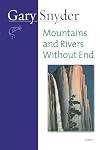
Apparently this isn't a common experience for everyone, but when I was in middle school, we studied the Beat Generation. I wouldn't be taking too much poetic license to claim that I was raised by Hippies, so to learn about the Beat Generation was like discovering a long-lost branch of my family. I still have a copy of "The Rolling Stones Book of the Beats." I wouldn't say that I am in love with the art produced by the Beat Generation, nor that I personally relate with it, but I do hold in show more high regard as an ancestral cultural well.
Gary Snyder is an animist, as am I. So when I learned of Snyder, I was immediately intrigued—an animist Beatnik.
Although I've been hearing about Snyder for a few years now, I haven't read much of his material. "Mountains and Rivers Without End" is Snyder's Magnum Opus, so I thought I might as well start there. Some had advised against this, but I would say—if you're willing to put in the time, you won't regret it!
The following is a book review of both "Mountains and Rivers Without End" and "A Sense of the Whole."
Gary Snyder spent forty years writing "Mountains and Rivers Without End"—from 1956 to 1996. For the '97-'98 academic year, Gonnerman hosted a seminar at Stanford on "Mountains and Rivers Without End." A broad community of intellectuals, artists, and spiritual leaders contributed to this corpus, which eventually lead to the publication of "A Sense of the Whole" in 2015 (I'm not entirely sure what led to the seventeen year delay). Snyder himself says that working with "Mountains and Rivers Without End" is a treacherous journey, and therefore recommends taking on the endeavor in community. This points to some of the ways in which Snyder's work harkens back to oral traditions. The copy I have includes an audio edition, and I appreciated being able to hear the work in Snyder's own voice (I wasn't able to track down a digital edition of the work).
If you're contemplating engaging with this work, I would encourage you to put together a reading plan. In my case, I read the poem from end to end first, then read the entirety of the companion volume, then listened to the audio edition of the poem. Throughout this time I was taking notes and having discussion with friends—both those familiar and unfamiliar with the text.
I read much less poetry than prose, so I will comment that whereas with prose, I generally read a book once, I can certainly see a work like this being something I come back to multiple or numerous times, as poems have a dynamic, ever-changing quality to them.
The poem is divided into four parts, following the structure of a Noh play.
My first reading of the piece wasn't particularly rapturous, although, as I was anticipating this, I stuck with it. Things really took off once I picked up the companion text. The corpus of the poem is a talisman. There might be a line that appears unremarkable, commonplace. But then once you place the line in context—the context of Chinese landscape art, Zen Buddhism, animism, geology, yogic mythology, or any of a numerous set of relationships—the line transports you to a web of relationship.
I also happen to be reading John McPhee's "From Annals of the Former World," a Pulitzer-winning book on the geology of the United States. I can certainly recommend this as one lens to deepen into Snyders work, although there are many others as well.
You might notice, I have yet to say really anything on the subject of what the poem is "about." Like any spiritual text, an meaning we derive from the material has as much to do with our own practice with the work as it does with some kind of objective set of takeaways. For this reason, I'll continue to marinade on the poetry, and hopefully this has given you enough reason to pick up the material for yourself. show less
Gary Snyder is an animist, as am I. So when I learned of Snyder, I was immediately intrigued—an animist Beatnik.
Although I've been hearing about Snyder for a few years now, I haven't read much of his material. "Mountains and Rivers Without End" is Snyder's Magnum Opus, so I thought I might as well start there. Some had advised against this, but I would say—if you're willing to put in the time, you won't regret it!
The following is a book review of both "Mountains and Rivers Without End" and "A Sense of the Whole."
Gary Snyder spent forty years writing "Mountains and Rivers Without End"—from 1956 to 1996. For the '97-'98 academic year, Gonnerman hosted a seminar at Stanford on "Mountains and Rivers Without End." A broad community of intellectuals, artists, and spiritual leaders contributed to this corpus, which eventually lead to the publication of "A Sense of the Whole" in 2015 (I'm not entirely sure what led to the seventeen year delay). Snyder himself says that working with "Mountains and Rivers Without End" is a treacherous journey, and therefore recommends taking on the endeavor in community. This points to some of the ways in which Snyder's work harkens back to oral traditions. The copy I have includes an audio edition, and I appreciated being able to hear the work in Snyder's own voice (I wasn't able to track down a digital edition of the work).
If you're contemplating engaging with this work, I would encourage you to put together a reading plan. In my case, I read the poem from end to end first, then read the entirety of the companion volume, then listened to the audio edition of the poem. Throughout this time I was taking notes and having discussion with friends—both those familiar and unfamiliar with the text.
I read much less poetry than prose, so I will comment that whereas with prose, I generally read a book once, I can certainly see a work like this being something I come back to multiple or numerous times, as poems have a dynamic, ever-changing quality to them.
The poem is divided into four parts, following the structure of a Noh play.
My first reading of the piece wasn't particularly rapturous, although, as I was anticipating this, I stuck with it. Things really took off once I picked up the companion text. The corpus of the poem is a talisman. There might be a line that appears unremarkable, commonplace. But then once you place the line in context—the context of Chinese landscape art, Zen Buddhism, animism, geology, yogic mythology, or any of a numerous set of relationships—the line transports you to a web of relationship.
I also happen to be reading John McPhee's "From Annals of the Former World," a Pulitzer-winning book on the geology of the United States. I can certainly recommend this as one lens to deepen into Snyders work, although there are many others as well.
You might notice, I have yet to say really anything on the subject of what the poem is "about." Like any spiritual text, an meaning we derive from the material has as much to do with our own practice with the work as it does with some kind of objective set of takeaways. For this reason, I'll continue to marinade on the poetry, and hopefully this has given you enough reason to pick up the material for yourself. show less
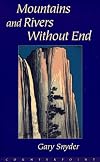
This long poem is all at once complex, simple, deep, worth reading slowly, worth dipping into any part of it in any sequence.
Mountains and Rivers Without End records some of Gary Snyder's journeys, from about 1956, until publication of the whole poem in book form in 1996.
It is about travels through geography, through time, and through his spiritual experiences within Zen Buddhism and other religious traditions. The poem is full of references to Snyder’s many lifelong interests, including show more back country hiking, poetry itself, environmentalism, the spirit, scholarship, and others.
The Bubbs Creek Haircut section begins and ends in a San Francisco barber shop, Snyder getting shorn "close as it will go" as he prepares for a hike to Bubbs Creek. His barber tells him the way, "Well I been up there, I built the cabin / up at Cedar Grove. In nineteen five." Snyder talks of this trek and other hitchhiking, walking, and camping experiences, mixing pasts and present in fascinating ways. His journey is folded inside the barber shop preparation for it, where all moments are the present moment and all things are one.
The Night Song of the Los Angeles Basin section is about an urban civilization that is surrounded by and suffused with nature. "The calligraphy of lights on the night / freeways of Los Angeles / will long be remembered. / Owl / calls; / late-rising moon." The owl and the moon get the last word.
By the nineties, the time when Snyder is telling this story, he has mellowed but he is still searching out "—the wildness, the / foolish loving spaces / full of heart." show less
Mountains and Rivers Without End records some of Gary Snyder's journeys, from about 1956, until publication of the whole poem in book form in 1996.
It is about travels through geography, through time, and through his spiritual experiences within Zen Buddhism and other religious traditions. The poem is full of references to Snyder’s many lifelong interests, including show more back country hiking, poetry itself, environmentalism, the spirit, scholarship, and others.
The Bubbs Creek Haircut section begins and ends in a San Francisco barber shop, Snyder getting shorn "close as it will go" as he prepares for a hike to Bubbs Creek. His barber tells him the way, "Well I been up there, I built the cabin / up at Cedar Grove. In nineteen five." Snyder talks of this trek and other hitchhiking, walking, and camping experiences, mixing pasts and present in fascinating ways. His journey is folded inside the barber shop preparation for it, where all moments are the present moment and all things are one.
The Night Song of the Los Angeles Basin section is about an urban civilization that is surrounded by and suffused with nature. "The calligraphy of lights on the night / freeways of Los Angeles / will long be remembered. / Owl / calls; / late-rising moon." The owl and the moon get the last word.
By the nineties, the time when Snyder is telling this story, he has mellowed but he is still searching out "—the wildness, the / foolish loving spaces / full of heart." show less

After writing my master's thesis on deep ecology, I was fed up with all that 'eco-lala' for a while - no matter how interesting, I had had enough of all that capitalizing Nature and the true Self ans whatnot. I never had the chance to read Snyder, whose work was referenced often in the writings of Naess and Devall. Having sort of dismissed him as a oh-how-harmonious-nature-is kind of poet, I encountered him again now years later when I have picked up zen meditation again, and I realize that show more I have done him wrong. Snyder's poems speak to us in times of climate change, they have outlived the hippie epoch and hold up still, inspiring us to engage in the real work, with enough hands-on qualities to invite us to stay with the trouble. Good stuff. show less

Snyder, a prize-winning poet and critic with an international reputation, has collected a number of nonfiction pieces written over the past several years into Back on the Fire: Essays. Like his most recent collection of poems, Danger on Peaks, these essays are devoted to discussing a planet--and a culture--in the grip of catastrophic change.
For Snyder, change is not a bad thing. The trouble arises when humans mistakenly assume a position outside nature. Snyder returns again and again to his show more basic premise: that we are not just part of nature, we are nature. No matter what our technological feats have accomplished, what happens to the planet happens to us.
The heart of the book is a pair of essays: "Entering the Fiftieth Millennium" and "Lifetimes with Fire." In the first, Snyder adopts a way of thinking about time that is different from the Western mind's habit of counting eras based on its own civilization. He neatly moves the time scale back to more accurately reflect humanity's position in the natural world. As a result, we're not nearly as "new and different" as a 21-century timescale might lead us to believe. Taking the cave paintings of France as an example, Snyder shows that art--and, by extension, human consciousness--has long existed in ways that we perceive as contemporary. Putting humanity's history on a 50,000-year time scale, he helps us see ourselves right-sized. "Modern man" is a blip on the radar, not the apex of evolution.
Thinking about time in this larger way changes our perceptions of the world. As a poet, Snyder is well aware that language alters both time and reality. If humans see ourselves as part of a long, natural tradition, we might--just might--be less likely to disrupt nature's order.
That attitude of living in nature rather than observing it inhabits "Lifetimes with Fire." From his first "real" job on fire watch to a lifetime spent attempting to both respect fire's place in the ecology of the Sierra and also save his own home, Snyder's narrative is respectful and honest. Among the ironies: As a young man on fire lookout, he thought stopping forest fires heroic. He now believes that forest-management policy was the worst possible for the health of the forests--especially since, in the long run (the only time that matters), it actually made fires worse.
But Snyder doesn't lose his sense of humor. The delightful "Regarding 'Smokey the Bear Sutra'" mixes spirituality and a huge dose of ironic laughter. Snyder crafts a sutra--a "talk given by a Buddha-teacher," which, according to tradition, is both anonymous and free--that reveals the true nature of Smokey the Bear, so misunderstood by the USDA Forest Service.
In the sutra, Smokey is freed from mascot status to become a defender of the natural, including humans. He takes on the title of the "Great Bear" with the "role of teaching and enlightening through the practice and examination of both the creative and destructive sides of Fire."
(From the Sacramento News & Review, 4/5/07, http://www.newsreview.com/sacramento/Content?oid=305860) show less
For Snyder, change is not a bad thing. The trouble arises when humans mistakenly assume a position outside nature. Snyder returns again and again to his show more basic premise: that we are not just part of nature, we are nature. No matter what our technological feats have accomplished, what happens to the planet happens to us.
The heart of the book is a pair of essays: "Entering the Fiftieth Millennium" and "Lifetimes with Fire." In the first, Snyder adopts a way of thinking about time that is different from the Western mind's habit of counting eras based on its own civilization. He neatly moves the time scale back to more accurately reflect humanity's position in the natural world. As a result, we're not nearly as "new and different" as a 21-century timescale might lead us to believe. Taking the cave paintings of France as an example, Snyder shows that art--and, by extension, human consciousness--has long existed in ways that we perceive as contemporary. Putting humanity's history on a 50,000-year time scale, he helps us see ourselves right-sized. "Modern man" is a blip on the radar, not the apex of evolution.
Thinking about time in this larger way changes our perceptions of the world. As a poet, Snyder is well aware that language alters both time and reality. If humans see ourselves as part of a long, natural tradition, we might--just might--be less likely to disrupt nature's order.
That attitude of living in nature rather than observing it inhabits "Lifetimes with Fire." From his first "real" job on fire watch to a lifetime spent attempting to both respect fire's place in the ecology of the Sierra and also save his own home, Snyder's narrative is respectful and honest. Among the ironies: As a young man on fire lookout, he thought stopping forest fires heroic. He now believes that forest-management policy was the worst possible for the health of the forests--especially since, in the long run (the only time that matters), it actually made fires worse.
But Snyder doesn't lose his sense of humor. The delightful "Regarding 'Smokey the Bear Sutra'" mixes spirituality and a huge dose of ironic laughter. Snyder crafts a sutra--a "talk given by a Buddha-teacher," which, according to tradition, is both anonymous and free--that reveals the true nature of Smokey the Bear, so misunderstood by the USDA Forest Service.
In the sutra, Smokey is freed from mascot status to become a defender of the natural, including humans. He takes on the title of the "Great Bear" with the "role of teaching and enlightening through the practice and examination of both the creative and destructive sides of Fire."
(From the Sacramento News & Review, 4/5/07, http://www.newsreview.com/sacramento/Content?oid=305860) show less
Lists
Awards


You May Also Like


Associated Authors
Statistics
- Works
- 150
- Also by
- 73
- Members
- 6,196
- Popularity
- #3,966
- Rating
- 4.0
- Reviews
- 123
- ISBNs
- 164
- Languages
- 14
- Favorited
- 35