
Lawrence Ferlinghetti (1919–2021)
Author of A Coney Island of the Mind
About the Author
Lawrence Ferlinghetti was born Lawrence Monsanto Ferling in Yonkers, New York on March 24, 1919. He received a B. A. from the University of North Carolina, a M. A. from Columbia University, and a Ph.D from the Sorbonne. During World War II, he served in the U. S. Naval Reserve and was sent to show more Nagasaki shortly after it was bombed. In 1953, he and Peter Martin began to publish City Lights magazine. They also opened the City Lights Books Shop in San Francisco to help support the magazine. In 1955, they launched City Light Publishing, which became known as the heart of the "Beat" movement. Ferlinghetti is the author of more than thirty books of poetry including Time of Useful Consciousness, Poetry as Insurgent Art, How to Paint Sunlight, A Far Rockaway of the Heart, Over All the Obscene Boundaries: European Poems and Transitions, Who Are We Now?, The Secret Meaning of Things, and A Coney Island of the Mind. He is also the author of more than eight plays and of the novels Love in the Days of Rage and Her. He has translated the work of a number of poets including Nicanor Parra, Jacques Prevert, and Pier Paolo Pasolini. He received the lifetime achievement award from the National Book Critics Circle in 2000, the Frost Medal in 2003, and the Literarian Award in 2005, presented for "outstanding service to the American literary community." He was named the first poet laureate of San Francisco in 1998. He writes a weekly column for the San Francisco Chronicle. (Bowker Author Biography) show less
Disambiguation Notice:
He was uncertain as to the year and place of his birth.
Series
Works by Lawrence Ferlinghetti
European Poems and Transitions: Over All the Obscene Boundaries (New Directions Paperback) (1984) 68 copies, 2 reviews
Literary San Francisco: A Pictorial History from Its Beginnings to the Present Day (1980) 65 copies, 1 review
Real Conversations. Henry Rollins, Jello Biafra, Lawrence Ferlinghetti, Billy Childish: Interviews / No. 1 (2001) 61 copies, 3 reviews
I Greet You at the Beginning of a Great Career: The Selected Correspondence of Lawrence Ferlinghetti and Allen Ginsberg, 1955-1997 (2015) 35 copies, 3 reviews
Tentative Description of a Dinner Given to Promote the Impeachment of President Eisenhower (1958) 9 copies
Journal for the Protection of All Beings - published by the Whole Earth Catalogue (1961) — Editor — 8 copies
Poetry Readings in the Cellar 4 copies
Smutná nahá jazdkyňa 4 copies
The Cool Eye: Lawrence Ferlinghetti Talks to Alexis Lykiard (Stride Converzation Pieces) (1993) 3 copies
At Sea 2 copies
Como eu costumava dizer 2 copies
Sulla rotta di Ulisse 1 copy
Il mare dentro di noi 1 copy
Notte messicana 1 copy
Americus 1 copy
The secret meaning of thing 1 copy
La noche mexicana 1 copy
La Vida Como Sueno Real (Traduccion de Eugenio Suarez-Galban Guerra, Con Una Entrevista Con El Poeta) Life as a Real Dre (1992) 1 copy
The Riverside Interviews 2 1 copy
Hun 1 copy
Onun 1 copy
Antología 1 copy
Ausgewählte Gedichte. Übersetzung und Nachwort von Alexander Schmitz. Deutsche Erstausgabe. (1972) 1 copy
POPULIST MANIFESTO 1 copy
The Statue of Saint Francis 1 copy
Christ climbed down 1 copy
Tremila formiche rosse 1 copy
Poesie politiche 1 copy
Själens Cirkus 1 copy
Ascending over Ohio 1 copy
City lights review 1 copy
Lunapark v hlavě 1 copy
Associated Works
Perrine's Literature: Structure, Sound, and Sense (1970) — Contributor, some editions — 896 copies, 4 reviews
Choice Cuts: A Savory Selection of Food Writing from Around the World and Throughout History (2002) — Contributor — 368 copies, 2 reviews
The Rolling Stone Book of the Beats: The Beat Generation and American Culture (1999) — Contributor — 181 copies, 2 reviews
From Totems to Hip-Hop: A Multicultural Anthology of Poetry Across the Americas 1900-2002 (2002) — Contributor — 181 copies
A Controversy of Poets: An Anthology of Contemporary American Poetry, (1965) — Contributor — 83 copies
The Heath Anthology of American Literature, Concise Edition (2003) — Contributor — 73 copies, 1 review
Penguin Modern European Poets : Selections from Paroles (1970) — Translator, Introduction — 51 copies, 1 review
The Roads from Bethlehem: Christmas Literature from Writers Ancient and Modern (1993) — Contributor — 34 copies, 1 review
Some Poems, Poets: Studies in American Underground Poetry since 1945 (1971) — Contributor — 7 copies
Peace or perish : a crisis anthology — Contributor — 4 copies
Free passage : a journal of prose and poetry/no.2 — Contributor — 1 copy
Beatitude 16 — Contributor — 1 copy
San Francisco poets [sound recording] — Contributor — 1 copy
Tagged
Common Knowledge
- Canonical name
- Ferlinghetti, Lawrence
- Legal name
- Ferling, Lawrence Monsanto (birth)
- Other names
- Ferling, Lawrence
- Birthdate
- 1919-03-24
- Date of death
- 2021-02-22
- Gender
- male
- Education
- University of North Carolina, Chapel Hill (B.A. ∙ Journalism ∙ 1941)
Columbia University (M.A. ∙ English ∙ 1948)
Sorbonne, University of Paris (Ph.D ∙ 1951) - Occupations
- teacher
painter
art critic
publisher
bookstore owner - Organizations
- American Academy of Arts and Letters (Literature ∙ 2003)
United States Navy (WWII)
City Lights Books - Awards and honors
- American Academy of Arts and Letters (2003)
Commandeur, Ordre des Arts et des Lettres (2007)
Literarian Award (2005)
Robert Kirsch Award (2000)
Poet Laureate of San Fransisco (1998-2000)
Author's Guild Lifetime Achievement Award (2003) (show all 10)
John Ciardi Award (2008)
Janus Pannonius International Poetry Prize (declined, 2012)
Premio Taormina (1973)
Frost Medal (2003) - Cause of death
- Interstitial lung disease
- Nationality
- USA
- Birthplace
- Yonkers, New York, USA
- Places of residence
- Yonkers, New York, USA
Strasbourg, Bas-Rhin, Grand-Est, France
San Francisco, California, USA - Place of death
- San Francisco, California, USA
- Burial location
- Bolinas Cemetery, Bolinas, California, USA
- Disambiguation notice
- He was uncertain as to the year and place of his birth.
- Associated Place (for map)
- California, USA
Members
Reviews

This New Directions paperback from 1958 brings together a selection of poems from Ferlinghetti's first, self-published collection Pictures of the gone world (1955) with two new, longer poems, "A Coney Island of the mind" and "Oral messages".
The title poem, "a kind of circus of the soul," in 29 sections, taking its title from a line of Henry Miller's — is something like the Ferlinghetti version of "Howl", a confrontation between the poet's sensibility and the banality of Eisenhower's show more America. But it's all a lot more playful and literary, full of mischievous echoes of everyone from Wordsworth, Keats and W B Yeats to T S Eliot and James Joyce. Where Ginsberg's lines thump out at you in a merciless rhythm, Ferlinghetti dances down the page in unexpected leaps and pirouettes. And comes to a fabulous conclusion in section 29 where he manages to condense Ulysses, Finnegan's Wake, Anna Karenina, Hemingway, Proust and Lorca (and much else) into about 100 breathlessly unpunctuated lines.
"Oral messages" are jazz poems, meant for live performance but still quite effective on the page, again full of clever puns and literary references that you would probably only pick up on a very subliminal level in performance. "Pictures of the gone world" range a little more widely, with a few nods to the lyrical tradition, but still in the light-footed style of "Coney Island".
The typographic design, with its classic underground "typewriter-style" look, is superb — I loved that they even went as far as using freehand underlining for emphasis instead of italics. Freda Browne is credited as the designer, while the cover is by Rudolphe de Harak. show less
The title poem, "a kind of circus of the soul," in 29 sections, taking its title from a line of Henry Miller's — is something like the Ferlinghetti version of "Howl", a confrontation between the poet's sensibility and the banality of Eisenhower's show more America. But it's all a lot more playful and literary, full of mischievous echoes of everyone from Wordsworth, Keats and W B Yeats to T S Eliot and James Joyce. Where Ginsberg's lines thump out at you in a merciless rhythm, Ferlinghetti dances down the page in unexpected leaps and pirouettes. And comes to a fabulous conclusion in section 29 where he manages to condense Ulysses, Finnegan's Wake, Anna Karenina, Hemingway, Proust and Lorca (and much else) into about 100 breathlessly unpunctuated lines.
"Oral messages" are jazz poems, meant for live performance but still quite effective on the page, again full of clever puns and literary references that you would probably only pick up on a very subliminal level in performance. "Pictures of the gone world" range a little more widely, with a few nods to the lyrical tradition, but still in the light-footed style of "Coney Island".
The typographic design, with its classic underground "typewriter-style" look, is superb — I loved that they even went as far as using freehand underlining for emphasis instead of italics. Freda Browne is credited as the designer, while the cover is by Rudolphe de Harak. show less
This 1950s poetry collection is the most famous writing by Ferlinghetti, who was also lauded as an activist, publisher, bookseller, and painter. It has three principal sections: the title piece, "Oral Messages," and poems from "Pictures of the Gone World."
The title of the book and its first section was taken "out of context" from Henry Miller's Into the Night Life. Ferlinghetti said that it was to describe the carnivalesque aspect of his own subjective experience in composing the poems. But show more a different and credible reading is to see the US society that the poet engages in his verse as a mental amusement park: corralling minds into circuitous rides that exhilarate, games that impoverish, and technology that dazzles and mystifies. Still, the weight of these poems often rests not in social criticism but in aesthetic contemplation, libidinal impulse, epistemic anxiety, and similar dilemmas.
The second section of the book is "Oral Messages," seven longer poems composed for recitation with "jazz accompaniment" (48), and to incorporate experimentation and spontaneity. Although this mode is a paragon of Beat Generation performance, and Ferlinghetti did publish prominent Beat authors, he rejected the "Beat" label for his own work. My favorite of these poems is "Junkman's Obbligato," which urges downward economic mobility in order to champion life and freedom. But a close second is the diffident brag of "Autobiography" ("I am the man. / I was there. / I suffered / somewhat.") succumbing irregularly to atypical end rhyme.
The final thirteen poems are selected from a volume "Pictures of the Gone World" that Ferlinghetti had written just three years previously. These are similar to some of those in the first section (briefer, and like them individually numbered rather than titled), and they tend toward a narrower and more intimate sensibility--even though the eleventh has the great wide scope of the world as the place for life and death.
Ferlinghetti offers some unflinching anti-Christian blasphemy in the fifth "Coney Island" poem (15-6), but the "Oral Messages" seem to exhibit sincere apocalyptic anticipation ("I Am Waiting") and a hope of obscure divine palingenesis ("Christ Climbed Down").
Despite Ferlinghetti's use of popular culture and accessible idiom, his texts are still in dialog with the canons of elite art and literature. The first poem of the book orients to the painting of Goya to reflect on "maimed citizens in painted cars" (10), and the second one alludes to Homer's Odyssey to indict "American demi-Democracy" (12). Later verses cite Hieronymus Bosch, Morris Graves, Franz Kafka, Dante, Chagall, Proust, and others. The poet fulminates against the enclosure of culture by experts and institutions in poem 9 of "Pictures of the Gone World," but he had an M.A. in English literature and a Ph.D. in comparative literature, and the consequences of this training are everywhere visible in his poems.
Twenty-first century readers may occasionally struggle with a dated allusion or two in these pages (nothing too arcane for a 'net search to remedy, though). Ironically, it is the "popular" and contemporary references from the 1950s that are more likely to have passed into obscurity. On the whole, the verses have aged well and still have a sense of immediacy sixty-four years later. show less
The title of the book and its first section was taken "out of context" from Henry Miller's Into the Night Life. Ferlinghetti said that it was to describe the carnivalesque aspect of his own subjective experience in composing the poems. But show more a different and credible reading is to see the US society that the poet engages in his verse as a mental amusement park: corralling minds into circuitous rides that exhilarate, games that impoverish, and technology that dazzles and mystifies. Still, the weight of these poems often rests not in social criticism but in aesthetic contemplation, libidinal impulse, epistemic anxiety, and similar dilemmas.
The second section of the book is "Oral Messages," seven longer poems composed for recitation with "jazz accompaniment" (48), and to incorporate experimentation and spontaneity. Although this mode is a paragon of Beat Generation performance, and Ferlinghetti did publish prominent Beat authors, he rejected the "Beat" label for his own work. My favorite of these poems is "Junkman's Obbligato," which urges downward economic mobility in order to champion life and freedom. But a close second is the diffident brag of "Autobiography" ("I am the man. / I was there. / I suffered / somewhat.") succumbing irregularly to atypical end rhyme.
The final thirteen poems are selected from a volume "Pictures of the Gone World" that Ferlinghetti had written just three years previously. These are similar to some of those in the first section (briefer, and like them individually numbered rather than titled), and they tend toward a narrower and more intimate sensibility--even though the eleventh has the great wide scope of the world as the place for life and death.
Ferlinghetti offers some unflinching anti-Christian blasphemy in the fifth "Coney Island" poem (15-6), but the "Oral Messages" seem to exhibit sincere apocalyptic anticipation ("I Am Waiting") and a hope of obscure divine palingenesis ("Christ Climbed Down").
Despite Ferlinghetti's use of popular culture and accessible idiom, his texts are still in dialog with the canons of elite art and literature. The first poem of the book orients to the painting of Goya to reflect on "maimed citizens in painted cars" (10), and the second one alludes to Homer's Odyssey to indict "American demi-Democracy" (12). Later verses cite Hieronymus Bosch, Morris Graves, Franz Kafka, Dante, Chagall, Proust, and others. The poet fulminates against the enclosure of culture by experts and institutions in poem 9 of "Pictures of the Gone World," but he had an M.A. in English literature and a Ph.D. in comparative literature, and the consequences of this training are everywhere visible in his poems.
Twenty-first century readers may occasionally struggle with a dated allusion or two in these pages (nothing too arcane for a 'net search to remedy, though). Ironically, it is the "popular" and contemporary references from the 1950s that are more likely to have passed into obscurity. On the whole, the verses have aged well and still have a sense of immediacy sixty-four years later. show less

The publisher calls it "A novelistic memoir by famed poet and publisher Lawrence Ferlinghetti.”
I say it’s a rich stew of words, a stream of consciousness poem in one long sentence filled with allusions both literary and historic, surreal, sharp, ironic, and a joy to read covering a century of the poet’s life written a year before his death.
Ferlinghetti, himself writes: "And I am just waking in the vortex of past time, as it were a kind of Noctrama, a structure for animals that are show more awake only at night, or the vortex of time thus becomes a poem with an invisible subject like a novel that has no plot but wanders around, in which its characters wander around through life in what would appear to be an aimless fashion, or at least the author has no idea where his back is headed or will end up, just like life itself… " show less
I say it’s a rich stew of words, a stream of consciousness poem in one long sentence filled with allusions both literary and historic, surreal, sharp, ironic, and a joy to read covering a century of the poet’s life written a year before his death.
Ferlinghetti, himself writes: "And I am just waking in the vortex of past time, as it were a kind of Noctrama, a structure for animals that are show more awake only at night, or the vortex of time thus becomes a poem with an invisible subject like a novel that has no plot but wanders around, in which its characters wander around through life in what would appear to be an aimless fashion, or at least the author has no idea where his back is headed or will end up, just like life itself… " show less
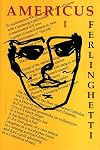
Americus is a rush of somethings old, somethings new, and much that is borrowed that’s melancholy and horrifically true. Ferlinghetti’s poetic fugue is told in the rhythm of his musings on America and Europe through the twentieth century in a rapid rush of verbiage that is musical. But unlike a mental fugue state he remembers everything. It’s ecstatic, punctuated by the horrors of war and the wonders and contractions of life. Starting with a quote from T. S. Eliot the poem is stuffed show more full of allusions and quotes from authors as various as Victor Hugo and Ezra Pound, song lyrics from George M. Cohan and Tuli Kuperberg, and phrases in French, German, and Italian, all of which Ferlinghetti scrupulously footnotes at the end of the book.
It’s a bravo performance by a master poet. show less
It’s a bravo performance by a master poet. show less
Lists
Awards


You May Also Like


Associated Authors
Statistics
- Works
- 147
- Also by
- 36
- Members
- 6,655
- Popularity
- #3,678
- Rating
- 4.0
- Reviews
- 115
- ISBNs
- 167
- Languages
- 15
- Favorited
- 30
