
Allen Ginsberg (1926–1997)
Author of Howl and Other Poems
About the Author
Irwin Allen Ginsberg was born in Newark, New Jersey, the son of poet and teacher Louis Ginsberg. In 1948, he received a B.A. degree from Columbia University. Ginsberg began writing poetry while still in school and first gained wide public recognition in 1956 with the long poem Howl. Howl has had a show more stormy history. When it was first recited at poetry readings, audiences cheered wildly. It was published by Lawrence Ferlinghetti's City Lights Books and printed in England. Before the printed copies could be distributed, however they were seized by U.S. custom officials as obscene. After a famous court case in which the poem was found not to be obscene, the work sold rapidly and Ginsberg's reputation was assured. Regarded as the foremost port of the Beat generation (as group of rebellious writers who opposed conformity and sough intensity of experience), Ginsberg's work is concerned with many subjects of contemporary interest, including drugs, sexual confusion, the voluntary poverty of the artist and rebel, and rejection of society. He is a poet with a significant message, and his criticism of American society is part of a long tradition of American writers who have questioned their country's values. Ginsberg received numerous honors, including a Woodbury Poetry Prize, a National Institute of Arts and Letters Award, and a National Book Award for poetry. Ginsberg was a Pulitzer Prize finalist in 1995 for his book Cosmopolitan Greetings: Poems 1986-1992. Ever the Bohemian, he had numerous occupations throughout his lifetime including dishwasher, porter, book reviewer, and spot welder. He died in April 1997 of complications due to liver cancer. (Bowker Author Biography) show less
Series
Works by Allen Ginsberg
Mind Breaths: Poems 1972-1977 (City Lights Pocket Poets Series) (2001) — Author — 148 copies, 2 reviews
Don't Hide the Madness: William S. Burroughs in Conversation with Allen Ginsberg (2018) — Author/Photographer — 49 copies, 13 reviews
To Eberhart from Ginsberg : a letter about Howl, 1956 : an explanation by Allen Ginsberg of his publication Howl and Ric (1976) 7 copies
Ah!merica 5 copies
A supermarket in California 5 copies
Las mejores mentes de mi generación: Historia literaria de la Generación Beat (2021) 4 copies, 1 review
Many Loves 3 copies
קדיש ושירים אחרים 3 copies
Tårgas & solrosor 3 copies
Kuolema van Goghin korvalle 3 copies
Take care of my ghost, ghost 2 copies
Poesie da cantare: primi blues 2 copies
Holy Soul Jelly Roll: Poems & Songs 2 copies
Old love story 2 copies
Tear Gas Rag 2 copies
The green automobile (1953-1954) 2 copies
عواء وقصائد أخرى 1 copy
Kaddish i altres poemes 1 copy
Nagyáruház Kaliforniában 1 copy
Antología 1 copy
Entering Kansas City High 1 copy
The Lion for Real 1 copy
The fall of America II 1 copy
Art of Poetry, no. 8, The 1 copy
Antología Poética 1 copy
Siesta en Xbalba 1 copy
Autumn Leaves 1 copy
Journals 1 copy
Birdbrain ; Sue Your Parents 1 copy
GINSBERG 1 copy
Urlo. Ediz. speciale 1 copy
Madrugada (Issue Number One) 1 copy
Howl [Aullido] 1 copy
Bombay Gin (Issue #8) 1 copy
"The Rune" 1 copy
Playfare: "Kaddish" Based on a Poem by Allen Ginsberg - Chelsea Theater Center of Brooklyn (February 1-20, 1972) Playbill (1972) 1 copy
America 1 copy
Guru 1 copy
Kral Majales 1 copy
Kissinger Dream (SC) 1 copy
Thieves Stole This Poem 1 copy
Village Voice 1 copy
Urlo 1 copy
Listy 1 copy
Ginsberg Allen 1 copy
Audit (Volume 5, Number 1) "Contexts of Poetry with Allen Ginsberg at the Vancouver Conference" 1 copy
Meditation Rock 1 copy
Birdbrain / Sue Your Parents 1 copy
Ulua 1 copy
WORCs/ aloud allowed (Volume 13, Numero 83) "Same Multiple Identity: An Interview with Jack Foley" 1 copy
Το ουρλιαχτό 1 copy
Associated Works
The Making of a Poem: A Norton Anthology of Poetic Forms (2000) — Contributor — 1,475 copies, 9 reviews
Literature: An Introduction to Fiction, Poetry, and Drama (1995) — Contributor, some editions — 1,017 copies, 7 reviews
A Book of Luminous Things: An International Anthology of Poetry (1996) — Contributor — 945 copies, 12 reviews
Blake's Poetry and Designs [Norton Critical Edition, 2nd ed.] (2007) — Contributor — 238 copies, 1 review
Mindfield: New and Selected Poems (1989) — Foreword, some editions; Foreword, some editions — 208 copies
Three Novels: The Soft Machine, Nova Express, the Wild Boys (1980) — Contributor, some editions — 192 copies
Gay and Lesbian Poetry in Our Time (Stonewall Inn Editions) (1988) — Contributor — 189 copies, 1 review
The Rolling Stone Book of the Beats: The Beat Generation and American Culture (1999) — Contributor — 181 copies, 2 reviews
The Lincoln Anthology: Great Writers on His Life and Legacy from 1860 to Now (2008) — Contributor — 172 copies, 1 review
Poetry Speaks Expanded: Hear Poets Read Their Own Work from Tennyson to Plath (2007) — Contributor — 158 copies, 2 reviews
The Norton Anthology of American Literature, Volume 2: 1865 to Present (1979) — Contributor, some editions — 136 copies
Answering Back: Living Poets Reply to the Poetry of the Past (2007) — Contributor — 119 copies, 1 review
The Dylan Companion: A Collection of Essential Writing About Bob Dylan (1990) — Contributor, some editions — 103 copies
Writing New York: A Literary Anthology (Expanded 10th-Anniversary Edition) (2008) — Contributor — 101 copies, 1 review
A Controversy of Poets: An Anthology of Contemporary American Poetry, (1965) — Contributor — 83 copies
The Heath Anthology of American Literature, Concise Edition (2003) — Contributor — 73 copies, 1 review
Queer: A Collection of LGBTQ Writing from Ancient Times to Yesterday (2021) — Contributor, some editions — 65 copies
Before Stonewall: The Making of a Gay and Lesbian Community [1984 film] (1984) — Self — 54 copies, 2 reviews
The Village Voice Reader: A Mixed Bag from the Greenwich Village Newspaper (1963) — Contributor — 29 copies, 1 review
Out of This World: An Anthology of the St. Mark's Poetry Project 1966-1991 (1982) — Foreword — 27 copies
The Serpent and the Fire: Poetries of the Americas from Origins to Present (2024) — Contributor — 18 copies
Possibilities of Poetry: An Anthology of American Contemporaries (1970) — Contributor — 17 copies, 1 review
First Thought Best Thought: The Art of Spontaneous & Inspired Writing Taught by Four Legendary Mentors of the Craft (2004) — Contributor — 15 copies
Democracy in Print: The best of the Progressive Magazine, 1909-2009 (2009) — Contributor — 14 copies
Sunlight on the River: Poems About Paintings, Paintings About Poems (2015) — Contributor — 11 copies, 2 reviews
Some Poems, Poets: Studies in American Underground Poetry since 1945 (1971) — Contributor — 7 copies
Unmuzzled Ox 13 — Contributor — 7 copies
Die Sammlung der Nationalgalerie : 1945-1968 : Der geteilte Himmel : die Dokumentation einer Ausstellung (2014) — Contributor — 6 copies
Epitaphs for Lorine — Contributor — 6 copies
Sylvia Plath's Tomato Soup Cake: A Compendium of Classic Authors' Favourite Recipes (2024) — Contributor — 6 copies
Peace or perish : a crisis anthology — Contributor — 4 copies
Crazy Wisdom: The Life & Times of Chogyam Trungpa Rinpoche (2011, film) (2011) — Featured, some editions — 3 copies
Saturday morning, vol. II, no. 1 & 2, New york City issue — Contributor — 3 copies
Soundings-East: Kerouac Issue (Proceedings of 1973 Symposium on Jack Kerouac) (1979) — Contributor — 2 copies
Whole Earth Review #90 (summer 1997) — Contributor — 1 copy
Bad Breath / Stage Ax / Emily Likes the TV, #3 — Contributor — 1 copy
San Francisco poets [sound recording] — Contributor — 1 copy
Intrepid No. 5, 1st Anniversary Issue — Contributor — 1 copy
Tagged
Common Knowledge
- Legal name
- Ginsberg, Irwin Allen
- Other names
- אלן גינזברג
- Birthdate
- 1926-06-03
- Date of death
- 1997-04-05
- Gender
- male
- Education
- Columbia University
Montclair State University - Occupations
- poet
dishwasher
actor
spot-welder - Organizations
- American Academy of Arts and Letters (Literature, 1973)
Jack Kerouac School of Disembodied Poetics (founder) - Awards and honors
- Frost Medal (1985/1986)
American Academy of Arts and Letters Academy Award (Literature, 1969)
National Book Award for Poetry (1974)
National Arts Club Gold Medal (1979)
American Academy of Arts and Letters (1973) - Relationships
- Orlovsky, Peter (partner)
- Cause of death
- liver cancer
- Nationality
- USA
- Birthplace
- Newark, New Jersey, USA
- Places of residence
- Paterson, New Jersey, USA
San Francisco, California, USA
Paris, France - Place of death
- New York, New York, USA
- Burial location
- Gomel Chesed Cemetery, Elizabeth, New Jersey, USA
- Map Location
- New Jersey, USA
Members
Discussions
1914: William S. Burroughs - The Yage Letters in Literary Centennials (August 2014)
Reviews

In October 1955, there was a low-key event at the 6 Gallery on Fillmore Street in San Francisco, with the promise of a "remarkable collection of angels on one stage reading their poetry." Jack Kerouac went around with the collection bowl, whilst Allen Ginsberg whipped the audience into excitement by reading Part I of his work-in-progress, Howl. When Lawrence Ferlinghetti published the completed poem the following year as the fourth in his Pocket Poets series, it soon became a runaway show more bestseller (partly thanks to a high-profile obscenity trial) and one of the defining works of what came to be called Beat literature.
The poem itself is in three parts: Part I is a grand, Whitmanesque celebration of the lives of his poetic heroes and of his own struggle against the modern world, with copious amounts of (gay) sex, drugs, bumming around and political subversion thrown in; the incantation of Part II confronts the destructive forces of the child-eating Moloch directly, and in Part III he addresses the dedicatee of the poem, Carl Solomon, whom he met while they were both patients in the same psychiatric institution. Then there's a "Footnote to Howl", which is another incantation, a kind of Beat Sanctus.
As in Whitman, the first thing that hits you about the poem is its tremendous momentum and kinetic energy, but there's a lot more to it than just the pounding impact of the long lines: every line is dense with paradoxical, unexpected but never quite nonsensical language (negro streets, starry dynamos, unshaven rooms, pubic beards, ...), and there's a clear thread of insight into the hostile world under all that counter-culture posturing. It's tempting to think of it as nothing more than drug-induced ramblings from long ago, but that's not at all what's going on here: this is a serious attempt to push beyond the usual limits of poetry and make it relevant to people who are confronting the dehumanising effects of fifties society, and it still clearly has things to say to us today.
The Pocket Poets collection includes five more, shorter, incantatory poems in the same kind of Whitman long-line format, plus four rather more conventionally lyrical "earlier poems". Probably the most striking is "Sunflower Sutra", where he and Kerouac sit in the shade of a locomotive on a dockside and contemplate a dead sunflower. show less
The poem itself is in three parts: Part I is a grand, Whitmanesque celebration of the lives of his poetic heroes and of his own struggle against the modern world, with copious amounts of (gay) sex, drugs, bumming around and political subversion thrown in; the incantation of Part II confronts the destructive forces of the child-eating Moloch directly, and in Part III he addresses the dedicatee of the poem, Carl Solomon, whom he met while they were both patients in the same psychiatric institution. Then there's a "Footnote to Howl", which is another incantation, a kind of Beat Sanctus.
As in Whitman, the first thing that hits you about the poem is its tremendous momentum and kinetic energy, but there's a lot more to it than just the pounding impact of the long lines: every line is dense with paradoxical, unexpected but never quite nonsensical language (negro streets, starry dynamos, unshaven rooms, pubic beards, ...), and there's a clear thread of insight into the hostile world under all that counter-culture posturing. It's tempting to think of it as nothing more than drug-induced ramblings from long ago, but that's not at all what's going on here: this is a serious attempt to push beyond the usual limits of poetry and make it relevant to people who are confronting the dehumanising effects of fifties society, and it still clearly has things to say to us today.
The Pocket Poets collection includes five more, shorter, incantatory poems in the same kind of Whitman long-line format, plus four rather more conventionally lyrical "earlier poems". Probably the most striking is "Sunflower Sutra", where he and Kerouac sit in the shade of a locomotive on a dockside and contemplate a dead sunflower. show less
Don't Hide the Madness: William S. Burroughs in Conversation with Allen Ginsberg by William S. Burroughs
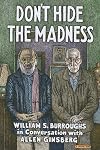
This is the unpublished transcript between William Burroughs and Allen Ginsberg around the peak time of the early 1990s, when both were having a somewhat resurgence in popularity. Recorded over a period of days, it really provides a whole canvas of talks between these two giants of the beat generation. There is informality, like the banality of cooking chicken in a pot, to the spiritual (The premise of some of the meetings was that WSB was having a shaman exorcise a demon he had in him since show more he shot his wife, Joan, during the infamous "William Tell routine".), to the downright fascinating gossip and heyday remembrances of times past (Kerouac, Burroughs and others pulling down Ginsberg's pants at a party and he "got a hard on" at the excitement of it all.)
There are just all of these flowing, winding conversations that go on and on, and while that may seem mundane for some, I found it quite involved, as if I were in the room with them, imagining their voices echoing through the rooms as they sometimes wandered in and out while preparing supper, for example. Some pretty charming moments between them as they call each other darling and dear as well, you can just feel their presence at times.
The format for this is great, like a play, easy to read and approach, and the footnotes are definitely helpful. It would be interesting if they did release an audio version of this, with their actual voices, but I have the feeling the quality may be not up to audio book snuff.
Overall, I really enjoyed this book, and a fantastic cover by R. Crumb would be great on a tee shirt! show less
There are just all of these flowing, winding conversations that go on and on, and while that may seem mundane for some, I found it quite involved, as if I were in the room with them, imagining their voices echoing through the rooms as they sometimes wandered in and out while preparing supper, for example. Some pretty charming moments between them as they call each other darling and dear as well, you can just feel their presence at times.
The format for this is great, like a play, easy to read and approach, and the footnotes are definitely helpful. It would be interesting if they did release an audio version of this, with their actual voices, but I have the feeling the quality may be not up to audio book snuff.
Overall, I really enjoyed this book, and a fantastic cover by R. Crumb would be great on a tee shirt! show less
 This review was written for LibraryThing Early Reviewers.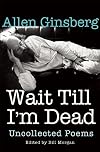
Wait Till I'm Dead: Uncollected Poems by Allen Ginsberg edited by Bill Morgan is the latest and possibly the last update to the complete works of Allen Ginsberg which already number at over 1,200 pages. Ginsberg needs little introduction even to the most secluded or unread person -- The standout poet from the Beat era who continued to write poetry until his death in 1997.
Wait Til I’m Dead is a collection that spans Ginsberg entire career and from a variety of publications. Included are show more Marrahwannah Quarterly, High Times, Shambhala, Fag Rag, City Lights Journal, and from a live impromptu performance at Shakespeare and Company in Paris. Many of these were pieces done at the spur of the moment like "Cleveland Airport." Others are memories like his last conversation with Carl Solomon as Solomon lie dying in a hospital.
The introduction is provided by Rachel Zucker who first read Ginsberg in college and want more poetry in her education. She calls Ginsberg her gateway drug to poetry. The English chair was happy to comply with Bishop, Moore, and Plath but nothing moved Zucker like Ginsberg. In what is probably the best quote on poetry I have read, Zucker says, “Allen was a good mother to me. He invited me into the kitchen of poetry and made me a sandwich.”
This is a great collection of Ginsberg’s work that has not made it in his complete collection. Because these poems were not included in the complete collection of his work one may wonder if they are worthy of reading or just poems rejected by previous editors. The work here is well worth the read. It is Ginsberg, and as far as the quality of the work, it is like a bootleg Bob Dylan concert. It is the artist in perhaps in his truest form. There is a visible evolution in the work as it covers half a century of writing that is more recognizable in a shorter collection, yet it is always, without a doubt, Ginsberg.
Death spoke out of the singer’s throat; While, staring through a drunkard’s eyes, Fate confounded drinker’s lies:
For all the drinks that they had tried, Death still sat there at their side.
And death peered with contemptuous calm. From the barman’s open palm.
“A Night in the Village”, 1944
Where can he go with alcohol and the landlord’s
eviction notice comes to us all?
gentrification will oust us from our nest
where to put books and file cabinets heavy with paper gold? Wake, smoke,
another cigarette with aching back and the last breath though cancered
throat…..
Bob Dylan Touring with Grateful Dead, 1986
I meet Carl Solomon.
What is it like in the afterworld?
“It’s just like the mental hospital. You get along if you follow the rules.”
Dream of Carl Solomon, 1996
Wait Till I'm Dead: Uncollected Poems is a worthwhile addition to any Ginsberg or Beat book collection. Grab a sandwich for poetry’s kitchen and enjoy. show less
Wait Til I’m Dead is a collection that spans Ginsberg entire career and from a variety of publications. Included are show more Marrahwannah Quarterly, High Times, Shambhala, Fag Rag, City Lights Journal, and from a live impromptu performance at Shakespeare and Company in Paris. Many of these were pieces done at the spur of the moment like "Cleveland Airport." Others are memories like his last conversation with Carl Solomon as Solomon lie dying in a hospital.
The introduction is provided by Rachel Zucker who first read Ginsberg in college and want more poetry in her education. She calls Ginsberg her gateway drug to poetry. The English chair was happy to comply with Bishop, Moore, and Plath but nothing moved Zucker like Ginsberg. In what is probably the best quote on poetry I have read, Zucker says, “Allen was a good mother to me. He invited me into the kitchen of poetry and made me a sandwich.”
This is a great collection of Ginsberg’s work that has not made it in his complete collection. Because these poems were not included in the complete collection of his work one may wonder if they are worthy of reading or just poems rejected by previous editors. The work here is well worth the read. It is Ginsberg, and as far as the quality of the work, it is like a bootleg Bob Dylan concert. It is the artist in perhaps in his truest form. There is a visible evolution in the work as it covers half a century of writing that is more recognizable in a shorter collection, yet it is always, without a doubt, Ginsberg.
Death spoke out of the singer’s throat; While, staring through a drunkard’s eyes, Fate confounded drinker’s lies:
For all the drinks that they had tried, Death still sat there at their side.
And death peered with contemptuous calm. From the barman’s open palm.
“A Night in the Village”, 1944
Where can he go with alcohol and the landlord’s
eviction notice comes to us all?
gentrification will oust us from our nest
where to put books and file cabinets heavy with paper gold? Wake, smoke,
another cigarette with aching back and the last breath though cancered
throat…..
Bob Dylan Touring with Grateful Dead, 1986
I meet Carl Solomon.
What is it like in the afterworld?
“It’s just like the mental hospital. You get along if you follow the rules.”
Dream of Carl Solomon, 1996
Wait Till I'm Dead: Uncollected Poems is a worthwhile addition to any Ginsberg or Beat book collection. Grab a sandwich for poetry’s kitchen and enjoy. show less
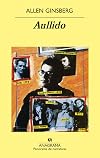
Howl
“I saw the best minds of my generation destroyed by madness, starving hysterical naked, draggin themselves through the negro streets at dawn looking for an angry fix, angelheaded hipsters burning for the ancient heavenly connection to the starry dinamo in the machinery of night.”
Me pregunto ¿Quién no habrá leído las primeras líneas de “Aullido”? Un poema que influenció ampliamente la poesía norteamericana del siglo XXI, creado y disfrutado más recitado que leído , pero show more que sobre todas las cosas es tremendamente egoísta y socialmente masiva. Para Allen todo se trata de su círculo, de aquellos con los que convivió y cuáles fueron sus experiencias, se alejó de la rítmica y se enfocó en el sentimiento, y es por ello que terminó marcando una época por la sensación de desazón que desprenden sus versos, de que el mundo te ha traicionado, pero que al final te da esperanza.
Dividido en cuatro partes, las tres primeras son sucias, apasionadas y tristes, la última sección lo deja claro: no están solos. Sin importar si están en el psiquiátrico o en las abandonas calles de la ciudad, en la locura o en la drogadicción se tienen a ellos mismos y su libertad para ser, hablar y estar.
Para mi Aullido es un poema directo y maravilloso, que muestra a los marginados y a los olvidados como sólo otro individuo marginado podría haberlo hecho.
...
A supermarket in California
Quien hayan leído algo acerca de Ginsberg sabe de la gran influencia que tuvo Walt Whitman sobre él, y este poema puede ser tanto una oda a su persona como una visión de la sociedad común, de las situaciones del día a día, y dela transformación del mundo para bien o para mal.
…
America
Este es especial. Personalmente creo que junto con Aullido fue mi favorito. Es una conversación directa con América, donde Allen expone su sensación de traición, de desasosiego, de haber dado y no recibir nada a cambio. Conforme leía mi cabeza no deja de pensar en “Born in the USA” de Bruce Springsteen, ambas tienen ese mismo mensaje expresado desde la singularidad a la colectividad, sólo que aquí no hay música audible que nos haga omitir la letra, aquí todo es directo.
”America when will you be angelic?”
…
Otros poemas de la colección son Transcripción de música de organo,Sutra de girasol y En la consigna de Greyhound. Todos ellos son buenos pero carezco de notas respecto a ellos debido a que los leí mientras iba de pie en el metro a las 8 de la mañana, por tanto no puedo reseñarlos de manera correcta sin que se me mezclen los mensajes de cada uno.
Esta colección incluye además algunos primeros poemas los cuales difieren considerablemente respecto a los anteriores por su estructura: aquí se mantiene la rítmica clásica, la longitudes más corta y hay un mayor uso del sentido figurado, no obstante el sentimiento triste y perdido esinamovible.
Al final esta es una colección que merece ser leída (al menos por Howl y America), ya sea que te guste o no la poesía, porque el trabajo de Ginsberg es distinto de la poesía clásica, más cercano a una buena conversación que a un compilado de versos que disfrutar en tu soledad. show less
“I saw the best minds of my generation destroyed by madness, starving hysterical naked, draggin themselves through the negro streets at dawn looking for an angry fix, angelheaded hipsters burning for the ancient heavenly connection to the starry dinamo in the machinery of night.”
Me pregunto ¿Quién no habrá leído las primeras líneas de “Aullido”? Un poema que influenció ampliamente la poesía norteamericana del siglo XXI, creado y disfrutado más recitado que leído , pero show more que sobre todas las cosas es tremendamente egoísta y socialmente masiva. Para Allen todo se trata de su círculo, de aquellos con los que convivió y cuáles fueron sus experiencias, se alejó de la rítmica y se enfocó en el sentimiento, y es por ello que terminó marcando una época por la sensación de desazón que desprenden sus versos, de que el mundo te ha traicionado, pero que al final te da esperanza.
Dividido en cuatro partes, las tres primeras son sucias, apasionadas y tristes, la última sección lo deja claro: no están solos. Sin importar si están en el psiquiátrico o en las abandonas calles de la ciudad, en la locura o en la drogadicción se tienen a ellos mismos y su libertad para ser, hablar y estar.
Para mi Aullido es un poema directo y maravilloso, que muestra a los marginados y a los olvidados como sólo otro individuo marginado podría haberlo hecho.
...
A supermarket in California
Quien hayan leído algo acerca de Ginsberg sabe de la gran influencia que tuvo Walt Whitman sobre él, y este poema puede ser tanto una oda a su persona como una visión de la sociedad común, de las situaciones del día a día, y dela transformación del mundo para bien o para mal.
…
America
Este es especial. Personalmente creo que junto con Aullido fue mi favorito. Es una conversación directa con América, donde Allen expone su sensación de traición, de desasosiego, de haber dado y no recibir nada a cambio. Conforme leía mi cabeza no deja de pensar en “Born in the USA” de Bruce Springsteen, ambas tienen ese mismo mensaje expresado desde la singularidad a la colectividad, sólo que aquí no hay música audible que nos haga omitir la letra, aquí todo es directo.
”America when will you be angelic?”
…
Otros poemas de la colección son Transcripción de música de organo,Sutra de girasol y En la consigna de Greyhound. Todos ellos son buenos pero carezco de notas respecto a ellos debido a que los leí mientras iba de pie en el metro a las 8 de la mañana, por tanto no puedo reseñarlos de manera correcta sin que se me mezclen los mensajes de cada uno.
Esta colección incluye además algunos primeros poemas los cuales difieren considerablemente respecto a los anteriores por su estructura: aquí se mantiene la rítmica clásica, la longitudes más corta y hay un mayor uso del sentido figurado, no obstante el sentimiento triste y perdido esinamovible.
Al final esta es una colección que merece ser leída (al menos por Howl y America), ya sea que te guste o no la poesía, porque el trabajo de Ginsberg es distinto de la poesía clásica, más cercano a una buena conversación que a un compilado de versos que disfrutar en tu soledad. show less
Lists
Beat (5)
poetry (1)
1950s (1)
BitLife (1)
Florida (1)
Nifty Fifties (1)
Poetry Corner (3)
Awards


You May Also Like


Associated Authors
Statistics
- Works
- 301
- Also by
- 113
- Members
- 16,979
- Popularity
- #1,310
- Rating
- 3.8
- Reviews
- 193
- ISBNs
- 380
- Languages
- 23
- Favorited
- 103


