
Barry Miles (1)
Author of Paul McCartney: Many Years From Now
For other authors named Barry Miles, see the disambiguation page.
About the Author
Barry Miles was the chairman of the Youth Campaign for Nuclear Disarmament in the early 1960s.
Works by Barry Miles
I Want to Take You Higher: The Psychedelic Era, 1965-1969 (Rock & Roll Hall of Fame & Museum) (1997) 88 copies, 2 reviews
William S. Burroughs: A Bibliography, 1953-73 Unlocking Inspectors Lee's Word Hoard (1978) — Author — 17 copies
Better Books / Better Bookz: Art, Anarchy, Apostasy: Counter-Culture & the New Avant-Garde (2019) 2 copies, 1 review
fusion is 1 copy
Associated Works
Free Press: Underground and Alternative Publications, 1965-1975 (2006) — Préface, some editions — 38 copies, 2 reviews
200 Trips from the Counter-Culture: Graphics and Stories from the Underground Press Syndicate (2006) — Preface, some editions — 18 copies, 1 review
Real English tea made here [sound recording] — Editor — 1 copy
Tagged
Common Knowledge
Members
Reviews
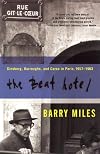
Burroughs biographer Barry Miles assiduously pulls together letters and fragments of recollection from various sources to create a historical narrative of the so-called Beat Hotel, the nameless, ramshackle Paris hotel where Allen Ginsberg, Gregory Corso and William S. Burroughs (among others) lived and created during the mid-twentieth century. Miles is a good writer and the book is engaging and well-paced, but from a purely human perspective the whole thing comes off as rather pathetic. Hey, show more these guys made history, so how pathetic could they have been, right? Well, how pathetic are any bunch of noisy drunks insisting that they're great poets, bending over backwards to draw attention to themselves (even mortifying W.H. Auden by trying to kiss the cuff of his pants, as Ginsberg and Corso did on a visit to London)? Because that's the mundane reality of the Beats: some American expatriates living in a dirty, rat-infested hotel with a shit-clogged Turkish toilet, drinking and getting laid and drinking and writing and drinking and generally behaving like asses. That in itself is not art. Yes, some of what was created during that period qualifies as literature (such as Ginsberg's "Kaddish"), but a lot of it falls well short of the mark. (And that includes Burroughs's celebrated Naked Lunch, which finally found a publisher not because it was a novel of such unparalleled brilliance that the world couldn't survive without it, but because it contained a handful of pornographic scenes and the publisher reckoned that it might be a moneymaker. Burroughs was a talented and occasionally even great writer, but Naked Lunch is not among his best work.)
It bears repeating that Miles is a fine writer and sets down nothing more or less than the truth in The Beat Hotel; my beef is with the sad debauchery of the author's man-baby subjects, not with the manner in which their story is told. If my analysis of them sounds harsh, it was intended to. I'm a fan of Burroughs--and Ginsberg, to a lesser extent--but not an uncritical one. No other literary movement has been so fundamentally defined by madness and murder (indeed, might never have come into being if not for madness and murder), nor seen its every masturbatory gesture exalted as high art. show less
It bears repeating that Miles is a fine writer and sets down nothing more or less than the truth in The Beat Hotel; my beef is with the sad debauchery of the author's man-baby subjects, not with the manner in which their story is told. If my analysis of them sounds harsh, it was intended to. I'm a fan of Burroughs--and Ginsberg, to a lesser extent--but not an uncritical one. No other literary movement has been so fundamentally defined by madness and murder (indeed, might never have come into being if not for madness and murder), nor seen its every masturbatory gesture exalted as high art. show less

There is an argument as to whether knowledge of the artist should be needed to appreciate a work of art. I suppose that a great work should stand for itself to some extent but, surely all knowledge is valuable and, if additional wisdom is gained from the understanding of an author, then why should that be a bad thing?
This is an amazing biography; one of the most sensitive but, at the same time, honest that I have read for many a year. Ginsberg wasn't a saint and, neither is he so portrayed. show more It wouldn't ring true if there weren't areas of difficulty and, believe me, there are. Homosexuality is, rightly, viewed with less opprobrium than in the 1940's but, his penchant for young boys is questionable as is the fact that he never seems to have considered that some of his conquests in latter years must have been in awe of his reputation rather than enamoured of the aging body.
Further difficulties surround his Buddhist leader, Chogyam Trungpa. The man appears to have been an alcoholic bully but, because of his standing, Ginsberg was unable to question his actions and, indeed, continued to raise finances and support this brigand.
The last two paragraphs make Allen Ginsberg seem a monster: nothing could be further from the truth: perhaps such a good man had further to fall than we mere mortals. In general, he supported people, and causes, far beyond where you or I would have considered that we had done our bit and turned away.
The best recommendation for any biography is that it reignites one's desires to visit the subject's works: this book has that ability in spades. An excellent biography of a great poet. show less
This is an amazing biography; one of the most sensitive but, at the same time, honest that I have read for many a year. Ginsberg wasn't a saint and, neither is he so portrayed. show more It wouldn't ring true if there weren't areas of difficulty and, believe me, there are. Homosexuality is, rightly, viewed with less opprobrium than in the 1940's but, his penchant for young boys is questionable as is the fact that he never seems to have considered that some of his conquests in latter years must have been in awe of his reputation rather than enamoured of the aging body.
Further difficulties surround his Buddhist leader, Chogyam Trungpa. The man appears to have been an alcoholic bully but, because of his standing, Ginsberg was unable to question his actions and, indeed, continued to raise finances and support this brigand.
The last two paragraphs make Allen Ginsberg seem a monster: nothing could be further from the truth: perhaps such a good man had further to fall than we mere mortals. In general, he supported people, and causes, far beyond where you or I would have considered that we had done our bit and turned away.
The best recommendation for any biography is that it reignites one's desires to visit the subject's works: this book has that ability in spades. An excellent biography of a great poet. show less
Covering seven years- 1965 through 1971- this book gives good picture of the main hippie era. Yes, hippies still exist, but these were the years when they flooded western culture with new music, new social movements, new clothing and new ways of living. Some of it wasn’t entirely new- the movement was rooted partly in the Beats of the 50s and in the intentional communities that went back some 100 years.
I really enjoyed this book; while I’ve read a good deal about the era, Miles really show more brought it to life. Pretty much every page has an illustration on it: photos, posters, ads. The main subjects are music and concerts, drugs, and protest movements. While “Hippie” is the title, the author also covers the Beats, the Black Power movement, Gay Pride, the Mods, and more. It’s all part of the era.
I lived through the era, but I was a child and my exposure was limited to TV, radio, and magazines. This book made me wish I had been just a little older. I would have loved to have gone to a Be-In, a Dead or Joplin concert, seen the Merry Pranksters with their bus. This book isn’t just the pretty stuff, though. He exposes the meth and heroin use, the Hell’s Angels becoming an unwelcome force at concerts, the ODs and the VD, and all the ugly parts. Five stars. show less
I really enjoyed this book; while I’ve read a good deal about the era, Miles really show more brought it to life. Pretty much every page has an illustration on it: photos, posters, ads. The main subjects are music and concerts, drugs, and protest movements. While “Hippie” is the title, the author also covers the Beats, the Black Power movement, Gay Pride, the Mods, and more. It’s all part of the era.
I lived through the era, but I was a child and my exposure was limited to TV, radio, and magazines. This book made me wish I had been just a little older. I would have loved to have gone to a Be-In, a Dead or Joplin concert, seen the Merry Pranksters with their bus. This book isn’t just the pretty stuff, though. He exposes the meth and heroin use, the Hell’s Angels becoming an unwelcome force at concerts, the ODs and the VD, and all the ugly parts. Five stars. show less
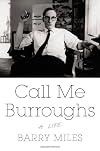
Hugely enjoyable. Barry Miles's intimate portrait of Burroughs strips away the artsy associations and we are invited, momentarily, to peer into the human sides of El Hombre Invisible: gun toter, accidental artist, guileless boy, sensitive sweetheart, absurdly inappropriate humourist and ardent cat fan - alongside being the accidental murderer of wife Joan Vollmer and the absent dad of son William Jr. It's astonishing to see how reviled he was when he was just starting out, when you see the show more reverence he received on later. Goes to show how inconsequential and picky fame can be, I guess? show less
Lists
Awards


You May Also Like


Associated Authors
Statistics
- Works
- 49
- Also by
- 7
- Members
- 3,854
- Popularity
- #6,578
- Rating
- 3.6
- Reviews
- 40
- ISBNs
- 203
- Languages
- 16
- Favorited
- 1