Philip Norman (1) (1943–)
Author of Shout!: The Beatles in Their Generation
For other authors named Philip Norman, see the disambiguation page.
About the Author
Philip Norman was born on April 13, 1943 and grew up in Ryde, Isle of Wight, United Kingdom. He is a novelist, biographer, journalist and playwright. His books include biographies of Buddy Holly, The Rolling Stones, Elton John and John Lennon Shout!: The Beatles in Their Generation and Paul show more McCartney: The Life. (Bowker Author Biography) show less
Image credit: via Goodreads
Works by Philip Norman
Tagged
Common Knowledge
- Birthdate
- 1943-04-13
- Gender
- male
- Education
- Ryde School
- Occupations
- journalist
biographer
novelist - Awards and honors
- Granta's Best of Young British Novelists
- Nationality
- UK
- Birthplace
- London, England, UK
- Places of residence
- Ryde, Isle of Wight, England, UK
- Map Location
- United Kingdom (UK)
Members
Reviews
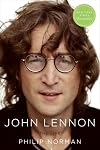
Philip Norman's JOHN LENNON: THE LIFE (2009), at over 800 pages, could be - and is - a major undertaking, but if you read it in smaller bites over a week or two, It's actually kinda fun, especially if you were a Beatles fan from the very beginning, as I was. I first heard of the Beatles when they traveled to New York for their first American tour in 1963. News of the Beatles landing at La Guardia came across the teletype in our Operations building in northern Turkey where I was stationed show more with the Army. We all scratched our heads, wondering, What are Beatles? But our questions were answered soon after when the Beatles' first two British albums (on the Parlophone label) showed up in the base PX. I bought both of them. My roommates and I were at first kinda mystified by their raw sound, but, after a few plays, they kinda grew on us, and soon we were all singing or humming along. So yeah, been a fan ever since. And since then I've also read a couple Beatles biographies - Hunter Davies' early one, and, much later, the one by Bob Spitz, both of them very interesting. So a lot of stuff here in Norman's book I already knew about, at least vaguely, but much of the info on Lennon's life post-Beatles was new to me. For example, his so-called "lost weekend" - the fourteen month period when he separated from Yoko and cohabited (on both coasts) with May Pang, their 'personal assistant,' and apparently with Yono's approval. This was a time of much drinking, drugging and hanging out with Harry Nilsson and Keith Moon - both very bad influences. I also had several of John's post-group LPs, a couple of them products, I learned, of his Primal Scream therapy. Because it seems John Lennon was a bucket of fears, insecurities abd unresolved issues regarding his mostly absent parents. I also was very interested in learning more about the important role that producer George Martin played in the lives and musical successes of the group. And Lennon's shoddy treatment of his long-suffering first wife, Cynthia, and their son, Julian, is brought painfully to light here too - behavior he tried hard to rectify in his meticulous caring for Sean, his son with Yoko. It's all very complicated, and so was John Lennon, a confused and tortured soul, despite all of his wealth and success. And of course there is no happy ending, which we knew from the start.
But this is a damn good book, full of facts, myths and misunderstandings about Lennon - who was, after all, just a guy from Liverpool, very human - from before, during and after the Beatles. Philip Norman also wrote another, earlier book about the Beatles phenomenon called SHOUT. And now he has a new book, all about George Harrison. I enjoyed making my way through this massive tome, remembering the songs, the albums, those wonderful, strange and turbulent times. Thank you, Phil. Very highly recommended.
- Tim Bazzett, author of the memoir, BOOKLOVER show less
But this is a damn good book, full of facts, myths and misunderstandings about Lennon - who was, after all, just a guy from Liverpool, very human - from before, during and after the Beatles. Philip Norman also wrote another, earlier book about the Beatles phenomenon called SHOUT. And now he has a new book, all about George Harrison. I enjoyed making my way through this massive tome, remembering the songs, the albums, those wonderful, strange and turbulent times. Thank you, Phil. Very highly recommended.
- Tim Bazzett, author of the memoir, BOOKLOVER show less
I'll just say this. I've been a fan of the Beatles for almost five full decades. Their first single, Love Me Do came out less than 24 hours before I was born. I heard the Beatles from birth. My older brother and sister kept me current with each new song. I was struck dumb by the deaths of John and George. I've seen countless Beatles tribute bands, seen Beatlemania! three times, seen Paul three times, watched all the movies, watched the full Anthology series, seen the Backbeat stage play, and show more read hundreds of articles on the band. And, to top it off, I've read over 60 books on the Beatles, both as a band, and the four individuals.
Through all of that, this is the singular best book I've ever read on the Beatles. Period. show less
Boy howdy! That took a while - but was worth every page. I'm not a fully fledged Beatlemaniac, but I do enjoy a good biography and Philip Norman's authorised in all but name study of the former Beatle definitely qualifies. True to his acknowledgements, Norman 'reconstructs his life completely afresh, writing for a hypothetical reader who has never heard of him or listened to a note of his music, ignoring all preconceptions, including [Norman's] own'. He is fair to both Lennon and Yoko, who I show more actually admire now, and although he seems to indulge in a fair bit of Paul bashing, the other Beatles too. I now want to read more about Brian Epstein, the Beatles' tragic manager, and buy John's albums, which is the mark of a good bio - inspiring the reader to learn more about the subject. show less
I hate to say this, but this book was disappointing on a number of levels: it compared poorly with Keith Richards' autobiography LIFE, which I read just previously, both in content and style; there were a number of mistakes in the text (on the copy-editing level); and it turns out that John was, simply put, kind of a jerk, especially when he was younger.
However, it was perhaps unfair of me to read it right after LIFE; if I could jump back in time two weeks, I'd read them in the opposite show more order. Keith's book had the immediacy of a first-person narrative, whereas John's was, necessarily, an autobiography. There were other factors going in as well: The Beatles' image as a smiley boy band, in suits and ties (despite their later long hair and other late-'60s/early-'70s trappings) raises the bar of audience expectation of the individual Beatles, whereas the Stones' bad-boy rock 'n' roll image lowers the bar. One expects all kinds of bad behavior from the Stones, but is more surprised to learn about the Beatles' very early years playing (and misbehaving) in the red light district in Hamburg.
Preconceptions aside, the Beatles did start out more rock 'n' roll before Brian Epstein cleaned up their act, and one gets the sense that John may have been happier with a grittier image, like the Stones. One clear point of contrast between the two is that Keith's love for music and for playing live shows shines through his whole book, but John came to hate playing to live audiences. No one was prepared for the unprecedented phenomenon of Beatlemania, and so "the boys" were not well guarded against it - not hidden behind a wall of security as they would be today. Additionally, it's easy to see how fans claiming to love the music and then screaming so loudly during the concert that the music was rendered inaudible could be extraordinarily aggravating.
The wonderful thing about Keith's book was his happiness, his enthusiasm about life and music and other people, and his sense of humor. If John had lived to write an autobiography, it might well have been a more enjoyable read than Philip Norman's biography of him. John's story as told by Norman is drier and more scholarly (Keith certainly couldn't be accused of either). And Keith has the perspective and distance of several extra decades; the flaws that stood out in John's youth and Beatles years were beginning to mellow before his premature death, but - if both accounts are to be taken at face value - John was far more insecure and had a much worse temper anyone who hears "I Want to Hold Your Hand" would suspect.
Not that I expect musicians (or writers or artists) to be paragons of virtue or shining examples of character, but it was a bit disillusioning reading about John in detail. I had a positive impression of his before I read the book, less so now. (Keith, on the other hand, was surprising in the opposite direction, as it were: despite all the drugs and trashed hotel rooms, he seems to have a relatively sunny outlook and peaceful personality. If I could hang out with one of these two, on the basis of these two books alone, I'd pick Keith, and not just because John's dead.)
Another difference between John and Keith is that Keith is primarily a musician: he goes into great detail about various chords and open tuning and riffs. Though it goes without saying that John was a brilliant musician as well, it seems he was primarily a writer; he wrote and drew from a young age. This difference is reflected in their respective songwriting processes as well as in their music. (When Keith and Mick wrote together, Keith usually came up with with central riff and a few words, usually the chorus - "it goes like this" - and Mick would fill in the verses.) In John and Paul's songs, there is often a strong story element; the lyrics are just as important as the music. In fact, the Beatles began printing the lyrics of their songs on their album covers, starting with Sgt. Pepper. Think of "A Day in the Life" - it tells a whole story in itself.
On a personal level, having been brought up to loathe Yoko Ono, there's really no way to do that after reading Norman's book, and that's a bit of a letdown. One does certainly feel for Cynthia and, especially, Julian, when one considers the radically different treatment of the first wife and son compared to the second; but, at least as presented in this book, it seems as if John did much better as a husband and a father the second time around.
Overall, John simply wasn't a person who could be constrained by one image or even one medium. He was undoubtedly creative and brilliant, but after nearly a decade, he didn't love being a Beatle the way Keith loved being in the Stones (or the way Paul loved being a Beatle; maybe I'll read a book of his next). Though the Beatles broke up fifteen years before I was born, I've always been sad about it (and also always blamed it on Yoko), but I don't know if I am anymore.
A final note: there were numerous typos and other small errors that ought to have been corrected in the copy-editing process. True, 850 pages is quite a long book, and this was a first edition, so some errors may have been corrected in subsequent editions. However, it makes this thoroughly researched book seem sloppy.
And it was thoroughly researched, and the writing was competent, if not lyrical or inspiring. There were certainly good tidbits about the origins of many of the songs, about who wrote what and why. There is solid primary source material, letters to and from John, quotes from many who knew and worked with him. But John Lennon: The Life just doesn't blaze off the page the way Keith Richards' LIFE does.
Re. Help!: "I remember, I got very emotional at the time, singing the lyrics. Whatever I'm singing, I really mean it. I don't mess around." (398)
Re. the MBEs: "Then it all just seemed part of the game we'd agreed to play. We'd nothing to lose, except that part of you which said you didn't believe in it." (400)
"God is a concept by which we measure our pain." (641)
"Perhaps the revelations in my life story may bring you a clearer picture of how fate and circumstance control so much of our lives and therefore must be considered in our judgment of one another." (Last letter John's father sent to him before Lennon Sr. died) (755)
On the Beatles and Apple Corps: So great was the volume of brilliant work they had left, and so ineradicable their effect on the pop psyche, they could be said never to have broken up at all - simply changed from a band into a brand. (757) show less
However, it was perhaps unfair of me to read it right after LIFE; if I could jump back in time two weeks, I'd read them in the opposite show more order. Keith's book had the immediacy of a first-person narrative, whereas John's was, necessarily, an autobiography. There were other factors going in as well: The Beatles' image as a smiley boy band, in suits and ties (despite their later long hair and other late-'60s/early-'70s trappings) raises the bar of audience expectation of the individual Beatles, whereas the Stones' bad-boy rock 'n' roll image lowers the bar. One expects all kinds of bad behavior from the Stones, but is more surprised to learn about the Beatles' very early years playing (and misbehaving) in the red light district in Hamburg.
Preconceptions aside, the Beatles did start out more rock 'n' roll before Brian Epstein cleaned up their act, and one gets the sense that John may have been happier with a grittier image, like the Stones. One clear point of contrast between the two is that Keith's love for music and for playing live shows shines through his whole book, but John came to hate playing to live audiences. No one was prepared for the unprecedented phenomenon of Beatlemania, and so "the boys" were not well guarded against it - not hidden behind a wall of security as they would be today. Additionally, it's easy to see how fans claiming to love the music and then screaming so loudly during the concert that the music was rendered inaudible could be extraordinarily aggravating.
The wonderful thing about Keith's book was his happiness, his enthusiasm about life and music and other people, and his sense of humor. If John had lived to write an autobiography, it might well have been a more enjoyable read than Philip Norman's biography of him. John's story as told by Norman is drier and more scholarly (Keith certainly couldn't be accused of either). And Keith has the perspective and distance of several extra decades; the flaws that stood out in John's youth and Beatles years were beginning to mellow before his premature death, but - if both accounts are to be taken at face value - John was far more insecure and had a much worse temper anyone who hears "I Want to Hold Your Hand" would suspect.
Not that I expect musicians (or writers or artists) to be paragons of virtue or shining examples of character, but it was a bit disillusioning reading about John in detail. I had a positive impression of his before I read the book, less so now. (Keith, on the other hand, was surprising in the opposite direction, as it were: despite all the drugs and trashed hotel rooms, he seems to have a relatively sunny outlook and peaceful personality. If I could hang out with one of these two, on the basis of these two books alone, I'd pick Keith, and not just because John's dead.)
Another difference between John and Keith is that Keith is primarily a musician: he goes into great detail about various chords and open tuning and riffs. Though it goes without saying that John was a brilliant musician as well, it seems he was primarily a writer; he wrote and drew from a young age. This difference is reflected in their respective songwriting processes as well as in their music. (When Keith and Mick wrote together, Keith usually came up with with central riff and a few words, usually the chorus - "it goes like this" - and Mick would fill in the verses.) In John and Paul's songs, there is often a strong story element; the lyrics are just as important as the music. In fact, the Beatles began printing the lyrics of their songs on their album covers, starting with Sgt. Pepper. Think of "A Day in the Life" - it tells a whole story in itself.
On a personal level, having been brought up to loathe Yoko Ono, there's really no way to do that after reading Norman's book, and that's a bit of a letdown. One does certainly feel for Cynthia and, especially, Julian, when one considers the radically different treatment of the first wife and son compared to the second; but, at least as presented in this book, it seems as if John did much better as a husband and a father the second time around.
Overall, John simply wasn't a person who could be constrained by one image or even one medium. He was undoubtedly creative and brilliant, but after nearly a decade, he didn't love being a Beatle the way Keith loved being in the Stones (or the way Paul loved being a Beatle; maybe I'll read a book of his next). Though the Beatles broke up fifteen years before I was born, I've always been sad about it (and also always blamed it on Yoko), but I don't know if I am anymore.
A final note: there were numerous typos and other small errors that ought to have been corrected in the copy-editing process. True, 850 pages is quite a long book, and this was a first edition, so some errors may have been corrected in subsequent editions. However, it makes this thoroughly researched book seem sloppy.
And it was thoroughly researched, and the writing was competent, if not lyrical or inspiring. There were certainly good tidbits about the origins of many of the songs, about who wrote what and why. There is solid primary source material, letters to and from John, quotes from many who knew and worked with him. But John Lennon: The Life just doesn't blaze off the page the way Keith Richards' LIFE does.
Re. Help!: "I remember, I got very emotional at the time, singing the lyrics. Whatever I'm singing, I really mean it. I don't mess around." (398)
Re. the MBEs: "Then it all just seemed part of the game we'd agreed to play. We'd nothing to lose, except that part of you which said you didn't believe in it." (400)
"God is a concept by which we measure our pain." (641)
"Perhaps the revelations in my life story may bring you a clearer picture of how fate and circumstance control so much of our lives and therefore must be considered in our judgment of one another." (Last letter John's father sent to him before Lennon Sr. died) (755)
On the Beatles and Apple Corps: So great was the volume of brilliant work they had left, and so ineradicable their effect on the pop psyche, they could be said never to have broken up at all - simply changed from a band into a brand. (757) show less
Lists
Awards
You May Also Like
Associated Authors
Statistics
- Works
- 26
- Members
- 3,031
- Popularity
- #8,424
- Rating
- 3.8
- Reviews
- 55
- ISBNs
- 275
- Languages
- 15