
Stephen Davis (1) (1947–)
Author of Hammer of the Gods: The Led Zeppelin Saga
For other authors named Stephen Davis, see the disambiguation page.
About the Author
Stephen Davis is the author of numerous books, including "The New York Times" bestsellers "Hammer of the Gods: The Led Zeppelin Saga" & "Walk This Way: The Autobiography of Aerosmith", & coauthor of "Fleetwood", the memoirs of Fleetwood Mac drummer Mick Fleetwood. His journalism has appeared in show more "Rolling Stone", "The New York Times", "The Boston Globe", & many other publications. He lives in New England. (Bowker Author Biography) show less
Works by Stephen Davis
LZ-'75: The Lost Chronicles of Led Zeppelin's 1975 American Tour (2012) — Author — 51 copies, 2 reviews
星迷 1 copy
Associated Works
The Rolling Stone Book of the Beats: The Beat Generation and American Culture (1999) — Contributor — 180 copies, 2 reviews
The Decibel Diaries: A Journey through Rock in 50 Concerts (2017) — Foreword — 22 copies, 12 reviews
Tagged
Common Knowledge
- Birthdate
- 1947
- Gender
- male
- Occupations
- journalist
- Nationality
- USA
- Birthplace
- New York, New York, USA
- Associated Place (for map)
- New York, USA
Members
Reviews
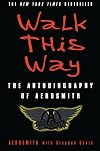
Well! I don't think Aerosmith will be replacing Queen as my favourite band any time soon, but I still love their music (and now know which albums to avoid!), think Steven Tyler is amazing, and really enjoyed this biography (even if Joe Perry now claims that parts are fabricated).
One quote that sums up the band for me would be this from Joey Kramer: 'I wish someone had smacked us back then. But we were one of the biggest bands in the world. There was literally no one who could tell us show more anything.' I never really appreciated how big Aerosmith were in their heyday, or even how good their music actually was/is, dismissing them as a heavy rock band of the type that I wouldn't usually listen to. But they have an amazing variety of styles - a lot like Queen (just thought I'd throw them in there!)
The many, many pages dedicated to drugs are frustrating to read - although the famous anecdote about Steven not recognising his own song ('It's us, fuckhead!') still makes me laugh - as are the chapters about Steven's weird (and kinky) taste in women, and (ugh!) Joe and Elyssa, but this is the real band. Well, mostly. They rocketed to fame, based on actual talent instead of Simon Cowell and his like, then self-destructed. But they're still going strong, way past the 1997 publication date of this book, so I guess that just goes to show. show less
One quote that sums up the band for me would be this from Joey Kramer: 'I wish someone had smacked us back then. But we were one of the biggest bands in the world. There was literally no one who could tell us show more anything.' I never really appreciated how big Aerosmith were in their heyday, or even how good their music actually was/is, dismissing them as a heavy rock band of the type that I wouldn't usually listen to. But they have an amazing variety of styles - a lot like Queen (just thought I'd throw them in there!)
The many, many pages dedicated to drugs are frustrating to read - although the famous anecdote about Steven not recognising his own song ('It's us, fuckhead!') still makes me laugh - as are the chapters about Steven's weird (and kinky) taste in women, and (ugh!) Joe and Elyssa, but this is the real band. Well, mostly. They rocketed to fame, based on actual talent instead of Simon Cowell and his like, then self-destructed. But they're still going strong, way past the 1997 publication date of this book, so I guess that just goes to show. show less

Read this book twenty-four years ago. It's no longer in my possession, so I can't cite it verbatim. I should also disclose that I'm a dork of sorts. In the mid-1980s, when The Thompson Twins, Duran Duran, and the A-Ha's of the New-Ro or New Wave world (whatever the hip kids called their hip music then) ruled radio airwaves, I wore my dated, feather-banged, long blonde locks parted down the middle with zest, and without fail wore faded denim, t-shirt and checkered flannel, too. And Vans. So show more yes, I was a dork extraordinaire. I proselytized Zeppelin-this and Zeppelin-that to anyone who would listen -- which meant I spoke of Led Zeppelin to mostly nobody, except myself. But now, thanks to LibraryThing, I can speak to you.
Stephen Davis wrote a biographic masterpiece for Zeppelin fans who'd fallen in love with the band years after their breakup (and for those who were fans all along during their heyday) and yet who were both starved for band information besides album liner notes and whatever else could be gleaned from that bloated, visually and sonically unstunning concert film / acid trip, The Song Remains The Same. Keep in mind that in 1985, hardly anyone owned a PC so forget about easy access to the internet; and the two major hard rock fanzines at the time, about the only solid sources for hard rock information, "Circus" and "Hit Parader," had long abandoned journalistic forays and photo spreads into what, considering the mid-80s hard rock zeitgeist, had become the dinosaurs of hard rock (i.e., the Zeppelin's and Sabbath's and so forth), and on into the heavier, allegedly edgier, more three-chordish and outrageously theatrical likes of Motley Crue, W.A.S.P., Twisted Sister, and Ozzy. Style -- and big hair and cartoonish videos -- had mostly replaced rock's core substance. A dearth of literature, Led Zeppelin-related, existed during this dark Reagan-80s epoch in our sick culture and society.
Enter, for the out-of-touch-with-current-musical / couture-trends, Zeppelin acolyte, the glorious Hammer of The Gods, an unauthorized salute to the Led Zeppelin Saga -- and a Burning Bush moment for yours truly. Glory glory hallelujah!, was my instantaneous, practically obeisant reaction seeing Hammer Of The Gods perched vertically on a plastic stand just outside the entrance to B. Dalton Booksellers in the Lakewood Mall, sandwiched inbetween the latest Jackie Collins and Sidney Sheldon releases. Thank God I'd just mowed some lawns and had a few bucks on me to buy it right then and there, or I might've lifted it.
Stephen Davis treated his subject matter, the four brilliant musicians of the band, along with band manager, Peter Grant, and the assortment of hangers-on and infamous groupies, like they were all important historical figures, writing about their childhoods, educations and genealogies. In other words, he took the members of Led Zeppelin and, more importantly, their music, seriously. The songs of every album got dissected like frogs. I learned about the blues and the history of blues and what a word like "hybrid" meant in a hard rock context. I learned about Celtic mythology and pagan and black magic; learned that Jimmy Page, guitarist of Led Zeppelin, so obsessed with Aleister Crowley, had actually purchased Crowley's mysterious manor on Loch Ness -- fascinating facts for a rebellious adolescent who, like that wily Serpent of yore, had shed the suffocating, confining skin of his religious upbringing.
Moreover, Hammer of The Gods came replete with chapter notes and sources -- like it were a bonafide textbook!-- and not merely some hastily binded record label's latest marketing ploy disguised as a fan-rag designed to sell more copies of some One-Hit wonder's second single about to drop off the charts -- a business tactic so rampant in those days (and still today, I'm afraid, among the teeny boppers). This teenage reader here, talking now as an adult, though still a raving Zep fanatic now as I was then, was enrapt reading Davis' biography, to say the least! The book carried an aura of genuine scholarship and research I'd seen only once before in a rock-bio covering another dearly departed band long out of style by the mid-80s, The Doors, in No One Here Gets Out Alive.
Of course, I'm praising Hammer of The Gods through the nostalgic lense of perhaps an overly impressionable teenager's eyes prone to worshipful, annoying hyperbole. I wonder, am I any different really than a Jonas Brothers slobbering aficionado? Could be. Today, of course, if I held the "Hammer" in my hands, read a few pages, I'd probably shake my head at the over-the-top hedonism (who could forget Zeppelin's notorious "Shark Incident" involving a shark's snout used rather disgustingly as a phallus on an inebriated groupie?) and legendary decadence explicitly and gleefully relayed by Davis to the reader, and think what's the big deal? Sounds like Jerry Springer or Howard Stern schenanigans. Perhaps I shake my head out of a sense of vicarious jealousy, as my life compared to Jimmy Page's life or Robert Plant's life has turned out to be so ... so damn ordinary. Though I'm glad my life hasn't ended like John Bonham's life, true (the iconic drummer for the band who died at 33 having OD'd after an extreme bout of binge drinking). And I guess the big deal for me was that Led Zeppelin at the time had become like my personal gods (think "American Idol"-like fanatical effusiveness) replacing what was to me an irrelevant, impersonal faith, giving me something, if only loud melodic music -- clanging overdubbed guitars riffing through the aether, bass thomp, snare thwack, grating though strangely ethereal vocals -- I could believe in and relate to instead, and Hammer of The Gods became like my brand new King James Bible. Amen!
I wonder when that fantastic biography of 80s Pop luminaries, ABC or The Human League, is going to come out? show less
Stephen Davis wrote a biographic masterpiece for Zeppelin fans who'd fallen in love with the band years after their breakup (and for those who were fans all along during their heyday) and yet who were both starved for band information besides album liner notes and whatever else could be gleaned from that bloated, visually and sonically unstunning concert film / acid trip, The Song Remains The Same. Keep in mind that in 1985, hardly anyone owned a PC so forget about easy access to the internet; and the two major hard rock fanzines at the time, about the only solid sources for hard rock information, "Circus" and "Hit Parader," had long abandoned journalistic forays and photo spreads into what, considering the mid-80s hard rock zeitgeist, had become the dinosaurs of hard rock (i.e., the Zeppelin's and Sabbath's and so forth), and on into the heavier, allegedly edgier, more three-chordish and outrageously theatrical likes of Motley Crue, W.A.S.P., Twisted Sister, and Ozzy. Style -- and big hair and cartoonish videos -- had mostly replaced rock's core substance. A dearth of literature, Led Zeppelin-related, existed during this dark Reagan-80s epoch in our sick culture and society.
Enter, for the out-of-touch-with-current-musical / couture-trends, Zeppelin acolyte, the glorious Hammer of The Gods, an unauthorized salute to the Led Zeppelin Saga -- and a Burning Bush moment for yours truly. Glory glory hallelujah!, was my instantaneous, practically obeisant reaction seeing Hammer Of The Gods perched vertically on a plastic stand just outside the entrance to B. Dalton Booksellers in the Lakewood Mall, sandwiched inbetween the latest Jackie Collins and Sidney Sheldon releases. Thank God I'd just mowed some lawns and had a few bucks on me to buy it right then and there, or I might've lifted it.
Stephen Davis treated his subject matter, the four brilliant musicians of the band, along with band manager, Peter Grant, and the assortment of hangers-on and infamous groupies, like they were all important historical figures, writing about their childhoods, educations and genealogies. In other words, he took the members of Led Zeppelin and, more importantly, their music, seriously. The songs of every album got dissected like frogs. I learned about the blues and the history of blues and what a word like "hybrid" meant in a hard rock context. I learned about Celtic mythology and pagan and black magic; learned that Jimmy Page, guitarist of Led Zeppelin, so obsessed with Aleister Crowley, had actually purchased Crowley's mysterious manor on Loch Ness -- fascinating facts for a rebellious adolescent who, like that wily Serpent of yore, had shed the suffocating, confining skin of his religious upbringing.
Moreover, Hammer of The Gods came replete with chapter notes and sources -- like it were a bonafide textbook!-- and not merely some hastily binded record label's latest marketing ploy disguised as a fan-rag designed to sell more copies of some One-Hit wonder's second single about to drop off the charts -- a business tactic so rampant in those days (and still today, I'm afraid, among the teeny boppers). This teenage reader here, talking now as an adult, though still a raving Zep fanatic now as I was then, was enrapt reading Davis' biography, to say the least! The book carried an aura of genuine scholarship and research I'd seen only once before in a rock-bio covering another dearly departed band long out of style by the mid-80s, The Doors, in No One Here Gets Out Alive.
Of course, I'm praising Hammer of The Gods through the nostalgic lense of perhaps an overly impressionable teenager's eyes prone to worshipful, annoying hyperbole. I wonder, am I any different really than a Jonas Brothers slobbering aficionado? Could be. Today, of course, if I held the "Hammer" in my hands, read a few pages, I'd probably shake my head at the over-the-top hedonism (who could forget Zeppelin's notorious "Shark Incident" involving a shark's snout used rather disgustingly as a phallus on an inebriated groupie?) and legendary decadence explicitly and gleefully relayed by Davis to the reader, and think what's the big deal? Sounds like Jerry Springer or Howard Stern schenanigans. Perhaps I shake my head out of a sense of vicarious jealousy, as my life compared to Jimmy Page's life or Robert Plant's life has turned out to be so ... so damn ordinary. Though I'm glad my life hasn't ended like John Bonham's life, true (the iconic drummer for the band who died at 33 having OD'd after an extreme bout of binge drinking). And I guess the big deal for me was that Led Zeppelin at the time had become like my personal gods (think "American Idol"-like fanatical effusiveness) replacing what was to me an irrelevant, impersonal faith, giving me something, if only loud melodic music -- clanging overdubbed guitars riffing through the aether, bass thomp, snare thwack, grating though strangely ethereal vocals -- I could believe in and relate to instead, and Hammer of The Gods became like my brand new King James Bible. Amen!
I wonder when that fantastic biography of 80s Pop luminaries, ABC or The Human League, is going to come out? show less
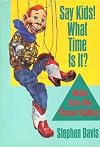
You probably have to be a baby boomer to appreciate this book -- or someone interested in just how bad male-dominated workplaces could get, and how sensitivity to this has changed since the book was written in 1987. 30 years after the show left the air, the author felt the need to frequently spell out exactly what television -- and the US -- was like from 1947 through the 50s. But in 1987, 30 years before this review, what's even more amazing is how neither Davis nor anyone he interviewed show more seems all that dismayed at the behavior that went on during the rehearsals, or how one of the main cast members was notorious for exposing himself to women in an elevator.
The title was the opening catchphrase for a daily kids puppet + live actor show called Howdy Doody. 5 days a week, live, no vacations, one writer, a handful of performers. But this is not the usual recap of the show's 13-year history. The author, born in 1947 (as was I), was the son of a TV executive who wrote and directed the show in its middle period. The author was a frequent member of the Peanut Gallery -- about 40 kids assembled each day to (1) laugh hysterically while Clarabelle the clown spritzed Buffalo Bob with seltzer, and (2) single the Colgate toothpaste song. Davis keeps the show and its creators front and center, but the author's presence and feelings are never far from view.
It's also very interesting (to a baby boomer) to see Bobbie Keeshan in this context: a talentless Clarabelle who eventually instigated an unsuccessful attempt by several of the main cast members for better contracts. Very much not what you would expect if you only know him as Captain Kangaroo in later years. If there's a Yin and Yang in this book, it's Buffalo Bob Smith and Bobbie Keeshan.
If you do find and read a copy of this book, I highly recommend following it up by listening to this interview with Keeshan. Knowing what actually happened in those early day, Keeshan's long pauses and carefully worded answers take on an added dimension:
https://interviews.televisionacademy.com/interviews/bob-keeshan?clip=47328#inter... show less
The title was the opening catchphrase for a daily kids puppet + live actor show called Howdy Doody. 5 days a week, live, no vacations, one writer, a handful of performers. But this is not the usual recap of the show's 13-year history. The author, born in 1947 (as was I), was the son of a TV executive who wrote and directed the show in its middle period. The author was a frequent member of the Peanut Gallery -- about 40 kids assembled each day to (1) laugh hysterically while Clarabelle the clown spritzed Buffalo Bob with seltzer, and (2) single the Colgate toothpaste song. Davis keeps the show and its creators front and center, but the author's presence and feelings are never far from view.
It's also very interesting (to a baby boomer) to see Bobbie Keeshan in this context: a talentless Clarabelle who eventually instigated an unsuccessful attempt by several of the main cast members for better contracts. Very much not what you would expect if you only know him as Captain Kangaroo in later years. If there's a Yin and Yang in this book, it's Buffalo Bob Smith and Bobbie Keeshan.
If you do find and read a copy of this book, I highly recommend following it up by listening to this interview with Keeshan. Knowing what actually happened in those early day, Keeshan's long pauses and carefully worded answers take on an added dimension:
https://interviews.televisionacademy.com/interviews/bob-keeshan?clip=47328#inter... show less
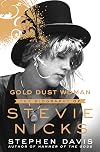
I enjoyed the first third or so of the book. The rest, not so much, but that’s because I’ve never really been a big fan of the sound (even though it was an extremely popular and successful one) that Stevie Nicks and Lindsey Buckingham brought to Fleetwood Mac, preferring instead Mac’s early years with Peter Green, Jeremy Spencer, Danny Kirwan, and the much more enjoyable voice (I think) of Christine McVie, née Perfect.
But that aside, if you love Stevie Nicks, you’ll probably find show more Gold Dust Woman to be an interesting biography that covers her pre-Mac days, her joining the band, her contributions that moved the band towards its more commercial and successful years, the troubles that finally made her leave the band, and beyond to her post Mac years. show less
But that aside, if you love Stevie Nicks, you’ll probably find show more Gold Dust Woman to be an interesting biography that covers her pre-Mac days, her joining the band, her contributions that moved the band towards its more commercial and successful years, the troubles that finally made her leave the band, and beyond to her post Mac years. show less
Lists
Awards

You May Also Like


Associated Authors
Statistics
- Works
- 19
- Also by
- 4
- Members
- 2,814
- Popularity
- #9,125
- Rating
- 3.6
- Reviews
- 40
- ISBNs
- 213
- Languages
- 13


