
Jerry Hopkins (1935–2018)
Author of No One Here Gets Out Alive
About the Author
Jerry Hopkins was born Elisha Gerald Hopkins in Camden, New Jersey on November 9, 1935. He received a bachelor's degree from Washington and Lee University and a master's degree in journalism from Columbia University. He wrote for The Twin-City Sentinel in Winston-Salem, The Village Voice in New show more York, and The Times-Picayune in New Orleans. In the early 1960s he was a writer-producer for PM East, a television talk show hosted by Mike Wallace, and a talent booker for the syndicated Steve Allen Show. In 1966, Hopkins and a partner opened Headquarters, a shop that sold drug paraphernalia in Los Angeles. He was also writing freelance articles for various publications when he responded to a 1967 ad in an early issue of Rolling Stone asking for submissions of music reviews. He became a music writer for Rolling Stone magazine and became the magazine's London correspondent in 1972. He wrote for Rolling Stone for about 20 years. He wrote several biographies of musicians including Elvis: A Biography, No One Here Gets Out Alive with Danny Sugerman, and Behind Closed Doors. He also wrote books and articles about exotic food, sex, travel, hula, and Hawaiian musical instruments. His memoir, The Ultimate Fish, was published in 2014 and focuses on his relationship with a transgender prostitute. He died of heart failure on June 3, 2018 at the age of 82. (Bowker Author Biography) show less
Works by Jerry Hopkins
Strange Foods: Bush Meat, Bats, and Butterflies: An Epicurean Adventure Around the World (1999) 82 copies, 2 reviews
Bangkok Babylon: The Real-Life Exploits of Bangkok's Legendary Expatriates are often Stranger than Fiction (2006) 54 copies
Romancing the East: A Literary Odyssey from the Heart of Darkness to the River Kwai (2013) 18 copies, 1 review
Nikt nie wyjdzie stąd żywy 1 copy
Jerry Hopkins 1 copy
Associated Works
Angels Dance and Angels Die: The Tragic Romance of Pamela and Jim Morrison (1998) — Preface, some editions — 61 copies, 1 review
Tagged
Common Knowledge
- Birthdate
- 1935-11-09
- Date of death
- 2018-06-03
- Gender
- male
- Occupations
- author
journalist - Nationality
- USA
- Birthplace
- Haddenfield, New Jersey, USA
- Places of residence
- Thailand
Camden, New Jersey, USA - Place of death
- Bangkok, Thailand
- Map Location
- New Jersey, USA
Members
Reviews
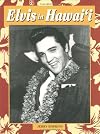
To look at this coffee table sized book with Elvis smiling on the cover, you'd think this would be a fluffy story of the making of Blue Hawaii and the comeback special and how Elvis is still a big tourist draw to the islands. Those subjects are covered, but as Hopkins was with Rolling Stone magazine for twenty years, he dug deeper and is sometimes critical about what he finds, especially with the two follow-up Hawaiian movies.
This book is filled with very rare photos that even a big fan may show more never have seen before, such as Elvis aboard the ship to his first visit to the islands in 1957. There's the story about the local rock radio station's publicity stunt for Elvis' first concert there, with the station's engineer dressing like Elvis and wearing a black wig while another employee dressed as Col. Tom Parker. They were chauffeured around the island in a convertible while the station kept reporting on Elvis sightings. "Elvis" came to the radio station, located at the top of a fourteen story hotel, wiggled for the screaming crowd below, then pulled his wig off and dropped it to them. Stunned silence.
Elvis' last visit to the islands, just months before his death and with an entourage of thirty-one people, is remembered by a long-time friend. There's also a few pages of Elvis-in-Hawaii collectibles. show less
This book is filled with very rare photos that even a big fan may show more never have seen before, such as Elvis aboard the ship to his first visit to the islands in 1957. There's the story about the local rock radio station's publicity stunt for Elvis' first concert there, with the station's engineer dressing like Elvis and wearing a black wig while another employee dressed as Col. Tom Parker. They were chauffeured around the island in a convertible while the station kept reporting on Elvis sightings. "Elvis" came to the radio station, located at the top of a fourteen story hotel, wiggled for the screaming crowd below, then pulled his wig off and dropped it to them. Stunned silence.
Elvis' last visit to the islands, just months before his death and with an entourage of thirty-one people, is remembered by a long-time friend. There's also a few pages of Elvis-in-Hawaii collectibles. show less

The book was first published in 1980 and its authors are respectively a rock writer and a personal friend of Morrison’s, so its credentials are pretty good. As a child of the mid-’80s who missed out on all the fun of the late ’60s and early ’70s, I thought it gave a rich flavour of the times: the drugs, the controversy, the radicalism and, perhaps most surprisingly, the incredible innocence. But there are drawbacks. This is not the kind of moderate, arm’s length, balanced biography show more that I’m used to. It verges on hagiography...
For the full review, please see my blog:
https://theidlewoman.net/2014/07/30/no-one-here-gets-out-alive-jerry-hopkins-and... show less
For the full review, please see my blog:
https://theidlewoman.net/2014/07/30/no-one-here-gets-out-alive-jerry-hopkins-and... show less
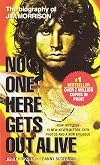
Rock biographies can be wonderful things - Guralnick's two volume life of the king Last Train to Memphis: The Rise of Elvis Presley and Careless Love: The Unmaking of Elvis Presley; the Gillmans' Alias David Bowie; and anything by Lester Bangs rank amongst the best biographies written about anyone - but despite having an undoubtedly fascinating subject in Jim Morrison and good pedigree in the Rolling Stone credentials of its authors, No One Gets Out Of Here Alive fails to impress on any show more level.
For me a decent biography has to have a thesis: A (perhaps controversial) view of its subject that the authors, having immersed themselves in research, can present, backed by evidence, to put a new perspective or shed some new light on a familiar subject: to tell a new story for a casual reader. Hopkins and Sugarman make no such effort: Morrison is portrayed as a clever, well-read alcoholic with an authority problem and a pretty apparent (but entirely unexplored) general social unease. The events of his life are thus trotted out is a somewhat patchy fashion, without the attempt to stitch together some overlying narrative or explanation where it feels one is called for: after all this phenomenon still occupies some (diminishing) part of the collective consciousness nearly forty years later. Yet James Morrison comes across as no more worthwhile or interesting a figure than Robbie Williams or Amy Winehouse, and while that may be true, I doubt it, and it doesn't explain the eerie and evocative content of nearly all the Doors' records. I can't imagine a Robbie Williams over the opening credits of Apocalypse Now, nor coming up with an album closer like Maggie McGill or Riders on the Storm.
This book doesn't even pretend to be a story about the rest of the band, and therefore leaves this fascinating artifact we still know as The Doors pretty much uninvestigated, let alone unexplained. Ray Manzarek is, at least, a peripheral figure: poor Robby Krieger and particularly John Densmore are barely mentioned, and the relationships, dynamics and creative processes of the band - which led to some undeniably memorable and haunting music, after all - are wholly unexplored. In any case Jim Morrison, even in his own right, can't be understood properly except through that prism, so this feels to me to be a dramatic failing.
Lastly, Hopkins and Sugarman indulge in absurd speculation about Morrison's demise - or more accurately the lack of evidence for it. Yet all of Morrison's behaviour before his, er "disappearance" - as patiently documented in this volume - points to exactly the sort of early death he apparently suffered, and the idea that such a publicity seeking (and utterly recognisable) drunkard could suddenly, miraculously, vanish without trace from the entire planet's conscience simply beggars belief.
There must be more rewarding accounts of The Doors than this. show less
For me a decent biography has to have a thesis: A (perhaps controversial) view of its subject that the authors, having immersed themselves in research, can present, backed by evidence, to put a new perspective or shed some new light on a familiar subject: to tell a new story for a casual reader. Hopkins and Sugarman make no such effort: Morrison is portrayed as a clever, well-read alcoholic with an authority problem and a pretty apparent (but entirely unexplored) general social unease. The events of his life are thus trotted out is a somewhat patchy fashion, without the attempt to stitch together some overlying narrative or explanation where it feels one is called for: after all this phenomenon still occupies some (diminishing) part of the collective consciousness nearly forty years later. Yet James Morrison comes across as no more worthwhile or interesting a figure than Robbie Williams or Amy Winehouse, and while that may be true, I doubt it, and it doesn't explain the eerie and evocative content of nearly all the Doors' records. I can't imagine a Robbie Williams over the opening credits of Apocalypse Now, nor coming up with an album closer like Maggie McGill or Riders on the Storm.
This book doesn't even pretend to be a story about the rest of the band, and therefore leaves this fascinating artifact we still know as The Doors pretty much uninvestigated, let alone unexplained. Ray Manzarek is, at least, a peripheral figure: poor Robby Krieger and particularly John Densmore are barely mentioned, and the relationships, dynamics and creative processes of the band - which led to some undeniably memorable and haunting music, after all - are wholly unexplored. In any case Jim Morrison, even in his own right, can't be understood properly except through that prism, so this feels to me to be a dramatic failing.
Lastly, Hopkins and Sugarman indulge in absurd speculation about Morrison's demise - or more accurately the lack of evidence for it. Yet all of Morrison's behaviour before his, er "disappearance" - as patiently documented in this volume - points to exactly the sort of early death he apparently suffered, and the idea that such a publicity seeking (and utterly recognisable) drunkard could suddenly, miraculously, vanish without trace from the entire planet's conscience simply beggars belief.
There must be more rewarding accounts of The Doors than this. show less
I like to think about what Jim Morrison might have done with the rest of his life if it’s true he faked his death to escape. Painter? Poet? Philosophy teacher?
I’d like his disapproving Dad to know that I’m almost 60 and I can remember so many Doors songs because of the deep and weird lyrics delivered in that soulful voice. There was plenty of talent there, Admiral. Too bad you cared about hair length more than you did your son.
I’d like his disapproving Dad to know that I’m almost 60 and I can remember so many Doors songs because of the deep and weird lyrics delivered in that soulful voice. There was plenty of talent there, Admiral. Too bad you cared about hair length more than you did your son.
Lists
You May Also Like


Associated Authors
Statistics
- Works
- 42
- Also by
- 2
- Members
- 2,941
- Popularity
- #8,701
- Rating
- 3.6
- Reviews
- 34
- ISBNs
- 137
- Languages
- 11
- Favorited
- 1
