

Patricia Kennealy-Morrison (1946–2021)
Author of The Copper Crown
About the Author
Image credit: amazon profile picture
Series
Works by Patricia Kennealy-Morrison
Associated Works
Tagged
Common Knowledge
- Legal name
- Kennealy-Morrison, Patricia
- Other names
- Kennely, Patricia (birth name)
Morrison, Patricia (rock mysteries) - Birthdate
- 1946-03-04
- Date of death
- 2021-07-23
- Gender
- female
- Education
- St. Bonaventure University (Journalism)
Harpur College (BA | English Literature | 1967) - Occupations
- journalist
music critic
novelist
advertising copywriter - Organizations
- Jazz & Pop magazine
Lizard Queen Press - Relationships
- Morrison, Jim (lover)
- Cause of death
- heart disease (complications)
- Nationality
- USA (birth)
- Birthplace
- Brooklyn, New York, USA
- Places of residence
- New York, New York, USA
Brooklyn, New York, USA
Long Island, New York, USA - Place of death
- Manhattan, New York, USA
- Associated Place (for map)
- New York, USA
Members
Reviews
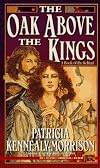
I thought I was getting too old for fantasy, until I found Patricia Kenneally's first trilogy of The Keltiad, an exciting mixture of space fiction and sword and sorcery. At the end of the third book we entered into Arthurian fiction and the second trilogy, of which this is the second book, takes us back in time in this alternate universe to tell us, through Taliesin's voice, the story of this alternate Arthur. I should confess, at this point, to being a fan of all things Arthurian.
However, show more this is not a simple re-telling, Kenneally-Morrison, as she now is, has built a totally new universe in which to set the tale, built upon old Celtic and Druidic foundations and as deep and complex as anything I have read since first reading "Dune" over 45 years ago. She weaves into this underlying fabric many of the different strands of the legends but alters them to fit into her grand design. The language fits the story beautifully, almost Tolkienesque at times.
I looked back and saw that I had only given the previous book 3 stars some nineteen months ago, but as I read this one, I recalled so much of the earlier book that I think I will need to revise my previous score.
Having read the first 100 pages I hastened to the computer to find the next one. It has arrived and I will read it soon. I am really looking forward to it. show less
However, show more this is not a simple re-telling, Kenneally-Morrison, as she now is, has built a totally new universe in which to set the tale, built upon old Celtic and Druidic foundations and as deep and complex as anything I have read since first reading "Dune" over 45 years ago. She weaves into this underlying fabric many of the different strands of the legends but alters them to fit into her grand design. The language fits the story beautifully, almost Tolkienesque at times.
I looked back and saw that I had only given the previous book 3 stars some nineteen months ago, but as I read this one, I recalled so much of the earlier book that I think I will need to revise my previous score.
Having read the first 100 pages I hastened to the computer to find the next one. It has arrived and I will read it soon. I am really looking forward to it. show less

The Copper Crown and The Throne of Scone - one story.
What a muddle!
Okay, first things first. These covers are just gorgeous. Thomas Canty isn't given any credit in the actual books, but it's his artwork. (And he even sells signed prints of the images.)
I fully expected to love these. I got a whole bunch of the books of the 'Keltiad' in advance of reading any of them. I don't think I'll be reading all of them.
Fine, the premise is a bit absurd: In the 27th century, a probe ship from Earth show more discovers an interstellar Empire, Keltia, made up of the descendants of Celts who fled persecution by Christians back in the 5th century, and, aided by the denizens of Atlantis, went out to space.
If it was done well, I could run with it. I love both space opera and fantasy; Celtic and pagan mythology is always full of good opportunities for stories. But it's not done well. The author doesn't pull it off.
The minor problem is that a complex situation with a great number of characters is set up, and the writing just doesn't do it justice. I usually love twisty conflicts and court politics, but here, as I said earlier, it just feels muddled.
The worst problem is not the complexity, however, it's the way that events seem to progress independent of any kind of logic stemming from characterization. People love and hate each other, turn traitor, change their minds, are loyal, etc - seemingly for no reason. One of the main characters (Sarah O'Reilly) is supposed to be a mature, competent naval officer. However, through both books she's written as if she's a star-struck, ditzy 10-year-old with a celebrity crush on Keltia's queen, Aeron. (And why would Earth military officers be impressed at all by foreign royalty? And why would Earth people instantly want to get involved in someone else's war?)
Another thing that bothered me: the use of the phrase "Any road" on practically every other page. I know this is British slang equivalent to "anyways," and maybe the author thought it made her characters sound more Celtic? But it was used in places where no such interjection was necessary, and no single phrase should ever be used with the frequency that this one is in these books.
In addition, the story seriously suffers due to the author completely failing to think things through logically. The people of Keltia have psi powers - but hardly ever use them, for no given reason. They and their enemies both have advanced technology including hyperspace ships - but don't use technological weapons. There's also magic - but with the exception of one past incident, the ramifications and potentials of that are not explored.
When everything happens due to the author's "cause I said so," as opposed to because that would be the logical thing to happen in a theoretical scenario, things just get boring.
I also owned the prequel to these, 'The Silver Branch,' but I've decided not to read it. show less
What a muddle!
Okay, first things first. These covers are just gorgeous. Thomas Canty isn't given any credit in the actual books, but it's his artwork. (And he even sells signed prints of the images.)
I fully expected to love these. I got a whole bunch of the books of the 'Keltiad' in advance of reading any of them. I don't think I'll be reading all of them.
Fine, the premise is a bit absurd: In the 27th century, a probe ship from Earth show more discovers an interstellar Empire, Keltia, made up of the descendants of Celts who fled persecution by Christians back in the 5th century, and, aided by the denizens of Atlantis, went out to space.
If it was done well, I could run with it. I love both space opera and fantasy; Celtic and pagan mythology is always full of good opportunities for stories. But it's not done well. The author doesn't pull it off.
The minor problem is that a complex situation with a great number of characters is set up, and the writing just doesn't do it justice. I usually love twisty conflicts and court politics, but here, as I said earlier, it just feels muddled.
The worst problem is not the complexity, however, it's the way that events seem to progress independent of any kind of logic stemming from characterization. People love and hate each other, turn traitor, change their minds, are loyal, etc - seemingly for no reason. One of the main characters (Sarah O'Reilly) is supposed to be a mature, competent naval officer. However, through both books she's written as if she's a star-struck, ditzy 10-year-old with a celebrity crush on Keltia's queen, Aeron. (And why would Earth military officers be impressed at all by foreign royalty? And why would Earth people instantly want to get involved in someone else's war?)
Another thing that bothered me: the use of the phrase "Any road" on practically every other page. I know this is British slang equivalent to "anyways," and maybe the author thought it made her characters sound more Celtic? But it was used in places where no such interjection was necessary, and no single phrase should ever be used with the frequency that this one is in these books.
In addition, the story seriously suffers due to the author completely failing to think things through logically. The people of Keltia have psi powers - but hardly ever use them, for no given reason. They and their enemies both have advanced technology including hyperspace ships - but don't use technological weapons. There's also magic - but with the exception of one past incident, the ramifications and potentials of that are not explored.
When everything happens due to the author's "cause I said so," as opposed to because that would be the logical thing to happen in a theoretical scenario, things just get boring.
I also owned the prequel to these, 'The Silver Branch,' but I've decided not to read it. show less
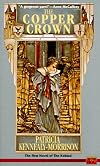
The Copper Crown and The Throne of Scone - one story.
What a muddle!
Okay, first things first. These covers are just gorgeous. Thomas Canty isn't given any credit in the actual books, but it's his artwork. (And he even sells signed prints of the images.)
I fully expected to love these. I got a whole bunch of the books of the 'Keltiad' in advance of reading any of them. I don't think I'll be reading all of them.
Fine, the premise is a bit absurd: In the 27th century, a probe ship from Earth show more discovers an interstellar Empire, Keltia, made up of the descendants of Celts who fled persecution by Christians back in the 5th century, and, aided by the denizens of Atlantis, went out to space.
If it was done well, I could run with it. I love both space opera and fantasy; Celtic and pagan mythology is always full of good opportunities for stories. But it's not done well. The author doesn't pull it off.
The minor problem is that a complex situation with a great number of characters is set up, and the writing just doesn't do it justice. I usually love twisty conflicts and court politics, but here, as I said earlier, it just feels muddled.
The worst problem is not the complexity, however, it's the way that events seem to progress independent of any kind of logic stemming from characterization. People love and hate each other, turn traitor, change their minds, are loyal, etc - seemingly for no reason. One of the main characters (Sarah O'Reilly) is supposed to be a mature, competent naval officer. However, through both books she's written as if she's a star-struck, ditzy 10-year-old with a celebrity crush on Keltia's queen, Aeron. (And why would Earth military officers be impressed at all by foreign royalty? And why would Earth people instantly want to get involved in someone else's war?)
Another thing that bothered me: the use of the phrase "Any road" on practically every other page. I know this is British slang equivalent to "anyways," and maybe the author thought it made her characters sound more Celtic? But it was used in places where no such interjection was necessary, and no single phrase should ever be used with the frequency that this one is in these books.
In addition, the story seriously suffers due to the author completely failing to think things through logically. The people of Keltia have psi powers - but hardly ever use them, for no given reason. They and their enemies both have advanced technology including hyperspace ships - but don't use technological weapons. There's also magic - but with the exception of one past incident, the ramifications and potentials of that are not explored.
When everything happens due to the author's "cause I said so," as opposed to because that would be the logical thing to happen in a theoretical scenario, things just get boring.
I also owned the prequel to these, 'The Silver Branch,' but I've decided not to read it. show less
What a muddle!
Okay, first things first. These covers are just gorgeous. Thomas Canty isn't given any credit in the actual books, but it's his artwork. (And he even sells signed prints of the images.)
I fully expected to love these. I got a whole bunch of the books of the 'Keltiad' in advance of reading any of them. I don't think I'll be reading all of them.
Fine, the premise is a bit absurd: In the 27th century, a probe ship from Earth show more discovers an interstellar Empire, Keltia, made up of the descendants of Celts who fled persecution by Christians back in the 5th century, and, aided by the denizens of Atlantis, went out to space.
If it was done well, I could run with it. I love both space opera and fantasy; Celtic and pagan mythology is always full of good opportunities for stories. But it's not done well. The author doesn't pull it off.
The minor problem is that a complex situation with a great number of characters is set up, and the writing just doesn't do it justice. I usually love twisty conflicts and court politics, but here, as I said earlier, it just feels muddled.
The worst problem is not the complexity, however, it's the way that events seem to progress independent of any kind of logic stemming from characterization. People love and hate each other, turn traitor, change their minds, are loyal, etc - seemingly for no reason. One of the main characters (Sarah O'Reilly) is supposed to be a mature, competent naval officer. However, through both books she's written as if she's a star-struck, ditzy 10-year-old with a celebrity crush on Keltia's queen, Aeron. (And why would Earth military officers be impressed at all by foreign royalty? And why would Earth people instantly want to get involved in someone else's war?)
Another thing that bothered me: the use of the phrase "Any road" on practically every other page. I know this is British slang equivalent to "anyways," and maybe the author thought it made her characters sound more Celtic? But it was used in places where no such interjection was necessary, and no single phrase should ever be used with the frequency that this one is in these books.
In addition, the story seriously suffers due to the author completely failing to think things through logically. The people of Keltia have psi powers - but hardly ever use them, for no given reason. They and their enemies both have advanced technology including hyperspace ships - but don't use technological weapons. There's also magic - but with the exception of one past incident, the ramifications and potentials of that are not explored.
When everything happens due to the author's "cause I said so," as opposed to because that would be the logical thing to happen in a theoretical scenario, things just get boring.
I also owned the prequel to these, 'The Silver Branch,' but I've decided not to read it. show less

I love the entire Keltiad series, more than I can say. It's one of my eternal go-to series of books to pick up when life is too much. Beautifully written, fully developed characters, plot, subplots, a rich and real world — everything a fantasy reader could ask for.
Lists
Awards


You May Also Like


Associated Authors
Statistics
- Works
- 21
- Also by
- 1
- Members
- 3,486
- Popularity
- #7,297
- Rating
- 3.9
- Reviews
- 24
- ISBNs
- 44
- Languages
- 1
- Favorited
- 14