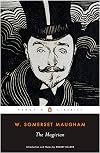
A literary light in earlier generations, W. Somerset Maugham is - for one reason or another - little discussed now, and his reputation has fallen into disrepair. Neither critics nor the author himself considered The Magician (1908) to be one of his major works, but it stands today as possibly his most admired novel. Certainly it's one of the greatest supernatural novels of its time and is still widely read due to the ongoing public fascination with Aleister Crowley. Maugham's first-hand encounters with the infamous ceremonial magician serve him well here, and both the strengths (his strange personal magnetism) and weaknesses (spurious claims of achievement, the compulsive need to shock) of Crowley's character are evident in Oliver Haddo, his literary counterpart. The novel is concise, well-paced and full of darkly fascinating imagery.
In his introduction to the Penguin Classics edition, Robert Calder mentions George du Maurier's Trilby (1894) as the central inspiration for The Magician, but I would argue that Maugham's novel was more directly influenced by Bram Stoker's Dracula (1897), though Dracula itself was certainly inspired by Trilby. (Henry Irving, legendary stage actor and Stoker's tyrannical boss, served as the model for both Svengali and Count Dracula.) The plot mechanics of Stoker's book - in particular, the geographical cat-and-mouse game which follows Dracula's unholy seduction of Mina - are reproduced in The Magician, though Maugham devised a ghastly bang-up show more climax which not only outdid du Maurier and Stoker, but also proved influential on later horror authors like H.P. Lovecraft (The Case of Charles Dexter Ward, "The Dunwich Horror") and Peter Straub (Mr. X). show less
In his introduction to the Penguin Classics edition, Robert Calder mentions George du Maurier's Trilby (1894) as the central inspiration for The Magician, but I would argue that Maugham's novel was more directly influenced by Bram Stoker's Dracula (1897), though Dracula itself was certainly inspired by Trilby. (Henry Irving, legendary stage actor and Stoker's tyrannical boss, served as the model for both Svengali and Count Dracula.) The plot mechanics of Stoker's book - in particular, the geographical cat-and-mouse game which follows Dracula's unholy seduction of Mina - are reproduced in The Magician, though Maugham devised a ghastly bang-up show more climax which not only outdid du Maurier and Stoker, but also proved influential on later horror authors like H.P. Lovecraft (The Case of Charles Dexter Ward, "The Dunwich Horror") and Peter Straub (Mr. X). show less
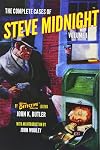
Unlike Dashiell Hammett and Raymond Chandler, John K. Butler never became a household name or even penned a full-length novel. But he was one of the best of the second-tier writers whose stories appeared in the private eye pulps, and this collection is the ideal introduction to Butler's work. Sure, the premise is corny (Steve Midnight, former playboy whose family's wealth was lost in the Depression, now toils as a Los Angeles cab driver - and, unofficially, a detective), but it belies the author's ability to create deadly-serious moments of dramatic tension. By the time he wrote "The Saint in Silver," the final tale in this collection, Butler was producing minor masterpieces. His style was reminiscent of Chandler's in that Steve Midnight is always finding dead bodies and getting sapped, and has usually taken quite a beating by the end of a case. In "The Saint in Silver," there's a further echo of Chandler in Midnight's encounter with an elderly character (the title character, in fact) whose mingled pathos and wisdom elevate the story above your standard detective action fare.
Includes fascinating biographical info on Butler in addition to the first four Steve Midnight tales, which appeared in Dime Detective from May 1940 through January 1941. They're novelette-length (running 50-65 pages apiece), and each is a standalone story. Butler had more than sufficient chops to write a novel; it's too bad that he opted for a screenwriting career.
Includes fascinating biographical info on Butler in addition to the first four Steve Midnight tales, which appeared in Dime Detective from May 1940 through January 1941. They're novelette-length (running 50-65 pages apiece), and each is a standalone story. Butler had more than sufficient chops to write a novel; it's too bad that he opted for a screenwriting career.

A difficult book to review. The Mysteries of Easter Island was originally written in French, and some of the author's ideas appear not to have survived the translation process in coherent form. It's obvious that Schwartz was sincerely, even passionately, interested in the history of the island and its enigmatic moai statues, but what he was trying to convey to the reader isn't always clear. He touches on the South American connection (most evident in the Incan-style masonry of Ahu Vinapu) and the near-identical resemblance of the island's undeciphered rongorongo writing to the Indus or Harappan script from the Indus Valley civilization (first noted by Guillaume de Hevesy), likewise undeciphered...but spends most of his time addressing what I feel is a much more tenuous link between the glyphs recorded in the Tomenika manuscript and ancient Chinese writing from the Shang Dynasty. There are some similarities, but they fall far short of matching the unmistakable resemblance that exists between rongorongo and the Indus script.
In 2017, the academic orthodoxy finally had to concede that a cultural exchange had taken place between South America and Easter Island. (For decades, they despised the very notion and said it was impossible.) In 2024, there emerged proof of a genetic link as well. Schwartz reckons that there was "a 'common center in Asia' from which numerous civilizations were derived, particularly that of Easter Island," but acknowledges that this point of origin show more "seems difficult to pin down." Perhaps evidence will eventually be found to support his contention. show less
In 2017, the academic orthodoxy finally had to concede that a cultural exchange had taken place between South America and Easter Island. (For decades, they despised the very notion and said it was impossible.) In 2024, there emerged proof of a genetic link as well. Schwartz reckons that there was "a 'common center in Asia' from which numerous civilizations were derived, particularly that of Easter Island," but acknowledges that this point of origin show more "seems difficult to pin down." Perhaps evidence will eventually be found to support his contention. show less

I have very little to say about The Ceremonies; it's just a bad book. Klein was a competent writer (but no more than that) and, obviously, some effort is required to produce a novel of this size. The trouble is that his effort was misdirected: the book isn't scary or disturbing or suspenseful. It's not even interesting. Nothing in this tale justifies its excessive length; there are too few characters and too little happening, so the only way that Klein could stretch his thin premise to an absurd 555 pages was to describe every incidental movement, every muttered aside and minor connecting event, in ploddingly painful detail ("painful" being the operative word). There's so much of this page-filling nonsense that the abrupt finale feels like an afterthought...and the reader has to assume that it was, since the villain's raison d'etre is never explained. He's just eeeeeevil, bwahahaha!!!
Considering its reputation, this novel was an unbelievable letdown. Despite its reputation (which seems to have had more to do with Klein's influence in the field of horror literature than with his talent), there are apparent reasons why The Ceremonies has not remained in print.
Considering its reputation, this novel was an unbelievable letdown. Despite its reputation (which seems to have had more to do with Klein's influence in the field of horror literature than with his talent), there are apparent reasons why The Ceremonies has not remained in print.
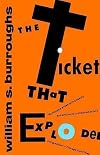
This 1962 "novel" is the second in William S. Burroughs' Cut-Up Trilogy, and--in my opinion--the most difficult to read. There are some interesting passages, but the cut-ups herein have a clunky, jarring quality as opposed to the ones in The Soft Machine and Nova Express. In that final book, especially, Burroughs got a handle on his cut-up/fold-in obsession and produced a text that flows almost poetically (though it never comes close to qualifying as an actual novel). I concur with Burroughs biographer Barry Miles that the highlight of The Ticket That Exploded is "do you love me?", a chapter in which WSB ruthlessly mocks the lyrics of popular love songs: "Love Mary? - Fuck the shit out of me - Get up off your big fat rusty-dusty - It's a long way to go, St. Louis woman - Remember every little thing you used to do - fish smell and dead - jelly jelly in the stardust of the sky - i've got you deep inside of me enclosed darling in my fashion - Yes, baby, electric fingers removed flesh my way..."
Of interest primarily to Burroughs completists. Features a closing calligraphic message by Brion Gysin, who happened upon the concept of cut-ups in the first place, and an epilogue that WSB wrote in 1967 to address his fascination with tape recorders. (He believed, or professed to believe, that tape recordings could incite revolution and literally alter reality.) This final section--utterly devoid of punctuation--is essentially unreadable, and one wonders if Burroughs wanted it to be show more read and understood. These tape recorder concepts are explained much more coherently in Daniel Odier's The Job: Interviews with William S. Burroughs (which I've also reviewed). show less
Of interest primarily to Burroughs completists. Features a closing calligraphic message by Brion Gysin, who happened upon the concept of cut-ups in the first place, and an epilogue that WSB wrote in 1967 to address his fascination with tape recorders. (He believed, or professed to believe, that tape recordings could incite revolution and literally alter reality.) This final section--utterly devoid of punctuation--is essentially unreadable, and one wonders if Burroughs wanted it to be show more read and understood. These tape recorder concepts are explained much more coherently in Daniel Odier's The Job: Interviews with William S. Burroughs (which I've also reviewed). show less
*Partial spoilers ahead*
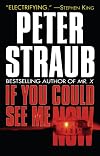
I gave If You Could See Me Now a very brief evaluation several years ago when reviewing Straub's 1984 collection Wild Animals (which features this novel along with Julia and Under Venus), but it merits a full review of its own. Straub's third published novel and second foray into the horror genre, it's a vastly different specimen from its predecessor Julia; in fact, there's nothing else like it in the author's catalog. For one thing, it's quite loosely structured, which is odd for Straub. The pace is wobbly and I didn't immediately feel myself drawn in. Once I had gotten used to pompous, brusque and inconstant Miles Teagarden as the tale's narrator, however, I set about savoring the dense atmosphere of gloom and unease on offer. Straub paints a convincing picture of a small town on edge--and of the displaced urban academic's "sophistication," which really does amount to simple, appalling rudeness.
Who (or what) is brutally murdering teen girls in Arden, Wisconsin? Has Miles returned to his family's ancestral home to write a dissertation on D.H. Lawrence, or does he truly believe that he can reunite with the spirit of his long-dead cousin Allison? Is the figure he so often glimpses at the edge of the woods a manifestation of Allison, or something else? If You Could See Me Now takes a while to get going, and overflows with the ambiguity typical of Peter Straub's work, but is an intensely satisfying horror novel nonetheless. (And, as Straub fans will show more attest, his brand of horror actually draws nourishment from ambiguity.) show less
I gave If You Could See Me Now a very brief evaluation several years ago when reviewing Straub's 1984 collection Wild Animals (which features this novel along with Julia and Under Venus), but it merits a full review of its own. Straub's third published novel and second foray into the horror genre, it's a vastly different specimen from its predecessor Julia; in fact, there's nothing else like it in the author's catalog. For one thing, it's quite loosely structured, which is odd for Straub. The pace is wobbly and I didn't immediately feel myself drawn in. Once I had gotten used to pompous, brusque and inconstant Miles Teagarden as the tale's narrator, however, I set about savoring the dense atmosphere of gloom and unease on offer. Straub paints a convincing picture of a small town on edge--and of the displaced urban academic's "sophistication," which really does amount to simple, appalling rudeness.
Who (or what) is brutally murdering teen girls in Arden, Wisconsin? Has Miles returned to his family's ancestral home to write a dissertation on D.H. Lawrence, or does he truly believe that he can reunite with the spirit of his long-dead cousin Allison? Is the figure he so often glimpses at the edge of the woods a manifestation of Allison, or something else? If You Could See Me Now takes a while to get going, and overflows with the ambiguity typical of Peter Straub's work, but is an intensely satisfying horror novel nonetheless. (And, as Straub fans will show more attest, his brand of horror actually draws nourishment from ambiguity.) show less

Short story masquerading unsuccessfully as a novel, padded with dialogue that thinks it's clever but isn't. Constant navel-gazing self-pity on the central character's part. Unrealistic premise. The Screaming Mimi is an excellent example of the precipitous decline in writing quality that occurred when noir supplanted the popularity of the hard-boiled detective story. The noirists were mostly gimmick writers, and aimed their work at a readership that had never understood (or cared) what made Dashiell Hammett and Raymond Chandler stand out among their pulp contemporaries. Ross Macdonald belonged to the generation of these second- and third-rate authors, but enjoyed two great advantages over them: A.) he followed the trail blazed by Hammett and Chandler, rather than the lurid bypath of his peers, and B.) he was infinitely more talented.
But didn't the classic PI writers employ some pretty far-fetched premises now and then? Yes, Chandler's The High Window and Macdonald's The Chill spring to mind. The difference is that Fredric Brown was never half as good as Chandler or Macdonald, and he didn't have the skills to make such a premise work. The High Window and The Chill are great books despite the fact that they test the reader's ability to suspend disbelief; The Screaming Mimi is just a perfunctory cardboard shack built around a twist ending.
Not my cup of tea.
But didn't the classic PI writers employ some pretty far-fetched premises now and then? Yes, Chandler's The High Window and Macdonald's The Chill spring to mind. The difference is that Fredric Brown was never half as good as Chandler or Macdonald, and he didn't have the skills to make such a premise work. The High Window and The Chill are great books despite the fact that they test the reader's ability to suspend disbelief; The Screaming Mimi is just a perfunctory cardboard shack built around a twist ending.
Not my cup of tea.
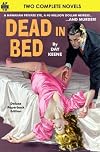
There's no particular reason for Los Angeles-based detective Johnny Aloha to be half-Hawaiian, but Dead in Bed (1959) is a solid little book that doesn't overstay its welcome. Fans of ladykiller private eye yarns in the mold of Henry Kane's Peter Chambers series will enjoy it. My guess is that the publisher told Day Keene to add some sort of novelty element, so Aloha gives Hawaiian vocabulary lessons at various random points throughout the story and other characters have to guess what the words mean. (This doesn't come off quite as awkwardly as it sounds, but it is very much the weakest aspect of the book.) Otherwise, Johnny is your standard he-man private investigator trying to help a gorgeous young heiress find her missing mother--a woman whom Johnny had known as a child.
Brevity and a sense of humor are virtues in a book like this, and Keene was one of the finest craftsmen of the drugstore action novel; he knew what his readers wanted and gave it to them in spades. This is a far cry from Raymond Chandler or Ross Macdonald, but Dead in Bed moves along briskly for just over 150 pages and comes to a satisfying conclusion. It's too bad that what was obviously intended to be an ongoing series ended after just two books.
Brevity and a sense of humor are virtues in a book like this, and Keene was one of the finest craftsmen of the drugstore action novel; he knew what his readers wanted and gave it to them in spades. This is a far cry from Raymond Chandler or Ross Macdonald, but Dead in Bed moves along briskly for just over 150 pages and comes to a satisfying conclusion. It's too bad that what was obviously intended to be an ongoing series ended after just two books.
Peace by Gene Wolfe
Peace, the debut novel of sci-fi/fantasy author Gene Wolfe, has been subject to nearly as many critical interpretations as Henry James's The Turn of the Screw. There's no need to examine those interpretations here, since Wolfe freely admitted that the book's rambling but fascinating narrative is being delivered by a ghost. Is Alden Dennis Weer a reliable narrator? The reader must judge for himself. Not a sci-fi novel in any sense of the term, Peace may befuddle those approaching it for the first time. Critic David G. Hartwell classified certain of Wolfe's works (like the novella "Seven American Nights" and this book) as horror, and what we have here is undoubtedly a ghost story of majestic proportions. Lush with detail, peopled by characters viewed exclusively through the lens of the narrator's memory, the novel is impossible to synopsize. It's not for everyone, but the middle-aged reader learning to confront his own mortality will find Weer's tale relatable--sometimes painfully so.
Reminiscent of William Goyen's House of Breath and Samuel Beckett's Malone Dies and The Unnamable, but with a Midwestern flavor that is uniquely Wolfe's.
Reminiscent of William Goyen's House of Breath and Samuel Beckett's Malone Dies and The Unnamable, but with a Midwestern flavor that is uniquely Wolfe's.
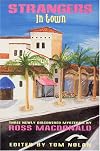
Not a book for the layman, but Strangers in Town is sure to fascinate Ross Macdonald aficionados. The title piece, written in 1950, is the best of the lot; when Macdonald realized that he had a concept worthy of building an entire novel around, he shelved the story and began working on The Ivory Grin, the full-length version. In 1953, he used a key scene from this story in a new tale, "Gone Girl," which is my favorite among Macdonald's short works. But even if you've read The Ivory Grin and "Gone Girl" already, "Strangers in Town" works beautifully as a standalone Archer story; it's significantly less mean-spirited than the novel and contains elements that were to become regular features of the Archer books over the years. 1955's "The Angry Man" was likewise shelved so that Macdonald could expand it into the novel The Doomsters. It's a very good read up to the end, which is inexplicably and uncharacteristically absurd (editor Tom Nolan reckons that it was written this way under the influence of Nelson Algren, author of The Man with the Golden Arm). Fortunately, that grotesquely ludicrous climax was not carried over into the full-length version.
The remaining tale, 1945's "Death by Water," follows the efforts of young private eye Joe Rogers (the proto-Archer) to solve a murder at a Southern California hotel. It's a minor story, but serves as an early example of Macdonald's career-long penchant for spotlighting the tragic sadness that lurks behind the palm trees and show more swimming pools and suntans generally associated with the Golden State. Good stuff for longtime Macdonald fans. show less
The remaining tale, 1945's "Death by Water," follows the efforts of young private eye Joe Rogers (the proto-Archer) to solve a murder at a Southern California hotel. It's a minor story, but serves as an early example of Macdonald's career-long penchant for spotlighting the tragic sadness that lurks behind the palm trees and show more swimming pools and suntans generally associated with the Golden State. Good stuff for longtime Macdonald fans. show less

Wikipedia, that most unimpeachable of all sources, tells me that Radu Florescu's theories on the inspiration for Mary Shelley's Frankenstein remain "controversial." It doesn't say why, mind you: it merely alleges that a controversy exists. However, I've read this book a couple of times during the past twenty years and Florescu's research seems perfectly sound to me. Shelley did, after all, name her title character after the real-life Frankenstein family of Germany, so how could it possibly be controversial to suggest a link? (Florescu notes that Baron Frank von Frankenstein and Vlad Dracula were bitter enemies, which is especially interesting in relation to this book's companion volume In Search of Dracula, co-authored by Florescu and Raymond T. McNally.) Also named as a likely influence on Shelley's novel is the alchemist Johann Konrad Dippel, who was born at Castle Frankenstein and who claimed to have created his own version of the legendary elixir of life.
In Search of Frankenstein is a bit dry, earning three stars for pure readability but five for depth of research. The only problem I have with Florescu's work is his querulous insistence that Frankenstein should not be classified as true science fiction because Shelley neglected to explain how Victor Frankenstein actually brought his creature to life. Extensively illustrated with engravings, paintings, photos from the various Frankenstein films, etc.
In Search of Frankenstein is a bit dry, earning three stars for pure readability but five for depth of research. The only problem I have with Florescu's work is his querulous insistence that Frankenstein should not be classified as true science fiction because Shelley neglected to explain how Victor Frankenstein actually brought his creature to life. Extensively illustrated with engravings, paintings, photos from the various Frankenstein films, etc.
Mr. X was Peter Straub's last major novel. It crossbreeds the themes of his two masterpieces Ghost Story (the menace of the supernatural) and The Throat (murder and politics in a medium-sized Midwestern city) to create a book which isn't quite the equal of its predecessors, but is a fascinating and complex work in its own right. (In retrospect, Straub worried that it may have been a little too complex: "I like the book but it’s so complicated, there are so many wheels within wheels that I think it might be a little hard to follow sometimes," he told fellow horror author John Langan in a 2012 interview.) Mr. X's greatest failing, as far as I'm concerned, is that it drags on for another sixty-five or seventy pages after the central conflict has been resolved, only to reach a murky, deliberately coy fadeout that contributes nothing to the reader's understanding. One expects such ambiguities from Straub, but it shouldn't have taken so long to get there.
Up to that point, however, I had a lot of fun. Edgerton is an alternate version of Millhaven, the hometown of The Throat's hero Tim Underhill, and Mr. X provides the reader with vivid glimpses of the city's underbelly as Ned Dunstan works his way through the winding, medievally narrow streets of Edgerton's Hatchtown district, alternately pursuing and pursued by his mysterious double and the equally enigmatic title character. Ned is likable enough as the novel's hero, but he's surrounded by a cast of infinitely more engaging show more players: his eccentric aunts (Nettie, May and Joy), endearingly shifty pawn shop owner Toby Kraft, cadaverous but wonder-working attorney C. Clayton Creech. Characterization is where this book really shines, and Ned's aunts manage easily to hold their own against Ricky and Sears from Ghost Story. Straub also subjects the turbulent inner life of Mr. X himself to merciless scrutiny, showing him to be nearly as much of a tragic figure as a fearsome one.
For a note on Straub's use of the character name "Cordwainer," see my 2024 review of his previous novel The Hellfire Club. show less
Up to that point, however, I had a lot of fun. Edgerton is an alternate version of Millhaven, the hometown of The Throat's hero Tim Underhill, and Mr. X provides the reader with vivid glimpses of the city's underbelly as Ned Dunstan works his way through the winding, medievally narrow streets of Edgerton's Hatchtown district, alternately pursuing and pursued by his mysterious double and the equally enigmatic title character. Ned is likable enough as the novel's hero, but he's surrounded by a cast of infinitely more engaging show more players: his eccentric aunts (Nettie, May and Joy), endearingly shifty pawn shop owner Toby Kraft, cadaverous but wonder-working attorney C. Clayton Creech. Characterization is where this book really shines, and Ned's aunts manage easily to hold their own against Ricky and Sears from Ghost Story. Straub also subjects the turbulent inner life of Mr. X himself to merciless scrutiny, showing him to be nearly as much of a tragic figure as a fearsome one.
For a note on Straub's use of the character name "Cordwainer," see my 2024 review of his previous novel The Hellfire Club. show less
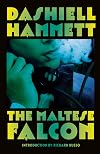
Arguably Dashiell Hammett's best novel (though he preferred The Glass Key), and certainly the most famous and influential. The story is slight: the reader knows almost immediately that Brigid O'Shaughnessy is bad news, and it's equally obvious that the only reason San Francisco private detective Sam Spade tolerates her for so long is that he's not a particularly swell guy himself. Hammett was, fundamentally, a shallow person whose art emerged directly from that superficiality; it was only when he started to chafe against being classified as a mystery writer and decided to become "profound" that he realized he could no longer write.
It falls short of perfection due to some clunky prose, but overall The Maltese Falcon is an impressive stylistic achievement. It lacks the realism of Hammett's Continental Op stories, but this book is the source of the mythic image of the American private eye: an image that audiences all over the world fell in love with, and still cherish. Spade and O'Shaughnessy are shallow, unpleasant people, and the plot may not amount to much, but the novel is tinged with such an indefinable sense of magic (and moves along so briskly) that you'll be fascinated by their interactions in spite of yourself. This was Hammett's gift to his readers.
So great was the public demand for more Sam Spade that Hammett's agent compelled him to write three short stories, all of which can be found in the collection Nightmare Town. One of them ("Too Many Have Lived") is show more pretty good, but it doesn't come close to matching the power of the novel. show less
It falls short of perfection due to some clunky prose, but overall The Maltese Falcon is an impressive stylistic achievement. It lacks the realism of Hammett's Continental Op stories, but this book is the source of the mythic image of the American private eye: an image that audiences all over the world fell in love with, and still cherish. Spade and O'Shaughnessy are shallow, unpleasant people, and the plot may not amount to much, but the novel is tinged with such an indefinable sense of magic (and moves along so briskly) that you'll be fascinated by their interactions in spite of yourself. This was Hammett's gift to his readers.
So great was the public demand for more Sam Spade that Hammett's agent compelled him to write three short stories, all of which can be found in the collection Nightmare Town. One of them ("Too Many Have Lived") is show more pretty good, but it doesn't come close to matching the power of the novel. show less
Way more fun to read than Naked Lunch or the Cut-Up Trilogy, but suffers from the same problem as all of Bockris's biographical works: inexactness. The awkwardly funny 1979 meeting between Burroughs and Lou Reed that was featured as an appendix in Transformer (Bockris's Reed bio) also turns up in this book...but here, it's supposed to have taken place during two separate dinners, and the wording is similar but not identical. What actually happened? Did a tape recording ever exist, or did Bockris piece the conversation together from memory? And were there two separate meetings or only one? We don't know. There's a photo of Burroughs and Reed together at the Bunker, so obviously they did meet, but the details are murky.
Lots of photos and interesting discussions--which Burroughs tended to monopolize--with musicians (Reed, Debbie Harry and Chris Stein), visual artists (Andy Warhol, Jean-Michel Basquiat) and other writers (Allen Ginsberg, Susan Sontag). I'm sure that most of them are at least a fair approximation of reality; Bockris was, after all, a fan and faithful friend. However, if I were writing an academic paper or even a magazine article on Burroughs, I would avoid using any direct quotations from this book.
Lots of photos and interesting discussions--which Burroughs tended to monopolize--with musicians (Reed, Debbie Harry and Chris Stein), visual artists (Andy Warhol, Jean-Michel Basquiat) and other writers (Allen Ginsberg, Susan Sontag). I'm sure that most of them are at least a fair approximation of reality; Bockris was, after all, a fan and faithful friend. However, if I were writing an academic paper or even a magazine article on Burroughs, I would avoid using any direct quotations from this book.
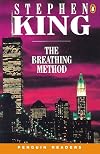
The only story from Different Seasons that I've ever felt inclined to reread, "The Breathing Method" remains one of my favorite Stephen King works. Before he became so grimly determined to make himself the object of public ridicule, King wrote some pretty good stuff; hardly any of it is as good as it's supposed to be, but this novella definitely ranks among his finest output. Dedicated to Peter Straub and his wife, it borrows a basic plot device from Straub's novel Ghost Story: wealthy old men gathering in a dark room (fragrant with cigar smoke) and telling each other gruesome stories. One freezing, inhospitable December night, a retired obstetrician recalls a macabre yet oddly uplifting incident from the early years of his practice in the 1930s. As it turns out, the wraparound story describing the mysterious and occasionally frightening gentlemen's club is more entertaining than the showpiece itself, but the payoff of that central tale is pretty good when it finally arrives. (And yes, it's directly related to the doc's medical specialty...as you may have guessed from the title.)
When King is gone, a lot of the crap he's written during the past thirty years will be forgotten. Stories like "The Breathing Method" will not.
When King is gone, a lot of the crap he's written during the past thirty years will be forgotten. Stories like "The Breathing Method" will not.
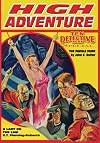
Seven stories from the May and June 1937 issues of Ten Detective Aces. The star attraction here is John K. Butler, who became popular a few years later for his Steve Midnight stories in Dime Detective; "The Parole Pawn" lacks the hard-boiled good humor of his more mature work, and relies on a couple of unlikely plot developments, but Butler already stood head and shoulders above most of his peers. The novella is fast-moving and keeps you engaged, and the romantic element isn't overdone as it is in many of the other stories. I don't know what TDA's editorial policy was, but they seem to have encouraged their authors to play up the romance. This hobbles an otherwise decent story like Jeremy Lane's "Murder for Nothing," and pretty much wrecks Norman A. Daniels' "Murder Is Necessary" with awkwardly earnest mooning.
Still, this is kind of a fun read for fans of vintage crime fiction. The stories are exact reproductions, and the stark, chiaroscuresque illustrations from the pages of the magazine contribute to the overall experience. It's pretty difficult to find John K. Butler's work even now (with the exception of those two pricey Steve Midnight collections from Altus Press), and connoisseurs of hard-boiled crime stories should jump at every chance to read Butler.
Still, this is kind of a fun read for fans of vintage crime fiction. The stories are exact reproductions, and the stark, chiaroscuresque illustrations from the pages of the magazine contribute to the overall experience. It's pretty difficult to find John K. Butler's work even now (with the exception of those two pricey Steve Midnight collections from Altus Press), and connoisseurs of hard-boiled crime stories should jump at every chance to read Butler.

Not my cup of tea. Though it was a popular success and an important early milestone of the paperback horror boom, The Wolfen (1978) is workmanlike at best. The dialogue between the central characters (the male-female cop duo) feels strained and unnatural, and the basic concept of the Wolfen didn't win me over, either. (Vastly superior is David Morrell's nontraditional take on werewolf lore, The Totem, which was published the year after this book.) There's plenty of violence but few genuine chills. Nonetheless, despite being thoroughly mediocre, The Wolfen is better than many of the glossy-covered horror potboilers that appeared in its wake. This is one of those rare cases wherein the film is superior, however: Michael Wadleigh's cinematic adaptation gives the material an authentically gritty urban vibe that doesn't really come across in Strieber's novel.
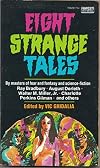
So-so collection of horror and dark sci-fi, quite representative of the paperback anthologies of its time. Clark Ashton Smith's story, "The Second Interment," was a vivid reminder of why I don't like Clark Ashton Smith very much: dull, suspenseless, each ten-dollar word that Smith fished out of his thesaurus landing with a boneless splat. (And, maddeningly, the title tells you exactly what's going to happen. The only Smith story that ever made an impression on me was "The Return of the Sorcerer," but I gather that fans consider it one of his worst.) Robert E. Howard's "Dig Me No Grave" is a typically lackluster imitation of H.P. Lovecraft. Howard was a great writer of spooky action tales (see the Solomon Kane series), but his straight horror stuff was always slightly below par.
Among the better stories are "Subterfuge," Ray Bradbury's succinct fantasy about how Earthlings might survive an alien invasion; "By Water," in which Algernon Blackwood cautions the reader never to disregard the predictions of gypsy fortune tellers; and "A Wig for Miss DeVore," a nasty little piece of black comedy by August Derleth. (It was adapted by Donald S. Sanford for an episode of Boris Karloff's anthology television series Thriller.) The Derleth story is the only one that I would recommend going out of your way to read.
Among the better stories are "Subterfuge," Ray Bradbury's succinct fantasy about how Earthlings might survive an alien invasion; "By Water," in which Algernon Blackwood cautions the reader never to disregard the predictions of gypsy fortune tellers; and "A Wig for Miss DeVore," a nasty little piece of black comedy by August Derleth. (It was adapted by Donald S. Sanford for an episode of Boris Karloff's anthology television series Thriller.) The Derleth story is the only one that I would recommend going out of your way to read.

*Partial spoilers ahead*
Based on two stories ("Killer in the Rain" and "The Curtain") originally published in Black Mask magazine, The Big Sleep (1939) is a slightly better debut novel than Dashiell Hammett's Red Harvest, but readers should bear in mind that it is a debut novel and that Raymond Chandler had a long way yet to go in his development as a literary artist. Chandler himself conceded that the book was "very unequally written"; indeed, it's almost wildly inconsistent and showcases the author's weaknesses as much as his strengths.
Chandler was never a skillful plotter, and The Big Sleep illustrates the danger of careless storytelling. He was more concerned with the creation of atmospheric scenes--and, while that's a vital ingredient of hard-boiled crime stories, doesn't the reader deserve a straight answer about who killed the Sternwoods' chauffeur? Chandler doesn't have one. The book does gain considerable momentum in its second half, which features two of the most memorable scenes in the Chandler oeuvre: private eye Philip Marlowe's interaction with tragic minor character Harry Jones, and his suspenseful showdown with hitman Lash Canino. However, thumb-sucking nymphomaniac Carmen Sternwood is the most inexplicably ridiculous character ever created by Chandler, and her scenes are hard to take.
Farewell, My Lovely, The Lady in the Lake and especially The Long Goodbye are better novels than The Big Sleep. (The High Window remains my personal favorite, for what show more that's worth.) Still, this is a respectable debut and readers will find it largely entertaining. show less
Based on two stories ("Killer in the Rain" and "The Curtain") originally published in Black Mask magazine, The Big Sleep (1939) is a slightly better debut novel than Dashiell Hammett's Red Harvest, but readers should bear in mind that it is a debut novel and that Raymond Chandler had a long way yet to go in his development as a literary artist. Chandler himself conceded that the book was "very unequally written"; indeed, it's almost wildly inconsistent and showcases the author's weaknesses as much as his strengths.
Chandler was never a skillful plotter, and The Big Sleep illustrates the danger of careless storytelling. He was more concerned with the creation of atmospheric scenes--and, while that's a vital ingredient of hard-boiled crime stories, doesn't the reader deserve a straight answer about who killed the Sternwoods' chauffeur? Chandler doesn't have one. The book does gain considerable momentum in its second half, which features two of the most memorable scenes in the Chandler oeuvre: private eye Philip Marlowe's interaction with tragic minor character Harry Jones, and his suspenseful showdown with hitman Lash Canino. However, thumb-sucking nymphomaniac Carmen Sternwood is the most inexplicably ridiculous character ever created by Chandler, and her scenes are hard to take.
Farewell, My Lovely, The Lady in the Lake and especially The Long Goodbye are better novels than The Big Sleep. (The High Window remains my personal favorite, for what show more that's worth.) Still, this is a respectable debut and readers will find it largely entertaining. show less
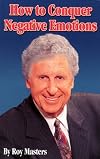
For several years I made an informal study of self-help books and movements, with an attitude of more or less friendly skepticism. Neither Hare Krishna nor Scientology was attractive to me, but I listened to the AM radio program of a commentator named Roy Masters and found it somewhat interesting. Masters advocated a simple meditation exercise that I had encountered twice before: initially in my high school theater class, and then as a sort of anti-anxiety ritual recommended by a therapist when I was experiencing panic attacks. It's essentially self-hypnosis, though Masters always insisted otherwise (just as L. Ron Hubbard insisted that "auditing" was not psychoanalysis). He certainly didn't invent the exercise, but he did wed it to the only useful observation I was able to pry out of the murky self-help realm: "If You Don't Control Your Emotions, Someone Else Will!" This motto appears in large type on the back cover of the book, and appropriately so.
Unfortunately, Masters attached a lot of pseudo-religious gobbledygook and Bible quotations to that basic but extremely valid counsel, and How to Conquer Negative Emotions is a rambling 300-page harangue. It might have worked better as a short, direct pamphlet...but, even then, the presentation would have been lacking. A big part of the appeal of Masters' message was actually hearing him deliver it in cultured English tones; it loses some fundamental quality on the printed page.
Experience is the ultimate teacher, and each of show more us learns--sooner or later--that we cannot allow other people's behavior to dictate how we feel. Practicing this little meditation exercise can help you to avoid an emotional ordeal, as long as you steer clear of the self-flagellating religious nonsense. (It's never been good for anybody.) show less
Unfortunately, Masters attached a lot of pseudo-religious gobbledygook and Bible quotations to that basic but extremely valid counsel, and How to Conquer Negative Emotions is a rambling 300-page harangue. It might have worked better as a short, direct pamphlet...but, even then, the presentation would have been lacking. A big part of the appeal of Masters' message was actually hearing him deliver it in cultured English tones; it loses some fundamental quality on the printed page.
Experience is the ultimate teacher, and each of show more us learns--sooner or later--that we cannot allow other people's behavior to dictate how we feel. Practicing this little meditation exercise can help you to avoid an emotional ordeal, as long as you steer clear of the self-flagellating religious nonsense. (It's never been good for anybody.) show less
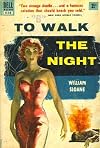
A favorite of Psycho author Robert Bloch, and widely considered an overlooked classic, To Walk the Night (1937) is one of only two novels by publishing industry veteran William Sloane. In his own day, Sloane's work was classified as science fiction; today it's routinely saddled with the "cosmic horror" label, which is something of a misnomer. Yes, this novel boasts an otherworldly premise, but it plays out in an understated, deliberately paced manner that has more in common with a Val Lewton film like Cat People than it does with the Lovecraftian aesthetic. The trouble is that it's often too understated, as though the author became so wrapped up in the creation of fussily precise sentences that he forgot to give the book any guts, any essence. Characters kinda-sorta interact and things happen (some authentically eerie atmosphere is generated in the tense exchange between the narrator and the police detective as they grope for a solution to the novel's central mystery), but ultimately it seemed to me that a sense of weight and solidity is not what Sloane was going for. If that's the case, he succeeded. Having finished the novel, I felt that I had eaten one very fancy gourmet potato chip...and was still hungry for a meal.
To Walk the Night had some interesting possibilities. I wish the execution had been a little more enjoyable. (It was from this book, incidentally, that Peter Straub derived the surname of--and basic character template for--Eva Galli, the memorably show more unearthly villainess of his novel Ghost Story. Straub handled the entire concept more effectively than Sloane, but he had the advantage of a frightening real-life counterpart on whom to model Eva and her subsequent incarnations.) show less
To Walk the Night had some interesting possibilities. I wish the execution had been a little more enjoyable. (It was from this book, incidentally, that Peter Straub derived the surname of--and basic character template for--Eva Galli, the memorably show more unearthly villainess of his novel Ghost Story. Straub handled the entire concept more effectively than Sloane, but he had the advantage of a frightening real-life counterpart on whom to model Eva and her subsequent incarnations.) show less
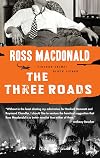
Occasionally interesting but mostly awkward and disjointed, The Three Roads (1948) demonstrates Ross Macdonald's struggles as a writer before he found his niche as the third and greatest master of the private eye subgenre. It's a slightly better book than the previous year's Blue City, but a far less consistent one. There's some decent action--both psychological and physical--in the novel, but it takes a long eighty pages to get going. Macdonald was intent on foisting his fascination with Freudian psychoanalysis on the reader, and did it in the clumsiest, most sophomoric way.
The plot twist doesn't amount to much, and when the book was finished I wondered if I was supposed to care about Bret Taylor and Paula West. And, if so, why? Flawed characters are one thing, but Macdonald seems to have gone out of his way to make them unsympathetic. There are flashes of the psychological depth that would distinguish his Lew Archer novels, but they're few and far between...making The Moving Target, the first Archer book, an even more impressive achievement. (Macdonald figured out that the ideal protagonist in a murder mystery is not a tortured amnesia victim, but rather an investigator who's fundamentally neutral.) Confirmed Macdonald fanatics should not expect much from The Three Roads; casual readers should avoid it altogether.
The plot twist doesn't amount to much, and when the book was finished I wondered if I was supposed to care about Bret Taylor and Paula West. And, if so, why? Flawed characters are one thing, but Macdonald seems to have gone out of his way to make them unsympathetic. There are flashes of the psychological depth that would distinguish his Lew Archer novels, but they're few and far between...making The Moving Target, the first Archer book, an even more impressive achievement. (Macdonald figured out that the ideal protagonist in a murder mystery is not a tortured amnesia victim, but rather an investigator who's fundamentally neutral.) Confirmed Macdonald fanatics should not expect much from The Three Roads; casual readers should avoid it altogether.
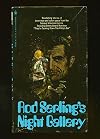
Rod Serling excelled as a dramatist rather than as a prose writer (amply attested by his Twilight Zone short story collections), but this little book is still a worthwhile souvenir for fans of Night Gallery, Serling's second network TV series in the psychological horror/dark fantasy/sci-fi mold. It contains adaptations of five teleplays that he authored for the show's first season (including Emmy-nominated "They're Tearing Down Tim Riley's Bar"), and one story which was never dramatized. The standout is "The Sole Survivor," which manages to recreate some of the cold, doomy atmosphere of the Night Gallery segment "Lone Survivor" (about a lifeboat passenger with a ghastly tale to tell, and an even more horrible warning to issue). In "Does the Name Grimsby Do Anything to You?", the aforementioned undramatized story, the first man to reach the Moon is haunted by the suspicion that he was not the first.
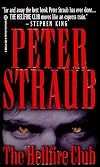
Fitfully entertaining but deeply flawed, The Hellfire Club is not one of Peter Straub's finest moments. This novel takes the better part of two hundred pages to get going (which is way too long for the layperson and possibly for the casual fan, as well), and even then it seems determined to stress the wrong story elements. Unusually for Straub, the historical mystery is de-emphasized to focus on protracted verbal interactions between characters who are not particularly fascinating (and that includes the villain, Dick Dart). All told, it's a singularly unmysterious book; the reader must instead make do with various long-winded conversations and arguments in kitchens, bedrooms, motel rooms, police stations and cars, occasionally punctuated by violence. In that regard, it's a lot like Stephen King's The Shining: the raw material for a better book is here, but the author has largely neglected it to write about the mundane stuff.
Part of the problem is that Nora is a sympathetic character only because the men around her are so absurdly, comically vile. The reader must root for her not because she's likable or interesting, but because nearly every man in the book is unrealistically awful. Nora's husband Davey, her ex-lover Dan, cartoonishly sneering FBI agents and random male passersby...it's one strawman takedown after another, and this routine becomes extremely tiresome. (Dick and Nora's dramatic escape from the pokey isn't especially believable, either.) Yes, it's Peter show more Straub in knee-jerk feminist mode, and his skill as a writer was the only thing that saved this novel from total disaster. As I've said, it's actually entertaining in spots. (Note, for example, Straub's compelling description of Georgina Weatherall, the iron-willed harridan who had owned Shorelands: "If she noticed a flaw, she submerged it beneath rouge and kohl, just as she had buried the stains on her walls and the rents in her lace beneath layers of fabric...The maid had loved Georgina, who had so demanded love that she had seen it in people who mocked her. This monolithic ruthlessness was what was meant by a romantic conception of oneself.") Unfortunately, that's not enough.
A few years later, Straub returned (with much more successful results) to the theme of cult fiction and its basis in/effect on real life in Mr. X, his final masterpiece. That's the book you should be reading. (The most interesting thing about The Hellfire Club is that it constitutes a fairly direct admission on Straub's part that he himself had written novels like Night Journey: i.e., allegedly fictitious works that were modeled on actual people and events. He continued to explore this approach in Mr. X by naming his title character after pseudonymous science fiction author "Cordwainer Smith"...in real life, CIA operative Paul Linebarger.) show less
Part of the problem is that Nora is a sympathetic character only because the men around her are so absurdly, comically vile. The reader must root for her not because she's likable or interesting, but because nearly every man in the book is unrealistically awful. Nora's husband Davey, her ex-lover Dan, cartoonishly sneering FBI agents and random male passersby...it's one strawman takedown after another, and this routine becomes extremely tiresome. (Dick and Nora's dramatic escape from the pokey isn't especially believable, either.) Yes, it's Peter show more Straub in knee-jerk feminist mode, and his skill as a writer was the only thing that saved this novel from total disaster. As I've said, it's actually entertaining in spots. (Note, for example, Straub's compelling description of Georgina Weatherall, the iron-willed harridan who had owned Shorelands: "If she noticed a flaw, she submerged it beneath rouge and kohl, just as she had buried the stains on her walls and the rents in her lace beneath layers of fabric...The maid had loved Georgina, who had so demanded love that she had seen it in people who mocked her. This monolithic ruthlessness was what was meant by a romantic conception of oneself.") Unfortunately, that's not enough.
A few years later, Straub returned (with much more successful results) to the theme of cult fiction and its basis in/effect on real life in Mr. X, his final masterpiece. That's the book you should be reading. (The most interesting thing about The Hellfire Club is that it constitutes a fairly direct admission on Straub's part that he himself had written novels like Night Journey: i.e., allegedly fictitious works that were modeled on actual people and events. He continued to explore this approach in Mr. X by naming his title character after pseudonymous science fiction author "Cordwainer Smith"...in real life, CIA operative Paul Linebarger.) show less

When I stepped outside my Hammett-Chandler-Ross Macdonald comfort zone, the very first hard-boiled crime story I read by a more obscure author was Richard Sale's "A Nose for News." Originally published in Detective Fiction Weekly in 1934, it was funny, fast-paced and engrossing; I was impressed by Sale's ability to cram enough action for a novel into just twenty-three pages. (You can find that story in Ron Goulart's first-rate collection The Hardboiled Dicks.) His skill as a writer is not in doubt.
Which makes a book like 1946's Benefit Performance all the more disappointing. It's readable, but so bland and undistinguished that you'll wonder why you even bothered. Sale's humor is intact (that's what got me through the novel), but all the rough edges--the things that made the crime stories in pulp magazines so interesting--have been ground off. This tale of an aging Hollywood star pretending that he's dead to draw his antagonist into the open is a good example of how the crime genre tended to suffer when its authors took the mainstream route.
Which makes a book like 1946's Benefit Performance all the more disappointing. It's readable, but so bland and undistinguished that you'll wonder why you even bothered. Sale's humor is intact (that's what got me through the novel), but all the rough edges--the things that made the crime stories in pulp magazines so interesting--have been ground off. This tale of an aging Hollywood star pretending that he's dead to draw his antagonist into the open is a good example of how the crime genre tended to suffer when its authors took the mainstream route.

Nice little collection of eight stories by some of the early-to-mid-20th century's greatest horror authors. "Ancient Sorceries," about a man who recounts his strange experience in a remote French village where the peasants seem to turn themselves into cats, is--in my opinion--the best and most atmospheric of Algernon Blackwood's longer pieces. H.P. Lovecraft hadn't yet hit his stride when he wrote "The Unnamable," but it's one of the first tales in which he grappled with the concept of cosmic horror, and made plain his ambition to produce something more than a standard haunted house story. August Derleth had his moments (see "The Thing That Walked on the Wind" and "Alannah"), but "Mr. Ames' Devil" isn't one of them; it's the sort of throwaway comedy-horror fluff that inspired Jack Laird's silly "blackout" sketches on Night Gallery and not much else. The book closes with a bang, however: "I Kiss Your Shadow" is one of the finest pulp horror tales that Robert Bloch ever wrote. He was a born yarn-spinner, and this story of a femme fatale who becomes even more implacable in death shows Bloch at the top of his game.
Good stuff from William Hope Hodgson, Theodore Sturgeon and Fritz Leiber, too. (Plus an okay story by Robert E. Howard.) Horror Hunters is worth picking up if you can find a reasonably priced copy.
Good stuff from William Hope Hodgson, Theodore Sturgeon and Fritz Leiber, too. (Plus an okay story by Robert E. Howard.) Horror Hunters is worth picking up if you can find a reasonably priced copy.
*Partial spoilers ahead*
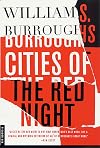
Frustrating. After years of blah, increasingly half-hearted experimental novels and a relatively short (though brutal) period of writer's block, Burroughs almost staged a comeback with Cities of the Red Night. Almost, but not quite. The first half of the book is the most ambitious thing he ever wrote, and the array of characters and situations is very impressive; it's obvious that he was taking greater pains with the material, and found it interesting and engaging. There's a story here, and you actually want to turn the page and find out what happens next. (This is extremely rare in WSB's oeuvre; he was by nature a writer, yet not a natural storyteller.)
So why did Burroughs allow this extraordinarily promising beginning to go to hell in the book's second half? Why did he abandon the various threads of the plot to churn out 160-odd pages of dreary, Naked Lunch-style routines? (You know the stuff I mean: young red-haired boy bends over and farts righteous green flame, setting fire to a bunch of screaming Southern bigots as Doc Benway looks on and mutters, "Most interesting case indeed," etc. This goes on for page after page after page, almost as if Burroughs intended to confound the reader's expectations.) Did he find himself unable to write a coherent ending? Was he only trying to give his audience the obscenity-by-numbers that he thought they demanded? Your guess is as good as mine, but the unfulfilled potential of Cities drives me crazy. I do feel show more that it's worth reading for the excellent first half; just enter into it with the understanding that the whole thing collapses rather abruptly and never recovers.
Burroughs was mixing with a dark, dangerous crowd during the years that this novel was being written, and the influence of the Magickal Childe scene is evident in the subplot involving New York private eye Clem Snide and the supernatural forces he encounters while investigating a cult murder case. If memory serves, the macabre death of the Jerry Green character was based on a real-life incident briefly described in a book by English travel writer Bruce Chatwin, and which actually did occur on the Greek island of Spetses or Spetsai. That island was the setting for John Fowles's critically acclaimed The Magus, to which Burroughs makes direct reference in Cities of the Red Night. It's interesting to note that horror novelist Peter Straub, who likewise appears to have rubbed elbows with some frightening folk during this same period, based his bestselling Shadowland (published the year before Cities) on the Fowles novel. show less
Frustrating. After years of blah, increasingly half-hearted experimental novels and a relatively short (though brutal) period of writer's block, Burroughs almost staged a comeback with Cities of the Red Night. Almost, but not quite. The first half of the book is the most ambitious thing he ever wrote, and the array of characters and situations is very impressive; it's obvious that he was taking greater pains with the material, and found it interesting and engaging. There's a story here, and you actually want to turn the page and find out what happens next. (This is extremely rare in WSB's oeuvre; he was by nature a writer, yet not a natural storyteller.)
So why did Burroughs allow this extraordinarily promising beginning to go to hell in the book's second half? Why did he abandon the various threads of the plot to churn out 160-odd pages of dreary, Naked Lunch-style routines? (You know the stuff I mean: young red-haired boy bends over and farts righteous green flame, setting fire to a bunch of screaming Southern bigots as Doc Benway looks on and mutters, "Most interesting case indeed," etc. This goes on for page after page after page, almost as if Burroughs intended to confound the reader's expectations.) Did he find himself unable to write a coherent ending? Was he only trying to give his audience the obscenity-by-numbers that he thought they demanded? Your guess is as good as mine, but the unfulfilled potential of Cities drives me crazy. I do feel show more that it's worth reading for the excellent first half; just enter into it with the understanding that the whole thing collapses rather abruptly and never recovers.
Burroughs was mixing with a dark, dangerous crowd during the years that this novel was being written, and the influence of the Magickal Childe scene is evident in the subplot involving New York private eye Clem Snide and the supernatural forces he encounters while investigating a cult murder case. If memory serves, the macabre death of the Jerry Green character was based on a real-life incident briefly described in a book by English travel writer Bruce Chatwin, and which actually did occur on the Greek island of Spetses or Spetsai. That island was the setting for John Fowles's critically acclaimed The Magus, to which Burroughs makes direct reference in Cities of the Red Night. It's interesting to note that horror novelist Peter Straub, who likewise appears to have rubbed elbows with some frightening folk during this same period, based his bestselling Shadowland (published the year before Cities) on the Fowles novel. show less

Blue Murder is not held in especially high regard among readers of hard-boiled crime fiction in general or even Robert Leslie Bellem's fan base in particular. (They prefer the Dan Turner stories by a mile.) Published in 1938, four years after Dashiell Hammett's final novel and one year before Raymond Chandler's first, this modest little book is written in the two-fisted Black Mask style that had become popular during the '20s. Bellem, an extremely prolific short story author (who also wrote for television, films and comic strips), penned only a few novels; this was his long-form debut and I found it quite entertaining.
What fans like best about the Dan Turner stories is the absurd language ("private skulk" for private detective; "roscoes" for handguns; "whatchamacallems" for breasts) that was Bellem's specialty. Unfortunately, he became so preoccupied with this synthetic slang that it got in the way of his storytelling, and Bellem was a pretty good storyteller otherwise. Blue Murder contains a few such indulgences (roscoes tend to say "Chow-chow!" or "Chud-chud-chud!" rather than simply "Bang!" or "Pow!"), but they don't become a hindrance to the momentum of the novel. Too dumb to be a good private eye, Duke Pizzatello is nonetheless amiable and determined, and I guarantee that his Los Angeles misadventures won't bore you. Vintage pulp aficionados can't go wrong with this book.
By the way, if you're curious about the Dan Turner stories, check out The Great American show more Detective (William Kittredge and Steven M. Krauzer, eds.) for "The Lake of the Left-Hand Moon." It's one of the better examples of what most fans consider to be prime Bellem. show less
What fans like best about the Dan Turner stories is the absurd language ("private skulk" for private detective; "roscoes" for handguns; "whatchamacallems" for breasts) that was Bellem's specialty. Unfortunately, he became so preoccupied with this synthetic slang that it got in the way of his storytelling, and Bellem was a pretty good storyteller otherwise. Blue Murder contains a few such indulgences (roscoes tend to say "Chow-chow!" or "Chud-chud-chud!" rather than simply "Bang!" or "Pow!"), but they don't become a hindrance to the momentum of the novel. Too dumb to be a good private eye, Duke Pizzatello is nonetheless amiable and determined, and I guarantee that his Los Angeles misadventures won't bore you. Vintage pulp aficionados can't go wrong with this book.
By the way, if you're curious about the Dan Turner stories, check out The Great American show more Detective (William Kittredge and Steven M. Krauzer, eds.) for "The Lake of the Left-Hand Moon." It's one of the better examples of what most fans consider to be prime Bellem. show less

In the long introduction to The General's Wife, Peter Straub cheerfully acknowledges that the premise was derived from a Carlos Fuentes novella entitled Aura. I haven't read that piece, so I'm unable to make a comparison, but I can assure Straub fans that this little book delivers the goods. It's a vignette subtracted from Straub's already gargantuan novel Floating Dragon (and Andy, its central character, is essentially Patsy from that book, right down to the abusive husband), but The General's Wife is a polished exercise in narrative restraint. Straub would later produce three volumes of short fiction, but said that the only way he could write stories during this phase of his career was within the novels themselves...and this one works beautifully.
Andy's hateful, bullying husband is transferred to London for work, but despises the city and rarely wants to go out. Tentatively exploring London on her own, Andy answers a want ad placed by a former Army general whose career was marred by some scandal which is never quite specified. The old gentleman is compiling his memoirs and needs a transcriptionist; not surprisingly, Andy encounters the horrific and, ultimately, the inexplicable in the general's dank, sparsely furnished home. A noticeable antecedent to Straub's later masterpiece Mrs. God, this novella marks the first overt appearance of Robert Aickman's influence in the Straub oeuvre. It actually bears a much greater resemblance to Mrs. God than to Floating Dragon, but show more is perfectly, elegantly self-contained. In fact, no prior knowledge of any of Straub's work is required to enjoy The General's Wife (though, unless you're a fan and a collector, you're probably not going to shell out forty of fifty bucks for this).
1200 copies, each signed by Straub and illustrator Thomas Canty. My copy is #145. show less
Andy's hateful, bullying husband is transferred to London for work, but despises the city and rarely wants to go out. Tentatively exploring London on her own, Andy answers a want ad placed by a former Army general whose career was marred by some scandal which is never quite specified. The old gentleman is compiling his memoirs and needs a transcriptionist; not surprisingly, Andy encounters the horrific and, ultimately, the inexplicable in the general's dank, sparsely furnished home. A noticeable antecedent to Straub's later masterpiece Mrs. God, this novella marks the first overt appearance of Robert Aickman's influence in the Straub oeuvre. It actually bears a much greater resemblance to Mrs. God than to Floating Dragon, but show more is perfectly, elegantly self-contained. In fact, no prior knowledge of any of Straub's work is required to enjoy The General's Wife (though, unless you're a fan and a collector, you're probably not going to shell out forty of fifty bucks for this).
1200 copies, each signed by Straub and illustrator Thomas Canty. My copy is #145. show less
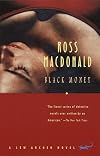
Many critics consider this to be Ross Macdonald's finest book, and Macdonald himself professed to agree...perhaps because of the general consensus among critics. I love his work, and this is a good book, but it's not in my top three (The Wycherly Woman, The Chill and The Underground Man, in that order). The fact is that critics are partial to Black Money because it nods self-consciously to Fitzgerald's The Great Gatsby, and such allusions are considered the height of sophistication in the literary world. In a very real sense, Macdonald wrote this novel for the critics after a couple of them had disparaged certain elements of The Chill. Artists are sensitive, and I guess it's not surprising that Macdonald responded to criticism by trying to prove that he could produce a "serious" book, but he needn't have bothered. He was already a first-class writer, and didn't have to demonstrate that to a bunch of stuffy literary people whose readership was a tiny fraction of his own. Like I said, Black Money is good, but I think Macdonald may have overvalued it a little falsely. (Even as he proclaimed this his best novel, however, he had to concede that The Chill contained his finest plotting.) Also, there are a few instances of editorial sloppiness--a rare phenomenon in Macdonald's oeuvre--which deny this book a place among the top tier of his work, in my opinion.
The back cover synopsis for Bantam's 1973 paperback edition tries hard to convey the impression that Macdonald had show more suddenly turned into Mickey Spillane, and it's downright hilarious: "Lew Archer made a deal with fat little Rich Boy at the posh Montevista Tennis Club. Seems Rich Boy had lost his beautiful fiancée to a stranger with a suspiciously phony French accent. So Rich Boy hired Archer to retrieve the runaway fiancée. Sounded like a fast, clean bundle for old, broke Archer..." You have to wonder who wrote that. (It certainly wasn't Macdonald.) Maybe the publisher was apprehensive about the book's literary pretensions and felt the need to compensate with an overtly hard-boiled teaser?
Black Money is a standard Archer novel in nearly every measurable sense. (And it happens to contain one of Macdonald's most painfully beautiful sentences: "His expression turned faraway, further and further away, as if his mind was climbing back over the curve of time to the source of his life.") The casual reader probably won't even notice the allusions to Gatsby, and those who have enjoyed Macdonald's other books will like this one, too. But it's emphatically not the best thing he ever wrote. show less
The back cover synopsis for Bantam's 1973 paperback edition tries hard to convey the impression that Macdonald had show more suddenly turned into Mickey Spillane, and it's downright hilarious: "Lew Archer made a deal with fat little Rich Boy at the posh Montevista Tennis Club. Seems Rich Boy had lost his beautiful fiancée to a stranger with a suspiciously phony French accent. So Rich Boy hired Archer to retrieve the runaway fiancée. Sounded like a fast, clean bundle for old, broke Archer..." You have to wonder who wrote that. (It certainly wasn't Macdonald.) Maybe the publisher was apprehensive about the book's literary pretensions and felt the need to compensate with an overtly hard-boiled teaser?
Black Money is a standard Archer novel in nearly every measurable sense. (And it happens to contain one of Macdonald's most painfully beautiful sentences: "His expression turned faraway, further and further away, as if his mind was climbing back over the curve of time to the source of his life.") The casual reader probably won't even notice the allusions to Gatsby, and those who have enjoyed Macdonald's other books will like this one, too. But it's emphatically not the best thing he ever wrote. show less