
Gregory Corso (1) (1930–2001)
Author of Gasoline (City Lights Pocket Poets Series)
For other authors named Gregory Corso, see the disambiguation page.
About the Author
In 1957, Allen Ginsberg wrote of Corso, "He's probably the greatest poet in America, and he's starving in Europe." Corso's themes are death and beauty, always in American terms. Virtually an orphan, Corso was born on Bleecker Street in New York's Greenwich Village. He spent his childhood and youth show more in and out of foster homes. During his numerous prison terms, he was introduced to literature by a fellow convict. On his release, he met Ginsberg, who immediately recognized his talent and helped him. (Bowker Author Biography) show less
Image credit: Noncorporeal
Works by Gregory Corso
Mokre more 4 copies
10 Times A Poem 2 copies
The Doubt of Truth 2 copies
Unmuzzled ox 15 2 copies
Alchemical Poem. 2 copies
Beat Legends: Gregory Corso 1 copy
Five/I/'77 1 copy
Italian Journals 1 copy
Way out : a poem in discord 1 copy
Die on me 1 copy
The three angels : original Beat poetry from Gregory Corso, Peter Orlovsky and Allen Ginsberg 1 copy
Deluge 1 copy
Junge Amerikanische Lyrik 1 copy
Associated Works
The Rolling Stone Book of the Beats: The Beat Generation and American Culture (1999) — Contributor — 181 copies, 2 reviews
A Controversy of Poets: An Anthology of Contemporary American Poetry, (1965) — Contributor — 83 copies
EVERGREEN REVIEW: VOL. 6, NO. 23: MARCH-APRIL 1962 — Contributor — 6 copies
Tagged
Common Knowledge
- Legal name
- Corso, Nunzio
- Birthdate
- 1930-03-26
- Date of death
- 2001-01-17
- Gender
- male
- Relationships
- Kerouac, Jack (friend)
Ginsberg, Allen (friend)
Burroughs, William (friend) - Nationality
- USA
- Birthplace
- Greenwich Village, New York, USA
- Places of residence
- New York, New York, USA
San Francisco, California, USA - Place of death
- Minnesota, USA
- Burial location
- Cimitero acattolico, Rom, Italien
- Associated Place (for map)
- USA
Members
Reviews
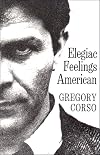
This is my first time reading Corso. Although I have never been a dedicated admirer of poetry as a literary style -- in this case -- I was inspired. And I hope this work will influence my own writing. The impressions conveyed by these poems are visual-visceral; sometimes raw, but rarely disgusting à la W. S. Burroughs. Corso's compound-word-creations and word-play-deconstructions provide great embellishment to his unique style. At first, Corso's stream of consciousness reminded me of show more Kerouac, but Corso goes more for the jugular via his servings of brute reality "samples" -- he is fully submerged in the realm of the subjective. That being said, he can be just as ethereal as he is blunt.
I especially enjoyed Corso's geopolitical views via "The American Way" (which foresees the rise of Evangelism and the decline of USA in general) -- and, in the same vein, "America Politica Historia, In Spontaneity". Other highlights include "Work" from "Triptych: Friend, Work, World", and the Egyptology-inspired drawings of "The Geometric Poem". "The Geometric Poem" appears in Corso's handwritten script and is often barely legible -- ultimately, I prefer the scribblings of "The Geometric Poem" over the text -- those drawings remind me of the album jacket liner artwork of the Jefferson Airplane's 1967 psychedelic masterpiece, "After Bathing at Baxer's". I'm giving this collection 5 stars because although I did not love the text unconditionally or unanimously -- what I did enjoy, which was the bulk of it, I found to be superlative. In closing -- I'm happy to have run across "Elegiac Feelings American", and I look forward to reading more of Corso's work. show less
I especially enjoyed Corso's geopolitical views via "The American Way" (which foresees the rise of Evangelism and the decline of USA in general) -- and, in the same vein, "America Politica Historia, In Spontaneity". Other highlights include "Work" from "Triptych: Friend, Work, World", and the Egyptology-inspired drawings of "The Geometric Poem". "The Geometric Poem" appears in Corso's handwritten script and is often barely legible -- ultimately, I prefer the scribblings of "The Geometric Poem" over the text -- those drawings remind me of the album jacket liner artwork of the Jefferson Airplane's 1967 psychedelic masterpiece, "After Bathing at Baxer's". I'm giving this collection 5 stars because although I did not love the text unconditionally or unanimously -- what I did enjoy, which was the bulk of it, I found to be superlative. In closing -- I'm happy to have run across "Elegiac Feelings American", and I look forward to reading more of Corso's work. show less
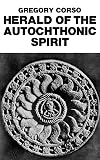
Gregory Corso's poem "Marriage" resonated deeply with my 10th grade self. I can still summon excellent turns of phrases by memory. While most of his poems contain the roots of brilliant ideas, or consonant phrases that beg to be spoken aloud, the truth is there is a reason he is a lesser known beat-poet. He, like Bukowski, is allergic to revising, preferring to represent his drug-addled ruminations in their rawest unedited forms. His rawness too often comes across as feigned, over-wrought, show more self-congratulatory, or petulant. This collection of his later poems is so strivingly artless that I find it embarrassing to even read. show less

If the Cut-Up Trilogy was considered of limited interest to readers in the sixties & seventies, 'Minutes To Go' is flat-out obscure. An epistolary collection of ideas & poesy, Gysin's tone is preachy (and, to be honest, a bit of a turn-off), Gregory Corso comes off as reluctant & shrill (protesting the attack on his poetic sensibilities as if protesting physical abuse), Sinclair Beiles is unaccountably gleeful (a child with a new surgical instrument), and Burroughs has become nondescript & show more inscrutable (having receded into the character of a technician from a hidden star). One is inclined to expect some sort of revelation, but none is forthcoming. All is arch experiment. 'Minutes To Go' is an oddity for the absolutely obsessed. show less
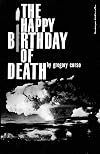
Reading this after many years since the 1960s,
I remember that Gregory Corse was sitting under a bridge for inspiration.
Not sure what attracted me to the poems back then, but now they all feel majorly depressing,
though BOMB is fairly incredible!
I remember that Gregory Corse was sitting under a bridge for inspiration.
Not sure what attracted me to the poems back then, but now they all feel majorly depressing,
though BOMB is fairly incredible!
Lists
You May Also Like


Associated Authors
Statistics
- Works
- 53
- Also by
- 20
- Members
- 1,484
- Popularity
- #17,304
- Rating
- 3.9
- Reviews
- 5
- ISBNs
- 45
- Languages
- 7
- Favorited
- 20
