
If the Cut-Up Trilogy was considered of limited interest to readers in the sixties & seventies, 'Minutes To Go' is flat-out obscure. An epistolary collection of ideas & poesy, Gysin's tone is preachy (and, to be honest, a bit of a turn-off), Gregory Corso comes off as reluctant & shrill (protesting the attack on his poetic sensibilities as if protesting physical abuse), Sinclair Beiles is unaccountably gleeful (a child with a new surgical instrument), and Burroughs has become nondescript & inscrutable (having receded into the character of a technician from a hidden star). One is inclined to expect some sort of revelation, but none is forthcoming. All is arch experiment. 'Minutes To Go' is an oddity for the absolutely obsessed.
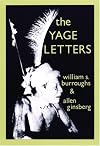
Brief but beautifully evocative of both a time & place that have all but ceased to exist outside the imagination. Burroughs followed Rimbaud in his Boys' Own determination to be the white man who made one last desperate attempt to step outside the confines of his own stupid culture and *see*; unlike Rimbaud, Burroughs never stopped writing, and that might have been the gesture that saved him. The letters jump time as well as space toward the end, cutting from the nineteen-fifties up to near present day-- the language & concerns evolve as suddenly. As with 'The Letters Of...' and 'Interzone', 'The Yagé Letters' aren't for everyone, but they might be considered slightly more relevant to younger readers.
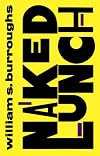
The apex of hunger & desperation for contact & understanding, Burroughs' need to communicate has spread outward in all dimensions, and folded in on itself as well, resulting in what many consider to be the first mature work of the twenty-first century. A perfectly scrutable writer if one pays attention, Burroughs is incapable of hiding his intentions with invention-- the characters & caricatures that parade through the work are both jocular & blisteringly honest, representing not on the author's open id but the horrifyingly human & animal nature of its host species. Naked to a fault, if one considers absolute awareness a fault. Not for everyone, although intended that way. Trapped in Tangiers with virtually no possibility of publication, Burroughs wrote for an audience yet to be born. The results continue to astonish.

A miscellany and as such, maybe not of interest to the passing reader. The variety of material is disconcerting-- from verbal sketch to travelogue to unmitigated logorrhea --but well worth the time of anyone who wants (or needs) to learn more about what Burroughs wanted (or needed) to achieve.

Necessary reading for the completist & scholar, but a trifle too involved in the minutiae of Burroughs' life to be of interest to the passing reader. Provides insight into the works in progress of the time ('Junky', 'Queer', 'The Yagé Letters', 'Naked Lunch') and the means by which they were assembled, correspondence being a vital component of the Beats' creative process-- perhaps moreso in Burroughs' case than any of the others.

A piercing, intensely self-analytic novelette. Again a portrait of another time, but perfectly accessible because of its emotional & intellectual honesty. Burroughs served himself well by keeping 'Queer' from publication until the mid-eighties-- complete with a new introduction, it cast an eye backward at how society, American & otherwise, was being shaped by the internal pressures of the citizens it considered its untouchables.
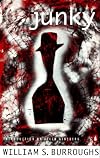
As much a port of entry for the author as for the audience, 'Junky' is the unshakable foundation of all Burroughs' later work and the beginnings of his later mythology. While the entry into the underworld may be borrowed from Jack Black, the voice is that of a younger, more intelligent Hemingway-- Hemingway minus the hubris that occluded his ear for dialogue. An immediately recognizable world, one not terribly estranged from our own; obviously the past, but not alien. Also one of the most matter-of-fact travelogues ever written about post-war America, chronicling the beginning of the modern underclass.

Fairly useful & illuminating in the context of Burroughs' first few works. Hindered toward the end by a peculiar confusion of the concept of hearsay, but otherwise a perfect read.