
Wes Jackson
Author of Becoming Native to This Place
About the Author
Wes Jackson, the president of the Land Institute in Salinas, Kansas, has become an influential voice in arguing for an agriculture that is more conservative of land and water resources. Born in 1936 on a farm in Topeka, Kansas, Jackson was subsequently trained as a biologist and botanist at Kansas show more Wesleyan and the University of Kansas, respectively. He was awarded a Doctor of Philosophy for his work in genetics by North Carolina State University in 1967. After completing his education, Jackson established an Environmental Studies program at California State University in Sacramento, where he served as a professor until 1976. In that year, he resigned from his professorship to establish the Land Institute, where he has since applied his scientific training to the breeding of a perennial wheat and to developing sustainable agricultural techniques. Through his writing, Jackson has articulated a vision of agriculture that is not only environmentally sound, but also provides a basis for the reinvigoration of rural communities. (Bowker Author Biography) show less
Works by Wes Jackson
Meeting the Expectations of the Land: Essays in Sustainable Agriculture and Stewardship (1984) 58 copies, 2 reviews
An Inconvenient Apocalypse: Environmental Collapse, Climate Crisis, and the Fate of Humanity (2022) 46 copies, 2 reviews
The Prairie Meets the Farm 1 copy
The 50-Year Farm Bill 1 copy
Associated Works
Tagged
Common Knowledge
- Birthdate
- 1936-06-15
- Gender
- male
- Organizations
- The Land Institute, Salina, Kansas
- Nationality
- USA
- Places of residence
- Kansas, USA
- Associated Place (for map)
- Kansas, USA
Members
Reviews
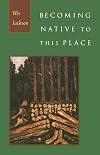
Summary: Six essays advocating agricultural practices that reflect close attention to the character of a particular place.
Wes Jackson thinks universities ought to focus their work on preparing their students for “homecomings”–not to assume that success consists in leaving home but rather becoming native to these places–fully appreciating the character of the place and conforming one’s life in that place to its character. He elaborates this idea of becoming native to one’s place show more in the six essays that make up this book.
He begins by asking a probing question. Archaeological evidence indicates that at one time over 25,000 indigenous persons lived in the boundaries of Rice County, Kansas. By 1990, only 10,400 could sustain their livelihoods there. Why this population decline? Why did so many families fail where the native peoples once thrived? Why, in a place where buffalo roamed amid native grasses could an economy based on wheat farming fail?
Jackson argues that the assumption that nature must be subdued and ignored had a lot to do with it. Farm plots laid out in squares, disregarding the location of creeks and rivers, the fencing of prairie that offered common grazing ground along with hunting led to the decimation of the buffalo, a food source rich in calories, well-adapted to the prairies. Instead of studying what worked, farmers in tandem with agricultural scientists sought to bend nature to their will. Nature would not be bent.
He offers an interesting case of the conflict between Lysenko and Vavilov, two Soviet scientists. On the science, Lysenko was wrong on many counts and power hungry as well. But he was right to listen to peasant wisdom rather than the proponents of the collective, who wrecked agriculture. Rather than the objectification and control of nature, he urges what Wendell Berry calls a “conversation with nature.” One honors water, forest animals, savanna grazers and the prairie. One pays attention to the topography of land, allowing grasses to hold the soil on slopes. Out of this “conversation,” Jackson launched the Land Institute to develop practices appropriate to the place, an approach that seeks to “mimic” the nature of the place.
More than that, he dreams of what a community might be that did this, describing the community that once was in his location. Sustainability is not just about preserving wilderness, but loving the ordinary of prairie farmland, and even our cities. This loving of place is a task for all of us, and without it, even the most wild places cannot be hoped to survive. It means paying attention to the succession of a place, how in a healthy ecosystem, whether a marsh or a forest, nothing is wasted.
He describes his find forty years programs of New Century Club, a women’s group and their discussions of local wisdom, and the gradual decline even as modern agriculture advanced, but fewer could afford to live there. From beautiful program covers, the programs declined to mimeographs on construction paper. It was evidence that the people of that place had lived closer to the land in those early years than later, with all their technical advances.
Jackson concludes with a call to a kind of ecological patriotism–of love of one’s land, of our place that doesn’t turn the clock back but uses what we know to go forward, though not as conquerors, but those who have finally learned that the land is our teacher, and if we are to care for it well, we must learn from it.
I reviewed Braiding Sweetgrass recently on the integrating of indigenous and ecological wisdom. It strikes me that Jackson is engaged in a similar project. Many argue that we cannot afford the less “efficient” approaches of Robin Wall Kimmerer, or the Land Institute, or places like Polyface Farm, or even Wendell Berry’s own farm. If Wes Jackson and these others are right, we cannot afford our current, unsustainable life, where the hidden costs of our supposed efficiency are becoming increasingly evident. The question is whether we will start learning the lessons of our place on earth while those places can still teach us? show less
Wes Jackson thinks universities ought to focus their work on preparing their students for “homecomings”–not to assume that success consists in leaving home but rather becoming native to these places–fully appreciating the character of the place and conforming one’s life in that place to its character. He elaborates this idea of becoming native to one’s place show more in the six essays that make up this book.
He begins by asking a probing question. Archaeological evidence indicates that at one time over 25,000 indigenous persons lived in the boundaries of Rice County, Kansas. By 1990, only 10,400 could sustain their livelihoods there. Why this population decline? Why did so many families fail where the native peoples once thrived? Why, in a place where buffalo roamed amid native grasses could an economy based on wheat farming fail?
Jackson argues that the assumption that nature must be subdued and ignored had a lot to do with it. Farm plots laid out in squares, disregarding the location of creeks and rivers, the fencing of prairie that offered common grazing ground along with hunting led to the decimation of the buffalo, a food source rich in calories, well-adapted to the prairies. Instead of studying what worked, farmers in tandem with agricultural scientists sought to bend nature to their will. Nature would not be bent.
He offers an interesting case of the conflict between Lysenko and Vavilov, two Soviet scientists. On the science, Lysenko was wrong on many counts and power hungry as well. But he was right to listen to peasant wisdom rather than the proponents of the collective, who wrecked agriculture. Rather than the objectification and control of nature, he urges what Wendell Berry calls a “conversation with nature.” One honors water, forest animals, savanna grazers and the prairie. One pays attention to the topography of land, allowing grasses to hold the soil on slopes. Out of this “conversation,” Jackson launched the Land Institute to develop practices appropriate to the place, an approach that seeks to “mimic” the nature of the place.
More than that, he dreams of what a community might be that did this, describing the community that once was in his location. Sustainability is not just about preserving wilderness, but loving the ordinary of prairie farmland, and even our cities. This loving of place is a task for all of us, and without it, even the most wild places cannot be hoped to survive. It means paying attention to the succession of a place, how in a healthy ecosystem, whether a marsh or a forest, nothing is wasted.
He describes his find forty years programs of New Century Club, a women’s group and their discussions of local wisdom, and the gradual decline even as modern agriculture advanced, but fewer could afford to live there. From beautiful program covers, the programs declined to mimeographs on construction paper. It was evidence that the people of that place had lived closer to the land in those early years than later, with all their technical advances.
Jackson concludes with a call to a kind of ecological patriotism–of love of one’s land, of our place that doesn’t turn the clock back but uses what we know to go forward, though not as conquerors, but those who have finally learned that the land is our teacher, and if we are to care for it well, we must learn from it.
I reviewed Braiding Sweetgrass recently on the integrating of indigenous and ecological wisdom. It strikes me that Jackson is engaged in a similar project. Many argue that we cannot afford the less “efficient” approaches of Robin Wall Kimmerer, or the Land Institute, or places like Polyface Farm, or even Wendell Berry’s own farm. If Wes Jackson and these others are right, we cannot afford our current, unsustainable life, where the hidden costs of our supposed efficiency are becoming increasingly evident. The question is whether we will start learning the lessons of our place on earth while those places can still teach us? show less
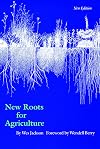
A fantastic exploration of agricultural sustainability and an in-depth critique of the current (abysmal) state of things. Jackson is a world-class authority on this topic and is leading real-world applicable research (The Land Institute) that aims to enable our food systems to become more ecologically sound. I really wish the Gates Foundations of the world would invest in efforts like this.
My criticisms of this book: (a) the author only touches upon livestock (our most sustainable food show more source) and specialty crops; (b) he never tackles the core reason we are unsustainable as a species—overpopulation (considered a moot point?); and (c) his writing has an odd 'voice'—the book is well written, but sometimes his phrasing and grammar choices muddle his message a bit. show less
My criticisms of this book: (a) the author only touches upon livestock (our most sustainable food show more source) and specialty crops; (b) he never tackles the core reason we are unsustainable as a species—overpopulation (considered a moot point?); and (c) his writing has an odd 'voice'—the book is well written, but sometimes his phrasing and grammar choices muddle his message a bit. show less

This was not a textbook for me. Rather I was resuming my college education after a 6 year hiatus. Like the compiler of this book, I was reading everything I could --- for me it was the great evolution of the social change of the Vietnam years and how the general human population started to think about science, ecology, and how we could save 'Mother Earth'. In the evolutionary sense, maybe we cannot, but we continue to learn about the things that counter destruction and slow the process. The show more text is a potpourri of quotes from Biblical to Poetry, and opinions on Human Behavior, the Environment, and Population and Food from many different sources. show less
As someone who practices a more green living arrangement with the environment around me, I can appreciate Wes Jackson's writing, "Becoming Native to This Place".
Jackson has skillfully combined history, environmentalism, philosophy, and ecology to show how we need to take better care of the environment, but he shows how we do not seem to be at a level (emotionally or generationally) to do what is needed to change the way we handle nature.
Many of the points that Jackson made were excellent. I show more agree with so many points about the cost of doing things to help nature instead of destroying it. I also agree with children getting more experience in the field so to speak. I hate to repeat what I heard growing up, but children really are our future. I do believe this book was well thought out, and completely researched to show the problems we have with what needs to be done and what happened from a historical perspective.
I will say this, it is short in pages, but long in details. There is a lot to unpack in this small book. It is harder to read because it doesn't flow as well as I liked, but it doesn't detract from wanting to continue reading. It would be a book even lovers of history would like. I would encourage others to read it. show less
Jackson has skillfully combined history, environmentalism, philosophy, and ecology to show how we need to take better care of the environment, but he shows how we do not seem to be at a level (emotionally or generationally) to do what is needed to change the way we handle nature.
Many of the points that Jackson made were excellent. I show more agree with so many points about the cost of doing things to help nature instead of destroying it. I also agree with children getting more experience in the field so to speak. I hate to repeat what I heard growing up, but children really are our future. I do believe this book was well thought out, and completely researched to show the problems we have with what needs to be done and what happened from a historical perspective.
I will say this, it is short in pages, but long in details. There is a lot to unpack in this small book. It is harder to read because it doesn't flow as well as I liked, but it doesn't detract from wanting to continue reading. It would be a book even lovers of history would like. I would encourage others to read it. show less
You May Also Like


Associated Authors
Statistics
- Works
- 20
- Also by
- 3
- Members
- 606
- Popularity
- #41,483
- Rating
- 3.7
- Reviews
- 12
- ISBNs
- 33
- Favorited
- 1