
Masanobu Fukuoka (1913–2008)
Author of The One-Straw Revolution: An Introduction to Natural Farming
About the Author
Works by Masanobu Fukuoka
The One-Straw Revolution: An Introduction to Natural Farming (1975) — Author — 1,165 copies, 23 reviews
Sowing Seeds in the Desert: Natural Farming, Global Restoration, and Ultimate Food Security (2012) 98 copies, 2 reviews
Lezioni italiane di Masanobu Fukuoka: un'introduzione alla rivoluzione del filo di paglia. (Buttate via l'orologio) (2005) 2 copies
無〈1〉神の革命 1 copy
無〈2〉無の哲学 1 copy
පිදුරැ ගහේ විප්ලවය 1 copy
Associated Works
Tagged
Common Knowledge
- Canonical name
- Fukuoka, Masanobu
- Birthdate
- 1913-02-02
- Date of death
- 2008-08-16
- Gender
- male
- Nationality
- Japan
- Birthplace
- Iyo, Shikoku, Japan
- Places of residence
- Iyo, Shikoku, Japan
- Associated Place (for map)
- Iyo, Shikoku, Japan
Members
Reviews
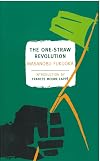
Call it Zen and the Art of Farming or a Little Green Book, Masanobu Fukuoka s manifesto about farming, eating, and the limits of human knowledge presents a radical challenge to the global systems we rely on for our food. At the same time, it is a spiritual memoir of a man whose innovative system of cultivating the earth reflects a deep faith in the wholeness and balance of the natural world. As Wendell Berry writes in his preface, the book is valuable to us because it is at once practical show more and philosophical. It is an inspiring, necessary book about agriculture because it is not just about agriculture.
Trained as a scientist, Fukuoka rejected both modern agribusiness and centuries of agricultural practice, deciding instead that the best forms of cultivation mirror nature s own laws. Over the next three decades he perfected his so-called do-nothing technique: commonsense, sustainable practices that all but eliminate the use of pesticides, fertilizer, tillage, and per haps most significantly, wasteful effort.
Whether you re a guerrilla gardener or a kitchen gardener, dedicated to slow food or simply looking to live a healthier life, you will find something here you may even be moved to start a revolution of your own. show less
Trained as a scientist, Fukuoka rejected both modern agribusiness and centuries of agricultural practice, deciding instead that the best forms of cultivation mirror nature s own laws. Over the next three decades he perfected his so-called do-nothing technique: commonsense, sustainable practices that all but eliminate the use of pesticides, fertilizer, tillage, and per haps most significantly, wasteful effort.
Whether you re a guerrilla gardener or a kitchen gardener, dedicated to slow food or simply looking to live a healthier life, you will find something here you may even be moved to start a revolution of your own. show less
Natural Way of Farming: The Theory and Practice of Green Philosophy (INTERNET ARCHIVE PDF) by Masanobu Fukuoka

Originally published in December 1975.
This was a very hard book to get through, and not as easy to read as "The Road Back to Nature", but it was one I had to finish because his beliefs are so similar to mine. He put into words, in a way that I never have been able to, exactly why I have always felt closer to God while out there digging in the dirt. Nature is a part of God! When originally designed, it was perfect. On page 214, author writes:
"A human environment cannot exist apart from show more nature, and so agriculture must be made the foundation for living…The earth is not merely soil, and the blue sky is more than just empty space. The earth is the garden of God, and the sky is where he sits. The farmer who, chewing well the grain harvested from the Lord's garden, raises his face to the heavens in gratitude, lives the best and most perfect life possible."
Fukuoka's vision is for all people to return to the garden of God to farm. It would be a way of life in which one constantly reaffirms the source of life ('life' being another name for God). This is so important because humans really have forgotten where life comes from. Young people today believe food comes from the grocery store without another thought about it.
He does explain the “natural” way to farm, but, also the fallacies of science technology: growing expenses for larger farming equipment placed on farmers and the damages it really places on their land, synthetic fertilizers, chemical herbicides and pesticides, GMO crops, etc... We are removing ourselves further from nature by destroying our lands, and removing ourselves from God! But there is hope! It is proven that land can be rehabilitated, but man has to be willing to return to the natural way of farming again.
Most of the lessons on the natural way to farm is on growing rice and barley in Japan, but one can still use the same principals to farm, or garden, or to naturally raise farm animals here in the U.S. I’m left very encouraged and motivated to get started in trying out a few ideas from this book.
Available to read FREE at Internet Archive (can download to Kindle):
https://archive.org/details/TheNaturalWayOfFarming-MasanobuFukuoka show less
This was a very hard book to get through, and not as easy to read as "The Road Back to Nature", but it was one I had to finish because his beliefs are so similar to mine. He put into words, in a way that I never have been able to, exactly why I have always felt closer to God while out there digging in the dirt. Nature is a part of God! When originally designed, it was perfect. On page 214, author writes:
"A human environment cannot exist apart from show more nature, and so agriculture must be made the foundation for living…The earth is not merely soil, and the blue sky is more than just empty space. The earth is the garden of God, and the sky is where he sits. The farmer who, chewing well the grain harvested from the Lord's garden, raises his face to the heavens in gratitude, lives the best and most perfect life possible."
Fukuoka's vision is for all people to return to the garden of God to farm. It would be a way of life in which one constantly reaffirms the source of life ('life' being another name for God). This is so important because humans really have forgotten where life comes from. Young people today believe food comes from the grocery store without another thought about it.
He does explain the “natural” way to farm, but, also the fallacies of science technology: growing expenses for larger farming equipment placed on farmers and the damages it really places on their land, synthetic fertilizers, chemical herbicides and pesticides, GMO crops, etc... We are removing ourselves further from nature by destroying our lands, and removing ourselves from God! But there is hope! It is proven that land can be rehabilitated, but man has to be willing to return to the natural way of farming again.
Most of the lessons on the natural way to farm is on growing rice and barley in Japan, but one can still use the same principals to farm, or garden, or to naturally raise farm animals here in the U.S. I’m left very encouraged and motivated to get started in trying out a few ideas from this book.
Available to read FREE at Internet Archive (can download to Kindle):
https://archive.org/details/TheNaturalWayOfFarming-MasanobuFukuoka show less
La révolution d'un seul brin de paille, une introduction à l'agriculture sauvage by Masanobu Fukuoka
Au cours des 40 dernières années Masanobu Fukuoka a témoigné avec indignation de la dégénérescence de la terre et de la société japonaise. Comme un seul homme, les japonais ont suivi le modèle américain de développement économique et industriel, abandonnant leur riche héritage de travail simple et proche de la terre. Mais M. Fukuoka était déterminé à ne pas abandonner l'agriculture traditionnelle. Il l'affina, au contraire, à tel point que sa méthode d'agriculture sauvage show more demande moins de travail et cause moins de dégâts à la nature qu'aucune autre méthode tout en maintenant les mêmes rendements à l'hectare que les paysans voisins. Dans cet ouvrage d'une profonde sensibilité et qui fait réfléchir, M.Fukuoka décrit les évènements qui l'ont conduit à développer sa méthode d'agriculture sauvage et l'impact qu'elle a eu sur la terre, lui-même, et les milliers de personnes à qui il l'a enseignée. Il décrit la méthode elle-même et pourquoi il croit qu'elle offre un modèle pratique et stable de société basée sur la simplicité et la permanence. M. Fukuoka fait preuve d'une compréhension profonde des interactions entre l'agriculture et les autres aspects de la culture. Il sent que l'agriculture sauvage a son origine dans la santé spirituelle de l'individu. Il considère que la guérison de la terre et la purification de l'esprit humain sont la même chose et propose une manière de vivre et de cultiver où ce processus puisse se réaliser. Ce livre a pour but de changer les attitudes envers la nature, l'agriculture, la nourriture, la santé physique et spirituelle. show less
The One-straw Revolution: Introduction to Natural Farming by Masanobu Fukuoka (1992) Paperback by Masanobu Fukuoka
I've been hearing about this book for the past ten years, and finally got around to giving it a read through. It was well worth it! It's on par with Schumacher's "Small is Beautiful"—both in its elegance and significance.
Fukuoka was a scientist for the first part of his life, and a simple farmer for the second part. Although it seems as though he might be an atheist, the book is quite spiritual in nature.
Our author starts the book with the proclamation of a realization he had relatively show more early in life about human life being meaningless. The rest of this book stems from this realization, and the end of the book goes into further discussion on the topic.
I can't say I ever came to an understanding about what Fukuoka meant by this. He obviously has a lot of beliefs about what is meaningful, as he navigates the world with a decisive conscience. For example, he knows that chemical fertilizers are bad, and that natural food should be cheaper than industrial food. Also, his term, "do-nothing farming" is equally misleading. I've heard a similar saying about the lazy farmer being the farmer that accomplishes his work today so that he can rest tomorrow. That's not really the commonly-held understanding of lazy, and I don't think anyone could say Fukuoka did nothing on his farm.
I think what Fukuoka's getting at here is along the same lines of efficiency in effort and labor. The image of a master craftsman comes to mind planing a block of wood—his motions use the minimal required effort to accomplish his aim, and their execution is skillful and precise.
Fukuoka's observations about food and farming truly do call for a revolution. He proposes that 100% of humans should be farmers. He proposes that, when considering the term "natural food," we would do to remember that preparing food with heat and with salt is unnatural (so of course the "natural foods" we see in grocery stores today are nothing of the sort). Fukuoka himself lived on a property without running water or electricity, and his farm was almost entirely self-sufficient in regard to calories produced.
Sometimes I feel a little depressed reading books like this—if someone could have such a clearly-articled and broadly read critique of industrial agriculture and consumer culture back in the '70s and '80s, why are we in an even worse situation today? Conversely, even if my generation is able to understand the underlying trends at work in the world today, and live our lives accordingly, what difference will it make? Sometimes this line of thinking can lead to a sense of futility.
On the other hand, grandfathers of sustainable farming such as Fukuoka have been instrumental to movements such as the one today forming around regenerative agriculture.
A note on my interpretation of "sustainability" as inspired by Fukuoka's use of the term. Sustainability has become a word that is almost meaningless today. Many have been turning to the word "regenerative," claiming that regeneration goes beyond sustainability. I find this to be an unfair and inaccurate assessment of the term. Sustainability originally was a living-systems term describing the ability of a bioregion to sustain itself indefinitely, which requires dynamism, not stasis. Proponents of the term "regenerative" claim that they're "improving" systems—but only systems that have already been degraded by human action! Actually, the net impact of regeneration is only to try to attempt to bring a system back up to a level of functioning almost as good as it was before we messed it up! In other words, true sustainability requires regeneration—not the other way around! show less
Fukuoka was a scientist for the first part of his life, and a simple farmer for the second part. Although it seems as though he might be an atheist, the book is quite spiritual in nature.
Our author starts the book with the proclamation of a realization he had relatively show more early in life about human life being meaningless. The rest of this book stems from this realization, and the end of the book goes into further discussion on the topic.
I can't say I ever came to an understanding about what Fukuoka meant by this. He obviously has a lot of beliefs about what is meaningful, as he navigates the world with a decisive conscience. For example, he knows that chemical fertilizers are bad, and that natural food should be cheaper than industrial food. Also, his term, "do-nothing farming" is equally misleading. I've heard a similar saying about the lazy farmer being the farmer that accomplishes his work today so that he can rest tomorrow. That's not really the commonly-held understanding of lazy, and I don't think anyone could say Fukuoka did nothing on his farm.
I think what Fukuoka's getting at here is along the same lines of efficiency in effort and labor. The image of a master craftsman comes to mind planing a block of wood—his motions use the minimal required effort to accomplish his aim, and their execution is skillful and precise.
Fukuoka's observations about food and farming truly do call for a revolution. He proposes that 100% of humans should be farmers. He proposes that, when considering the term "natural food," we would do to remember that preparing food with heat and with salt is unnatural (so of course the "natural foods" we see in grocery stores today are nothing of the sort). Fukuoka himself lived on a property without running water or electricity, and his farm was almost entirely self-sufficient in regard to calories produced.
Sometimes I feel a little depressed reading books like this—if someone could have such a clearly-articled and broadly read critique of industrial agriculture and consumer culture back in the '70s and '80s, why are we in an even worse situation today? Conversely, even if my generation is able to understand the underlying trends at work in the world today, and live our lives accordingly, what difference will it make? Sometimes this line of thinking can lead to a sense of futility.
On the other hand, grandfathers of sustainable farming such as Fukuoka have been instrumental to movements such as the one today forming around regenerative agriculture.
A note on my interpretation of "sustainability" as inspired by Fukuoka's use of the term. Sustainability has become a word that is almost meaningless today. Many have been turning to the word "regenerative," claiming that regeneration goes beyond sustainability. I find this to be an unfair and inaccurate assessment of the term. Sustainability originally was a living-systems term describing the ability of a bioregion to sustain itself indefinitely, which requires dynamism, not stasis. Proponents of the term "regenerative" claim that they're "improving" systems—but only systems that have already been degraded by human action! Actually, the net impact of regeneration is only to try to attempt to bring a system back up to a level of functioning almost as good as it was before we messed it up! In other words, true sustainability requires regeneration—not the other way around! show less
Lists
You May Also Like


Associated Authors
Statistics
- Works
- 13
- Also by
- 1
- Members
- 1,522
- Popularity
- #16,892
- Rating
- 4.2
- Reviews
- 30
- ISBNs
- 50
- Languages
- 9
- Favorited
- 4
