
Michael Pollan
Author of The Omnivore's Dilemma: A Natural History of Four Meals
About the Author
Michael Pollan is a contributing writer for "The New York Times Magazine" as well as a contributing editor at "Harper's" magazine. He is the author of two prize-winning books: "Second Nature: A Gardener's Education" and "A Place of My Own: The Education of an Amateur Builder." Pollan lives in show more Connecticut with his wife and son. (Publisher Provided) Michael Pollan was born in 1955 and raised on Long Island, NY. He received his B.A. in English from Bennington College in 1977 and his Masters, also in English, from Columbia University, in 1981. He is the author of Cooked: A Natural History of Transformation, as well as 5 New York Times bestselling books: Food Rules: An Eater's Manual, In Defense of Food: An Eater's Manifesto, The Omnivore's Dilemma: A Natural History of Four Meals. The Botany of Desire: A Plant's-Eye View of the World and Ho wto Change Your Mind: What the New Science of Psychedelics Teaches Us about Consciousness, Dying, Addiction, Depression, and Transcendence. (Bowker Author Biography) show less
Works by Michael Pollan
How to Change Your Mind: What the New Science of Psychedelics Teaches Us About Consciousness, Dying, Addiction, Depression, and Transcendence (2018) 2,855 copies, 81 reviews
Cooked: A Natural History of Transformation (2013) — Narrator, some editions — 1,898 copies, 58 reviews
The Botany of Desire Young Readers Edition: Our Surprising Relationship with Plants (2023) 20 copies, 1 review
Cat Treat Recipes: Homemade Cat Treats, Natural Cat Treats and How to Make Cat Treats (2010) 2 copies
Unhappy Meals [article] 1 copy
A Model Summer 1 copy
Michael Pollan Bestselling 3 Books Set - The Omnivore's Dilemma, In Defense of Food, Food Rule (2023) 1 copy
Vote for the Dinner Party 1 copy
Associated Works
Salt, Fat, Acid, Heat: Mastering the Elements of Good Cooking (2017) — Foreword, some editions — 3,593 copies, 32 reviews
The Art of Fermentation: An In-Depth Exploration of Essential Concepts and Processes from around the World (2012) — Foreword — 1,006 copies, 13 reviews
Drawdown: The Most Comprehensive Plan Ever Proposed to Reverse Global Warming (2016) — Contributor — 633 copies, 13 reviews
Food Inc.: A Participant Guide: How Industrial Food is Making Us Sicker, Fatter, and Poorer-And What You Can Do About It (2009) — Contributor — 542 copies, 3 reviews
Brilliant Green: The Surprising History and Science of Plant Intelligence (2013) — Foreword, some editions — 269 copies, 8 reviews
This Is My Best: Great Writers Share Their Favorite Work (2004) — Contributor — 175 copies, 3 reviews
Fantastic Fungi: Expanding Consciousness, Alternative Healing, Environmental Impact // Official Book of Smash Hit Documentary (2019) — Contributor — 140 copies, 1 review
A Fork in the Road: Tales of Food, Pleasure, and Discovery on the Road (2013) — Contributor — 116 copies, 2 reviews
My Favorite Plant: Writers and Gardeners on the Plants They Love (1998) — Contributor — 100 copies, 1 review
Old Growth: The Best Writing about Trees from Orion Magazine (2021) — Contributor — 16 copies, 1 review
Tagged
Common Knowledge
- Canonical name
- Pollan, Michael
- Legal name
- Pollan, Michael Kevin
- Other names
- POLLAN, Michael
- Birthdate
- 1955-02-06
- Gender
- male
- Education
- Bennington College (B.A. | 1977)
University of Oxford (Mansfield College)
Columbia University (M.A. | English | 1981) - Occupations
- journalist
journalism professor
activist
producer - Organizations
- Harper's Magazine
The New York Times Magazine
University of California, Berkeley Graduate School of Journalism - Awards and honors
- Knight Professor of Journalism (Berkeley)
James Beard Award (2007)
Borders Original Voices Award for Botany of Desire (2001)
Reuters/World Conservation Union Global Award in Environmental Journalism
Genesis Award from the American Humane Association
Orwell Award (2010) (show all 8)
Nierenberg Prize (2014)
Washington University International Humanities Medal (2008) - Agent
- Ann Godoff
- Relationships
- Fox, Michael J. (brother-in-law)
Pollan, Stephen M. (father)
Pollan, Corky (mother)
Belzer, Judith (wife)
Pollan, Tracy (sister) - Short biography
- Michale Pollan lives in the Bay Area with his wife, the painter Judith Belzer, and their son, Isaac.
- Nationality
- USA
- Birthplace
- Long Island, New York, USA
- Places of residence
- Berkeley, California, USA
Manhattan, New York, New York, USA
Cornwall, Connecticut, USA - Associated Place (for map)
- USA
Members
Reviews
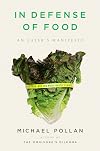
What happened to common sense when it comes to food and eating? Isn't it funny that in a day and age where people seem obsessed with how to eat healthily by focusing on nutrients, food-related scourges like obesity, heart diseases, stroke and else are hitting up the roof? Well, why the irony?
Michael Pollan, journalist (mainly for The New York Times Magazine) points straight at the problem: nutritionism itself on one side, and its conflagration with the food industry on the other. And gosh! show more What a slap his 'In Defense of Food' is! Common sense at its best, but so much needed!
About nutritionism, his main target here, he is bluntly harsh but so right on spot:
'The first thing to understand about nutritionism is that it is not the same thing as nutrition. As the "-ism" suggests, it is not a scientific subject but an ideology.'
And indeed it is, and worryingly more than that. As he outlines brilliantly, by reducing food to its nutrients and chemicals components, and thus taking it out of a whole context (meals, diets, lifestyles, cultures, individual metabolisms etc.) nutritionism is not only guilty of bad reductionism but, it can also be clearly harmful -e.g. the saga of margarine vs butter is a case in point, but sadly there are many more!
Relevant, he also shoot his guns at the food industry and its offspring, the so-called Western diet that is, processed food way too rich in calories and, again ironically, mostly depleted in nutrients; with all the obvious consequences for our health:
'A diet based on quantity rather than quality has ushered a new creature onto the world stage: the human being who manages to be both overfed and undernourished.'
'Overfed and undernourished'. Here we are! So what happened to common sense? And, most importantly in our societies completely ruled and taken over by the so-called experts nutritionists on the one hand and the food industry and supermarkets on the other, how can we escape and as best as can be eat proper and healthy food? His last chapter addresses the question, and resounds with sound advices without being dogmatic; which helps making this 'manifesto' a must read for anyone caring a bit about what we put in our plates (and bodies!).
'Eat food. Not too much. Mostly plants.' Common sense, right? Well, common sense being anything but common... Here's a great read! show less
Michael Pollan, journalist (mainly for The New York Times Magazine) points straight at the problem: nutritionism itself on one side, and its conflagration with the food industry on the other. And gosh! show more What a slap his 'In Defense of Food' is! Common sense at its best, but so much needed!
About nutritionism, his main target here, he is bluntly harsh but so right on spot:
'The first thing to understand about nutritionism is that it is not the same thing as nutrition. As the "-ism" suggests, it is not a scientific subject but an ideology.'
And indeed it is, and worryingly more than that. As he outlines brilliantly, by reducing food to its nutrients and chemicals components, and thus taking it out of a whole context (meals, diets, lifestyles, cultures, individual metabolisms etc.) nutritionism is not only guilty of bad reductionism but, it can also be clearly harmful -e.g. the saga of margarine vs butter is a case in point, but sadly there are many more!
Relevant, he also shoot his guns at the food industry and its offspring, the so-called Western diet that is, processed food way too rich in calories and, again ironically, mostly depleted in nutrients; with all the obvious consequences for our health:
'A diet based on quantity rather than quality has ushered a new creature onto the world stage: the human being who manages to be both overfed and undernourished.'
'Overfed and undernourished'. Here we are! So what happened to common sense? And, most importantly in our societies completely ruled and taken over by the so-called experts nutritionists on the one hand and the food industry and supermarkets on the other, how can we escape and as best as can be eat proper and healthy food? His last chapter addresses the question, and resounds with sound advices without being dogmatic; which helps making this 'manifesto' a must read for anyone caring a bit about what we put in our plates (and bodies!).
'Eat food. Not too much. Mostly plants.' Common sense, right? Well, common sense being anything but common... Here's a great read! show less
How to Change Your Mind: What the New Science of Psychedelics Teaches Us About Consciousness, Dying, Addiction, Depression, and Transcendence by Michael Pollan
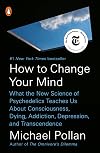
I read this book after seeing Michael Pollan on Sixty Minutes. In a word: riveting. Pollan wrote this as an investigative journalist. He started with the science which took him quite a distance. But because psychedelics are not exactly mainstream yet, he soon dove into a world about as far off the grid as you can get.
The science portion lays the groundwork for why psychedelics are so interesting to scientists who study the brain and the mind. A series of brain scan studies revealed how show more psychedelics shut down the default mode network (DMN) in the brain. This is the same thing that happens when adept spiritualists meditate. The experience is one of ego dissolution and universal love. So you can either spend forty years in a monastic tradition learning the right way to meditate, or you can use psychedelics and get there in a few days.
Then he went the distance to experience each of the three psychedelic compounds with the longest traditions and best results. He sought healers and other guides for a direct experience. That's where he went off grid. None of these people advertise, but they do have friends and past clients who will give recommendations.
Pollan tells a great story. His descriptions of these deep experiences are well worth the read. He even works in some humor in places. It turns out kids don't have a functioning DMN. In essence, children are tripping all the time. No wonder they seem like ET aliens. show less
The science portion lays the groundwork for why psychedelics are so interesting to scientists who study the brain and the mind. A series of brain scan studies revealed how show more psychedelics shut down the default mode network (DMN) in the brain. This is the same thing that happens when adept spiritualists meditate. The experience is one of ego dissolution and universal love. So you can either spend forty years in a monastic tradition learning the right way to meditate, or you can use psychedelics and get there in a few days.
Then he went the distance to experience each of the three psychedelic compounds with the longest traditions and best results. He sought healers and other guides for a direct experience. That's where he went off grid. None of these people advertise, but they do have friends and past clients who will give recommendations.
Pollan tells a great story. His descriptions of these deep experiences are well worth the read. He even works in some humor in places. It turns out kids don't have a functioning DMN. In essence, children are tripping all the time. No wonder they seem like ET aliens. show less
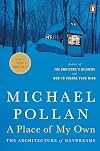
I first came across the work of Michael Pollan while a student at the Farm School, in the Fall of 2008. “The Omnivore’s Dilemma” was one of our assigned readings, and I remember reading this text late into the night up in my little loft in the dormitory. Pollan goes about his journalism with an often-comical amateurism (I regularly find myself laughing as I read his prose). And yet, with his Zen “beginner’s mind” and poetic attention to detail, as well as viscously restrained show more editing (all of his books span a tightly curated quiver of topics, and are never more than a few hundred pages in length), Pollan always manages to get to the depth at which true meaning can be created and explored.
While reading Tedd Benson’s “Timberframe” I kept coming across quotes from a mysterious Pollan text: “A Place of My Own.” “But isn’t Pollan a food writer?” I thought to myself. My second book I read from Pollan was his recent text on psychedelics, “How to Change Your Mind.” I think of him as the foodie Berkeley type (I happen to have run into him last time I was at the Berkeley farmer’s market); what was he doing writing about architecture?
It turns out that Pollan’s second book, published in 1997, reveals an entirely different man (or at least a man in an entirely different context) then we find him in today. Apparently Pollan, his wife, and son, spent quite some time (more than a decade) living in Northwestern Connecticut. Being a ruddy New Englander myself, this rather raises my regard of him (until I think remember that he, for some reason, still resides in Berkeley—even while supposedly teaching at Harvard).
For a couple of years now, I’ve been daydreaming about building a sauna. Two winters ago I read a book on sauna construction. I live on land that is “in the family,” so to say, so I have enough trust in my tenure to consider building something. The place also is an open timber frame spanning three generations; so Pollan’s concept of “a place of my own” sounds extremely appealing.
During this time of coronavirus, I feel both a strong sense of nostalgia, as well as a sense of somehow being outside of my life. Given this coincidence of sentiments, I’ve been gravitating towards books like this one, books that bring us into ourselves while bringing us in contact with the tangible, the commonplace.
This is a book about Pollan going through the two-and-a-half-year-long process of building himself a writer’s cabin.
From the beginning, Pollan goes about this in a very different way than I would. Pollan says the only thing his father ever built was a cedar closet, during the construction of which, he happened to nail his toolbox back behind the paneling. In contrast, my father timber-framed the house I grew up in, and I’ve spent much of my life in contact with one form or another of craft.
So to come around to the first surprise: Pollan hired an architect to come up with a plan for his cabin! Although I intended to become an architect for some stretch of time in childhood (I still retain the graph-paper blueprints I made of glass dome houses), I’ve had effectively zero contact with them in my adult life. We recently constructed a substantial porch on my current home, and our contractor drew up the blueprint, not an architect. I can appreciate the importance of design process (I would consider myself a permaculturist), and I can see the ways that working with an architect enabled Pollan to achieve something he wouldn’t have been able to on his own.
The next surprise: he hires a contractor to work with him! This also ends up being a wise decision for Pollan, as his contractor serves as a mentor.
In the new foreword, composed in 2010, Pollan describes his journalism as muddling through the relationship between nature and culture. This is an intersection close to my heart. In this book, Pollan has somehow been able to explore the exceedingly obtuse history of architecture and private space in a text that is both tactile and accessible. With writing this good, I feel as though I could almost read anything Pollan decides to write about. He is likely the best non-fiction writer of which I’m aware.
By no means is this book dated. In many ways, it speaks to more fundamental truths than his writing on food and psychedelics. If you’re looking for a meditative reflection on space, the built environment, and the way that this all relates to our humanity and sensory experience, this book will delight. show less
While reading Tedd Benson’s “Timberframe” I kept coming across quotes from a mysterious Pollan text: “A Place of My Own.” “But isn’t Pollan a food writer?” I thought to myself. My second book I read from Pollan was his recent text on psychedelics, “How to Change Your Mind.” I think of him as the foodie Berkeley type (I happen to have run into him last time I was at the Berkeley farmer’s market); what was he doing writing about architecture?
It turns out that Pollan’s second book, published in 1997, reveals an entirely different man (or at least a man in an entirely different context) then we find him in today. Apparently Pollan, his wife, and son, spent quite some time (more than a decade) living in Northwestern Connecticut. Being a ruddy New Englander myself, this rather raises my regard of him (until I think remember that he, for some reason, still resides in Berkeley—even while supposedly teaching at Harvard).
For a couple of years now, I’ve been daydreaming about building a sauna. Two winters ago I read a book on sauna construction. I live on land that is “in the family,” so to say, so I have enough trust in my tenure to consider building something. The place also is an open timber frame spanning three generations; so Pollan’s concept of “a place of my own” sounds extremely appealing.
During this time of coronavirus, I feel both a strong sense of nostalgia, as well as a sense of somehow being outside of my life. Given this coincidence of sentiments, I’ve been gravitating towards books like this one, books that bring us into ourselves while bringing us in contact with the tangible, the commonplace.
This is a book about Pollan going through the two-and-a-half-year-long process of building himself a writer’s cabin.
From the beginning, Pollan goes about this in a very different way than I would. Pollan says the only thing his father ever built was a cedar closet, during the construction of which, he happened to nail his toolbox back behind the paneling. In contrast, my father timber-framed the house I grew up in, and I’ve spent much of my life in contact with one form or another of craft.
So to come around to the first surprise: Pollan hired an architect to come up with a plan for his cabin! Although I intended to become an architect for some stretch of time in childhood (I still retain the graph-paper blueprints I made of glass dome houses), I’ve had effectively zero contact with them in my adult life. We recently constructed a substantial porch on my current home, and our contractor drew up the blueprint, not an architect. I can appreciate the importance of design process (I would consider myself a permaculturist), and I can see the ways that working with an architect enabled Pollan to achieve something he wouldn’t have been able to on his own.
The next surprise: he hires a contractor to work with him! This also ends up being a wise decision for Pollan, as his contractor serves as a mentor.
In the new foreword, composed in 2010, Pollan describes his journalism as muddling through the relationship between nature and culture. This is an intersection close to my heart. In this book, Pollan has somehow been able to explore the exceedingly obtuse history of architecture and private space in a text that is both tactile and accessible. With writing this good, I feel as though I could almost read anything Pollan decides to write about. He is likely the best non-fiction writer of which I’m aware.
By no means is this book dated. In many ways, it speaks to more fundamental truths than his writing on food and psychedelics. If you’re looking for a meditative reflection on space, the built environment, and the way that this all relates to our humanity and sensory experience, this book will delight. show less
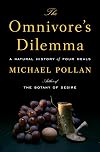
Brilliantly researched, structured, and written, this book's greatest strength is bringing a personal and emotional perspective to what could have been a very dry and preachy topic. Chock full of good quotes and strongly worded points, this book about food politics manages heart and even suspense in the bargain. Highly recommended to anyone who eats.
Lists
Favourite Books (1)
Unread books (1)
Reading LIst (1)
Read These Too (1)
Nature Writing (1)
Carole's List (3)
Food Memoirs (2)
Seeking the Soul (2)
el (1)
To Read (1)
Big tags (1)
. (1)
Awards


You May Also Like


Associated Authors
Statistics
- Works
- 34
- Also by
- 33
- Members
- 42,835
- Popularity
- #396
- Rating
- 4.1
- Reviews
- 1,126
- ISBNs
- 316
- Languages
- 19
- Favorited
- 112
