

Harold McGee
Author of On Food and Cooking: The Science and Lore of the Kitchen
About the Author
Harold McGee writes about the chemistry of food and cooking, and the science of everyday life. He has worked alongside some of world's most innovative chefs, including Thomas Keller and Heston Blumenthal. He lives with his family in California. (Publisher Provided)
Works by Harold McGee
Keys to Good Cooking: A Guide to Making the Best of Foods and Recipes (2010) — Author — 493 copies, 5 reviews
Associated Works
Tagged
Common Knowledge
- Birthdate
- 1951-10-03
- Gender
- male
- Education
- California Institute of Technology
Yale University - Occupations
- columnist
author - Organizations
- Yale University
The New York Times - Nationality
- USA
- Places of residence
- Cambridge, Massachusetts, USA
- Associated Place (for map)
- Massachusetts, USA
Members
Reviews
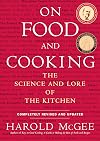
When I want to understand the muscle fiber structure of octopus, or learn about the history and definition of pumpernickel bread, or figure out how the qualities of corn syrup differ from that of honey, I turn to Harold McGee's On Food and Cooking. This is an impressively extensive reference book of ingredients, cooking techniques, food history, and food science. The information is grouped in chapters such as Milk and Dairy Products, Meat, and Edible Plants, with a nice chemistry primer show more covering atoms, molecules and energy at the end. A staggering amount of information is packed into each chapter ranging from interesting facts, history and detailed descriptions to excellent illustrations.
McGee dedicates 68 pages to eggs, covering such topics as how a hen makes an egg, why yolks sometimes turn green when cooked, the eight different proteins that make up an egg white along with their natural function and culinary properties (did you know ovalbumin is 54% of the total protein in albumen and it sets when heated to 180˚F?), plus, a silly cook's joke about cooking eggs on a spit from book printed in the 1400s, and fourteen pages on egg foams. Whew! If you have any tendencies toward research, you will be lost in the pages from the moment you open the cover. show less
McGee dedicates 68 pages to eggs, covering such topics as how a hen makes an egg, why yolks sometimes turn green when cooked, the eight different proteins that make up an egg white along with their natural function and culinary properties (did you know ovalbumin is 54% of the total protein in albumen and it sets when heated to 180˚F?), plus, a silly cook's joke about cooking eggs on a spit from book printed in the 1400s, and fourteen pages on egg foams. Whew! If you have any tendencies toward research, you will be lost in the pages from the moment you open the cover. show less
It is not a cookbook, but rather the context for all cookbooks: a stupendous compendium of how food -- every type of food -- works. It is heavy on chemistry (and its closing pages are a chemistry primer I wish I'd had in high school; read this first), but also patient explanations that a layperson / foodie will like: What is emulsification? Why do so many foods turn brown on exposure to air? How does the Maillard reaction work, and why is it the greatest thing to hit the culinary art since show more well before sliced bread? This is a reference book to be consulted often -- but I read it cover to cover, and enjoyed it lots. show less
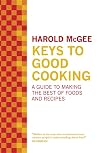
I make no bones about it, I regard McGee as a culinary demigod. For years I have been in awe of the scholarship that informs On Food and Cooking.
His new publication is a distillation of that wisdom, applied to the practicalities of cooking just about anything (and that includes selecting and storage of produce). Of course I already know some of it, but not always the scientific explanations. And there's plenty that's new to me. This book will help you get the best out of a recipe, or show more improve one that doesn't quite work. Food for thought! show less
His new publication is a distillation of that wisdom, applied to the practicalities of cooking just about anything (and that includes selecting and storage of produce). Of course I already know some of it, but not always the scientific explanations. And there's plenty that's new to me. This book will help you get the best out of a recipe, or show more improve one that doesn't quite work. Food for thought! show less
I like to think that, while I don't know everything, I do know where to look it up. And this book is where I turn to most often: it tells me which fruit ripen faster in a paper bag (thank you, ethylene!), whether or not to refrigerate apples (wisdom which is trumped by my wife's preference), and what the bubbles in bread dough come from (in language, with pictures, that even my kids understand).
Advances in the state of the art may render some of the information out of date, but it will be a show more long time before it's all put together between two covers that make me want to throw out my McGee. show less
Advances in the state of the art may render some of the information out of date, but it will be a show more long time before it's all put together between two covers that make me want to throw out my McGee. show less
Lists
Awards


You May Also Like


Associated Authors
Statistics
- Works
- 5
- Also by
- 5
- Members
- 5,275
- Popularity
- #4,721
- Rating
- 4.5
- Reviews
- 54
- ISBNs
- 57
- Languages
- 6
- Favorited
- 12