
Alan Davidson (1) (1924–2003)
Author of The Oxford Companion to Food
For other authors named Alan Davidson, see the disambiguation page.
About the Author
Image credit: By Praemium Erasmianum Foundation - Sent via email by Praemium Erasmianum Foundation, CC BY-SA 4.0, https://commons.wikimedia.org/w/index.php?curid=45575334
Works by Alan Davidson
Index to the Proceedings of the Oxford Symposium, 1981-94 (Proceedings of the Oxford Symposium on Food and Cookery) (1996) 4 copies
Petits Propos Culinaires 01 — Editor — 3 copies
Oxford Symposium 1983. Food in Motion. The Migration of Foodstuffs and Cookery Techniques. Proceedings [Vol 1] (1998) 3 copies
Petits propos culinaires 50 — Editor — 2 copies
Petits Propos Culinaires 30 — Editor — 2 copies
Petits Propos Culinaires 36 — Editor — 2 copies
Petits Propos Culinaires 02 — Editor — 2 copies
Petits Propos Culinaires 28 — Editor — 2 copies
Petits Propos Culinaires 47 — Editor — 1 copy
Petits Propos Culinaires 49 — Editor — 1 copy
Petits Propos Culinaires 48 — Editor — 1 copy
Petits Propos Culinaires 42 — Editor — 1 copy
Petits Propos Culinaires 46 — Editor — 1 copy
Petits Propos Culinaires 45 — Editor — 1 copy
Petits Propos Culinaires 44 — Editor — 1 copy
Petits Propos Culinaires 43 — Editor — 1 copy
Petits Propos Culinaires 40 — Editor — 1 copy
Petits Propos Culinaires 39 — Editor — 1 copy
Petits Propos Culinaires 51 — Editor — 1 copy
Petits Propos Culinaires 62 — Editor — 1 copy
Petits Propos Culinaires 52 — Editor — 1 copy
Petits Propos Culinaires 53 — Editor — 1 copy
Petits Propos Culinaires 54 — Editor — 1 copy
Petits Propos Culinaires 55 — Editor — 1 copy
Petits Propos Culinaires 56 — Editor — 1 copy
Petits Propos Culinaires 57 — Editor — 1 copy
Petits Propos Culinaires 58 — Editor — 1 copy
Petits Propos Culinaires 59 — Editor — 1 copy
Petits Propos Culinaires 60 — Editor — 1 copy
Petits Propos Culinaires 61 — Editor — 1 copy
Petits Propos Culinaires 63 — Editor — 1 copy
Petits Propos Culinaires 69 1 copy
Petits Propos Culinaires 38 — Editor — 1 copy
Petits Propos Culinaires 23 — Editor — 1 copy
Petits Propos Culinaires 37 — Editor — 1 copy
Petits Propos Culinaires 15 — Editor — 1 copy
Petits Propos Culinaires #1-82, 1979-2007. Essays and Notes on Food, Cookery and Cookery Books. 1 copy
Oxford Symposium 1983. Food in Motion. The Migration of Foodstuffs and Cookery Techniques. Proceedings. Volume II (1983) 1 copy
Petits Propos Culinaires 03 — Editor — 1 copy
Petits Propos Culinaires 04 — Editor — 1 copy
Petits Propos Culinaires 06 — Editor — 1 copy
Petits Propos Culinaires 07 — Editor — 1 copy
Petits Propos Culinaires 08 — Editor — 1 copy
Petits Propos Culinaires 10 — Editor — 1 copy
Petits Propos Culinaires 11 — Editor — 1 copy
Petits Propos Culinaires 12 — Editor — 1 copy
Petits Propos Culinaires 13 — Editor — 1 copy
Petits Propos Culinaires 14 — Editor — 1 copy
Petits Propos Culinaires 16 — Editor — 1 copy
Petits Propos Culinaires 35 — Editor — 1 copy
Petits Propos Culinaires 18 — Editor — 1 copy
Petits Propos Culinaires 19 — Editor — 1 copy
Petits Propos Culinaires 21 — Editor — 1 copy
Petits Propos Culinaires 22 — Editor — 1 copy
Petits Propos Culinaires 24 — Editor — 1 copy
Petits Propos Culinaires 25 — Editor — 1 copy
Petits Propos Culinaires 26 — Editor — 1 copy
Petits Propos Culinaires 27 — Editor — 1 copy
Petits Propos Culinaires 29 — Editor — 1 copy
Petits Propos Culinaires 31 — Editor — 1 copy
Petits Propos Culinaires 32 — Editor — 1 copy
Petits Propos Culinaires 33 — Editor — 1 copy
Petits Propos Culinaires 34 — Editor — 1 copy
Marmalade 1 copy
Associated Works
On Food and Cooking: The Science and Lore of the Kitchen (1984) — Foreword, some editions — 4,119 copies, 45 reviews
Tagged
Common Knowledge
- Legal name
- Davidson, Alan Eaton
- Birthdate
- 1924-03-30
- Date of death
- 2003-12-02
- Gender
- male
- Education
- Leeds Grammar School
University of Oxford (Queen's College) - Occupations
- diplomat
- Nationality
- UK
- Associated Place (for map)
- UK
Members
Reviews
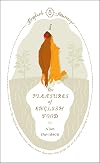
1) I read this only late at night, after all meals of the day had been taken, but I suspect reading it before meals would be a great aid to dieters as an appetite suppressant. (Those on calorie-controlled diets living in the British Isles, though, may because of habituation find it less effective and dieters from Iceland accustomed to eating with gusto sheep's eyeballs might experience a paradoxical effect.)
2) Davidson has interesting accounts of the origins and evolution of traditional show more English dishes and ways of cooking them. He also provides some, though not enough for my taste, information on the social history and cultural connotations of British eating habits.
3) Some of the entries (invariably ones in which the ingredients of a dish aren't mentioned) are fascinating. The discussion of 'banquet' not only suggests a question for a pub quiz but skirts the stuff of domestic anthropology whilst serving as reminder that an aristocrat can indulge in vulgar display as obviously and heartily as a footballer.
4) And it was over 'banquet' that I lingered longest. There was a time when the host of a feast would before the pudding lead his guests out of the dining hall, and 'one can imagine the merriment with which [they] would file along a corridor . . . finally emerging from a small circular staircase onto the roof, enjoying a panorama of the surrounding countryside' before entering the banquet room.' Perhaps I'm constitutionally incapable of merriment, but all I can imagine is the misery of wandering down long cold corridors and up a stone spiral staircase after a heavy meal and of having one's silks and velvets sodden by the British rain which would of course render that panorama a grey blur. (Even more confounding, there was later a craze for contructing banquet rooms of twigs. Outdoors. Next to a fountain.)
5) An all-purpose traditional English recipe: Make two pie crusts with flour, water, and suet. Into one of them load chopped meat, suet, currants, orange peel, lemon rind, cinnamon, and nutmeg. Cover with other crust; into a hole in the centre of it pour the broth you have made with offal, which will when cooked act as gelatin and hence turn the pie into a jelly.
For dessert, simply mince the meat fine and assemble as above, adding sugar and omitting the broth. (For a 21st-century touch, dump several cupfuls of cream over cooked pie. On no account add sugar to or whip the cream; doing the former presents the danger of overwhelming the delicate suety undertones and doing the latter would make the crust insufficiently soggy.)
6) The title of the book is not a tongue-in-cheek one.
7) Davidson is knowledgeable and perversely enthusiastic about the subject and the book is except for the food quite enjoyable;h
8) hence the book is worth keeping an eye out for even though one phrase in it says all you think you need , but don't in the event want, to know about English cookery: [of the inedible fish heads poking out around the circumference of stargazey pie] '. . . the only valid reason for the pie is an aesthetic one.' show less
2) Davidson has interesting accounts of the origins and evolution of traditional show more English dishes and ways of cooking them. He also provides some, though not enough for my taste, information on the social history and cultural connotations of British eating habits.
3) Some of the entries (invariably ones in which the ingredients of a dish aren't mentioned) are fascinating. The discussion of 'banquet' not only suggests a question for a pub quiz but skirts the stuff of domestic anthropology whilst serving as reminder that an aristocrat can indulge in vulgar display as obviously and heartily as a footballer.
4) And it was over 'banquet' that I lingered longest. There was a time when the host of a feast would before the pudding lead his guests out of the dining hall, and 'one can imagine the merriment with which [they] would file along a corridor . . . finally emerging from a small circular staircase onto the roof, enjoying a panorama of the surrounding countryside' before entering the banquet room.' Perhaps I'm constitutionally incapable of merriment, but all I can imagine is the misery of wandering down long cold corridors and up a stone spiral staircase after a heavy meal and of having one's silks and velvets sodden by the British rain which would of course render that panorama a grey blur. (Even more confounding, there was later a craze for contructing banquet rooms of twigs. Outdoors. Next to a fountain.)
5) An all-purpose traditional English recipe: Make two pie crusts with flour, water, and suet. Into one of them load chopped meat, suet, currants, orange peel, lemon rind, cinnamon, and nutmeg. Cover with other crust; into a hole in the centre of it pour the broth you have made with offal, which will when cooked act as gelatin and hence turn the pie into a jelly.
For dessert, simply mince the meat fine and assemble as above, adding sugar and omitting the broth. (For a 21st-century touch, dump several cupfuls of cream over cooked pie. On no account add sugar to or whip the cream; doing the former presents the danger of overwhelming the delicate suety undertones and doing the latter would make the crust insufficiently soggy.)
6) The title of the book is not a tongue-in-cheek one.
7) Davidson is knowledgeable and perversely enthusiastic about the subject and the book is except for the food quite enjoyable;h
8) hence the book is worth keeping an eye out for even though one phrase in it says all you think you need , but don't in the event want, to know about English cookery: [of the inedible fish heads poking out around the circumference of stargazey pie] '. . . the only valid reason for the pie is an aesthetic one.' show less

I found this at the library and renewed it to the max, and then decided I need to own it. It helped to find a really cheap copy in good condition. This is not your typical kitchen decor book, though the pictures sometimes echo what I'd want in a kitchen. This is more the sociology of the cooking room, with a survey across the globe. It links features with the functionality which each culture requires. Great photos.

This August, 1992 edition of Petit Propos Culinaires, a scholarly international journal on food, food history, cookery and cookery books contains a very insightful tribute and obituary of M.F.K. Fisher, who died in June, 1992. Alan Davidson says"...although food was the main theme of many of [Fisher's books] it was at most the core and never the whole; indeed much of her writing was of a scope so broad that one could best describe it as being about life.", and he quotes Elgy Gillespie who show more said "to label MFK as 'a cookery writer would be like calling Sir Richard Burton a travel writer'". pp. 13-14. show less
Wide-ranging, idiosyncratic, endlessly appetizing... and very British; it does not contain the term "bologna."
Lists
Awards


You May Also Like


Associated Authors
Statistics
- Works
- 90
- Also by
- 5
- Members
- 1,860
- Popularity
- #13,837
- Rating
- 4.5
- Reviews
- 20
- ISBNs
- 137
- Languages
- 6
- Favorited
- 1