Basically a Young Adult/queer-romance novel tricked out with metafictional apparatus. I enjoyed the apparatus but raced through the novel itself with increasing impatience: the characters (only two) are pure cardboard and the prose is overheated. Full of detailed descriptions of Taiwanese food, though, so if that's your bag you may enjoy it.

This has an intriguing premise (a series of letters from a dead woman to the man she loved), but eventually became repetitive and implausible.
As I wrote in my review, this is a bad book, plain and simple, and should not have been published in its present form.
https://languagehat.com/travelling-heroes/
https://languagehat.com/travelling-heroes/
I loved this book when I first read it decades ago; on rereading it in 2023, I found myself increasingly irritated by the ridiculous characters and insufficient understanding of what Russia and Russians are like (apart from what could be gleaned from Baedeker, and even there the street names and geography are often confused). I still like her style, but I consider this another in a long series of novels that use Russia as a handy source of exoticism.

Man, I didn't like this book at all -- I had to give up after the first section. It felt like I was reading the ravings of a coked-up maniac who wanted to tell you everything that occurred to them when wandering around looking at random crap. I'm not giving it a star rating because people I respect love this book, and it was voted best book of the 2000-2020 period by a panel of Russian experts, so I figure the problem is with me, but I'm leaving this review so that if anyone else finds the book unreadable they'll know they have company.
One of the best movie books I've read. Yes, Brody is perhaps overly sensitive to, or at least loquacious about, Godard's antisemitism, but that's a minor irritant -- his discussions of the movies are invariably illuminating and well-informed, and even when you disagree with his judgments he gives you a lot to think about. Anybody interested in Godard should immerse themselves in this book.
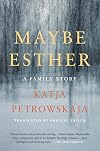
I wound up disliking this book intensely, but I'm not going to give it a star rating because I'm pretty sure the fault lies with me rather than Petrowskaja, given the fairly universal raves for the book. I am, however, going to leave a review for the benefit of those who might feel as I do, who deserve to know what they're getting into.
Petrowskaja is one of those people who see meaning in absolutely everything and insist on telling you all about it in great detail. Nothing is ever just a coincidence. A random example: "In Linz, I ask for the bus to Mauthausen at the central bus station. Sure enough, it's bus number 360 to Mauthausen, a circle around the world." She goes on about how this confirms she's on the right path: "I'm moving in a circle. It would also prove that I'm still at the beginning of all journeys, but I continue calculating..." This goes on for a paragraph, and I just keep thinking "Why are you telling me all this? Who cares?" It's like someone telling you in detail about their dreams. It reminds me of those long screeds schizophrenics leave on telephone poles explaining how everything is connected to everything else.
I realize this is a personal reaction, but I doubt I'm the only potential reader who is impatient with that sort of self-absorbed rambling, so if you find yourself nodding in agreement with my reaction, trust me, you won't like the book. I did enjoy the parts about Kiev, though. She writes well when she's not writing about the inside of her head.
Petrowskaja is one of those people who see meaning in absolutely everything and insist on telling you all about it in great detail. Nothing is ever just a coincidence. A random example: "In Linz, I ask for the bus to Mauthausen at the central bus station. Sure enough, it's bus number 360 to Mauthausen, a circle around the world." She goes on about how this confirms she's on the right path: "I'm moving in a circle. It would also prove that I'm still at the beginning of all journeys, but I continue calculating..." This goes on for a paragraph, and I just keep thinking "Why are you telling me all this? Who cares?" It's like someone telling you in detail about their dreams. It reminds me of those long screeds schizophrenics leave on telephone poles explaining how everything is connected to everything else.
I realize this is a personal reaction, but I doubt I'm the only potential reader who is impatient with that sort of self-absorbed rambling, so if you find yourself nodding in agreement with my reaction, trust me, you won't like the book. I did enjoy the parts about Kiev, though. She writes well when she's not writing about the inside of her head.

I haven't been so disappointed by a great writer's novel since reading Dostoevsky's The Adolescent. (Of course, D went on to write The Brothers Karamazov, whereas Sokolov hasn't written anything of any length since.) Of course it's well written on a sentence-by-sentence basis -- it's Sokolov, after all -- but otherwise it's Candy crossed with fanfic and the Marquis de Sade, all drenched in a pompous mock-19th-century style that quickly wears out its welcome. I gather Sokolov had decided literature was meaningless and the Author was Dead, or something of the sort, but the honest response to that revelation would have been to stop writing, not to turn out something worthy only of the occasional knowing snigger.

The Viaz'ma Catastrophe, 1941: The Red Army's Disastrous Stand Against Operation Typhoon by Lev Lopukhovsky
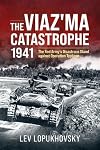
I wouldn't know how to give a star rating to this book. If you're especially interested in this particular episode of the war, with a drive to understand exactly who was doing what at every hour of every day, and are eager to read long transcriptions of phone conversations, excerpts from memoirs, etc. etc., it's definitely five stars and a must-read. But I can't imagine many people have that level of interest, and for someone like me, who is interested in the war and has read fairly detailed histories like Erickson's Road to Stalingrad and Stahel's Kiev 1941, it's way, way, way more detail than I need -- I wound up skipping the vast bulk of it. The final chapter was impressive and moving, though; this guy did a hell of a lot of work to try to find out what happened to his father, and he's properly outraged over the continuing refusal of official Russia to come to terms with the disastrous Soviet failures of WWII.
The Imperative of Reliability: Russian Prose on the Eve of the Novel, 1820s-1850s (Northwestern University Press Studies in Russian Literature and Theory) by Victoria Somoff
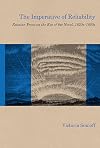
Not a very good book, I'm afraid. I was excited about it because she's discussing a period I'm very interested in and nobody talks about much, but it turns out she's more interested in her theory than in the actual history -- for one thing, she pretends there were no Russian novels before the 1850s, which is absurd, there were a bunch of them in the 18th century and some fine ones in the early 19th. She has some interesting things to say, but it should have been an article, not a book.
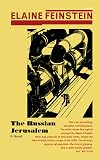
Well written but in the end dissatisfying -- essentially a collection of anecdotes about Jewish writers who had trouble in the Soviet Union, held together by a dream-voyage with Feinstein's beloved Tsvetaeva. Unfortunately, Feinstein doesn't know enough about Russia and Soviet life to make it more than superficial, and I wasn't thrilled with her own poems (interspersed between chapters).
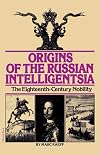
This is a superb book. It was already a classic when I was in college circa 1970, and I wish I'd read it then (as a Russian major) -- it explains so much that I've had to pick up in bits and pieces as I read my way through Russian history and literature. It's a short book and probably too sweeping in its conclusions, but it's better to have a clear idea that's essentially correct (the intelligentsia came out of the frustrated service ideals of the Russian eighteenth-century nobility) -- you can always refine the details later. If you have any interest in the topic, read this book.

This is a superb history that should be read by anyone with even a slight interest in the region. Perdue integrates sources from all the relevant languages and archives, takes account of all important scholarly and nationalist interpretations, and puts together a convincing synthesis full of insights and thought-provoking suggestions. This is the kind of history we need.
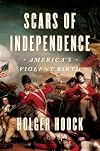
It's a good book in its way, but it's not the groundbreaking work it pretends to be. I'm annoyed by Hoock's insistence that nobody ever thinks of the Revolution as violent, that everyone just focuses on the Founding Fathers and their intellectual debates and the actual war with its accompanying unpleasantness is somehow elided. That's simply not true. Fred Anderson's The Dominion of War: Empire and Liberty in North America, 1500-2000 came out a dozen years ago; obviously, it's not as detailed about the Revolutionary period since it covers a much longer span, but he doesn't spare the violence -- it's the point of his whole book. And in general I don't think people have closed their eyes to it nearly as much as Hoock claims; I took down Page Smith's classic two-volume A New Age Now Begins: A People's History of the American Revolution from 1976 and didn't find any papering-over of violence.
Hoock has some good set pieces in which he tells vivid individual stories, but on the whole it's a disappointing book; there's no particular point of view or theoretical framework, just an attempt to remind people of the violent nature of the conflict, which I don't really think has been ignored. He quotes some of my favorite historians, like Page Smith, Gary Nash, Alan Taylor, and Jill Lepore, but every time I got to one of those quotes I found myself wishing I were reading them instead. I did a fair amount of skimming. In short, it's a worthy book but I don't recommend it.
Hoock has some good set pieces in which he tells vivid individual stories, but on the whole it's a disappointing book; there's no particular point of view or theoretical framework, just an attempt to remind people of the violent nature of the conflict, which I don't really think has been ignored. He quotes some of my favorite historians, like Page Smith, Gary Nash, Alan Taylor, and Jill Lepore, but every time I got to one of those quotes I found myself wishing I were reading them instead. I did a fair amount of skimming. In short, it's a worthy book but I don't recommend it.
Shattering Empires: The Clash and Collapse of the Ottoman and Russian Empires 1908-1918 by Michael A. Reynolds
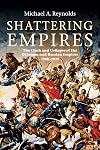
This is a superb book of necessarily specialized appeal: you have to be interested in the detailed history of the Ottoman and Russian empires in relation to the Caucasus and Eastern Anatolia, in the period around WWI. But if you are, you absolutely must read this book; it's comprehensive, thoughtful, and well written, and describes events not from our hindsighted view (how things came to be the way they are) but from the view at the time, with no one knowing who was going to end up controlling the territory. You'll never look at a map of the region the same way again.

A superb biography of a good poet but pathetic human being who was (as those who knew him best said) doomed to suicide; the people around him were by and large as unpleasant a collection of human beings as I have had the displeasure to read about, and I was relieved when I finished it. If you want to know about Mayakovsky, though, this is the book to read.
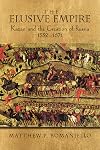
A superb monograph that explains in detail how the tsars proclaimed the conquest of Kazan and the Middle Volga region, then took over a century to make that conquest an accomplished fact through a combination of accommodation and force. Occasionally dry, and marred by poor copyediting/proofreading, but well worth the read if the subject interests you.
Autocracy in the Provinces: The Muscovite Gentry and Political Culture in the Seventeenth Century by Valerie A. Kivelson
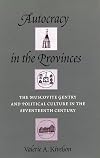
A superb monograph that overturns simplistic ideas about traditional autocracy versus bureaucratic modernism and the center versus the provinces, showing how interdependent everything was and how local powers made use of the new legal/bureaucratic tools to advance their interests. It's also well written, with lively and occasionally hilarious anecdotes. Highly recommended.
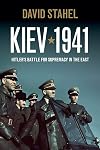
A superb book of military history, with more detail about the day-by-day movements of army units than all but the most diligent reader will need, but an entirely convincing overall message: Hitler's war in the east was lost by the end of August 1941, and the rest was just a long-drawn-out, incredibly destructive demonstration of that fact, with the Soviet advantage in manpower and resupply grinding down the German war machine. Useful maps, plenty of references, highly recommended.

One of the best books I've read about any war, and it gets better and better as it goes on. Highly recommended.
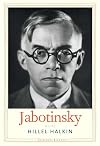
A superb short bio that finally makes me feel I understand Jabotinsky and the Revisionist Zionism he founded. I agree with the author that Jabotinsky probably should have stuck to literature; as a politician he was far-sighted but in practical terms a failure, and he made his own life and those of his wife and son much more difficult than they need have been. A sad life, well told.
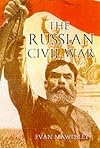
I've read several books on the Russian Civil War, and this is the one I'd recommend as a first approach to the subject. It presents the military developments thoroughly and memorably (and has excellent maps), and has succinct and convincing accounts of the politics involved. The main thing missing is the internal peasant opposition (the "Green" movement), which Brovkin dealt with brilliantly in Behind the Front Lines of the Civil War (after this book's first edition -- in the second edition, Mawdsley recommends it to supplement his own work). A great achievement that I wholeheartedly recommend.
I always turn to Wood’s reviews eagerly (though I often find myself arguing with them) — he’s very well-read, acutely sensitive to the qualities of good writing, and (most important) an excellent writer himself — so I opened this book with anticipation, and was not disappointed, even though I had read two of the four essays before, the first in the New Yorker and the last in the London Review of Books. I like Woods better when he’s mingling observations on literature, life, and his own memories, as he does here, rather than when he’s concentrating fiercely on a single book. I love reading the Chekhov stories he discusses and listening to the music he mentions, and he says things whose wording I admire or that plunge me into thought on nearly every page. I’ll add, since as a copyeditor I notice these things, that the book is extraordinarily well proofread; the only error I noticed was a running head that had strayed from the essay “Why?” to “Using Everything” (p. 91). Well done, Brandeis University Press!
 This review was written for LibraryThing Early Reviewers.
Through the Eye of a Needle: Wealth, the Fall of Rome, and the Making of Christianity in the West, 350-550 AD by Peter Brown
This learned and well-written book totally transformed my understanding of both the later Roman Empire and the early centuries of Christianity. To take one example, I knew Carthage was an important city, but I had no idea how important; it was essentially the Rome of North Africa, its hinterland was the source of Rome's grain supply after the grain of Egypt started going to Constantinople, and its loss to the Vandals was one of the biggest blows to the Empire in its slow collapse. As for the church, Brown brings to life personalities like Augustine, Jerome, and Pelagius and shows how their ideas interacted with the people and culture around them and with the situation of the Empire at the time. Anyone with even a slight interest in the period and topic should read it.
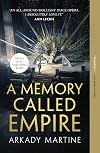
I was initially intrigued by the use of female pronouns for everyone, but while that's very effective in usefully disorienting the reader, it's only a tiny piece of what makes the book worth reading. Like all great literature, it's about life and death, destiny and free will, love and hate, and ultimately what makes us human. It does all that in a way that's specific to sf and yet resonates with real-life experience much the way Tolstoy does. I was originally reluctant to get into the first part of a trilogy, but now I can't wait for the sequel. Best novel I've read in quite a while.
Base Ball Founders: The Clubs, Players and Cities of the Northeast That Established the Game by Peter Morris
What a wonderful book! If you're interested in 19th-century baseball, you'll spend hours poring through this. For twenty years or so I've depended on an ancient photocopied version of Preston Orem’s Baseball From the Newspaper Accounts 1845-1881; this has much more detail about teams and players, and some great pictures. I don't know how I got along without it.
This review was written for LibraryThing Early Reviewers.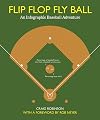
This amazing book should be in the library of any baseball fan who likes to see things presented graphically. Robinson has a genius for coming up with visually striking and convincing ways to present data; one of the first charts, of pro baseball history in the U.S., shows the earliest teams at the top with colored bars extending down to show the length of their existence, different colors for the various leagues, and it's the little touches that make it -- the Cincinnati Red Stockings off by themselves at the top left, and their pre-league rivals (Brooklyn's Eckfords and Atlantics, the Troy Haymakers, and so on) continuing down farther but changing color as they joined the NAPBBP (in pink), and the slight overlaps to show where teams contributed to the makeup of more than one later team. There's even an inset paragraph about the Continental League, which never actually came into existence. There's an "etymological Venn diagram" about team names ("Braves" comes under both "Bragging" and "Native American"), there's a graph of the Yankees' retired numbers ("the whole roster should have three-digit numbers by the year 2220"), there's "Ballpark Orientation" showing which direction the batter is facing in each park, there's a chart of 100-win seasons showing how far each team got... Well, you get the idea. Docked half a star for too much rambling in the essays ("At the Greyhound station in Milwaukee to get an overnight bus to the Twin Cities, I took an empty seat next to a show more hipster-looking guy..."). show less
This review was written for LibraryThing Early Reviewers.