
Paterson Joseph
Author of The Secret Diaries of Charles Ignatius Sancho
About the Author
Paterson Joseph is a British actor who has performed with the Royal Shakespeare Company and the National Theatre, among other institutions. He has also worked extensively in television an in film. In 2015, he wrote and performed his one-man play Sancho: An Act of Remembrance on tour.
Works by Paterson Joseph
Julius Caesar 1 copy
Wonka 1 copy
Associated Works
Tagged
Common Knowledge
- Canonical name
- Joseph, Paterson
- Birthdate
- 1964-06-22
- Gender
- male
- Occupations
- actor
chef - Organizations
- Royal Shakespeare Company
- Nationality
- UK
- Places of residence
- France
UK - Associated Place (for map)
- UK
Members
Reviews
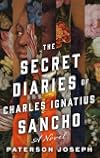
I was interested in this novel as a scholar of 18th-century literature -- I'd read Sancho's published letters and found them fascinating. This novel is a critical fabulation that does important work almost without the reader's noticing. What I mean by that is that the novel absorbs you, pulls you in, makes you care about Sancho, and shows you a full, rounded life. The value of seeing an African-British person imagined by a black British person -- not seen through the lens of white saviors -- show more is really incalculable. And it's GOOD. It reminded me in some ways of what Honore Fanone Jeffers does in The Age of Phillis. Its framing as a missive to his son put me in mind, too, of Baldwin and Coates.
I don't usually write reviews, but this book appeared on my doorstep out of the blue, even though my Early Reviewers page says I didn't win the book. I'm so glad I got to read it. show less
I don't usually write reviews, but this book appeared on my doorstep out of the blue, even though my Early Reviewers page says I didn't win the book. I'm so glad I got to read it. show less
As a college freshman in a required English Lit survey class I fell in love with 18th c literature and later took an advanced class in the early novel. I loved it all. Henry Fielding! Tobias Smollett! Lawrence Sterne! Grub Street hacks and Samuel Johnson! Consequently, when I began reading The Secret Diaries of Charles Ignatius Sancho, I fell right into the world of Georgian London as experienced by Sancho. Paterson Joseph takes the scant historical records of a real person and richly show more imagines the life of an African in 18th c. London.
Born on a slave ship crossing the Atlantic Ocean on what is quaintly described as the middle passage. I now say a slave ship is neither in a passage nor does it navigate the middle of anywhere. It sails straight to the heart of hell.
from The Secret Diaries of Charles Ignatius Sancho by Paterson Joseph
Born aboard ship in 1729 to African parents who had been kidnapped by slavers, as a tot Charles Ignatius was sent to England to live with three unmarried sisters. They dress him finely and treat him like a pet, calling him Sancho (after Sancho Panza from Don Quixote) for his rotundness. Discovering that he has learned to read and write in secret, the sisters lock him in the cellar for punishment and call for the slave catcher. Sancho’s dear ally, the housemaid Tilly, rescues him. And so his pampered life ends, and he must live as he can, neither free nor slave, with the slave catcher hot on his trail.
Sancho’s adventures takes him into gritty bars and gambling dens–and to meet the Queen. He encounters all the age’s lights–Handel, Samuel Johnson, Lawrence Sterne (whose writing style Sancho “vowed to imitate”), famous actors, and artists including Thomas Gainsborough who painted his portrait.
And he falls in love.
The novel is written by an elderly Sancho, suffering from gouty hands and knees, sharing his story with his youngest son through excerpts from his journal. A long section of the novel consists of letters written between him and his love interest Anne, who traveled to Barbados to care for an ailing aunt. The section is a nod to the epistolary style of early 18th c novels, including Samuel Richardson’s Pamela.
Those letters bring to light the horrors of British slavery on the Caribbean plantations. Anne observes first-hand the heartless overseer left in charge by the uninvolved plantation owners, and the total subjugation and powerlessness of the slaves. Anne fears for her virtue until she is able to return to England after five years.
Newly married, Sancho grabs what work he can, filling in as a valet, playing his harpsicord music, and running errands, until he purchases a shop. As a landowner, he stands up for his right to vote for an abolitionist candidate.
I found the novel vastly entertaining while offering insight into the 27th c black experience.
Thanks to Henry Holt who send an ARC through LibraryThing. show less
Born on a slave ship crossing the Atlantic Ocean on what is quaintly described as the middle passage. I now say a slave ship is neither in a passage nor does it navigate the middle of anywhere. It sails straight to the heart of hell.
from The Secret Diaries of Charles Ignatius Sancho by Paterson Joseph
Born aboard ship in 1729 to African parents who had been kidnapped by slavers, as a tot Charles Ignatius was sent to England to live with three unmarried sisters. They dress him finely and treat him like a pet, calling him Sancho (after Sancho Panza from Don Quixote) for his rotundness. Discovering that he has learned to read and write in secret, the sisters lock him in the cellar for punishment and call for the slave catcher. Sancho’s dear ally, the housemaid Tilly, rescues him. And so his pampered life ends, and he must live as he can, neither free nor slave, with the slave catcher hot on his trail.
Sancho’s adventures takes him into gritty bars and gambling dens–and to meet the Queen. He encounters all the age’s lights–Handel, Samuel Johnson, Lawrence Sterne (whose writing style Sancho “vowed to imitate”), famous actors, and artists including Thomas Gainsborough who painted his portrait.
And he falls in love.
The novel is written by an elderly Sancho, suffering from gouty hands and knees, sharing his story with his youngest son through excerpts from his journal. A long section of the novel consists of letters written between him and his love interest Anne, who traveled to Barbados to care for an ailing aunt. The section is a nod to the epistolary style of early 18th c novels, including Samuel Richardson’s Pamela.
Those letters bring to light the horrors of British slavery on the Caribbean plantations. Anne observes first-hand the heartless overseer left in charge by the uninvolved plantation owners, and the total subjugation and powerlessness of the slaves. Anne fears for her virtue until she is able to return to England after five years.
Newly married, Sancho grabs what work he can, filling in as a valet, playing his harpsicord music, and running errands, until he purchases a shop. As a landowner, he stands up for his right to vote for an abolitionist candidate.
I found the novel vastly entertaining while offering insight into the 27th c black experience.
Thanks to Henry Holt who send an ARC through LibraryThing. show less
 This review was written for LibraryThing Early Reviewers.
[This is a review of the Advanced Reader's Edition of The Secret Diaries of Charles Ignatius Sancho]
A fascinating figure of London’s 18th century is fleshed out in this historical novel. Sancho was born at sea on a slave ship. His mother did not survive the cruel crossing and he arrived in the West Indies an enslaved orphan. Fate seems to conspire to bring him to London by the time he was five, and London is the setting for most of this account.
Sancho’s life as history is fascinating show more enough, but Joseph’s knowledge of 18th c London and the historical records of Sancho’s life results in a wonderfully live protagonist. Joseph’s prose rings with 18th c. overtones, while still being easily understood in the 21st. This story is carried along by lovely prose – sometimes Sancho’s voice as the primary narrator writing a letter to his son; sometimes letters between Sancho and his love. Even poetry finds its place in this accomplished work.
I would probably never have found this book on my own. But now I’m glad to introduce it to anyone interested in 18th c. London from the vantage point of a black slave. Even if the historical setting doesn’t tempt you, this is a well written novel of a fascinating character in a London beginning to undergo major changes.
Os show less
A fascinating figure of London’s 18th century is fleshed out in this historical novel. Sancho was born at sea on a slave ship. His mother did not survive the cruel crossing and he arrived in the West Indies an enslaved orphan. Fate seems to conspire to bring him to London by the time he was five, and London is the setting for most of this account.
Sancho’s life as history is fascinating show more enough, but Joseph’s knowledge of 18th c London and the historical records of Sancho’s life results in a wonderfully live protagonist. Joseph’s prose rings with 18th c. overtones, while still being easily understood in the 21st. This story is carried along by lovely prose – sometimes Sancho’s voice as the primary narrator writing a letter to his son; sometimes letters between Sancho and his love. Even poetry finds its place in this accomplished work.
I would probably never have found this book on my own. But now I’m glad to introduce it to anyone interested in 18th c. London from the vantage point of a black slave. Even if the historical setting doesn’t tempt you, this is a well written novel of a fascinating character in a London beginning to undergo major changes.
Os show less
This review was written for LibraryThing Early Reviewers.Fictionalized lives of historical figures sometimes work and sometimes just irritate me: I'm always delighted to be able to report when it's the former. Paterson Joseph has creatively imagined much of the life of Charles Ignatius Sancho, imagined as a sort of diary/autobiography written for one of his sons. Well crafted and quite readable, and certainly will make readers want to go and explore the historical figure's biography.
This review was written for LibraryThing Early Reviewers.Lists
To Be Read (1)
Awards


You May Also Like
Associated Authors
Statistics
- Works
- 7
- Also by
- 13
- Members
- 251
- Popularity
- #91,085
- Rating
- 3.9
- Reviews
- 20
- ISBNs
- 17
