
Dawn Kurtagich
Author of The Dead House
Series
Works by Dawn Kurtagich
Tagged
Common Knowledge
Members
Reviews
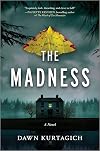
Beware what waits in the shadows…With one unexpected email from her estranged best friend, Lucy, Mina Murray’s carefully curated life is turned upside down. Leaving behind her psychiatric practice in London, she returns home to the windswept shores of Wales. Faced with everything she’s left behind, she soon discovers that Lucy’s symptoms mirror those of her mysterious amnesiac patient hundreds of miles away.
This had absolutely everything that I love about of a horror story. This new show more author for me, lays a foundation of this foreboding backdrop of a small Welsh village where Mina Murray was raised by her “Witch on the Hill”, mother. She’s never believed all the ghost stories that her mother told her and always thought her mother a little bit crazy with all the spiritual house blessings she did. All Mina wanted was to escape, to get out and as far away from that place, especially after everything that happened to her.
Now we "fast forward" many years and Mina is a successful working adult; a psychiatrist in London, who keeps herself focused on anything and everything OTHER than her hometown or the people she left behind there. Then she has a new case. A young woman who keeps calling out for “Master” and has some strange injuries that Mina can’t quite explain. Then a mysterious email arrives from a childhood friend asking, begging her to come home.
As Mina reconnects with her friend, Lucy, who is now married to a wealthy man in the transportation business, she is surprised and shocked to learn that Lucy is exhibiting the same strange and troubling symptoms as her latest patient, Renee. Both the women are experiencing sleepwalking episodes, delirium, hallucinations, anemia, and rashes that worsen daily, and she has no explanation for their symptoms.
As Mina delves deeper into the mystery, she uncovers a disturbing pattern: several young girls, presumed missing, have been found dead, all of whom were lured by a mysterious job opportunity at a prestigious nightclub frequented by the rich and powerful. Is there a secret organization preying on innocent girls from lower-class families? As Mina's investigation leads her to the dark web, she encounters a group of conspirators whose motives remain unclear. In order to help her friend Lucy, Mina must confront her own dark past and risk everything—including the safety of her loved ones. Will she find the courage to face her own demons and uncover the truth?
Overall, this is a brilliant horror story that will leave you on the edge of your seat. It's a gripping, spine-tingling tale that keeps you guessing until the very end. I highly recommend it to any reader that likes true horror. show less
This had absolutely everything that I love about of a horror story. This new show more author for me, lays a foundation of this foreboding backdrop of a small Welsh village where Mina Murray was raised by her “Witch on the Hill”, mother. She’s never believed all the ghost stories that her mother told her and always thought her mother a little bit crazy with all the spiritual house blessings she did. All Mina wanted was to escape, to get out and as far away from that place, especially after everything that happened to her.
Now we "fast forward" many years and Mina is a successful working adult; a psychiatrist in London, who keeps herself focused on anything and everything OTHER than her hometown or the people she left behind there. Then she has a new case. A young woman who keeps calling out for “Master” and has some strange injuries that Mina can’t quite explain. Then a mysterious email arrives from a childhood friend asking, begging her to come home.
As Mina reconnects with her friend, Lucy, who is now married to a wealthy man in the transportation business, she is surprised and shocked to learn that Lucy is exhibiting the same strange and troubling symptoms as her latest patient, Renee. Both the women are experiencing sleepwalking episodes, delirium, hallucinations, anemia, and rashes that worsen daily, and she has no explanation for their symptoms.
As Mina delves deeper into the mystery, she uncovers a disturbing pattern: several young girls, presumed missing, have been found dead, all of whom were lured by a mysterious job opportunity at a prestigious nightclub frequented by the rich and powerful. Is there a secret organization preying on innocent girls from lower-class families? As Mina's investigation leads her to the dark web, she encounters a group of conspirators whose motives remain unclear. In order to help her friend Lucy, Mina must confront her own dark past and risk everything—including the safety of her loved ones. Will she find the courage to face her own demons and uncover the truth?
Overall, this is a brilliant horror story that will leave you on the edge of your seat. It's a gripping, spine-tingling tale that keeps you guessing until the very end. I highly recommend it to any reader that likes true horror. show less
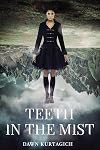
Ooof. Trigger warnings: gory scenes, self-harm, mental illness, incest, infanticide, and religious problems.
The problems with the above: the gore is nine parts cliché (a head explodes like a melon, for example) and one part nonessential to the plot; the self-harm isn't really plot-essential either - it could have been replaced by a lot of other things - and it's unclear at the start whether cutting has been encouraged by a father and/or boyfriend (pretty easy fix there; why it didn't happen show more is unclear). The mental illness in the story, at least the one that involved institutionalization, combines memory loss and violence, and the main character's mother accuses her of also having it, with all the problematic implications of mental illness being a thing of which one can accuse people. The incest: not plot-essential, replaceable by thousands alternatives for the parentage of the child supposed to be the result of it.
Infanticide: No, really, what could possibly go wrong when the perpetrator is definitely supposed to be over 2100 years old, speaks a language with different sounds and symbols than English or Latin, was considered a religious heretic by at least one monastic order, and further participates in basically every anti-Semitic stereotype except the nose, which is not specifically excepted, just not mentioned?
As for religion, I personally have no objection to children reading stories that include any honest representation of an existing faith, but I strongly object to the incongruously complete lack of actual religious horror in a book in which Faust is the villain and a principal character is supposed to be both Faust's and the Devil's child. I mean, if you're going to bring pre-19th century Christian beliefs into your story, particularly regarding said Devil and also witchcraft, you really need to be prepared to engage Christian fear of damnation, not just to sort of mention it casually while also talking about a grown man flogging his small stepchild. There's also the anachronistic as well as improbable proudly-ignorant agnosticism of the 19th century British characters. They'd all have known the basic Anglican liturgy just as thoroughly as they knew how to wear clothing if they wanted to pass, as they did, in any company at all. Yes, even the one who only lived in the city as a child. It's also disconcerting that he had religious tutors but thought nothing in particular, positive or negative, about clubbing animals with sticks/rocks, sex in a not clearly consensual first time alone together situation, or sharing his childhood home with the Devil in the form of a male sheep, etc. Also, he was gently spoken but illiterate as an adult, which is just as improbable.
It was only irksome at first, when he instantly disliked but still thought "there was something about" (direct quote) the half-sister he later impregnated with one interaction, moments after overcoming months of weirdly protective loathing that smacked of stalking. Speaking of relationships that don't quite count as consenting, his daughter seduced a teen 150 years later, which is still not cool even if Edward did it in Twilight.
Why did I read it? For work. Did I like anything about it? Well... the structure was overall successful, and the idea of three women in a family being misunderstood in similar ways and strong enough to resist that misunderstanding, though usually too late, is actually interesting. The flying scene was cute, even though it ended with yet another cliché tragedy. I'm all for revisiting the Faust legend in general, though I'm pretty insistent that he should not be characterized as Jewish and probably shouldn't be confused with Ahasuerus either for the same reasons. The types of witchcraft specified as the gifts Faust's children manifested would have been interesting if one character hadn't had all of them. Specifically, if the one character who was especially pretty, internally justified, and beloved by all but the "Christian" "monk" hadn't had all of them. A diversity of characters with different powers would have been more fertile ground for a diversity of insights and descriptions, feelings and conflicts, etc.
That this challenge was left unaddressed begs a question. Where was the editor? What editor failed to say "Why don't you draw out some more romantic tension?" or "Do you see why this set of characteristics plays into a problematic stereotype?" Wouldn't an editor for a major publisher, working on the youth label, bring up just how poorly the heterosexual intercourse is written? For that matter, how did someone not ask earlier "Why did the monk really, really need to show up in the middle of the night, and why did the Irish girl decide he was romantically interesting after he scourged and branded and tried to drown the English girl, and why did the monk reciprocate the Irish girl's attentions, being a monk, or at least of a socioeconomic status unlikely to date a parentless, penniless Catholic, even if he were rebelling against the morés of his class?" or even just "Can you make a timeline for yourself showing the diminishing food and water relative to plot points so that the ongoing worry about starvation doesn't get repetitive?" and "could you have the male best friend come up with something more original to say in anger than what you have here, 'lesbian whores', which at this point in our cultural history doesn't even carry shock value and is really just there to be offensive?"
The trouble is, one character is conspicuously physically disabled at the end of the book, and I can't see how the obviously planned sequel is going to do justice to the condition given this opening act.
Editor, engage. This author can do better. Demand it. Readers, follow suit. show less
The problems with the above: the gore is nine parts cliché (a head explodes like a melon, for example) and one part nonessential to the plot; the self-harm isn't really plot-essential either - it could have been replaced by a lot of other things - and it's unclear at the start whether cutting has been encouraged by a father and/or boyfriend (pretty easy fix there; why it didn't happen show more is unclear). The mental illness in the story, at least the one that involved institutionalization, combines memory loss and violence, and the main character's mother accuses her of also having it, with all the problematic implications of mental illness being a thing of which one can accuse people. The incest: not plot-essential, replaceable by thousands alternatives for the parentage of the child supposed to be the result of it.
Infanticide: No, really, what could possibly go wrong when the perpetrator is definitely supposed to be over 2100 years old, speaks a language with different sounds and symbols than English or Latin, was considered a religious heretic by at least one monastic order, and further participates in basically every anti-Semitic stereotype except the nose, which is not specifically excepted, just not mentioned?
As for religion, I personally have no objection to children reading stories that include any honest representation of an existing faith, but I strongly object to the incongruously complete lack of actual religious horror in a book in which Faust is the villain and a principal character is supposed to be both Faust's and the Devil's child. I mean, if you're going to bring pre-19th century Christian beliefs into your story, particularly regarding said Devil and also witchcraft, you really need to be prepared to engage Christian fear of damnation, not just to sort of mention it casually while also talking about a grown man flogging his small stepchild. There's also the anachronistic as well as improbable proudly-ignorant agnosticism of the 19th century British characters. They'd all have known the basic Anglican liturgy just as thoroughly as they knew how to wear clothing if they wanted to pass, as they did, in any company at all. Yes, even the one who only lived in the city as a child. It's also disconcerting that he had religious tutors but thought nothing in particular, positive or negative, about clubbing animals with sticks/rocks, sex in a not clearly consensual first time alone together situation, or sharing his childhood home with the Devil in the form of a male sheep, etc. Also, he was gently spoken but illiterate as an adult, which is just as improbable.
It was only irksome at first, when he instantly disliked but still thought "there was something about" (direct quote) the half-sister he later impregnated with one interaction, moments after overcoming months of weirdly protective loathing that smacked of stalking. Speaking of relationships that don't quite count as consenting, his daughter seduced a teen 150 years later, which is still not cool even if Edward did it in Twilight.
Why did I read it? For work. Did I like anything about it? Well... the structure was overall successful, and the idea of three women in a family being misunderstood in similar ways and strong enough to resist that misunderstanding, though usually too late, is actually interesting. The flying scene was cute, even though it ended with yet another cliché tragedy. I'm all for revisiting the Faust legend in general, though I'm pretty insistent that he should not be characterized as Jewish and probably shouldn't be confused with Ahasuerus either for the same reasons. The types of witchcraft specified as the gifts Faust's children manifested would have been interesting if one character hadn't had all of them. Specifically, if the one character who was especially pretty, internally justified, and beloved by all but the "Christian" "monk" hadn't had all of them. A diversity of characters with different powers would have been more fertile ground for a diversity of insights and descriptions, feelings and conflicts, etc.
That this challenge was left unaddressed begs a question. Where was the editor? What editor failed to say "Why don't you draw out some more romantic tension?" or "Do you see why this set of characteristics plays into a problematic stereotype?" Wouldn't an editor for a major publisher, working on the youth label, bring up just how poorly the heterosexual intercourse is written? For that matter, how did someone not ask earlier "Why did the monk really, really need to show up in the middle of the night, and why did the Irish girl decide he was romantically interesting after he scourged and branded and tried to drown the English girl, and why did the monk reciprocate the Irish girl's attentions, being a monk, or at least of a socioeconomic status unlikely to date a parentless, penniless Catholic, even if he were rebelling against the morés of his class?" or even just "Can you make a timeline for yourself showing the diminishing food and water relative to plot points so that the ongoing worry about starvation doesn't get repetitive?" and "could you have the male best friend come up with something more original to say in anger than what you have here, 'lesbian whores', which at this point in our cultural history doesn't even carry shock value and is really just there to be offensive?"
The trouble is, one character is conspicuously physically disabled at the end of the book, and I can't see how the obviously planned sequel is going to do justice to the condition given this opening act.
Editor, engage. This author can do better. Demand it. Readers, follow suit. show less
Creepy, entertaining, page-turning. A must-read ya horror!
I can't remember the last time I've been addicted to a horror the way I was with TEETH, but I've spent the last several days engulfed in this creepy book.
My fave parts: The dual storylines & the mixed media. This book is set in multiple timelines, but there are mainly 2 eras that are focused on. Today, with Zoey-- a girl with magical abilities and a mission to find out what made her father go mad. And 1851 with Roan-- a girl who has show more been brought to a evil house on a mountain... which may or may not bring out her evil side.
The mixed media is what this author does best. Her other books make use of these pictures, diary entries, letters, etc. as well and I love what these elements do to the books. Here it gave the book that extra splash of authenticity, which given that it's a horror, made it that much creepier.
The only thing I didn't love was the way it went from zero to HOLY SHIT with very little crescendo. I wanted more of a slow build to the main event, but given that the book is 400 pages, I don't think adding more to it is a good option.
I really can't say enough about how dark and compelling this book is. The way the mountain and the house felt like live characters in the book gave it the best atmosphere... or the creepiest atmosphere anyway. I also loved and cared about all (well, not Cage) the side characters. I will now go and try to power through Dawn's other books that I didn't get into. Now I know it had to be my mood and not the books!!
OVERALL: I am so glad I gave this author another try!! This book is all you could want in a horror, plus there's a cool historical timeline and present-day mystery to solve. The coolest part? All the letters, journal entries, pictures, & news articles. It gave the book that added spark. Totally recommend for horror historical lovers.
My Blog:
Pink Polka Dot Books
show less
I can't remember the last time I've been addicted to a horror the way I was with TEETH, but I've spent the last several days engulfed in this creepy book.
My fave parts: The dual storylines & the mixed media. This book is set in multiple timelines, but there are mainly 2 eras that are focused on. Today, with Zoey-- a girl with magical abilities and a mission to find out what made her father go mad. And 1851 with Roan-- a girl who has show more been brought to a evil house on a mountain... which may or may not bring out her evil side.
The mixed media is what this author does best. Her other books make use of these pictures, diary entries, letters, etc. as well and I love what these elements do to the books. Here it gave the book that extra splash of authenticity, which given that it's a horror, made it that much creepier.
The only thing I didn't love was the way it went from zero to HOLY SHIT with very little crescendo. I wanted more of a slow build to the main event, but given that the book is 400 pages, I don't think adding more to it is a good option.
I really can't say enough about how dark and compelling this book is. The way the mountain and the house felt like live characters in the book gave it the best atmosphere... or the creepiest atmosphere anyway. I also loved and cared about all (well, not Cage) the side characters. I will now go and try to power through Dawn's other books that I didn't get into. Now I know it had to be my mood and not the books!!
OVERALL: I am so glad I gave this author another try!! This book is all you could want in a horror, plus there's a cool historical timeline and present-day mystery to solve. The coolest part? All the letters, journal entries, pictures, & news articles. It gave the book that added spark. Totally recommend for horror historical lovers.
My Blog:
Pink Polka Dot Books
show less
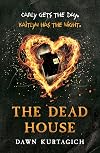
Overall, I enjoyed this book; it definitely kept me turning pages, and I really liked the surreal, nightmare-like bits dealing with the Dead House itself. I also enjoyed the references to the conspiracy theories and wild internet speculation surrounding the case, though I wish we'd gotten more of it earlier on, to build up the mystery surrounding what happened, instead of getting most of it at the end when we already know more or less what happened--though I appreciate that there are a few show more mysteries left at the end and the author doesn't succumb to the desire to overexplain everything.
What bothered me, though, is the way that Kaitlyn's therapy sessions range from useless to harmful and the psychiatric medications are just straight-up harmful. Okay, her apparent delusions and multiple personalities have supernatural explanations, and if those were her only issue I'd roll my eyes slightly and move on without writing an irritated review. "People think I'm crazy when I try to explain the freaky supernatural stuff that's happening" is kind of a genre staple. But Kaitlyn self-harms and is suicidal, and at least to some extent that predates the onset of the supernatural shenanigans. She really does need help--but the book appears to come down on the side of "if you are suicidal and/or self-harming, don't ever tell anyone about it (or at least not any adults), because you'll just get locked away for life and made to take harmful medications that will make you Not Yourself." And of course it's a horror novel, and of course the choices and opinions of fictional characters aren't necessarily an example to be followed, but let's not pretend that "treatment for mental illnesses is scary and harmful and to be avoided at all costs" isn't a really pernicious and widespread cultural meme that does real damage to some people (second, in my mind, only to "people with mental illnesses are scary and harmful and to be avoided at all costs" as far as shitty mental illness myths go), and this book doesn't do much to avoid propping that up. A brief thank-you in the author's note at the end to the doctors who helped the author with her sleep disorder is a bit too little, too late as far as I'm concerned.
(And then again, I do know some people who have real horror stories about inpatient treatment for mental health problems, and a lot of us--especially teenagers and especially girls/women--have had doctors not take us seriously about our own health and what was and wasn't working for us. And I would never want to suggest that people with these experiences shouldn't be allowed to tell their stories. But I also know people who have actually found inpatient helpful, and who have found medications and/or therapy to have an immensely positive impact on their lives, and this book just felt like a very un-nuanced, negative view of the whole concept of mental health treatment.) show less
What bothered me, though, is the way that Kaitlyn's therapy sessions range from useless to harmful and the psychiatric medications are just straight-up harmful. Okay, her apparent delusions and multiple personalities have supernatural explanations, and if those were her only issue I'd roll my eyes slightly and move on without writing an irritated review. "People think I'm crazy when I try to explain the freaky supernatural stuff that's happening" is kind of a genre staple. But Kaitlyn self-harms and is suicidal, and at least to some extent that predates the onset of the supernatural shenanigans. She really does need help--but the book appears to come down on the side of "if you are suicidal and/or self-harming, don't ever tell anyone about it (or at least not any adults), because you'll just get locked away for life and made to take harmful medications that will make you Not Yourself." And of course it's a horror novel, and of course the choices and opinions of fictional characters aren't necessarily an example to be followed, but let's not pretend that "treatment for mental illnesses is scary and harmful and to be avoided at all costs" isn't a really pernicious and widespread cultural meme that does real damage to some people (second, in my mind, only to "people with mental illnesses are scary and harmful and to be avoided at all costs" as far as shitty mental illness myths go), and this book doesn't do much to avoid propping that up. A brief thank-you in the author's note at the end to the doctors who helped the author with her sleep disorder is a bit too little, too late as far as I'm concerned.
(And then again, I do know some people who have real horror stories about inpatient treatment for mental health problems, and a lot of us--especially teenagers and especially girls/women--have had doctors not take us seriously about our own health and what was and wasn't working for us. And I would never want to suggest that people with these experiences shouldn't be allowed to tell their stories. But I also know people who have actually found inpatient helpful, and who have found medications and/or therapy to have an immensely positive impact on their lives, and this book just felt like a very un-nuanced, negative view of the whole concept of mental health treatment.) show less
Lists
Awards


You May Also Like


Associated Authors
Statistics
- Works
- 10
- Members
- 1,356
- Popularity
- #18,965
- Rating
- 3.5
- Reviews
- 93
- ISBNs
- 50
- Languages
- 1