
Anna Redsand
Author of To Drink From the Silver Cup: From Faith Through Exile and Beyond
About the Author
Anna Redsand was raised by fundamentalist missionary parents in the Navajo Nation. Her essays and stories have appeared in literary journals, and "Naturalization" was listed as notable in The Best American Essays 2014. Her biography, Viktor Frankl: A Life Worth Living, has won four national and show more international awards. She writes for the religion page of the Gallup Independent, Much of her writing explores the fluidity of identity, the effects of colonization, race relationships, the morality of missions, and the dynamics of cultural contact. She lives in Albuquerque, New Mexico. show less
Works by Anna Redsand
Tagged
Common Knowledge
There is no Common Knowledge data for this author yet. You can help.
Members
Reviews
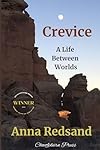
This essay collection reflects the unique perspective of Anna Redsand, a woman who grew up bridging two worlds: that of her Dutch Reformed missionary family and the Diné (Navajo) people on whose reservation land she lived in New Mexico. The essays are Redsand’s attempt to “know her own mind, her own experience” rather than be “an untethered astronaut, adrift in the cosmos” (p.111).
I really appreciated this books, especially the parts where Redsand compares the different worldviews show more of the cultures of her youth (e.g. view of death). Redsand doesn't shy away from different topics--boarding schools, permission (or not) to use one's native tongue, racism, privilege, government engagement with native communities.
Whereas Redsand is not afraid to criticize the stance of her missionary parents, she also sees their virtues as she tries to understand them. Her writing is honest and beautiful (especially when describing the NW landscape). I highly recommend this award-winning book. show less
I really appreciated this books, especially the parts where Redsand compares the different worldviews show more of the cultures of her youth (e.g. view of death). Redsand doesn't shy away from different topics--boarding schools, permission (or not) to use one's native tongue, racism, privilege, government engagement with native communities.
Whereas Redsand is not afraid to criticize the stance of her missionary parents, she also sees their virtues as she tries to understand them. Her writing is honest and beautiful (especially when describing the NW landscape). I highly recommend this award-winning book. show less
How can a person belong to a place that is not her people’s original home?
Every American has to address this question, since we all live on stolen land, even if our families have lived on those lands for generations.
Anna Redsand was in a unique position as a child. She was the descendent of Dutch immigrants, and then, when she was still a young child, her family, missionaries in a strict Calvinist Dutch Reformed church, moved to proselytize on the Navajo Reservation. It was while living in show more this new land among people her parents sought to convert to Christianity that Redsand developed a sense of “home, not home.”
The child in her accepted the place as home, just as she accepted the people around her, including her Navajo friends in school and at church. But, as she grew, she met with cultural resistance, both from the Dutch descendants her parents identified with and from some Navajo.
How do we grow up in a place where we feel we belong, even when we don’t truly belong?
Redsand explores this issue and many more interplays between cultures, including recognizing how her parents’ missionary agenda harmed the Navajo and how learning to view life from a Navajo perspective altered her perceptions of those missionaries, as she shares her previously published essays in this collection to create a united examination of how her childhood formed her into the adult she became.
We learn, in the process, that there is value in understanding that a place can be, at the same time, both “home” and “not home.” show less
Every American has to address this question, since we all live on stolen land, even if our families have lived on those lands for generations.
Anna Redsand was in a unique position as a child. She was the descendent of Dutch immigrants, and then, when she was still a young child, her family, missionaries in a strict Calvinist Dutch Reformed church, moved to proselytize on the Navajo Reservation. It was while living in show more this new land among people her parents sought to convert to Christianity that Redsand developed a sense of “home, not home.”
The child in her accepted the place as home, just as she accepted the people around her, including her Navajo friends in school and at church. But, as she grew, she met with cultural resistance, both from the Dutch descendants her parents identified with and from some Navajo.
How do we grow up in a place where we feel we belong, even when we don’t truly belong?
Redsand explores this issue and many more interplays between cultures, including recognizing how her parents’ missionary agenda harmed the Navajo and how learning to view life from a Navajo perspective altered her perceptions of those missionaries, as she shares her previously published essays in this collection to create a united examination of how her childhood formed her into the adult she became.
We learn, in the process, that there is value in understanding that a place can be, at the same time, both “home” and “not home.” show less
Statistics
- Works
- 2
- Members
- 14
- Popularity
- #739,558
- Rating
- 5.0
- Reviews
- 2
- ISBNs
- 1