
Avi Steinberg
Author of Running the Books: The Adventures of an Accidental Prison Librarian
About the Author
Image credit: Avi Steinberg
Works by Avi Steinberg
The Lost Book of Mormon: A Journey Through the Mythic Lands of Nephi, Zarahemla, and Kansas City, Missouri (2014) 74 copies, 2 reviews
Associated Works
The Good Book: Writers Reflect on Favorite Bible Passages (2015) — Contributor — 46 copies, 3 reviews
Tagged
Common Knowledge
- Canonical name
- Steinberg, Avi
- Gender
- male
- Education
- Harvard University
- Organizations
- The New Yorker
- Nationality
- USA
- Associated Place (for map)
- USA
Members
Reviews

Running through this memoir by a greenhorn librarian/creative-writing teacher in a Boston prison is a subliminal meditation on the power of words to liberate, isolate, connive, cajole, and dispute.
‘During a debate with a fellow hustler, C.C. Too Sweet scored major points when he said, “With all due, and undue, respect, the difference between me and you is the following: You are nonsensical while I, my brother, am ineffable. In case you ain’t mastered your diction, I’ll break that show more down for you—ineffable, meaning: I can not, and will not, be effed with.”’ show less
‘During a debate with a fellow hustler, C.C. Too Sweet scored major points when he said, “With all due, and undue, respect, the difference between me and you is the following: You are nonsensical while I, my brother, am ineffable. In case you ain’t mastered your diction, I’ll break that show more down for you—ineffable, meaning: I can not, and will not, be effed with.”’ show less
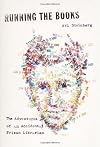
After my rage subsided (apparently, Boston’s Suffolk County House of Correction hires snarky, young Harvard graduates with bachelor’s degrees in English as prison librarians, rather than actual librarians), I enjoyed this touching memoir.
After a few years of aimless, post-graduation wandering, Avi Steinberg comes across an ad in Craig’s List (Craig’s List? really?) for a job as a prison librarian. (To be fair, one of his duties was to teach creative writing, so that might explain why show more he was hired, but still.) He works at the prison for two years and, during that time, interacts with a wide variety of colorful characters, both inmates and staff. Especially touching is the story of Jessica, an inmate who finds that the son she abandoned as a baby, has been sent to the men’s unit of the prison as an 18 year old boy. Steinberg tells the heartbreaking story of her attempt to connect with him after all this time through the limited channels available to prison inmates.
Throughout the memoir, we also get glimpses of Steinberg’s upbringing in a strict Orthodox Jewish household. While, for the most part, he has abandoned his religion, it still informs much of his life. Particularly interesting is his relationship with his cold and emotionally unavailable grandmother, a Holocaust survivor.
Although the jobs are few and far between, I’ve always thought I’d be willing to apply for a prison librarian position, upon graduation. However, after reading this, I was somewhat surprised to learn that the most stressful aspect of the job is not dealing with the inmates, but rather with the ongoing conflict between civilian staff (librarians, teachers, psychologists) and the guards/administration. The groups hold polar opposite philosophies about how to treat inmates (we’re here to help them versus there’s no hope for them and we’re here to keep order), which seems to cause an ongoing conflict that often erupts into serious incidents and even violence (!).
All in all, this is a warm, witty, and touching memoir. I do have a special interest in prison librarianship, but I think this would be an enjoyable read for anyone. Nice job, Avi Steinberg! show less
After a few years of aimless, post-graduation wandering, Avi Steinberg comes across an ad in Craig’s List (Craig’s List? really?) for a job as a prison librarian. (To be fair, one of his duties was to teach creative writing, so that might explain why show more he was hired, but still.) He works at the prison for two years and, during that time, interacts with a wide variety of colorful characters, both inmates and staff. Especially touching is the story of Jessica, an inmate who finds that the son she abandoned as a baby, has been sent to the men’s unit of the prison as an 18 year old boy. Steinberg tells the heartbreaking story of her attempt to connect with him after all this time through the limited channels available to prison inmates.
Throughout the memoir, we also get glimpses of Steinberg’s upbringing in a strict Orthodox Jewish household. While, for the most part, he has abandoned his religion, it still informs much of his life. Particularly interesting is his relationship with his cold and emotionally unavailable grandmother, a Holocaust survivor.
Although the jobs are few and far between, I’ve always thought I’d be willing to apply for a prison librarian position, upon graduation. However, after reading this, I was somewhat surprised to learn that the most stressful aspect of the job is not dealing with the inmates, but rather with the ongoing conflict between civilian staff (librarians, teachers, psychologists) and the guards/administration. The groups hold polar opposite philosophies about how to treat inmates (we’re here to help them versus there’s no hope for them and we’re here to keep order), which seems to cause an ongoing conflict that often erupts into serious incidents and even violence (!).
All in all, this is a warm, witty, and touching memoir. I do have a special interest in prison librarianship, but I think this would be an enjoyable read for anyone. Nice job, Avi Steinberg! show less
The last thing Avi expected to become was a prison librarian. This former Orthodox Jew without an MLS applied for the job because, well why not? It was full time and came with benefits, which was more than he could say for writing obits. But the job came with much more than the description in the ad could entail.
As a librarian in a public library, I usually skip over books that are about working at a library. It feels too much like bringing work home. This memoir intrigued me, however, show more reminding me of a class I look en route to my MLS on serving underserved populations. Our class even visited a prison library as a field trip. And, I figured, his job was different enough from mine not to feel like bringing work home.
Well, soon after starting this book I realized how much of an understatement that was. At first I was put off by his casual use of swear words and his attitude towards the religious life he left behind. After he got the job, however, I became fascinated with some of the details of his interactions with inmates, his struggles with "the right thing to do" in various situations, and what his job entailed. It's about as different as a job in the same field can possibly be; we both work with books and try to have materials on the shelves that interest our patrons, but that's about as far as the similarities go. The high stress of his job and the constant battle between serving the inmates and keeping the guards happy gets to him after awhile. The descriptions of prison life and the lifestyle and choice of the men and women who were in that prison are not pretty, and drained me just reading the book. By the time I got to the end, the book started to feel disjointed and hard to follow. I wasn't sure if I ran out of steam or the author did. Still, this is a profession that doesn't get a lot of notice, and I enjoyed this look into an aspect of librarianship that is often fraught with difficulty. show less
As a librarian in a public library, I usually skip over books that are about working at a library. It feels too much like bringing work home. This memoir intrigued me, however, show more reminding me of a class I look en route to my MLS on serving underserved populations. Our class even visited a prison library as a field trip. And, I figured, his job was different enough from mine not to feel like bringing work home.
Well, soon after starting this book I realized how much of an understatement that was. At first I was put off by his casual use of swear words and his attitude towards the religious life he left behind. After he got the job, however, I became fascinated with some of the details of his interactions with inmates, his struggles with "the right thing to do" in various situations, and what his job entailed. It's about as different as a job in the same field can possibly be; we both work with books and try to have materials on the shelves that interest our patrons, but that's about as far as the similarities go. The high stress of his job and the constant battle between serving the inmates and keeping the guards happy gets to him after awhile. The descriptions of prison life and the lifestyle and choice of the men and women who were in that prison are not pretty, and drained me just reading the book. By the time I got to the end, the book started to feel disjointed and hard to follow. I wasn't sure if I ran out of steam or the author did. Still, this is a profession that doesn't get a lot of notice, and I enjoyed this look into an aspect of librarianship that is often fraught with difficulty. show less
The Lost Book of Mormon: A Journey Through the Mythic Lands of Nephi, Zarahemla, and Kansas City, Missouri by Avi Steinberg
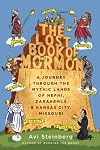
I wasn't sure what was going on with this book. Is it a memoir? An expose? A commentary? I also had trouble discerning the author's motivations. He was on a quest to discover ... something ... about Joseph Smith and the Book of Mormon. Along the way he does manage to teach the reader something about the culture of Mormons, or Saints, or whatever the proper term of reference might be. Most of the time he calls them "readers of the Book of Mormon," without specifying whether they are show more devotees/adherents or curious laypeople, which it seems he is. But even that isn't quite clear, as he gets drawn into his quest. Anyway, I'm a sucker for a spiritual journey and certainly for a religious history, especially when it's a history of something like Mormonism, which I still consider to be, rightly or wrongly, kind of fringe. I think part of the point of this book is to ask, if not to answer, how a religion becomes "legitimate." Is it time? After all, Christianity, Judaism and Islam have many centuries' head start on the Mormons. Or is it simply being in possession of some mysterious and prophetic texts, which some number of people consider to be sacred? These questions are all presented in this book, and even though it's not realistic to expect an answer from such a slim volume, I found myself feeling a little disappointed in the end. show less
Lists
Awards


You May Also Like


Associated Authors
Statistics
- Works
- 4
- Also by
- 2
- Members
- 1,043
- Popularity
- #24,686
- Rating
- 3.6
- Reviews
- 57
- ISBNs
- 15
- Favorited
- 2